Sam Altman envisions AI as metered utility, but questions remain about who foots the bill


2 Sources
[1]
Sam Altman Says Intelligence Will Be a Utility, and He's Just the Man to Collect the Bills
In an appearance at BlackRock’s U.S. Infrastructure Summit on Wednesday, OpenAI CEO Sam Altman offered a surprisingly clear articulation of how he imagines the future of artificial intelligenceâ€"it's just not clear if he meant it the way that it sounded. While speaking with Adebayo Ogunlesi
[2]
Just like electricity, AI will soon become metered service for all, says OpenAI CEO Sam Altman
OpenAI is building new data centres with partners to support the growing use of AI. OpenAI CEO Sam Altman believes the future of artificial intelligence may be far simpler than many people imagine. Speaking at the BlackRock US Infrastructure Summit in Washington, DC, Altman explained that AI may
Share
Copy Link
OpenAI CEO Sam Altman outlined his vision for artificial intelligence becoming a utility like electricity or water at BlackRock's U.S. Infrastructure Summit. Users would pay based on computing power consumed, he explained. But his comments raise concerns about energy costs, infrastructure financing, and potential government subsidies for AI expansion.
Sam Altman Presents Vision for AI Utility at BlackRock U.S. Infrastructure Summit
Sam Altman delivered a bold vision for the future of artificial intelligence at the BlackRock U.S. Infrastructure Summit in Washington, DC, speaking alongside Adebayo Ogunlesi, a member of OpenAI's board of directors. The OpenAI CEO stated plainly: "We see a future where intelligence will be a utility, like electricity or water, and people buy it from us on a meter."
1
This concept suggests that AI will soon become metered service, with users paying based on how much computing power they consume rather than fixed monthly fees. Altman expanded on this vision by invoking an old energy industry phrase, expressing his company's goal to make intelligence "too cheap to meter."1
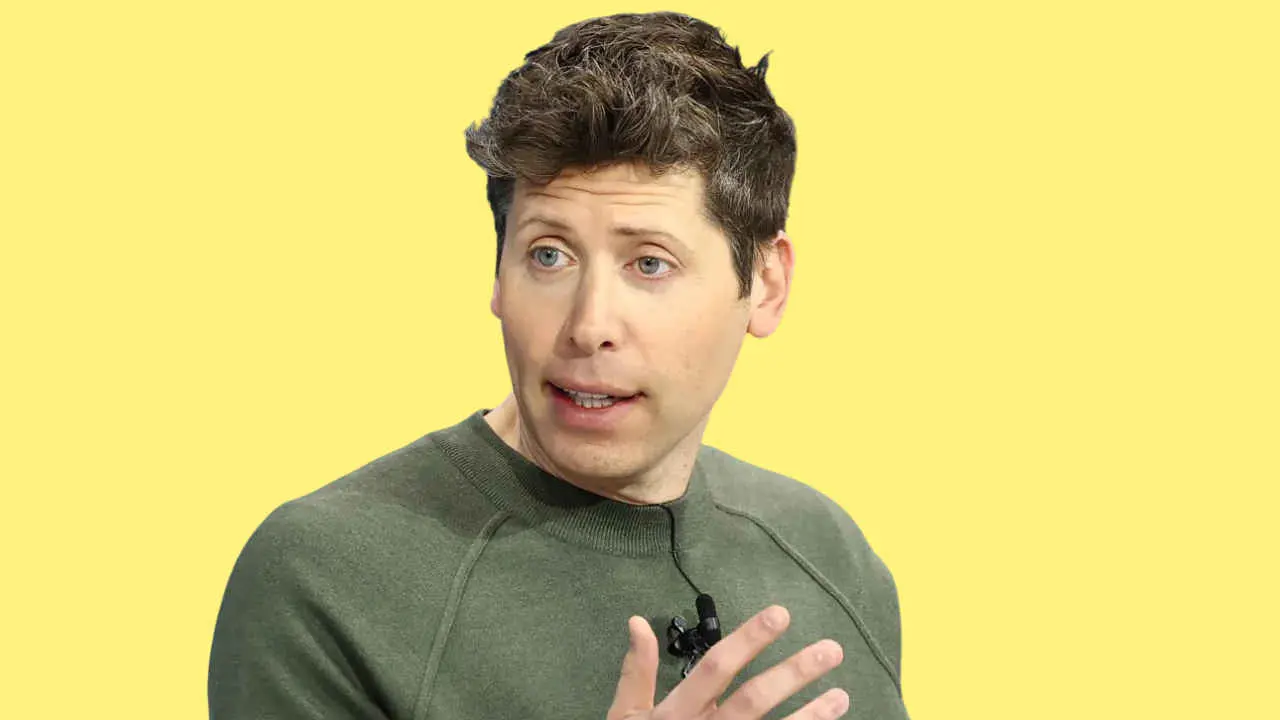
Source: Digit
Artificial Intelligence Becoming a Utility Raises Infrastructure Concerns
The path toward making AI utility a reality requires immense computing power and infrastructure that OpenAI currently lacks. AI companies sell "tokens"—units that models use to process and generate responses—and as demand scales, compute becomes finite.
1
This scarcity means companies must either charge more per unit or fail to meet demand. To avoid this outcome, OpenAI is building new data centers with partners including Microsoft and Oracle, while exploring massive global chip initiatives with investors like SoftBank.2
However, the AI infrastructure expansion faces significant hurdles. OpenAI recently backed out of a planned expansion to its Stargate project in Texas due to financing issues, signaling that funding for data center buildouts is starting to look shaky.1
Energy and Financial Costs Challenge AI Expansion Plans
Altman's choice to evoke energy costs proves particularly fraught, given that the AI industry has been responsible for skyrocketing energy costs across the country. Residents living near data centers have experienced this pain firsthand, though AI companies are at least starting to agree to fit the bill for these expenses.
1
The energy and financial costs of AI expansion have created a major pain point that extends beyond individual communities. OpenAI CFO Sarah Friar previously stated she expects a federal "backstop" to guarantee the company will be able to finance its massive and rapidly expanding data center infrastructure. Altman echoed these comments in a separate appearance, suggesting the government should serve as "the insurer of last resort" given AI's expected economic impact.1
While both executives later walked back suggestions that the government should treat them as "too big to fail," Altman's utility framing carries a tacit acknowledgement that government subsidies may be necessary, similar to how other utilities receive federal support.1
Related Stories

OpenAI CEO Describes Growing Role of AI in Workplaces
Sam Altman explained that AI tools are already completing tasks that once required hours of effort from skilled professionals, with software development showing this shift most clearly. AI systems increasingly help engineers write, test, and review code, while also supporting research, science, and other fields requiring detailed analysis.
2
Employees are beginning to spend less time on technical execution and more time guiding AI systems that perform the tasks. Altman believes AI will handle bigger tasks over time—systems that currently finish work taking a few hours could soon take on projects normally requiring several days or weeks. He revealed he personally uses AI when running OpenAI, asking AI tools for feedback on new product ideas or business plans before sharing them with his team.2
This growing reliance on metered service models and the need for electricity-like accessibility raises critical questions about who will ultimately pay for the infrastructure required to deliver intelligence as a utility.References
Summarized by

Navi
[1]
Related Stories
AI's Voracious Appetite: The Looming Energy Crisis in Tech's Quest for Compute Power
23 Sept 2025•Technology

Sam Altman Predicts Imminent AI Superintelligence, Sparking Debate on Future Impact
11 Jun 2025•Technology

OpenAI's Ambitious Plan to Build Massive AI Data Centers Sparks Energy Concerns
25 Sept 2024

Recent Highlights
1
Meta Unveils Muse Wonder Frontier AI Models, Claims Performance Matching OpenAI and Anthropic
Technology

2
IMF Report Warns AI Market Correction Could Spark Global Financial Crisis With $1.4T at Risk
Business and Economy

3
OpenAI Releases 722 AI-Generated Math Solutions, Triggering Existential Crisis in Mathematics
Technology

Recent Highlights
Today's Top Stories








Don’t drown in AI news. We cut through the noise - filtering, ranking and summarizing the most important AI news, breakthroughs and research daily. Follow topics that matter to you and stay ahead.


