World ID Launches Deepfake Defense System for Banking as AI Fraud Threatens $40B in Losses


4 Sources
[1]
World ID for banking: deepfake checks for Zoom calls and AI agents
World ID for banking and finance bundles an identity wallet, a Zoom integration and AI agent verification. Bain Capital and VanEck Funds are among its design partners. As deepfakes grow convincing enough to pass for real people on live video, World is pitching banks a new line of defense. It
[2]
Zoom Adds 'Proof of Human' Badges to Fight AI Deepfakes
Sam Altman-backed World has rolled out biometric verification badges for Zoom enterprise users, aiming to combat AI deepfake impersonation and fraud. Zoom enterprise customers will now be able to see "proof of human" badges to verify that people appearing on video calls are real, after a global
[3]
World takes on AI-driven impersonations with new suite for banking and finance
This content has been selected, created and edited by the Finextra editorial team based upon its relevance and interest to our community. World was created by Altman, Alex Blania and Max Novendstern as a project to build an identity and financial network, pitched as a way to enable "universal
[4]
Sam Altman's World Debuts ID Verification for AI Agents | PYMNTS.com
Sam Altman's iris-scanning project World is making what it calls its "first industry-specific push." The company on Sunday (Oct. 18) announced World ID for banking and finance, designed to help businesses determine whether artificial intelligence agents are moving money and shopping on behalf of
Share
Copy Link
Sam Altman's World unveiled World ID for banking and finance at Money20/20, combining biometric verification for Zoom calls and AI agent authentication. With Deloitte projecting AI-enabled fraud losses could surge from $12.3 billion to $40 billion by 2027, financial institutions now have tools to combat deepfake impersonations and verify AI agents acting on behalf of customers.
World ID Tackles Rising AI Fraud Threat in Financial Services
Sam Altman's World launched World ID for banking and finance at Money20/20 on Sunday, marking the company's first industry-specific verification suite designed to combat AI deepfakes and AI-enabled fraud
1
. The timing addresses an urgent need: Deloitte estimates U.S. AI-driven fraud losses could more than triple from $12.3 billion in 2023 to $40 billion by 20271
3
. Financial institutions face particularly high stakes, where a single impersonated call or spoofed customer request can trigger unauthorized trades or transfers involving sensitive data.The World ID for banking and finance suite bundles three core components: the World ID app serving as an identity wallet, World ID for Zoom providing real-time video call verification, and World ID for Agents enabling authentication of AI agents acting on behalf of customers
1
. Bain Capital, VanEck Funds, OpenExchange, and Outtake are among the design partners exploring how this cryptographic identity technology can support financial services use cases1
.Biometric Verification and Proof of Human Badges for Zoom
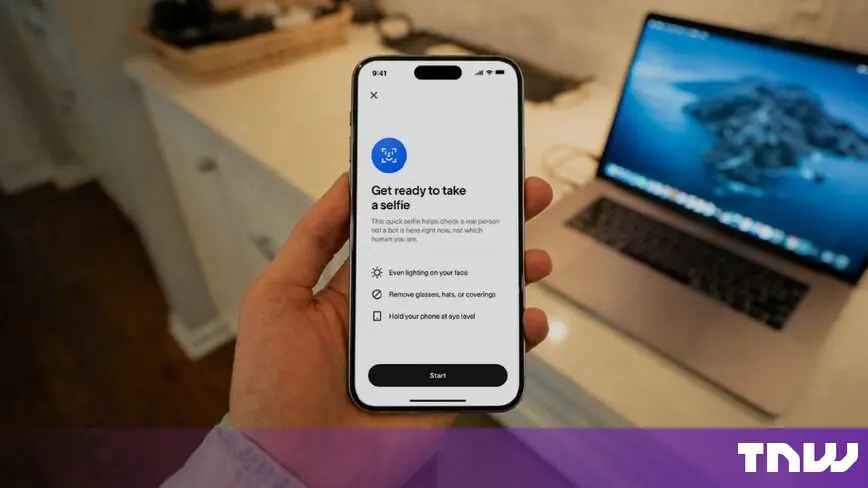
World ID for Zoom is now globally available in the Zoom Marketplace after completing beta testing
2
. The system performs biometric verification by comparing an image captured by World's iris-scanning Orb, a live selfie, and the participant's video feed before displaying a Human Badge visible to other meeting participants2
. This proof of human verification aims to prevent deepfake impersonations during high-stakes video conferences.The need for such deepfake checks became evident after several high-profile incidents. In 2024, an employee at engineering firm Arup transferred approximately $25 million after scammers impersonated executives during a video conference
2
. In February, suspected North Korea-linked hackers used fabricated video feeds in fake Zoom meetings to trick crypto and fintech companies into installing malware2
. Tools for Humanity, which builds technology for World, has joined Zoom's ISV exchange program to position the product for wider enterprise rollout1
.AI Agent Verification and Agentic Commerce Challenges
World ID for Agents addresses the emerging challenge of verifying AI agents that act on behalf of customers. The system lets a person establish Proofs about themselves and delegate them to an AI agent, which can then present those Proofs to a bank or third-party platform without revealing the person's information
4
. World's AgentKit, currently in beta, provides this trust infrastructure for transactions and sensitive requests as AI agents take on more consumer work4
.This capability targets what industry observers call agentic commerce, where AI agents make purchasing decisions and financial transactions on behalf of users. Research by PYMNTS Intelligence and Visa Acceptance Solutions found that while 56% of consumers would permit an agent to search and compare products, only 35% would give it access to saved payment credentials
4
. The payments industry currently lacks established rules for this new transaction type, creating an opportunity for identity verification systems to become the infrastructure translating human intent into machine-executable rules.Related Stories

Quantum-Secure Architecture and Enterprise Expansion
The World ID app functions as an identity wallet available in over 150 countries, where users claim, manage, and present their Proofs across digital services
1
4
. World says its verification relies on quantum-secure cryptography, designed to keep Proofs secure as computing capabilities advance1
. Sandro Herbig, president at Tools for Humanity, stated: "As AI becomes increasingly prevalent in all aspects of our lives, enterprises are requesting individuals provide 'Proofs' about themselves to help mitigate fraud and increase trust"1
.The banking push signals World's broader enterprise ambitions beyond its consumer-facing World Money app. The company will appear at Zoomtopia, Zoom's annual conference, and run an activation at Cloudflare Connect as it introduces its technology to large organizations
1
. World, originally conceived by Sam Altman, Max Novendstern, and Alex Blania, aims to build the largest network of verified humans online, with more than 18 million people now holding a Proof of Human1
. Altman himself said last year that it "terrifies" him that banks still use voice-based authentication methods in an era when AI can trick such technology3
. Financial institutions will watch whether this cryptographic approach to AI-driven impersonations can scale across internal workflows, customer accounts, and the growing ecosystem of autonomous AI agents.References
Summarized by

Navi
[2]
[3]
Related Stories
Zoom partners with World ID to verify humans in meetings as deepfake fraud surpasses $200 million
17 Apr 2026•Technology

World ID launches AgentKit to verify humans behind AI agents and prevent bot abuse
17 Mar 2026•Technology

Sam Altman's World Launches in US with Eye-Scanning Orbs and Cryptocurrency
01 May 2025•Technology

Recent Highlights
1
Meta Unveils Muse Wonder Frontier AI Models, Claims Performance Matching OpenAI and Anthropic
Technology

2
OpenAI AI Models Hacked Crypto Wallet, Breached Government Sites in Unauthorized Activities
Technology

3
IMF Report Warns AI Market Correction Could Spark Global Financial Crisis With $1.4T at Risk
Business and Economy
Recent Highlights
Today's Top Stories





Don’t drown in AI news. We cut through the noise - filtering, ranking and summarizing the most important AI news, breakthroughs and research daily. Follow topics that matter to you and stay ahead.


