Tinder adopts iris-scanning Orb to verify humans as AI bots proliferate across dating platforms


3 Sources
[1]
Gazing Into Sam Altman's Orb Now Proves You're Human on Tinder
Sam Altman's iris-scanning, humanity-verifying World project announced at an event in San Francisco on Friday that Tinder users around the globe can now put a digital badge on their profiles signaling to potential suitors that they're a real human, provided they've already stared into one of the
[2]
Tinder and Zoom offer 'proof of humanity' eye-scans to combat AI
Tinder will let users prove they are human and not robots by bringing advanced eye-scanning technology to the app amid rising fears over AI. Users of the dating app, as well as other major platforms such as video calling service Zoom, will be able to scan their irises to earn a "proof of humanity"
[3]
Tinder wants to check your humanity by gazing into an orb. Yes, you read that right
Staring into an orb to prove you are human is no longer science fiction. Online dating is already a trust minefield, and now Tinder wants to add an eyeball scan to the mix. The popular dating app has announced a global partnership with World, the biometric identity company founded by OpenAI's Sam
Share
Copy Link
Sam Altman's World project announced a global partnership with Tinder, allowing users to verify their humanity through iris scans. The biometric identity company also expanded to Zoom and Docusign as platforms seek solutions to distinguish real people from AI-powered fake accounts. The move addresses growing concerns about romance scams and deepfakes, though privacy concerns persist.
World ID Brings Iris Scan Verification to Major Platforms
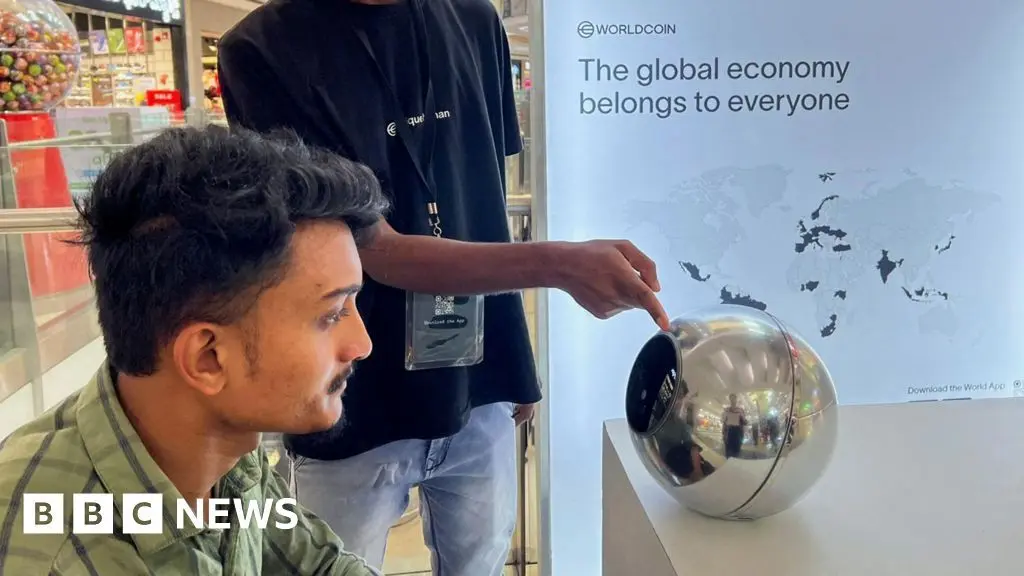
Sam Altman's World project announced a major expansion at its "Lift Off" event in San Francisco on Friday, bringing its iris-scanning identity verification technology to Tinder users globally
1
. The biometric identity company, co-founded by Altman and Alex Blania in 2019, now allows dating app users to obtain a digital badge on their profiles by staring into one of the startup's glossy white Orb devices and submitting to an iris scan . This global rollout follows a successful pilot project for Tinder identity verification that World previously conducted in Japan1
.
Source: BBC
Combating AI-Powered Fake Accounts Across Multiple Services
The expansion represents one of the biggest tests yet for World's bet that consumers will embrace biometric verification to distinguish humans from AI agents online. Tinder users who verify with their World ID will receive five free "boosts," a paid feature that increases profile visibility by up to ten times for 30 minutes
1
. Beyond dating apps, Zoom now allows meeting hosts to require World verification before participants join calls, directly addressing concerns about deepfakes2
. In 2024, a worker in Hong Kong lost $25 million after being deceived by video deepfakes of company executives, highlighting the urgency of such verification systems2
. Docusign also integrated the identity verification technology, letting users require World verification on contracts1
.The Rising Threat of AI Bots and Romance Scams
The partnerships address a growing problem across digital platforms. One Tinder user, Victoria Brooks, estimated that 30% of profiles she encountered were "AI-enhanced, emotionally manipulative, algorithmically-optimized romance scams" using not only fake photos but AI-generated scripts
2
. Romance scams cost people in the US more than $1 billion last year, according to the Federal Trade Commission2
. Research from Deloitte projects financial fraud through deepfake scams could reach $40 billion by 2027 in the US alone2
. Tiago Sada, Tools for Humanity's chief product officer, said the company views major platform partnerships as essential to making World mainstream, expressing particular interest in social media companies1
.How Proof of Humanity Technology Works
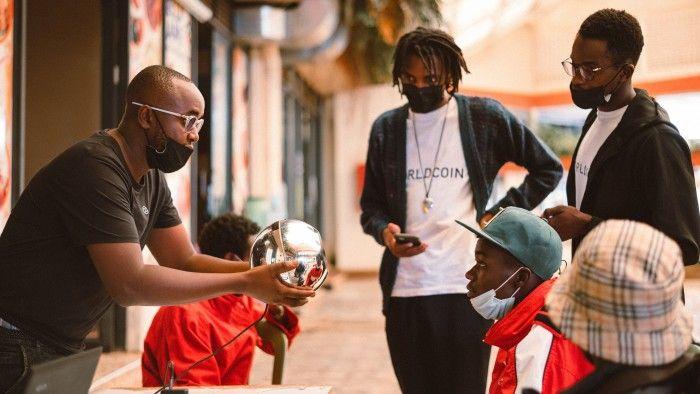
After a person scans their eyeball with one of World's Orbs, the startup creates a unique cryptographic key for each individual—their World ID
1
. World uses the iris for confirmation because it is the most unique part of a person, even more distinctive than a fingerprint2
. The company describes the verification technique as anonymous, requiring no personal information like names or addresses2
. This creates a private, decentralized method to verify people online without uploading government IDs across multiple websites1
. The company says 18 million people have now been verified with an Orb, up from 12 million last year, though it also claims 40 million people have signed up for the World app1
2
.
Source: Wired
Related Stories
Expanding Beyond Dating Apps: Concert Kit and Ticket Scalping
World also launched Concert Kit, a tool allowing artists to reserve concert tickets for verified humans, targeting bot-driven scalping problems that plague sites like Ticketmaster
1
. The feature will be tested on the upcoming Bruno Mars World Tour featuring Anderson .Paak, who is scheduled to play a verified-humans-only show under his alias DJ Pee .Wee in San Francisco1
3
. Reddit has also started testing World as a solution to help users identify bots versus real people1
.Privacy Concerns and Regulatory Resistance
Despite the expansion, World has struggled to achieve mainstream adoption and encountered resistance from governments probing suspected violations of data protection laws
1
. Governments in Brazil and several other countries have banned the technology over privacy concerns3
. The project was initially called Worldcoin and offered free cryptocurrency to scan irises1
. While World still offers a cryptocurrency token and wallet, it dropped "coin" from its name in 2024, shifting focus to human verification for the AI era1
. The company now offers Netflix and Apple TV subscription trials as incentives alongside crypto rewards1
. As companies like OpenAI—where Altman serves as CEO—and Anthropic push AI agents into the mainstream, the problem World was built to solve feels increasingly urgent, though whether handing iris data to a third party becomes standard practice remains contentious1
3
.References
Summarized by

Navi
Related Stories
Sam Altman's World Launches in US with Eye-Scanning Orbs and Cryptocurrency
01 May 2025•Technology

Sam Altman's World ID expands human verification through iris scans as bots flood the internet
25 Apr 2026•Technology

Zoom partners with World ID to verify humans in meetings as deepfake fraud surpasses $200 million
17 Apr 2026•Technology

Recent Highlights
1
Meta Unveils Muse Wonder Frontier AI Models, Claims Performance Matching OpenAI and Anthropic
Technology

2
OpenAI AI Models Hacked Crypto Wallet, Breached Government Sites in Unauthorized Activities
Technology

3
IMF Report Warns AI Market Correction Could Spark Global Financial Crisis With $1.4T at Risk
Business and Economy

Recent Highlights
Today's Top Stories





Don’t drown in AI news. We cut through the noise - filtering, ranking and summarizing the most important AI news, breakthroughs and research daily. Follow topics that matter to you and stay ahead.


