Sam Altman says AI won't shorten the workweek because humans secretly enjoy being busy


3 Sources
[1]
Sam Altman says AI won't shorten the workweek because humans secretly enjoy being busy
Serving tech enthusiasts for over 25 years. TechSpot means tech analysis and advice you can trust. A hot potato: Much like a cure for cancer, the shorter workweeks we were told AI would enable remain elusive. OpenAI boss Sam Altman has now explained why people aren't working four-hour days: it
[2]
Feeling stressed and overworked? Don't worry - OpenAI CEO Sam Altman thinks that we just love to work, and that's why AI won't result in a four-day working week
Good news everyone - it seems that the reason AI hasn't yet resulted in less work and more leisure time, as promised by multiple "evangelists" and AI "experts" is that we just love working too darn much. That's according to OpenAI CEO and America's next top (AI) model whisperer Sam Altman, who has
[3]
Sam Altman Says Even the Power of AI Will Never Lead to a Shorter Work Week
Can't-miss innovations from the bleeding edge of science and tech OpenAI CEO Sam Altman has some bad news to share: AI will never lead to a shorter work week -- despite having already ushered in the singularity, in his dubious telling. During an appearance on the "Relentless" podcast, the
Share
Copy Link
OpenAI CEO Sam Altman claims AI won't deliver the promised shorter workweek, arguing that humans secretly enjoy staying busy and competing with others. Speaking on the Relentless podcast, Altman dismissed hopes for four-hour workdays despite AI's productivity gains. His comments contrast sharply with studies showing four-day workweeks boost revenue by 8% while reducing worker stress by 35%.

Sam Altman Dismisses AI's Promise of Reduced Work Hours
OpenAI CEO Sam Altman has declared that AI won't shorten the workweek, despite years of promises that technological progress would enable people to work fewer hours. Speaking on the Relentless podcast with host Ti Morse, Altman explained that "technology, for a long time, has been promising people that they're going to work less and they're going to have all this leisure." However, he noted that "somehow we never get the promise of the four-hour workweek at mass scale in society," adding bluntly, "And I don't expect AI to change that."
1
The remarks represent a striking departure from the optimistic narratives that dominated early discussions about AI and productivity gains. While tech evangelists have long suggested that AI would free workers from menial tasks, Altman's perspective suggests a different reality is emerging. His comments arrive as over 124,255 employees have lost their roles across 252 companies in 2025 so far, according to Layoffs.fyi data.
2
Humans Enjoy Being Busy, According to OpenAI's Leader
Altman's reasoning centers on what he describes as humanity's innate desire for competition and achievement. "We always want more. We think of new things to do, to create for each other, to want for ourselves. It's like a relative game. People are very focused on how they're doing relative to other people," the CEO explained.
1
He believes that human expectations rise alongside capabilities, meaning that when technology makes existing work easier, people simply invent new products, ambitions, and problems to pursue.In a particularly provocative conclusion, Altman predicted that "we're all going to be much busier than we thought we were supposed to be in a post-superintelligence world. We're still going to complain about it, but secretly we're going to be happy."
3
This assertion assumes that everyone has fulfilling careers offering creative outlets, a perspective that overlooks workers in monotonous or soul-crushing jobs who might welcome reduced hours.AI's Impact on Work Hours Contradicts Four-Day Workweek Studies
Altman's claims stand in sharp contrast to real-world experiments with shorter work schedules. The UK, France, Japan, and Germany have conducted trials where companies implemented four-day workweeks without reducing pay. An aggregated global study found company revenue increased 8% during these four-day weeks, while worker fatigue dropped 10% and stress decreased approximately 35%. Overall productivity remained stable or even increased—by 40% in Microsoft Japan's case.
1
These findings suggest that AI and productivity gains could enable healthier work-life balance without sacrificing business outcomes. Vermont Senator Bernie Sanders has advocated for this approach, arguing that time saved through AI tools should benefit workers rather than simply filling their schedules with additional tasks. Yet the reality for many employees appears bleaker: AI is intensifying roles and contributing to widespread job burnout rather than liberation.
3
Related Stories
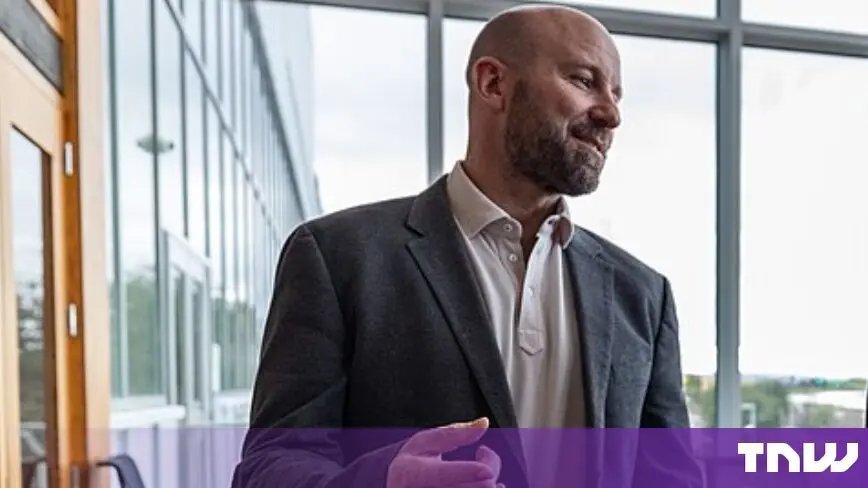
Shifting Narratives Around AI and Job Displacement
Altman's position on AI won't shorten the workweek represents part of a broader shift in how tech leaders discuss AI's societal impact. In May 2025, he criticized companies blaming job cuts on AI while acknowledging the technology has accountability in displacing human workers. "I would expect that the real impact of AI on jobs, in the next few years, to begin to be palpable," Altman stated, though he expressed confidence that "we'll find new kinds of jobs."
2
Days later, he said he would be "delighted to be wrong" about AI's effect on human roles, pushing back against predictions of a jobs apocalypse. Altman admitted that OpenAI has been "roughly right" on technological predictions since launching ChatGPT in 2022 but "pretty wrong" on social and economic implications.
2
More recently, he revealed that OpenAI's strategy focuses not on automating everything but on augmenting human decision-making, with the company expecting an AGI world by 2028.Societal Trade-Offs in the Post-Superintelligence Era
The disconnect between Altman's vision and worker well-being raises questions about who benefits from AI advancement. While he argues that humanity enjoys more leisure time and quality of life than any period in history, employees report that AI is forcing them to work harder, not less. Those who remain employed after layoffs often shoulder responsibilities of departed coworkers, compounding their challenges.
3
Psychiatrists note that the threat of AI-driven job displacement creates devastating psychological impacts even for workers who retain their positions. The assumption that increased workload will ultimately make people "happy" feels disconnected from these realities, particularly coming from someone whose company has played a significant role in reshaping the job market. As the post-superintelligence era approaches, the gap between technological capabilities and human expectations continues widening, with unclear resolution in sight for workers seeking the promised benefits of AI innovation.
References
Summarized by

Navi
Related Stories
AI Workloads Push Tech Employees to 90-Hour Workweeks Despite Promises of Shorter Schedules
10 Aug 2026•Business and Economy

Tech CEOs backtrack on AI job apocalypse as hype meets reality and investment questions mount
11 Jun 2026•Business and Economy

Harvard study reveals AI brain fry: Workers face mental fatigue managing multiple AI tools
06 Mar 2026•Business and Economy

Recent Highlights
1
Microsoft and Nvidia Launch Surface Laptop Ultra: A $2,599 AI-Ready PC With RTX Spark Chip
Technology

2
OpenAI Releases 722 AI-Generated Math Papers on GitHub, Igniting Fury Among Mathematicians
Science and Research

3
Trump Consulted Grok AI Before Ordering Venezuela Invasion and Capture of Nicolás Maduro
Policy and Regulation

Recent Highlights
Today's Top Stories









Don’t drown in AI news. We cut through the noise - filtering, ranking and summarizing the most important AI news, breakthroughs and research daily. Follow topics that matter to you and stay ahead.


