Samsung Launches PM9E1: A High-Performance SSD Optimized for AI Applications


8 Sources
[1]
Samsung Begins Mass Production of PM9E1 Gen5 SSD, Featuring 8th Gen V-NAND With Up To 14.5 GB/s Speeds
The Samsung PM9E1 Gen5 SSD will bring blazing-fast transfer speeds of up to 14.5 GB/s in SQ Read and up to 13 GB/s in SQ Write. Samsung has begun mass-producing its fastest Gen5 SSD to date. The announcement was made in a blog post, explaining the features and specifications of the PM9E1 Gen5 SSD,
[2]
Samsung Initiates Mass Production of PM9E1 PCIe 5.0 SSD
Samsung Electronics has commenced mass production of the PM9E1, a PCIe 5.0 solid-state drive (SSD) designed to meet the demanding requirements of artificial intelligence (AI) applications in personal computers. The PM9E1 leverages Samsung's proprietary 5-nanometer (nm) controller and
[3]
Samsung Starts Mass Production of Industry's Most Powerful PC SSD Optimal for AI Applications
Integrating Samsung's 5nm controller and eighth-generation V-NAND, PM9E1 provides unmatched performance and power efficiency suitable for AI PCs Sequential read and write speeds improved more than two times compared to previous generation, reaching up to 14.5GB/s and 13GB/s, respectively Samsung
[4]
Samsung's New SSD is Designed for AI - Phandroid
Samsung recently announced that it has begun production on the PM9E1, a PCle 5.0 SSD built with Samsung's own in-house 5nm-based controller and eighth-generation V-NAND (V8) technology. Samsung claims that the PM9E1 provides improved performance and power efficiency for on-device AI PCs. The PM9E1
[5]

Samsung Electronics starts mass production of industry-leading SSD for AI computers
This image provided by Samsung Electronics shows the company's industry-leading PM9E1 SSD product, Oct. 4. Yonhap Samsung Electronics said Friday it has begun mass production of its latest industry-leading solid-state drive (SSD) product optimal for usage in powerful artificial intelligence
[6]

Samsung begins mass production of SSDs for AI computers
SEOUL (BERNAMA) - Samsung Electronics Co said yesterday it has begun mass production of its latest industry-leading solid-state drive (SSD) product optimal for usage in powerful artificial intelligence (AI) personal computers. Samsung said the PM9E1 SSD, which boasts the industry's highest
[7]

Samsung Electronics Begins Mass Production of New SSD for AI PCs
Samsung Electronics has begun mass production of a new solid-state drive that stores and transfers data for artificial-intelligence personal computers. The South Korean tech giant said Friday that its PM9E1 SSD can be "an optimal solution for on-device AI PCs" thanks to enhanced data-transfer
[8]

Just in time for Black Friday? Samsung may be preparing for launch of 990 Pro successor -- PM9E1 SSD is its first PCIe 5.0 SSD but it isn't aimed at end users
Samsung announced SSD, then mysteriously removed all mentions Samsung recently announced that its PM9E1 NVMe Gen 5 SSD has entered mass production. The initial press release was pulled shortly after publication, but the details were later republished by TechPowerUp. The PM9E1 is the successor to
Share
Copy Link
Samsung has begun mass production of the PM9E1, a PCIe 5.0 SSD designed for AI-enabled PCs. This new SSD offers improved performance, capacity, and power efficiency, positioning Samsung at the forefront of storage solutions for the emerging on-device AI market.

Samsung Unveils PM9E1: A Next-Generation SSD for AI-Enabled PCs
Samsung Electronics has announced the mass production of its latest solid-state drive (SSD), the PM9E1, designed to meet the demanding requirements of artificial intelligence (AI) applications in personal computers
1
2
3
. This new PCIe 5.0 SSD represents a significant leap in storage technology, offering enhanced performance, increased capacity, and improved power efficiency compared to its predecessor.Cutting-Edge Technology and Performance
The PM9E1 is built on Samsung's proprietary 5-nanometer (nm) controller and eighth-generation V-NAND (V8) technology
1
3
. This advanced architecture enables the SSD to achieve impressive sequential read and write speeds of up to 14.5 gigabytes per second (GB/s) and 13 GB/s, respectively1
2
3
. These speeds, more than double those of the previous generation, allow for rapid data transfer in data-intensive AI tasks.Capacity and Power Efficiency
Samsung offers the PM9E1 in various storage capacities, including 512 gigabytes (GB), 1 terabyte (TB), 2 TB, and 4 TB
1
3
. The 4 TB option is particularly suitable for users requiring substantial storage for AI-generated content, high-resolution videos, and resource-intensive applications3
. Additionally, the PM9E1 boasts over 50% improvement in power efficiency, contributing to extended battery life for portable AI-enabled devices2
3
.Optimized for AI Applications
The PM9E1's high-speed data transfer capabilities make it ideal for handling large AI models. For instance, it can transfer a 14 GB large language model (LLM) from the SSD to dynamic random-access memory (DRAM) in less than a second
2
3
. This rapid data access is crucial for on-device AI processing, where quick response times are essential.Related Stories

Enhanced Security Features
Security has been a key focus in the development of the PM9E1. Samsung has implemented the Security Protocol and Data Model (SPDM) version 1.2, which incorporates technologies such as Secure Channel, Device Authentication, and Firmware Tampering Attestation
1
2
3
. These measures are designed to mitigate supply chain risks, including the forgery or manipulation of stored data during manufacturing and distribution processes.Market Impact and Future Plans
YongCheol Bae, Executive Vice President of Memory Product Planning at Samsung Electronics, emphasized the PM9E1's role in the growing on-device AI era, stating that it will "offer a robust foundation for global customers to effectively plan their AI portfolios"
3
. Samsung plans to expand its advanced SSD offerings to global PC manufacturers and expects to launch PCIe 5.0-based consumer products in the future, aiming to solidify its leadership in the on-device AI market3
5
.As the demand for AI-capable devices continues to grow, Samsung's PM9E1 positions the company at the forefront of storage solutions for this emerging market. The combination of high performance, large capacity, and enhanced security features makes the PM9E1 a significant development in SSD technology, potentially accelerating the adoption of AI-enabled PCs and applications.
References
Summarized by

Navi
[1]
[3]
[4]
Related Stories
Samsung Begins Mass Production of Fastest PCIe 5.0 SSD: PM9E1 with 14.5 GB/s Read Speeds
20 Sept 2024

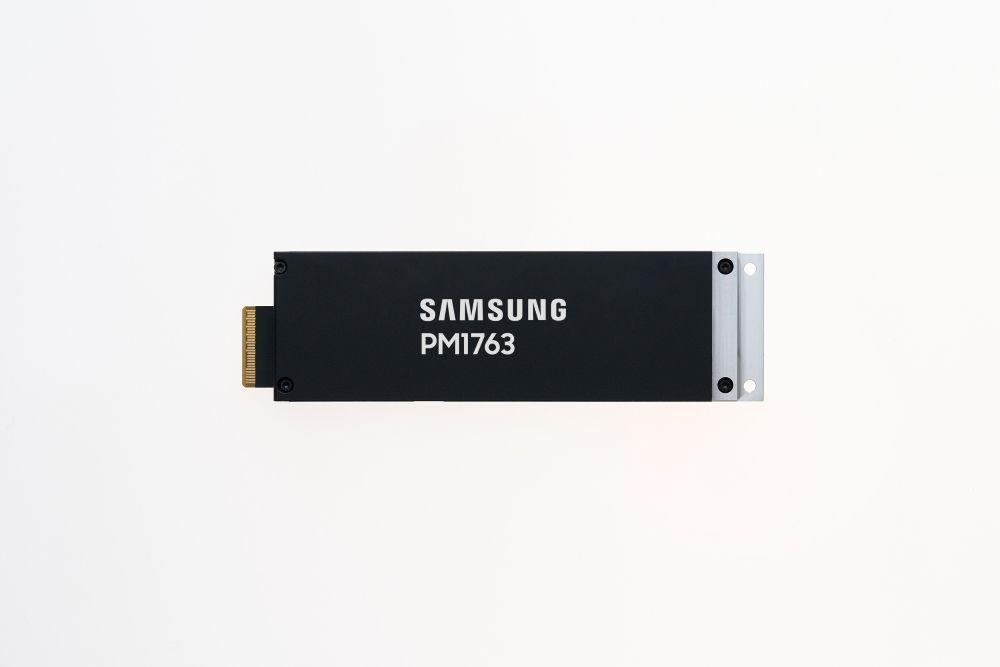
Samsung starts mass production of PM1763 PCIe 6.0 SSD with 28.4GB/s speeds for AI data centers
08 Jul 2026•Technology
Samsung Unveils Industry's First Automotive SSD with 8th-Generation V-NAND Technology
24 Sept 2024

Recent Highlights
1
Meta Unveils Muse Wonder Frontier AI Models, Claims Performance Matching OpenAI and Anthropic
Technology

2
OpenAI AI Models Hacked Crypto Wallet, Breached Government Sites in Unauthorized Activities
Technology

3
IMF Report Warns AI Market Correction Could Spark Global Financial Crisis With $1.4T at Risk
Business and Economy

Recent Highlights
Today's Top Stories










Don’t drown in AI news. We cut through the noise - filtering, ranking and summarizing the most important AI news, breakthroughs and research daily. Follow topics that matter to you and stay ahead.


