5 Sources
[1]
Samsung Unveils Industry's Fastest UFS 5.0 Solution for Next-Gen On-Device AI Applications
Samsung's UFS 5.0 solution achieves the industry's highest data transfer speed of 10.8GB/s, enabling faster storage and processing in mobile memory Enhanced power efficiency and smaller package to provide optimal mobile AI experiences Samsung Electronics, the world leader in advanced memory technology today announced that, for the first time in the industry, it has developed the industry's fastest Universal Flash Storage (UFS) 5.0 solution, which will help enable seamless and highly efficient AI services on future mobile devices. The milestone sets a new benchmark for the next-generation mobile memory market as the enhanced performance is expected to allow mobile device users with significantly reduced latency and faster response times when running large language models (LLMs) in on-device AI environments. "In the era of on-device AI, storage devices are evolving into a key driver defining AI experiences," said Jangseok Choi, head of Memory Product Planning at Samsung Electronics. "As we successfully move beyond the development stage of the industry's first UFS 5.0 solution, Samsung is setting a new standard for storage on the go and will continue to drive innovation for the next-generation mobile platform market." Generative AI is rapidly shifting from the cloud to the device, driving a surge in the scale of data required for local processing. As a result, storage is evolving from a medium used primarily to store data to core infrastructure that supports AI computation. Samsung's UFS 5.0 integrates the latest embedded memory interface standard from JEDEC, achieving unparalleled performance levels with the industry's highest bandwidth of up to 10.8 gigabytes per second (GB/s). The new storage solution delivers a sequential read speed of up to 10.8 GB/s and a sequential write speed of up to 9.5 GB/s, speeds that are respectively more than twice as fast as those of the previous UFS 4.1 standard. This significant advancement enables much faster storage and processing of large data for on-device AI applications. Power efficiency in Samsung's UFS 5.0 is also improved by more than 40% compared to the company's UFS 4.1 solution. This is achieved by implementing a number of new innovations, including clock gating and multi-voltage technologies. These enhancements help to considerably reduce the power required to transfer the same amount of data, drastically lowering overall power consumption and extending the battery life of next-generation mobile devices. Samsung has engineered the UFS 5.0 solution into an ultra-compact package measuring just 7.5mm x 13mm x 0.9mm -- making it 16.7% smaller than its predecessor. This form factor significantly boosts design flexibility and internal space utilization for a wide range of applications, including mobile, wearable and extended reality (XR) devices. Samsung will begin mass production of its UFS 5.0 in the fourth quarter of this year in a variety of capacities up to one terabyte (TB). Through this breakthrough in UFS 5.0 technology, Samsung is staying ahead of industry needs and plans to scale up supply to meet the growth of next-generation device markets -- ranging from flagship smartphones to XR headsets and AI wearables.
[2]
Samsung's new UFS 5.0 chip brings faster on-device AI and longer battery life for your smartphone
Samsung just unveiled its fastest UFS 5.0 storage chip yet, built specifically with your phone's AI features in mind. It hits a data transfer speed of 10.8GB per second, which should make on-device AI feel noticeably snappier for you. Why storage speed actually matters for your AI experience AI has been steadily moving away from the cloud and straight onto your device, which requires more local storage than before. Samsung says storage chips are quickly becoming core infrastructure for AI, not just a spot to dump your photos and apps. The new UFS 5.0 chip delivers read speeds up to 10.8GB per second and write speeds up to 9.5GB per second, more than double the previous UFS 4.1 standard. In plain terms, that means way less lag and faster responses whenever your phone runs AI models locally, without needing to ping a server. UFS 5.0 is a smaller chip with better battery life Samsung also improved power efficiency by more than 40% compared to its UFS 4.1 chip, using new clock gating and multi voltage technology to cut down on energy use. That should help your battery last longer even when your phone is grinding through heavier AI tasks all day. On top of that, the physical chip itself shrank to just 7.5mm x 13mm x 0.9mm, which is about 16.7% smaller than before, giving device makers more flexibility with internal design. Samsung plans to kick off mass production of the UFS 5.0 chip in the fourth quarter of this year, with capacities going all the way up to 1TB. Recommended Videos This chip is clearly aimed at flagship smartphones, wearables, and XR headsets. So get ready because on-device AI is about to become a much bigger part of how your everyday gadgets actually work. If faster storage has you curious about Samsung's next chip lineup, the company has also confirmed the Exynos 2700, which may be heading towards the Galaxy S27.
[3]
Samsung's UFS 5.0 Doubles Read Speeds To 10.8 GB/s, And Qualcomm's Snapdragon 8 Elite Gen 6 Has Already Locked In Support
Samsung has just made on-device AI substantially more practical by unveiling the next-gen UFS 5.0 storage solution, with read and write speeds that are over twice as fast as those of the previous UFS 4.1 standard. Samsung's UFS 5.0 storage solution "delivers a sequential read speed of up to 10.8 GB/s and a sequential write speed of up to 9.5 GB/s" According to Samsung, its UFS 5.0 storage solution "integrates the latest embedded memory interface standard from JEDEC, achieving unparalleled performance levels with the industry's highest bandwidth of up to 10.8 gigabytes per second (GB/s)." The South Korean tech giant claims that its cutting-edge storage standard "delivers a sequential read speed of up to 10.8 GB/s and a sequential write speed of up to 9.5 GB/s, speeds that are respectively more than twice as fast as those of the previous UFS 4.1 standard." This bandwidth unlocks much faster processing of a much larger context window, allowing on-device AI models to truly come of age. But that's not all. Samsung claims that UFS 5.0 is around 40 percent more energy efficient than the UFS 4.1 standard, with this feat made possible by "implementing a number of new innovations, including clock gating and multi-voltage technologies." Finally, do note that Samsung has managed to package its cutting-edge storage solution in an ultra-compact form factor that measures just 7.5mm x 13mm x 0.9mm, rendering it 16.7 percent smaller than its predecessor. Mass production for capacities of up to 1TB is now slated to begin in the fourth quarter of 2026. Meanwhile, the tipster Reptalica has just disclosed that SM8975 and SM8950, which are codenames for Qualcomm's Snapdragon 8 Elite Gen 6 Pro and Snapdragon 8 Elite Gen 6 chips, respectively, will sport Samsung's UFS 5.0 storage solution. It is also quite likely that MediaTek's Dimensity 9600 Pro and Samsung's in-house Exynos 2700 will also support this standard. Follow Wccftech on Google to get more of our news coverage in your feeds.
[4]
Samsung announces development of UFS 5.0 storage solution
Samsung has announced the development of its Universal Flash Storage (UFS) 5.0 solution, designed to support on-device artificial intelligence (AI) applications in future mobile devices. The announcement comes amid an industry-wide shift of generative AI processing from cloud networks to local hardware, which has increased the data throughput demands on mobile memory systems. Performance and Specifications The new storage solution integrates the latest JEDEC embedded memory interface standards. According to specifications released by the company, UFS 5.0 achieves: * Sequential Read Speed: Up to 10.8 gigabytes per second (GB/s) * Sequential Write Speed: Up to 9.5 GB/s These data transfer rates represent a two-fold increase compared to the previous UFS 4.1 standard, aimed at reducing latency when processing large language models (LLMs) locally. Power Efficiency and Form Factor Samsung reports a 40% improvement in power efficiency over UFS 4.1. This reduction in energy consumption per data transfer is attributed to the implementation of clock gating and multi-voltage technologies, which are intended to optimize battery life in mobile hardware. The reduced physical footprint is designed to provide hardware manufacturers with greater design flexibility and internal space allocation across various product categories. Production Timeline and Market Deployment Mass production of the UFS 5.0 chips is scheduled to begin in the fourth quarter of this year. Samsung plans to distribute the storage solutions in multiple capacities, targeting integration into flagship smartphones, extended reality (XR) headsets, and wearable devices. Jangseok Choi, head of Memory Product Planning at Samsung Electronics, said: In the era of on-device AI, storage devices are evolving into a key driver defining AI experiences. As we successfully move beyond the development stage of the industry's first UFS 5.0 solution, Samsung is setting a new standard for storage on the go and will continue to drive innovation for the next-generation mobile platform market.
[5]
Samsung unveils industry's 1st UFS 5.0 memory optimized for on-device AI - The Korea Times
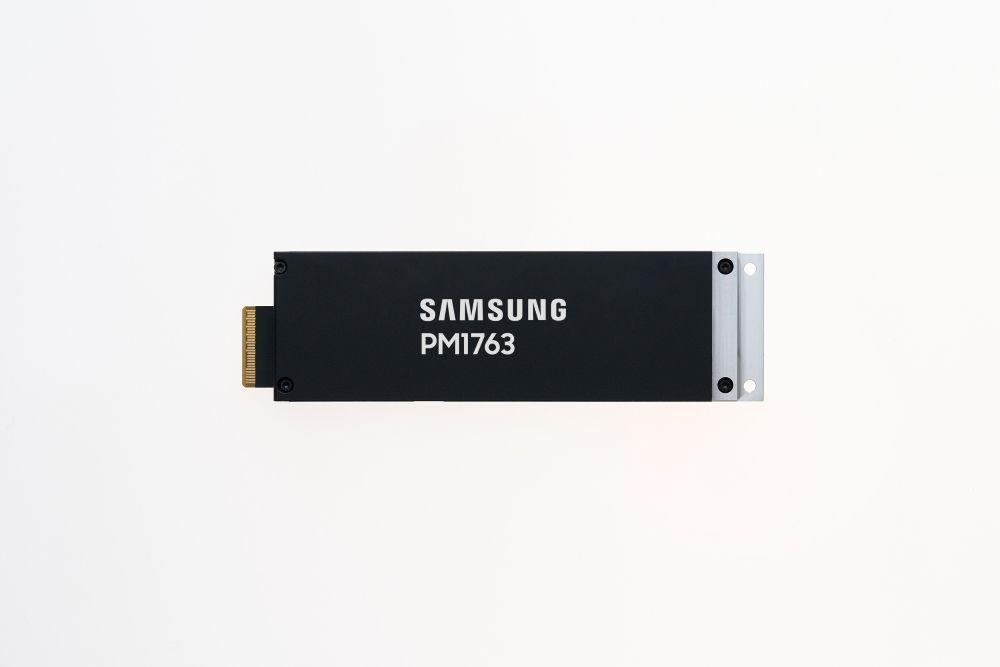
Samsung Electronics unveiled its latest universal flash storage 5.0 solution / Courtesy of Samsung Electronics Samsung Electronics unveiled its latest universal flash storage (UFS) 5.0 solution on Tuesday, targeting surging demand for faster and more power-efficient storage as artificial intelligence (AI) workloads increasingly shift from the cloud to on-device processing. The development comes as generative AI increasingly shifts from cloud-based computing to on-device processing, driving a surge in the volume of data that must be processed locally. As a result, data storage is evolving beyond its traditional role of storing information into critical infrastructure supporting AI workloads. The company said its UFS 5.0 sets a new benchmark for mobile memory, with improved performance expected to cut latency and speed up response times for large language models running on-device. "In the era of on-device AI, storage devices are evolving into a key driver defining AI experiences," said Choi Jang-seok, Samsung Electronics' head of memory product planning. "As we successfully move beyond the development stage of the industry's first UFS 5.0 solution, Samsung is setting a new standard for storage on the go and will continue to drive innovation for the next-generation mobile platform market." The development comes as generative AI applications are becoming more capable of running directly on smartphones and other devices, increasing the amount of data that must be processed locally. As a result, storage chips are evolving from simple repositories for data into critical infrastructure supporting AI workloads and user experiences. The solution integrates the latest embedded memory interface standard from the semiconductor consortium Joint Electron Device Engineering Council and is built on Samsung's ninth-generation vertical NAND, achieving data transfer speeds of up to 10.8 gigabytes per second (Gbps). It also delivers a sequential write speed of up to 9.5 Gbps, more than twice as fast as the previous UFS 4.1 solution. Samsung said the bandwidth puts UFS 5.0 among the highest-performing mobile storage solutions available, enabling significantly faster storage and processing of large volumes of data for on-device AI applications. The latest solution's power efficiency is also improved by more than 40 percent compared to the UFS 4.1 solution by implementing a number of new innovations, including clock gating and multivoltage technologies. Clock gating reduces power use by turning off signals to idle parts of a chip, while multivoltage technology lowers energy consumption and heat by supplying only the necessary power to each circuit. These enhancements help to considerably reduce the power required to transfer the same amount of data, drastically lowering overall power consumption and extending the battery life of next-generation mobile devices. Samsung has engineered the UFS 5.0 solution into an ultra-compact package, about 16.7 percent smaller than the predecessor. The smaller form factor is designed to give device makers more flexibility and internal space for a wide range of applications, including mobile, wearable and extended reality (XR) devices. Samsung will begin mass production of its UFS 5.0 in the fourth quarter of this year in a variety of capacities up to one terabyte and expand its supply beyond flagship smartphones to XR headsets and AI wearables. Meanwhile, Samsung's sixth-generation high-bandwidth memory (HBM) chip, HBM4, has surpassed $1 billion in sales, according to industry sources, driven by surging demand just four months after the company became the first in the world to begin mass production in February. HBM4 chips are designed for next-generation AI accelerators, including Nvidia's Vera Rubin platform. Nvidia's graphics processing units are widely used to power generative AI applications. Samsung is expected to significantly increase HBM4 shipments through the end of the year, with annual sales projected to surpass $10 billion in 2026.
Share
Copy Link
Samsung has developed the industry's first UFS 5.0 storage solution, achieving unprecedented data transfer speeds of 10.8GB/s—more than double its predecessor. The breakthrough addresses the growing demand for faster on-device AI processing as generative AI shifts from cloud to local hardware. With 40% improved power efficiency and a 16.7% smaller form factor, the technology targets flagship smartphones, XR headsets, and AI wearables set for mass production in Q4 2025.
Samsung Electronics has announced the development of Samsung UFS 5.0, the industry's first next-generation storage standard designed specifically to handle the intensive demands of on-device AI applications. The UFS 5.0 storage solution achieves a data transfer speed of up to 10.8 gigabytes per second (GB/s) for sequential read speeds and up to 9.5GB/s for write speeds—performance metrics that represent more than double the capabilities of the previous UFS 4.1 standard
1
. This significant leap in bandwidth addresses a critical bottleneck as generative AI processing rapidly migrates from cloud networks to local hardware, fundamentally transforming storage from a passive data repository into core infrastructure for AI computation.The UFS 5.0 storage chip integrates the latest embedded memory interface standard from JEDEC and is built on Samsung's ninth-generation vertical NAND technology
5
. According to Jangseok Choi, head of Memory Product Planning at Samsung Electronics, "In the era of on-device AI, storage devices are evolving into a key driver defining AI experiences"4
. The enhanced performance is expected to deliver significantly reduced latency and faster response times when running large language models in on-device AI environments, making AI model processing feel noticeably snappier for users2
.Beyond raw speed, the UFS 5.0 memory solution delivers improved power efficiency of more than 40% compared to Samsung's UFS 4.1 solution
1
. Samsung achieved this through implementing clock gating and multi-voltage technologies—innovations that considerably reduce the power required to transfer the same amount of data. Clock gating works by turning off signals to idle parts of the chip, while multi-voltage technology lowers energy consumption and heat by supplying only the necessary power to each circuit5
. These enhancements drastically lower overall power consumption and extend battery life in next-generation mobile devices, a crucial advantage as faster on-device AI tasks demand more energy throughout the day2
.Samsung has engineered the UFS 5.0 into an ultra-compact package measuring just 7.5mm x 13mm x 0.9mm, making it 16.7% smaller than its predecessor
1
. This reduced physical footprint significantly boosts design flexibility and internal space utilization for device manufacturers across a wide range of applications, including flagship smartphones, wearable devices, and XR headsets4
. The smaller form factor becomes particularly important as manufacturers pack increasingly sophisticated AI capabilities into compact form factors.Related Stories
Samsung will begin mass production of its UFS 5.0 in the fourth quarter of this year, offering capacities up to 1TB
1
. Industry sources indicate that Qualcomm Snapdragon 8 Elite Gen 6 Pro and Snapdragon 8 Elite Gen 6 chips—identified by codenames SM8975 and SM8950—will support the new storage standard3
. MediaTek's Dimensity 9600 Pro and Samsung's in-house Exynos 2700 are also likely to incorporate UFS 5.0 support3
.The development signals a broader industry shift as next-generation on-device AI applications require substantially more local data processing capacity. As generative AI becomes more capable of running directly on smartphones and other devices without pinging servers, the volume of data that must be processed locally continues to surge
2
. Samsung plans to scale up supply to meet the growth of next-generation device markets, expanding beyond flagship smartphones to XR headsets and AI wearables1
. With this bandwidth unlocking much faster processing of larger context windows, the technology allows on-device AI models to truly mature3
, positioning storage as a defining factor in how users experience AI on their everyday gadgets.Summarized by
Navi
[1]
[2]
1
Startups

2
Technology

3
Policy and Regulation