Samsung Launches Vision AI Companion: Transforming TVs into Conversational AI Hubs


8 Sources
[1]
Samsung's new TV remote lets you talk with AI about almost anything
The AI-powered feature is available only in 2025 Samsung TV models. Samsung is integrating its next-generation AI assistant directly into its 2025 TVs, featuring a dedicated AI button on the remote that provides access to conversational assistance -- not just standard voice commands. Called Vision
[2]
Samsung brings a generative AI-powered Bixby to its TVs
Samsung is rolling out new conversational AI across its 2025 TVs that lets users ask questions about what's on the screen and beyond it. First announced in September, the generative AI update is rolling out now with support for several languages. Vision AI Companion is based on an upgraded,
[3]
These Samsung TVs are getting a software overhaul
Samsung just announced its new Vision AI Companion platform. This is transforming the familiar TV screens from passive viewing devices into a connected, conversational hub for the entire household. Users will be able to communicate with their televisions with just conversational dialogue. The core
[4]
Your Samsung TV just got a personality - and it knows what you're watching, what you need, and when to talk
The AI is angling to make the TV a regular hub for tasks well beyond finding a show to watch. Samsung has officially launched its Vision AI Companion for its new smart TVs, fusing several AI models into potentially the de facto source of answers and assistance in your home. The blend of Samsung
[5]

Samsung turns its TVs into AI-powered home assistants with Vision AI Companion
Samsung has introduced Vision AI Companion, a generative AI-powered evolution of Bixby for its 2025 TVs, delivering on-screen, real-time assistance to address user queries about current content and broader household needs. The Vision AI Companion operates as a conversational layer integrated
[6]

Samsung Starts Rolling Out Vision AI Companion Across Its 2025 TVs
Samsung has begun rolling out its new Samsung Vision AI Companion across its 2025 TV lineup. Announced earlier at Internationale Funkausstellung Berlin (IFA) 2025 in Berlin, this feature allows viewers to ask questions about on-screen content and more. The Samsung Vision AI Companion is built on
[7]

Samsung rolls out Vision AI Companion to 2025 Smart TVs and Monitors
Samsung has introduced Vision AI Companion, a platform that brings conversational AI to household televisions. It enables users to ask questions, receive customized recommendations, and manage tasks using natural voice commands and two-way dialogue. Vision AI Companion is designed for shared use
[8]

Samsung introduces Vision AI Companion, a conversational AI platform for Smart TVs, monitors: Details
It will be available across 2025 Samsung TV and smart monitor lineup. Samsung officially unveiled Vision AI Companion (VAC) at IFA 2025 in September. VAC is a new conversational AI platform aimed at everyday users who want more intuitive control and interaction with their TVs. The pitch is that
Share
Copy Link
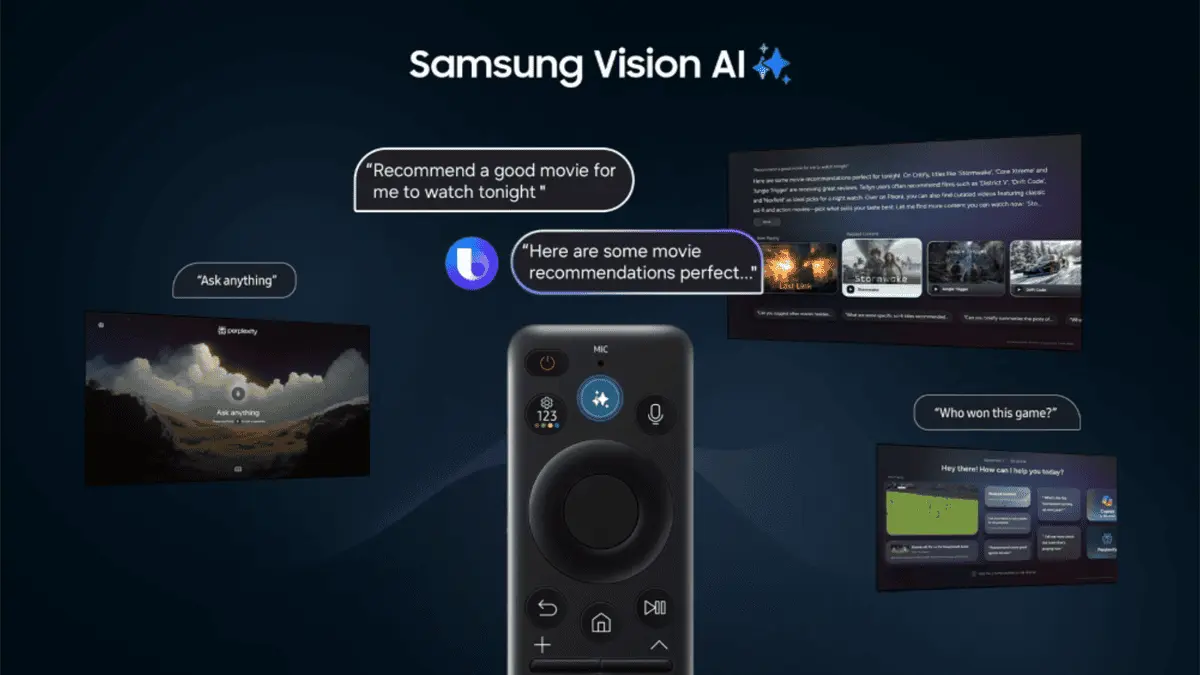
Samsung introduces Vision AI Companion across its 2025 TV lineup, featuring an upgraded Bixby powered by multiple AI models including Microsoft Copilot and Perplexity. The system enables natural conversations about on-screen content and beyond, with real-time translation and visual responses.
Samsung Unveils Vision AI Companion for 2025 TV Lineup
Samsung has officially launched Vision AI Companion, a generative AI-powered evolution of its Bixby assistant, exclusively for its 2025 television models. The system transforms traditional TV viewing into an interactive, conversational experience by integrating multiple AI models including Microsoft Copilot and Perplexity
1
2
.
Source: TechRadar
Advanced Conversational Capabilities
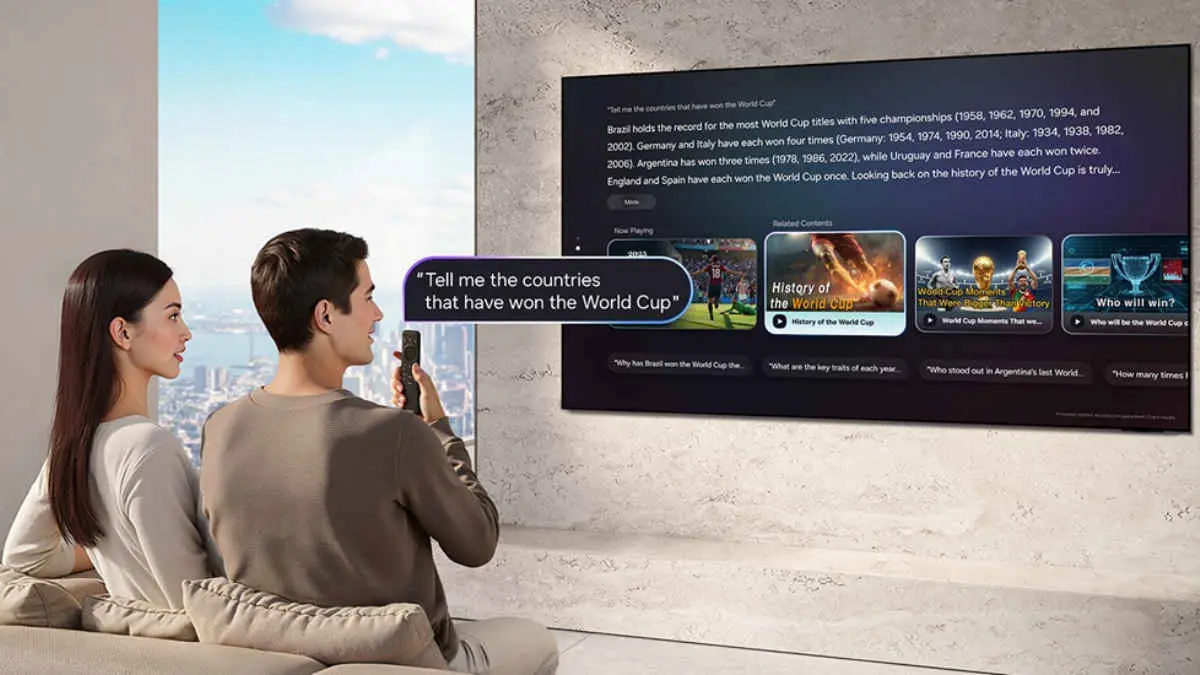
The Vision AI Companion enables natural, two-way dialogue that extends far beyond traditional voice commands. Users can press a dedicated AI button on their Samsung TV remote to engage with the system, asking questions about on-screen content such as identifying actors, artwork, or sports scores. The AI maintains conversational context, allowing for follow-up questions without requiring users to restate previous queries
3
4
.
Source: Digit
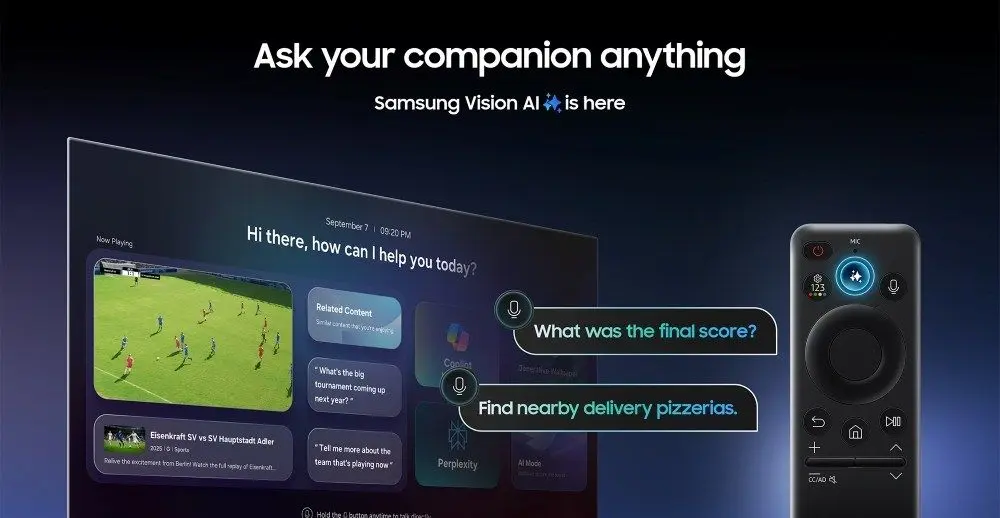
The system's capabilities extend beyond content recognition to include TV and movie recommendations, cooking advice, travel tips, and local restaurant discovery. Samsung positions this as the world's first multi-AI agent TV platform, combining various large language models to provide more varied and comprehensive responses
3
.Visual Integration and Real-Time Features
Unlike traditional voice assistants, Vision AI Companion provides visual responses directly on the TV screen, displaying information alongside ongoing content without interrupting playback. The system includes Live Translation capabilities, offering real-time translation of on-screen dialogue and conversations—a feature Samsung describes as essential for global families and international content viewers
1
3
.
Source: The Verge
Additional features include Generative Wallpaper, which creates dynamic, personalized visuals that adapt to user preferences and moods, and AI-powered picture and audio optimization through AI Picture, AVA Pro, and AI Upscaling Pro
3
.Related Stories




Market Positioning and Availability
Vision AI Companion is available across Samsung's entire 2025 lineup, including Neo QLED, Micro LED, OLED, QLED, Smart Monitors, and The Frame lifestyle displays. The system supports 10 languages, including English, Korean, Spanish, French, German, Italian, and Portuguese
2
5
.This launch positions Samsung competitively against recent AI upgrades from Amazon's Alexa+ for Fire TVs and Roku's AI Voice feature. However, unlike these competitors that offer over-the-air updates for existing devices, Samsung's Vision AI Companion remains exclusive to 2025 models, requiring new hardware purchases
1
.Strategic Implications
For Samsung, which lacks a dedicated smart speaker line like Amazon or Google, the TV represents a crucial platform for establishing its AI presence in the home. The company is betting that the fusion of multiple AI tools—search engine, translator, planner, visual explainer, and recommendation engine—will drive user engagement with smart TV assistants
4
5
.References
Summarized by

Navi
[3]
[4]
Related Stories
Recent Highlights



Recent Highlights
Today's Top Stories



Don’t drown in AI news. We cut through the noise - filtering, ranking and summarizing the most important AI news, breakthroughs and research daily. Follow topics that matter to you and stay ahead.


