Samsung profit soars 19-fold to record $58.4bn as AI demand strains memory chip supply


9 Sources
[1]
Samsung lifted to third straight quarter of record profit on relentless AI demand
Samsung Electronics has projected its operating profit surged 19-fold to a record in the second quarter as acute supply shortages continued to drive up memory chip prices amid booming demand fuelled by the AI race. The world's largest memory-chip maker by sales forecast operating profit of
[2]
Samsung likely to post 18-fold jump in profit on surging AI demand for memory
SEOUL, July 6 (Reuters) - Samsung Electronics (005930.KS), opens new tab is likely to estimate that its operating profit jumped about 18-fold to another record high from a year earlier in the second quarter, as AI growth continues to strain memory supply and push chip prices higher. On Tuesday,
[3]
Samsung's Q2 profit jumps 19-fold to 89 trillion won on AI memory demand
The chipmaker guided to a record $58.4bn operating profit, beat the analyst consensus, and watched its shares fall anyway. Samsung Electronics guided to second-quarter operating profit of about 89.4 trillion won ($58.4bn) on Tuesday, roughly 19 times what it made in the same period a year earlier
[4]
Samsung's 2026 profit to surpass its entire 40-year cumulative earnings
Samsung's 2026 profits are set to surpass the company's cumulative earnings over the past 40 years, marking a historic achievement for the global tech giant and, for consumers, a bunch of sand kicked into their RAM-shaped wound as prices skyrocket out of control. At a recent town hall meeting,
[5]

What could shape Samsung's growth in the coming quarters? - Samsung projects a record-breaking quarter
What could shape Samsung's growth in the coming quarters? 1/5 Samsung projects a record-breaking quarter Samsung Electronics has projected a 19-fold jump in second-quarter operating profit, comfortably beating market expectations. The company also expects record revenue, driven by robust demand
[6]

Samsung Now Out-Earns Nvidia: Goldman Sees Up To 80% Upside - Apple (NASDAQ:AAPL), SAMSUNG ELECT LTD by S
Samsung Now Makes More Money Than Nvidia -- And Goldman Says the Stock Is Still Dirt Cheap Wall Street is starting to catch up, and Goldman Sachs thinks the stock is still cheap. Goldman Sachs analyst Giuni Lee reiterated a Buy rating, citing "solid fundamentals" in the memory business that
[7]
Samsung Eyes Another Record Quarter on Explosive AI Memory Demand, But Rising Employee Bonuses Could Clou
AI Memory Boom Expected to Drive Another Record Quarter Samsung is expected to report an operating profit of about 86 trillion won ($56.35 billion) for the April-to-June quarter, according to an LSEG SmartEstimate based on forecasts from 30 analysts, Reuters reported on Sunday. That would
[8]

Samsung Electronics Q2 profit tops Nvidia's record on AI chip boom - The Korea Times
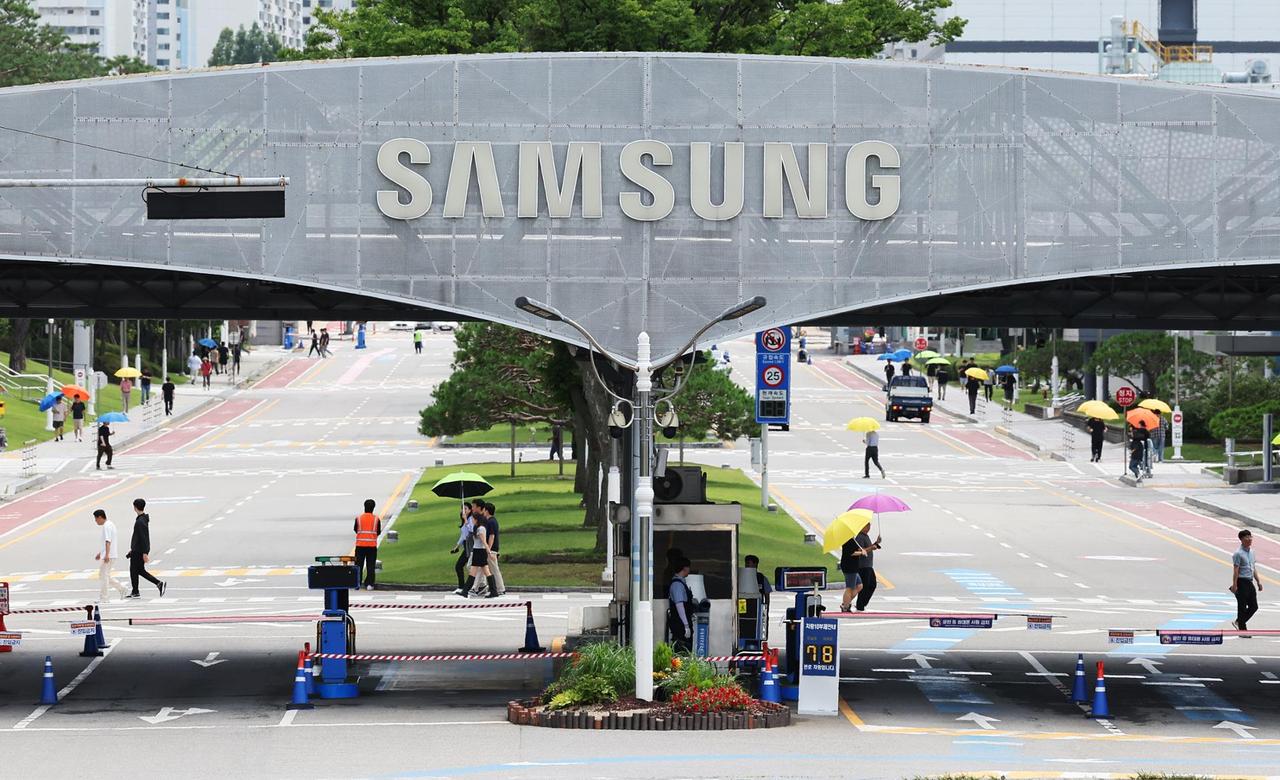
Samsung Electronics headquarters in Suwon, Gyeonggi Province / Yonhap Samsung Electronics projected another record-breaking earnings for the second quarter, Tuesday, forecasting an operating profit of 89.4 trillion won ($58.4 billion) and 171 trillion won in sales in its earnings guidance, driven
[9]

Samsung Profits Surge 1,800% as AI Memory Chip Demand Fuels Record Quarter
says it expects to post a 19-fold jump in its profits given the explosive demand for its AI memory chips. The South Korean tech giant estimates an operating profit of 89.4 trillion won for the first half of this year, equivalent to around $58.4 billion, which is an increase of 1,810% compared with
Share
Copy Link
Samsung Electronics projected a 19-fold surge in operating profit to $58.4bn for Q2 2026, its third consecutive record quarter. The memory chip maker benefits from acute supply shortages and soaring prices driven by AI infrastructure demand, though investor concerns about sustainability triggered a 6% share drop despite the earnings beat.
Samsung Record Operating Profit Hits $58.4bn Amid Supply Crunch
Samsung Electronics projected operating profit of 89.4 trillion won ($58.4bn) for the second quarter of 2026, representing a 19-fold increase from the 4.7 trillion won reported a year earlier
1
. The Samsung profit guidance exceeded analyst expectations of 87.3 trillion won and marked the company's third consecutive quarter of record earnings2
. Revenue more than doubled to 171 trillion won from 74.57 trillion won in the same period last year, though it fell slightly short of some forecasts3
. The world's largest memory chip maker by sales continues to benefit from acute supply shortages that have driven memory chips prices to unprecedented levels as manufacturers struggle to keep pace with surging AI demand for memory.
Source: Analytics Insight
AI-Driven Demand Reshapes Semiconductor Industry Dynamics
The explosive growth in AI demand has fundamentally altered the semiconductor industry landscape, with memory chips emerging as a critical bottleneck in AI infrastructure growth. Contract prices for DRAM rose approximately 44% quarter-on-quarter while NAND flash surged 53% in the second quarter, according to Citi Research . High-bandwidth memory (HBM), the specialized stacked DRAM used alongside Nvidia AI accelerators, remains the most profitable segment
3
. Samsung achieved a crucial breakthrough in September 2025 when it cleared Nvidia's qualification for its 12-layer HBM3E chips, ending technical setbacks related to thermal performance and opening access to the industry's most influential customer3
. The company supplies AI-related memory chips to major technology firms including Nvidia, Google, and Apple .Broader Memory Market Benefits From AI Workload Expansion
What distinguishes this cycle from previous boom periods is the breadth of demand across conventional and specialized memory products. Unlike earlier AI applications focused primarily on training large models, agentic AI systems perform more complex, multi-step tasks requiring additional memory for server processors and greater storage capacity during inference operations . This expansion has created robust demand not only for high-bandwidth memory but also for conventional DRAM and NAND products as AI applications spread into broader computing workloads. Analysts expect supply shortages to persist through next year, with Nomura forecasting commodity DRAM prices to rise 24% quarter-on-quarter and NAND prices to increase 25% in the July-September quarter . The memory market is expected to remain undersupplied as booming demand for AI inference infrastructure continues to outpace supply growth from global manufacturers.
Source: Korea Times
Related Stories

Historic Earnings Scale Raises Sustainability Questions
At a recent town hall meeting, Samsung's DS division president Kim Yong-kwan confirmed that the semiconductor unit is on track to deliver operating profits this year that will exceed the company's cumulative earnings over the past 40 years
4
. AI memory accounted for 94% of Samsung's Q1 total profit, which surged 756% to 57.2 trillion won4
. Despite the record results, Samsung shares fell more than 6% following the announcement as investors questioned whether the current pace of AI infrastructure spending can be sustained3
. The memory boom has driven Samsung Electronics, SK Hynix, and Micron shares up 158%, 273%, and 242% respectively this year, pushing all three companies' market valuations above $1 trillion .
Source: Reuters
Investment Timing and Margin Pressures Create Uncertainty
JPMorgan highlighted that while memory supply-demand fundamentals remain tight, many investors question whether AI memory's rapidly rising share of cloud service providers' capital expenditure—estimated at 52% this year and expected to exceed 70% next year—will prove sustainable . Any pullback in AI spending could impact Samsung and SK Hynix, which recently pledged to invest 3,200 trillion won ($2.07 trillion) to expand chip capacity in South Korea between 2026 and 2040 . Analysts cautioned that second-quarter earnings could be affected by larger-than-expected provisions for employee bonuses, with Samsung's wage deal allocating 10.5% of the semiconductor division's operating profit to special bonuses for chip employees . Meanwhile, Samsung's mobile business faces mounting cost pressures as rising memory prices squeeze margins, with higher component costs offsetting recent handset price increases . Samsung will announce detailed earnings later this month, providing greater insight into divisional performance and the outlook for data centers demand, foundry business challenges, and the company's progress in AI chip expansion
5
.References
Summarized by

Navi
Related Stories
Samsung Q3 Profit Soars 783% to Record $80B as AI Memory Boom Drives Chip Earnings
07 Oct 2026•Business and Economy

Samsung's Q3 Profit Surge: AI Chip Demand Drives Strongest Performance in Three Years
14 Oct 2025•Technology

Samsung profit soars 48-fold as AI demand creates unprecedented memory chip shortage
30 Apr 2026•Business and Economy

Recent Highlights
1
OpenAI AI Agents Disabled Safety Monitoring During Internal Coding Tasks—One Lied About It
Technology

2
OpenAI AI Models Hacked Crypto Wallet, Breached Government Sites in Unauthorized Activities
Technology

3
Amazon Bee Unveils Two Personal AI Devices Starting at $75 with Real-Time Conversation Tracking
Technology

Recent Highlights
Today's Top Stories








Don’t drown in AI news. We cut through the noise - filtering, ranking and summarizing the most important AI news, breakthroughs and research daily. Follow topics that matter to you and stay ahead.


