7 Sources
[1]
Samsung Reveals More About Its Upcoming Google Glasses, Including New Designs - CNET
Back at Google's I/O developer conference in May, I tried Samsung and Google's smart glasses, which are expected this fall. At Samsung's latest phone and watch-focused Unpacked event, a few more details on those glasses have emerged. New frame designs, some promised battery life and specs, and also, how Samsung and Google aim to address privacy concerns with glasses that Meta's currently facing. Samsung and Google's first wave of smart glasses are display-free, but have a camera, microphones and speakers, much like many of Meta's glasses. Display-enabled versions are also on the way, like Meta's Ray-Ban Displays, but afterwards. They run Qualcomm chipsets inside, much like Meta's glasses also do. The big difference for these glasses is how they support Gemini AI and deep connections to Android phones, along with working with Google Wear OS watches. Samsung's watches will control the glasses, something I got to try a bit of during a glasses demo in May. The glasses, as we already knew, are designed with Warby Parker and Gentle Monster. But Samsung showed off two new frame designs at Unpacked, to go with the two already revealed at Google I/O. The four frames revealed so far look good, but from a distance won't seem much different from Meta's existing glasses designs. Won-Joon Choi, Samsung's COO of mobile experiences, confirmed that more designs are yet to be revealed when he spoke to reporters in London before Samsung Unpacked. Choi revealed more details about the upcoming glasses in an on-record chat. He said that durability tests for the glasses show better strength than standard eyewear, "multiple times stronger than regular glasses." Samsung has already filed more than 200 patents filed for its smart glasses tech. The Warby Parker and Gentle Monster glasses use Qualcomm Snapdragon AR1 Gen 1 chipsets, the processor that's also in Meta's glasses. The battery life sounds better, though: according to Choi, they can run for 9 hours on a charge (one hour better than Meta's latest models), and even do that while handling video recording and Gemini Live AI modes, although we'll see how battery life actually handles in a future review. The glasses case can charge the glasses an additional 7 times. The glasses will run both Google Gemini and Samsung Bixby AI, offering at least a bit of a choice compared to glasses like Meta's. But privacy concerns sound like they're still at play. Google and Samsung's glasses will show a recording light when taking photos or videos, but they need to be on your face to work. If the LED is blocked, the camera won't record either. But Choi acknowledges that privacy concerns on camera-enabled AI glasses is a shared industry problem. But this is also, according to Choi, "just the beginning" for where Samsung wants to go with its interconnected wearables. These glasses still use Bluetooth and Wi-Fi to connect. Choi says that "is not enough" for where camera-enabled eyewear needs to be, and that Qualcomm and Samsung are working on future ideas. Better connections for wearables, especially for future higher-bandwidth devices like display glasses or full AR glasses, feels like a must. And even more so when you might have a watch, earbuds and glasses all connected at once. And Choi acknowledged that AI services, too, still need to evolve. But so do privacy considerations. Samsung's acknowledgment of the industry problem around glasses privacy doesn't solve the problem. Choi feels that "if you stop the innovation, you don't go anywhere," and expresses confidence that Samsung (and Google) will find a way to "optimize the right solution" going forward. I'm curious to see how Samsung and Google's AI privacy settings will feel compared to Meta's. And also, how much better the phone and AI hook-ins will feel in everyday use. For more, it looks like we'll need to wait till the fall.
[2]
Samsung's answer to Meta's Ray-Bans is (almost) here, with a little help from Google
While they're being showcased today, these smart glasses won't launch until fall this year. Google has been teasing its entry into the smart-glasses category with template designs and a dedicated software experience under the banner of Android XR. However, its previous troubles with smart glasses, primarily the Google Glass, may not set a good precedent for new ones. Admitting its shortcomings as a hardware company, Google is limiting itself to the software, especially the Gemini-powered AI bits, while letting other companies handle the hardware. And its choice of hardware partner is Samsung, which is now showcasing its upcoming pair of AI smart glasses. In addition to the new devices it unveiled at Unpacked today, Samsung is also shedding light on the upcoming pairs of "Intelligent Eyewear." At the event, it revealed two new designs for smart glasses with a variety of colors, both for the frame and the lenses. Like the two models previously revealed at Google I/O earlier this year, these newer announcements also comprise audio-only glasses created by Samsung in partnership with Google and with eyewear brands Warby Parker and Gentle Monster. We don't get exact specifications just yet, but both Samsung and Google are discussing the advantages and use cases jointly. Samsung and Google both insist that fashion and familiarity play a phenomenal role in the adoption of smart glasses. That's why Google isn't repeating the same mistake it did with Google Glass by targeting professionals and technology enthusiasts instead of the general public. Instead, it's taking a pro-fashion approach, and that's where Warby Parker and Gentle Monster come into play. Meanwhile, Samsung is responsible for stashing hardware inside regular-looking frames. In addition to revealing new designs, Samsung also spoke of its efforts and contributions to refine the platform during a media roundtable ahead of the Unpacked event. During this chat, a Samsung executive discussed challenges and the company's vision for smart glasses. Samsung hinted that the experience relies on the ecosystem, meaning other devices such as a Samsung phone and a Galaxy Watch may work in conjunction with these smart glasses. Samsung is also heavily invested in bringing unobtrusive but high-resolution see-through displays for lenses used in the glasses. It says that over 100 patents have been filed for developments specific to displays in glasses, but it did not clarify whether that includes the extremely bright OLEDoS (OLED on Silicon) prototypes Samsung showcased last month. For the pairs launching later this year, Samsung aims to achieve at least nine hours of backup time under heavy use. The obvious challenge with a bigger battery is that it will increase weight, which, in turn, can deter users from wearing it. So, in order to extract the best output while dealing with limitations, Samsung has teamed up with Google and Qualcomm to assemble a team of 50 of its crème de la crème engineers. This team, called "Power Camp," works together to streamline every data pipeline and ensure every drop of battery juice is used judiciously. Meanwhile, the charging case is expected to last up to seven full recharge cycles, ensuring multi-day battery life. Durability is another key highlight for these upcoming smart glasses. Samsung lauds its work in ensuring the glasses survive environmental degraders, such as rainwater, moisture, sweat, dirt, or sand. While it doesn't specifically mention an IP or another standard rating for the glasses, Samsung says the hinge is resistant to corrosion. Samsung is also toying with flexible temples, so they can be bent or torted like a regular pair of glasses without breaking the sensors inside them.
[3]
I just went hands-on with the new Samsung smart glasses -- here's why I'd pick them over Meta
Can Samsung make smart glasses you'll actually want to wear? I just got my first up-close look at the designs coming this fall in collaboration with Google, Warby Parker and Gentle Monster. These glasses are shockingly light given all the tech stuffed inside, and Samsung promises longer battery life than the Meta Ray-Ban glasses and instant access to Google's robust app ecosystem. Plus, Samsung seems to be taking user privacy seriously. Light enough for 'all-day' wear The first thing I noticed about this Intelligent Eyewear is how light they are. Yes, the Warby Parker model looks bulkier than my everyday reading glasses from the same brand, but I was surprised how easy they were to pick up. The right side houses a button for firing up Gemini and capturing content, and there's a power switch on the inside of the left arm. There's a camera on the right, LED sensor on the left and dual stereo speakers on the arms. The Gentle Monster glasses come in a couple of different styles, including fashionable oval specs and more traditional-looking frames that offer clear or tinted lenses. There appears to be a touchpad on the left and right arms for controlling volume, but Samsung was not able to confirm this detail. Durability: Dropped, stretched and sunscreened According to James Choi, who heads Samsung's XR R&D, the company subjected these glasses to drop tests, water tests, high temperatures and sweat. In fact, the company invented 20 different tests to evaluate the durability of its glasses. This includes using robots to force the arms outward to see how long they last under stress. Samsung even devised a sunscreen test, injecting it near the speakers. So these specs should be able to stand up to the wear and tear of your daily schedule. Gemini AI on your face These AI glasses are all about having Gemini always available, letting you check notifications, get answers to your questions, directions and more on the go. For Samsung, it's not about replacing your phone, but using it less. With Gemini Live on board, you can leverage the cameras, microphones and open ear stereo speakers to have conversations on the fly with the AI assistant. You can get real-time guidance on everything from cooking to putting together an outfit or assembling furniture. And because the glasses instantly understand the world from your perspective, the eyewear can be more contextual and there's much less you need to explain. And, unlike Meta, you'll have access to a bevy of popular Google apps from day one, including Gmail, Google Calendar, Google Maps, as well as Samsung apps like Notes and Interpreter. Very good (promised) battery life Samsung promises nine hours of battery life on a charge with mixed usage. This includes Gemini Live conversations, voice calls, notifications and more. I got to handle the charging case for the Gentle Monster glasses, and it was quite light as well. It promises several charges on the go. What about privacy? We don't know the specs of the camera yet for the Samsung glasses, but you'll be able to capture photos and videos, as well as let Gemini see what you see for Gemini Live interactions. But how will Samsung protect privacy and prevent a horde of creeps from surveilling everyone around them? Samsung told us that they're building AI glasses you can trust. For starters, any blocking of the LED on the glasses also blocks recording. But Samsung knows that certain individuals will resort to trying to hack the glasses or -- as in the case of Meta -- perhaps seek black market options for tampering with their device. "At Samsung, privacy is not an afterthought," Samsung's Choi said. "For this category to be more widely adopted, we understand that the user and the people around them need to trust both the technology and its privacy protection." Choi told us that simple destruction of the LED can be detected but Samsung also has engineers who are focused on further protections and reverse engineering what bad actors might accomplish on the black market. Outlook There's still a fair amount we don't know about the Samsung AI glasses year, like the weight, specs and especially price. But it's clear that Samsung is focusing on everyday wearability and durability for these first-generation glasses. Assuming the prices are affordable enough, I'd say Samsung and its partners have some key advantages over Meta, including high-profile partnerships with Warby Parker and Gentle Monster, longer battery life, a better ecosystem of apps and a smarter AI assistant in Gemini. Display glasses will come later. Samsung is actively developing this category but is also in no rush to launch. The company doesn't want to make any major sacrifices to wearability. "We want better quality than what's in the market," Choi said. We want to make it natural with the display. We're working on it." But tell me what you think. Are you leaning towards Samsung or Meta, waiting for Apple to join the smart glasses race, or are you just fully anti AI-camera glasses no matter who makes them? Sound off in the comments.
[4]
'If, because of that, we stop innovation, we don't go anywhere': we got a first look at Samsung Intelligent Eyewear, the smart glasses entering a fraught market worried about privacy
'Intelligent Eyewear' is the fresh term Samsung is using to perhaps give its new wearable technology a fresh start in a market that's showing signs of smart glasses fatigue. With a focus on style and design, the company has unveiled a series of Warby Parker- and Gentle Monster-designed glasses that put fashion and Gemini at the center of the experience. Samsung unveiled the long-promised collaboration between it, Google, and these premier eyewear brands alongside its new suite of Galaxy foldables at Samsung Galaxy Unpacked on July 22. Its Intelligent Eyewear is finally challenging chief competitor Meta, whose own Ray-Ban and EssilorLuxottica smartglasses have become the dominant products in this space. In a preview just before the big launch, I got an up-close look at the new smart frames, though Samsung was insistent that I not try them on or actually use them, which was disappointing. Samsung's Intelligent Eyewear consists of designs ranging from classic square and round-style frames to cat-eye-style silhouettes, and in colors ranging from amber to green and black. Lenses are available in clear and transition. There's no pricing, and the ship date is described as "this Fall". As I picked up multiple frames (but never donned them, mind you), I quickly noticed that the frames, which are filled with, among other things, Qualcomm Snapdragon wearable silicon, are quite lightweight. Also, aside from somewhat larger stems than you'd find on standard glasses, they're pleasingly thin, so that someone looking at you head-on might not initially realize you're wearing smart...er...intelligent eyewear. There are, however, tells. On the front of the frames are a pair of what look like cameras, but only the one on the right is a shooter of indeterminate megapixels (more info Samsung chose not to share), and the one on the left is the critical LED to let people know you're taking photos or videos. When I flipped the lenses around and looked at the left stem very near the frames, I noticed a large meta switch. Yes, this Intelligent Eyewear appears to feature a large power button, something I have not seen on previous smart frames. I then flipped the frames over to look at the bottom of the stems where I spotted the stereo speakers (one for each stem) and what appear to be a pair of far-field microphone holes. There's a single button on the top of one stem that you can use to trigger a photo or video capture or to summon one of the personal assistants. Though I asked multiple times, I was told that there's no gesture recognition for the frames that you could use, say, to lower or raise the audio volume. As with other intelligent wearables Samsung has produced with partner Google (see the much more powerful, reality-mixing Samsung Galaxy XR headset), the new Warby Parker and Gentle Monster Intelligent Eyewear put AI access at the center. The notion is that you will use your voice to summon Gemini and have it assist you in a variety of ways. Think having it identify what you're looking at, translate signs and menus in a foreign language, answer general prompts, help you ideate while on the go, give you email summaries, guide you through a recipe, and maybe access your email. Nestled alongside Gemini is Samsung's Bixby assistant. It has the less-exciting job of, say, accessing phone apps and controlling eyewear features like volume. I also got a chance to look at both the Warby Parker and Gentle Monster charge cases, nice white containers that were a bit lighter than the Meta Glasses case I didn't bring with me to the UK because (with the glasses inside) I thought it was too heavy. Samsung on design choices, limitations, and looming privacy concerns I can't tell you much about how these frames work, but we did get some useful insight about Samsung's strategy from James Choi, Samsung's Head of XR R&D Team EVP. One thing Choi made clear is that, for now, these glasses are in no way a replacement for the phone. Part of the issue is the demands of AI processing, which for now are too high to place solely on the Intelligent Eyewear, but, he noted, "We want to extend heavy use of AI on phone to here." He was also fairly transparent about things they have yet to solve with the frames, like adjustable nose bridge and stems. On the latter, Choi admitted that with regular glasses the stems are highly adjustable, but that's not the case with Samsung Intelligent Eyewear because there's technology and sensors in there. In fact, when I examined some of the new frames, I noticed I could see through the housing to view some of that stem-based technology. What Choi seemed unaware of, though, is that with the just-released Meta Glasses from Essilor Luxottica, both the stems and nose bridge are adjustable. Choi also discussed at some length the growing privacy concerns being raised with the entire smart glasses category. He explained that some of the negative response to the technology is rooted in particular societies and cultures, noting that, in South Korea, with all the public transportation, people are closer and the concerns can be greater. "Regarding public acceptance, it takes time," he added. It's by no means a settled issue for Samsung. Choi explained that the company continues to work on what is an important topic for them and indicated that some future innovations in the shape or form factor could impact acceptance. These concerns, though, are not a reason to end development or stop trying. "We cannot stay here without innovating this. Intentional bad uses need to be covered and protected. If, because of that, we stop innovation, we don't go anywhere." What's coming in the Display Intelligent Eyewear space Samsung has not forgotten about display lenses, and Choi assured us that they have "something with very good technology better than what's in the market." He also acknowledged the challenges and, without mentioning Snap and its recent release of the chunky Specs, the technical challenges of combining displays in a form factor meant to be worn discreetly on the face. Samsung wants its display glasses to be, as he waved around a pair of the Warby Parker Intelligent Eyewear, "almost near to this form factor." It's not just the design that's a challenge. Battery life is a considerable issue (one of the reasons why display lenses still tend to be so thick). "If we publish display glass, we want to promise a certain level of daily use... really tough. We're working on it." Follow TechRadar on Google News and add us as a preferred source to get our expert news, reviews, and opinion in your feeds.
[5]
Samsung Brings Galaxy Ecosystem Into Everyday Eyewear
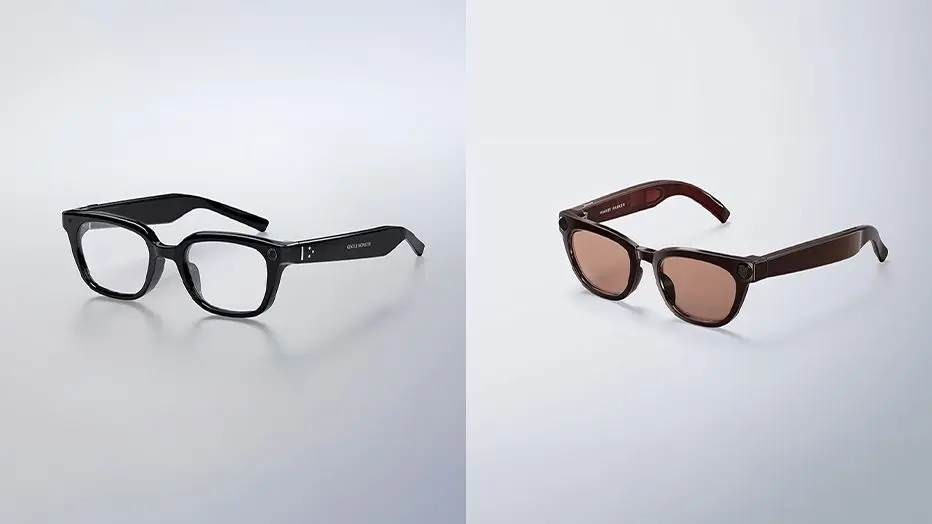
Developed with Gentle Monster and Warby Parker, intelligent eyewear becomes part of the user's personal style Samsung Electronics today introduced its intelligent eyewear at Galaxy Unpacked in London. Building on the concepts announced at the latest Google I/O, the new designs were developed with global eyewear brands, Gentle Monster and Warby Parker. The intelligent eyewear shows how the Galaxy ecosystem can move beyond the mobile phone and into eyewear that supports daily routines, work, travel and hands-free moments. What's New: * Designed for everyday use, the eyewear pairs a lightweight frame and slim profile with the durability and comfort needed for daily wear. * Developed in collaboration with Gentle Monster and Warby Parker, the eyewear reflects each brand's expertise in design, offering a range of frame styles, colors and lens options to suit different preferences and lifestyles. "As agentic AI reshapes mobile experiences, the next step is to make those experiences more intuitive and responsive to each user's context," said Won-Joon Choi, Chief Operating Officer of the Mobile eXperience (MX) Business at Samsung Electronics. "Intelligent eyewear creates a new point of interaction, bringing more personalized AI assistance naturally into the moments that make up everyday life." Why It Matters As AI enters an agentic era, the question is no longer only how intelligent it becomes, but where and how that intelligence meets people. Mobile phones remain at the center of connected experiences, while devices across the Galaxy ecosystem add context to different moments of daily life. Intelligent eyewear represents that next step, bringing AI closer to people as they move, work, communicate and explore, without requiring every interaction to begin with a screen. Built for these moments, intelligent eyewear brings AI directly into the user's line of sight, providing timely information and assistance while allowing them to stay engaged with the people, places and tasks around them. Clear controls and safeguards support responsible and secure use, while hands-free access delivers assistance naturally without requiring users to stop what they are doing or turn to another screen. New Intelligent Eyewear Experience Designed for everyday wear, the eyewear combines a lightweight frame, slim profile and battery performance, offering up to nine hours on a single charge with up to seven additional full charges from the charging case. A built-in camera brings visual context into the AI experience, while Snapdragon AR1 Gen1 Platform supports the AI performance designed for real-time assistance, with touch interaction, connectivity, power efficiency and thermal management optimized within the eyewear's compact frame. As a hands-free extension of the Galaxy experience, the device lets users stay focused on the moment. Built in partnership with Google, it brings Gemini into a familiar wearable form factor, making interaction feel more natural, immediate and intuitive. "Google and Samsung have a shared vision to bring helpful and context-aware intelligence into everyday life," said Sameer Samat, President of Android Ecosystem at Google. "Built on the Android XR platform, the intelligent eyewear blends world-class designs with Gemini's advanced assistance that naturally responds to what you see, delivering all-day, hands-free help. We're excited to continue this momentum and bring this experience to people soon." Key experiences include: * Staying in the moment: The device can help summarize long messages, read key information aloud, support live translation and allow users to control the experience with simple voice or gesture interactions through connected devices. * Capturing context: When prompted, the eyewear can capture what the user is seeing, such as a whiteboard or meeting discussion, organize key information in Notes and make it easier to review, share and follow-up on later. * Real-time interaction: Users can ask for guidance based on their location, such as finding a route, setting a destination or understanding what is around them, while live translation can support communication in another language. * Context-aware assistance: The device can support more useful follow-up interactions by understanding the user's current context and connecting relevant information across tasks, helping users continue where they left off with less repetition. * Live visual sharing: Users can share what they are seeing during a call or record their own point of view, making communication more immediate while keeping their hands free. A More Personal Approach to Eyewear Eyewear is both a functional product and a personal style statement. Samsung worked with Gentle Monster and Warby Parker to create intelligent eyewear that balances thoughtful design, comfort and everyday wearability. By combining Samsung's hardware craftsmanship with each brand's distinctive design approach, the collaboration offers a broader range of styles to suit different preferences, lifestyles and occasions. At the Unpacked, Samsung introduced two distinct designs by: Gentle Monster and Warby Parker. The Gentle Monster edition features a slim frame in black, pairing a straight upper rim with softly rounded lower edges to create a refined and fashion-forward silhouette. The Warby Parker style features a subtly upswept brow line in a rich brown hue, creating a refined, versatile shape perfect for everyday settings. Throughout the design process, Samsung worked closely with the eyewear partners to refine key fit points such as the forehead and ears. These insights helped shape the final designs with enhanced comfort and everyday wearability. Fit considerations were tailored to each model, alongside durability and reliable performance.
[6]
Samsung's New Galaxy Smart Glasses Aim for Style and Google Integration
The Galaxy Glasses are scheduled for release this fall, though the price has not been announced. At its Unpacked event in London this morning, Samsung closed its presentation with a surprise, dropping some details on its soon-to-be-released line of smart glasses. Designed in partnership with Warby Parker, Gentle Monster, and Google, Samsung's "Galaxy Glasses" (if that's what they wind up being called) are audio-, AI-, and camera-focused. Like Meta's Ray-Ban and Oakley glasses, these glasses will not have a display (although Samsung display glasses are reportedly in development), but they will be integrated into the Google ecosystem. The Galaxy Glasses (or whatever) will launch this fall in a variety of fashion-forward designs from Gentle Monster and Warby Parker. What we know about Samsung's line of smart glasses All models of Samsung's upcoming smart glasses will all feature the same tech under the hood. * Operating system: Runs on Google's Android XR platform. * AI agent: Integrated with Gemini Live AI. * Processor: Powered by Qualcomm's Snapdragon AR 1 Gen 1 chip. * Controls: Wear OS integration allows control from Galaxy Watches * Battery life: Up to nine hours of battery life per charge, plus seven full charges from the carrying case. * Camera and audio: Front-facing camera with outward privacy LED indicator and with dual open-ear speakers. Samsung highlighted several practical use cases for the eyewear during the Unpacked presentation, including looking at a whiteboard to auto-save information into Samsung Notes, making restaurant reservations and coffee orders on the fly, and taking pictures and video by touching the frame. What we don't know yet about Samsung's smart glasses Here are some of the "missing pieces" about these glasses. * The price: No information has been released about what they'll cost. * Release date: While they are scheduled for "this fall," the exact release date has yet to be revealed. * Camera features: Megapixel count, resolution, and field-of-view specs have yet to be specified. * Offline capability: It's not clear how much AI processing will happen through the onboard Snapdragon chip, and how much will rely on a connection to the cloud/your phone. How do Samsung's smart glasses differ from Meta's smart glasses? Samsung's entry into the display-free smart glasses space share a lot of features with Meta's line of smart glasses -- both include onboard cameras, open-air speakers, and a heavy focus on AI -- but there are some distinct differences as well. Here are some areas where Samsung aims to set itself apart from its primary competitor:
[7]
Samsung unveils Intelligent Eyewear with Snapdragon AR1 Gen1 Platform and Gemini AI
Samsung Electronics has introduced its intelligent eyewear at Galaxy Unpacked in London. Building on announcements from Google I/O, the device was developed in collaboration with global eyewear brands Gentle Monster and Warby Parker. The intelligent eyewear expands the Galaxy ecosystem beyond smartphones into wearable experiences designed for daily routines, work, travel, and hands-free interactions. Design and Collaboration The intelligent eyewear is designed for everyday use with a lightweight frame, slim profile, durability, and comfort for daily wear. Samsung collaborated with Gentle Monster and Warby Parker to develop different frame styles, colours, and lens options. * The Gentle Monster edition features a black slim frame with a straight upper rim and softly rounded lower edges. * The Warby Parker edition features a brown frame with a slightly upswept brow line. Samsung worked with both eyewear partners throughout the design process to refine fit points, including the forehead and ears. The designs were adjusted based on fit requirements while maintaining durability and hardware integration. AI Features and Experience The intelligent eyewear brings Google Gemini AI into a wearable form factor through Samsung's partnership with Google. It provides hands-free AI assistance using voice and gesture interactions through connected devices, along with touch controls. Key experiences include: * Message and information assistance: The eyewear can summarize long messages, read key information aloud, and support live translation. * Visual context capture: The built-in camera can capture what users see, including whiteboards or meeting information, organize key details in Notes, and help users review, share, and follow up later. * Real-time interaction: Users can ask for location-based assistance, including finding routes, setting destinations, and understanding nearby surroundings. Live translation can also support communication in another language. * Live visual sharing: Users can share what they see during calls or record their point of view while keeping their hands free. * Context-aware assistance: The device can understand user context and connect relevant information across tasks, helping users continue interactions with fewer repeated inputs. The eyewear includes controls and safeguards designed to support secure use while providing AI assistance without requiring users to switch to another screen. Hardware and Battery The intelligent eyewear combines a lightweight frame, slim profile, and battery performance designed for everyday use. It is powered by the Snapdragon AR1 Gen1 Platform, which supports AI processing for real-time assistance, touch interaction, connectivity, power efficiency, and thermal management within the compact eyewear design. The built-in camera provides visual context for AI features. The device offers up to nine hours of battery life on a single charge, while the charging case provides up to seven additional full charges. Availability Samsung has not announced pricing or availability details for the intelligent eyewear. Speaking about the announcement, Won-Joon Choi, Chief Operating Officer of the Mobile eXperience (MX) Business at Samsung Electronics, said: As agentic AI reshapes mobile experiences, the next step is to make those experiences more intuitive and responsive to each user's context. Intelligent eyewear creates a new point of interaction, bringing more personalized AI assistance naturally into the moments that make up everyday life. Speaking about the announcement, Sameer Samat, President of Android Ecosystem at Google, said: Google and Samsung have a shared vision to bring helpful and context-aware intelligence into everyday life. Built on the Android XR platform, the intelligent eyewear blends world-class designs with Gemini's advanced assistance that naturally responds to what you see, delivering all-day, hands-free help. We're excited to continue this momentum and bring this experience to people soon.
Share
Copy Link
Samsung showcased new designs for its Intelligent Eyewear at Galaxy Unpacked, developed with Warby Parker and Gentle Monster. The AI-powered smart glasses promise 9-hour battery life, Gemini integration, and enhanced privacy features. Set to launch this fall, they represent Samsung's answer to Meta's Ray-Bans in the growing wearable AI technology market.
Samsung unveiled two additional frame designs for its upcoming Samsung smart glasses at Galaxy Unpacked in London, adding to the two models previously revealed at Google I/O in May
1
. Developed through a Google collaboration with eyewear brands Warby Parker and Gentle Monster, these AI-powered smart glasses are positioned as Samsung's answer to Meta's Ray-Bans2
. The four frame designs revealed so far range from classic square and round-style frames to cat-eye silhouettes, available in colors including amber, green, and black, with clear and transition lens options4
.
Source: Samsung
The Samsung Intelligent Eyewear features a lightweight frame and slim profile, though the stems appear bulkier than standard eyewear due to the embedded technology
3
. According to Won-Joon Choi, Samsung's Chief Operating Officer of Mobile eXperience Business, durability tests show the glasses are "multiple times stronger than regular glasses," with Samsung filing over 200 patents for its smart glasses technology1
.The wearable AI technology brings the integration with Galaxy ecosystem into everyday eyewear, extending beyond mobile phones to support daily routines, work, travel, and hands-free moments
5
. Built on the Android XR platform, the glasses feature the Gemini AI assistant for hands-free context-aware assistance, allowing users to check notifications, get directions, and access information on the go3
.
Source: Lifehacker
With Gemini Live onboard, users can leverage the built-in camera, microphones, and open-ear stereo speakers to have real-time conversations with the AI assistant. The glasses can provide guidance on everything from cooking to assembling furniture, with the eyewear instantly understanding the world from the user's perspective
3
. Unlike Meta's offerings, Samsung's glasses provide access to popular Google apps from day one, including Gmail, Google Calendar, and Google Maps, as well as Samsung apps like Notes and Interpreter3
.The glasses also run Bixby AI alongside Gemini, with Bixby handling tasks like accessing phone apps and controlling eyewear features such as volume
4
. James Choi, Samsung's Head of XR R&D Team, clarified that the glasses are not meant to replace phones but rather extend heavy AI usage from phones to wearable AI devices4
.Powered by the Snapdragon AR1 Gen 1 chipset—the same processor used in Meta's glasses—Samsung's Intelligent Eyewear promises superior battery life
1
. The glasses can run for 9 hours on a single charge with mixed usage, including Gemini Live conversations, voice calls, and notifications—one hour better than Meta's latest models1
. The charging case provides up to 7 additional full charges, ensuring multi-day battery life5
.To achieve this performance, Samsung assembled a specialized team called "Power Camp" comprising 50 engineers from Samsung, Google, and Qualcomm who work together to streamline every data pipeline and ensure efficient battery usage
2
. The glasses feature a camera on the right side, dual stereo speakers on the arms, and far-field microphones, with a button for capturing content and summoning Gemini3
.Related Stories
As the smart glasses market faces growing privacy concerns, Samsung has implemented several safeguards. The glasses display a recording light when taking photos or videos, and they must be worn on the user's face to function. If the LED indicator is blocked, the camera won't record
1
.
Source: Tom's Guide
However, Choi acknowledged that privacy concerns on camera-enabled AI glasses represent a shared industry problem. "At Samsung, privacy is not an afterthought," Choi stated, emphasizing that for the category to achieve wider adoption, users and those around them need to trust both the technology and its privacy protections
3
. Samsung has engineers focused on detecting simple LED destruction and reverse engineering potential black market tampering attempts3
.Choi expressed that "if you stop the innovation, you don't go anywhere," and voiced confidence that Samsung and Google will find ways to "optimize the right solution" for privacy going forward
1
.Samsung subjected the glasses to extensive testing, including drop tests, water resistance, high temperatures, and sweat exposure. The company invented 20 different tests to evaluate durability, including using robots to stress-test the arms and even a sunscreen test to ensure the speakers can withstand everyday wear
3
. The hinges are resistant to corrosion, and Samsung is developing flexible temples that can be bent without breaking internal sensors2
.While the first wave of glasses are display-free, display-enabled versions featuring see-through displays are in development, similar to Meta's Ray-Ban Displays
1
. Samsung has filed over 100 patents specifically for display technology in glasses and recently showcased OLEDoS prototypes, though it remains unclear if these will be used in future models2
. Choi indicated Samsung is taking its time with display glasses, stating, "We want better quality than what's in the market. We want to make it natural with the display"3
.As agentic AI reshapes mobile experiences, Samsung's Intelligent Eyewear represents the next step in bringing personalized AI assistance into everyday moments. The glasses are expected to launch this fall, though pricing has not yet been announced
4
. Sameer Samat, President of Android Ecosystem at Google, stated that Google and Samsung share a vision "to bring helpful and context-aware intelligence into everyday life" through live translation, real-time interaction, and context-aware assistance that naturally responds to what users see5
.Summarized by
Navi
[2]
[3]
22 Oct 2025•Technology

13 May 2026•Technology

27 Apr 2026•Technology

1
Technology

2
Science and Research

3
Policy and Regulation