3 Sources
[1]
Savers Value Village thrift store launches new AI tool to price items
Savers Value Village is launching a new platform leveraging artificial intelligence to help optimize product pricing, the company told CNBC exclusively, as the tricky-to-price thrift segment gains traction around the world. The new platform, called ThriftIQ, uses AI to reduce the work needed to price items across the men's and women's apparel assortment and bring more consistency. "We're getting clear sell-throughs, larger baskets, it's helping our new stores ramp more favorably, and obviously there is the profitability improvements," CEO Mark Walsh told CNBC. The tool has already been deployed in 58 pilot stores, according to the company, pricing more than 25 million items. That number is expected to double by the end of the year, Walsh added. Savers, which had 375 stores at the end of the second quarter, said it processes more than 1 billion pounds of reusable goods every year. ThriftIQ was developed in partnership with data science and technology consulting firm Kaizen Analytix using Savers' proprietary data sets, which the company has been developing for nearly two years. "It's not dynamic pricing, and once those garments are priced and tagged, that tag doesn't change," Walsh said. The company's goal with the new AI tool is to bring more predictable pricing for customers while also keeping average prices the same or lower, remaining between roughly 40% and 70% below traditional retail prices. Savers said ThriftIQ marks the latest step in the company's broader strategy to modernize and enhance its business operations. It will deploy the platform across more of its U.S. and Canadian locations through early 2028. Walsh said the tool is not meant to get rid of manual labor in stores, but rather make workers more productive. "Savers is transforming thrift through innovation, and I couldn't be more excited about the trajectory of the business," he said. The tool comes at a time when secondhand retail and thrift are seeing a surge, especially with the macroeconomic backdrop of higher inflation, lower consumer confidence and more price-conscious buyers. "We are benefiting from some very powerful secular momentum in this space. Thrift has gone, and is continuing to go, mainstream in retail, and so we see that in the younger customers, in the more affluent customers, for example, that are adopting thrift," Chief Financial Officer Michael Maher told CNBC. "But I think in addition to that, we are bringing investment, technology, innovation and execution to that." Savers also reported its second-quarter earnings on Thursday, seeing a 7.4% increase in total net sales, which came in at $448.2 million. Comparable store sales increased 4.4%. Savers reported net income of $21.6 million, or 14 cents per share, for the quarter, versus $18.9 million, or 12 cents per share, in the prior-year period. Maher also said the company saw its third consecutive quarter of year-over-year growth in earnings before interest, taxes, depreciation and amortization. The company incorporated the impact of ThriftIQ into its updated 2026 guidance, saying that it expects to return to a "high-teens adjusted EBITDA margin within the next three years." "This is just the latest chapter of transformative innovation," Maher told CNBC. "It is a core plank of our long-term strategic plan, and yes, we're constantly looking at innovation."
[2]
Thrift Store Chain Starts Using AI to Price Items (but Denies It's for Dynamic Pricing)
Savers Value Village, the national chain of thrift stores that sells secondhand merchandise, announced this week that it's using AI to help price its goods in dozens of its 375 stores. But the company denies that it's going to be used for so-called dynamic or surveillance pricing, the practices of changing the price quickly based on market conditions or the individual characteristics of who's doing the buying. The AI platform is called ThriftIQ and it aims to take the guess work out of pricing the goods that it sells. The company pays non-profit organizations for things like clothes and household items and then turns around and sells them for a profit. Jubran Tanious, the president and CEO of Savers, explained during an earnings call Thursday how pricing has traditionally worked for the used goods retailer. "Prior to ThriftIQ, our team members would assess each garment and they would grade it based on condition and quality to determine its value. And then that grade would translate to a price based on the category and department. And for many years, this method has worked well," said Tanious. Tanious said that pricing with that strategy would be inconsistent and that two employees could evaluate the exact same item and come up with different prices, even with the best training since it was so subjective. "So now fast forward to ThriftIQ, we're no longer asking the team member to assess condition and quality," Tanious said. "We're simply asking them to identify the brand. We then use that brand and combine it with seasonality [and] sell-through to determine the price of the garment. So it's easier, it's more objective, allows us to show up to the customer in a more consistent and in a precise way, and that is the key." The company, which is mostly owned by the private equity firm Ares Management and also operates in some parts of the U.S. under the brand Unique, has faced criticism in Canada for charging several times what goods are sold for in other stores new. As one example, a vase that was priced at $3 new was being sold for $8 at Savers, according to the CBC. It's unclear whether AI will avoid situations like that or if getting maximum dollar, above and beyond the new price, is actually the goal. Whatever the answer to that question, Savers is reporting that it expects net sales of $1.77 billion to $1.79 billion in the second half of the year with comparable store sales growth of 3% to 4%. And AI seems to be helping. "ThriftIQ delivered improvements in sales yield and gross profit in our pilot stores, with average prices that are the same or lower than the rest of the fleet, and continuing to average 40% to 70% off traditional retail," CEO Mark Walsh said on that earnings call. CNBC reports the AI tool was developed with the tech reporting firm Kaizen Analytix using proprietary data sets held by Savers, though it's unclear what data that may entail. Walsh, clearly anticipating the concern customers have about surveillance pricing, told CNBC that they're not using AI for dynamic pricing and "once those garments are priced and tagged, that tag doesn't change." There has been massive pushback against the idea of AI setting prices, largely because there's concern that companies are jacking up the prices on a whim to maximize profits. Sixty-eight percent of Americans say they worry surveillance pricing will increase the cost of goods, according to polling from May. "ThriftIQ is currently live in 58 stores across the U.S. and Canada. In these stores, we've seen customers respond positively through increased unit sell-through, larger baskets, and stronger sales yields with the same or lower average prices compared to the rest of our fleet," CFO Michael Maher said on the earnings call. "That translated into gross profit dollar growth that was approximately 100 basis points higher in our pilot stores than in our non-pilot stores. ThriftIQ is also helping our new stores ramp to profitability faster with better data-driven pricing out of the gate and simpler operational processes."
[3]
Savers Value Village launches AI pricing tool ThriftIQ
Savers Value Village launched ThriftIQ, a proprietary AI-powered pricing platform for its men's and women's apparel assortment, on Thursday. The company said the tool is designed to reduce manual pricing work and bring more consistency across its store network. ThriftIQ was built alongside data science and technology consulting firm Kaizen Analytix, leveraging proprietary datasets that Savers Value Village has been accumulating for roughly two years. As of launch, the platform has processed more than 25 million apparel items across 45,000 retail brands at 58 pilot locations, and Savers Value Village said it expects that store count to double before year's end. The company said pilot results showed higher unit sell-through, larger basket sizes, and stronger sales yields, while average prices remained the same or lower than the rest of its store network -- continuing to run 40% to 70% below traditional retail prices. "It's not dynamic pricing, and once those garments are priced and tagged, that tag doesn't change," Chief Executive Officer Mark Walsh told CNBC. Walsh also said the tool is not intended to eliminate manual labor but to make workers more productive. The company operates more than 375 stores across the U.S. and Canada and handles upward of one billion pounds of reusable goods annually. Savers Value Village positioned ThriftIQ as one piece of a wider modernization effort that also encompasses centralized processing centers, automated book processing, enhanced point-of-sale systems, self-checkout kiosks, and AI-enabled facility management, with a full network rollout targeted for early 2028. Chief Financial Officer Michael Maher said the company incorporated the expected impact of ThriftIQ into its updated 2026 guidance, telling CNBC the company expects to return to a "high-teens adjusted EBITDA margin within the next three years." Separately, Savers Value Village reported second-quarter financial results on Thursday. Total net sales rose 7.4% to $448.2 million, and comparable store sales increased 4.4%. Net income for the quarter reached $21.6 million, or 14 cents per share, against $18.9 million, or 12 cents per share, recorded in the year-ago quarter.
Share
Copy Link
Savers Value Village unveiled ThriftIQ, an AI-powered pricing platform that has already processed over 25 million items across 58 pilot stores. The thrift store chain developed the tool with Kaizen Analytix to improve pricing consistency while keeping prices 40-70% below traditional retail, denying it will use dynamic pricing tactics.
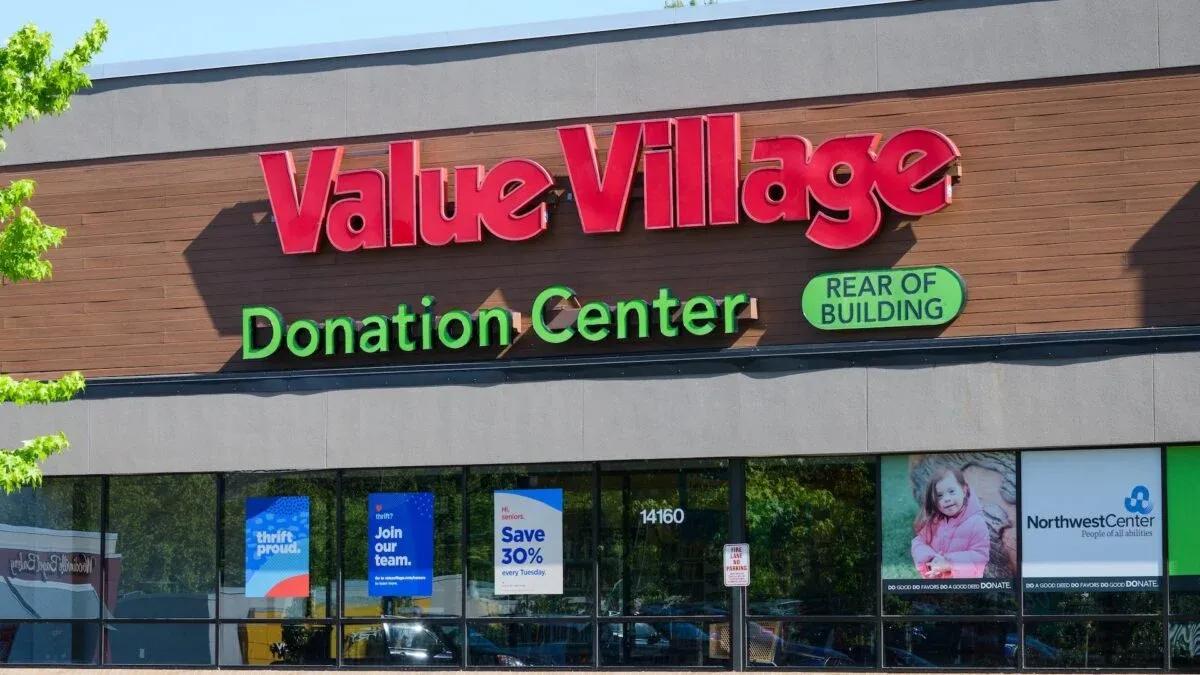
Savers Value Village has launched ThriftIQ, an AI pricing tool designed to optimize apparel pricing across its thrift store chain network
1
. The AI-powered pricing platform is currently operational in 58 pilot stores across the U.S. and Canada, where it has already processed more than 25 million items across 45,000 retail brands3
. CEO Mark Walsh told CNBC that the company expects this store count to double by the end of the year, marking a significant expansion of the modernizing thrift retail initiative1
.The thrift store chain, which operates 375 stores and processes more than 1 billion pounds of reusable goods annually, developed ThriftIQ in partnership with data science and technology consulting firm Kaizen Analytix using proprietary data sets accumulated over nearly two years
1
. The platform focuses on men's and women's apparel assortment, aiming to reduce manual pricing work and improve pricing consistency across the network3
.President and CEO Jubran Tanious explained during the second-quarter earnings call that prior to ThriftIQ, team members would assess each garment and grade it based on condition and quality to determine its value
2
. This subjective method often led to inconsistent pricing, with two employees potentially evaluating the same item differently. Now, workers simply identify the brand identification, and the AI combines that information with seasonality and sell-through data to determine pricing2
.Mark Walsh emphasized to CNBC that "it's not dynamic pricing, and once those garments are priced and tagged, that tag doesn't change"
1
. This statement directly addresses growing consumer concerns about surveillance pricing, with 68% of Americans worried that such practices will increase costs according to May polling2
. Walsh also clarified that the tool is not meant to eliminate manual labor but to enhance operational efficiency and worker productivity3
.The pilot stores have demonstrated measurable improvements across key metrics. Walsh reported "clear sell-throughs, larger baskets, it's helping our new stores ramp more favorably, and obviously there is the profitability improvements"
1
. CFO Michael Maher provided specific data during the earnings call, noting that pilot stores achieved gross profit dollar growth approximately 100 basis points higher than non-pilot stores2
.Critically, the company maintains that average prices remain the same or lower than the rest of its fleet, continuing to run 40% to 70% below traditional retail prices
3
. This pricing strategy aims to keep secondhand shopping accessible while optimizing revenue. The results showed customers responding positively through increased unit sell-through, larger basket sizes, and stronger sales yields2
.Related Stories
Savers Value Village reported its second-quarter earnings alongside the ThriftIQ announcement, showing total net sales increased 7.4% to $448.2 million
1
. Comparable store sales grew 4.4%, while net income reached $21.6 million, or 14 cents per share, compared to $18.9 million, or 12 cents per share, in the prior-year period3
. Maher noted the company saw its third consecutive quarter of year-over-year growth in earnings before interest, taxes, depreciation and amortization1
.The company incorporated ThriftIQ's expected impact into its updated 2026 guidance, with Maher telling CNBC that Savers Value Village expects to return to a "high-teens adjusted EBITDA margin within the next three years"
3
. The platform represents one component of a broader modernization effort that includes centralized processing centers, automated book processing, enhanced point-of-sale systems, self-checkout kiosks, and AI-enabled facility management, with full network rollout targeted for early 20283
. CFO Maher emphasized that "this is just the latest chapter of transformative innovation" and "a core plank of our long-term strategic plan"1
.Summarized by
Navi
20 Mar 2026•Technology
10 Dec 2025•Business and Economy

19 Feb 2026•Technology

1
Technology

2
Science and Research

3
Technology