Singapore wants AI handling your money, and says the banks take the blame if it goes wrong


3 Sources
[1]
Singapore sets national AI missions for financial services
Singapore has set itself three "national AI missions" for financial services, harnessing the technology to strengthen crime prevention, boost access to financing for businesses, and enabling agents to transact safely. 0 Be the first to comment Outlining the missions, Gan Kim Yong, deputy prime
[2]
Singapore Steps Up Use of AI to Combat Fraud | PYMNTS.com
Singapore is reportedly stepping up its use of artificial intelligence (AI) in finance. Five of the city-state's banks have begun pooling transaction data so AI can identify scam patterns that individual lenders could miss, while the Monetary Authority of Singapore (MAS) is due to launch a study
[3]
Singapore's AI Crackdown: Fighting Scams and Changing Business Lending
Singapore is launching three AI initiatives to detect financial scams, improve loans for smaller businesses and enable safer automated payments, as authorities seek to strengthen the country's financial technology sector. Singapore is introducing three major artificial intelligence initiatives to
Share
Copy Link
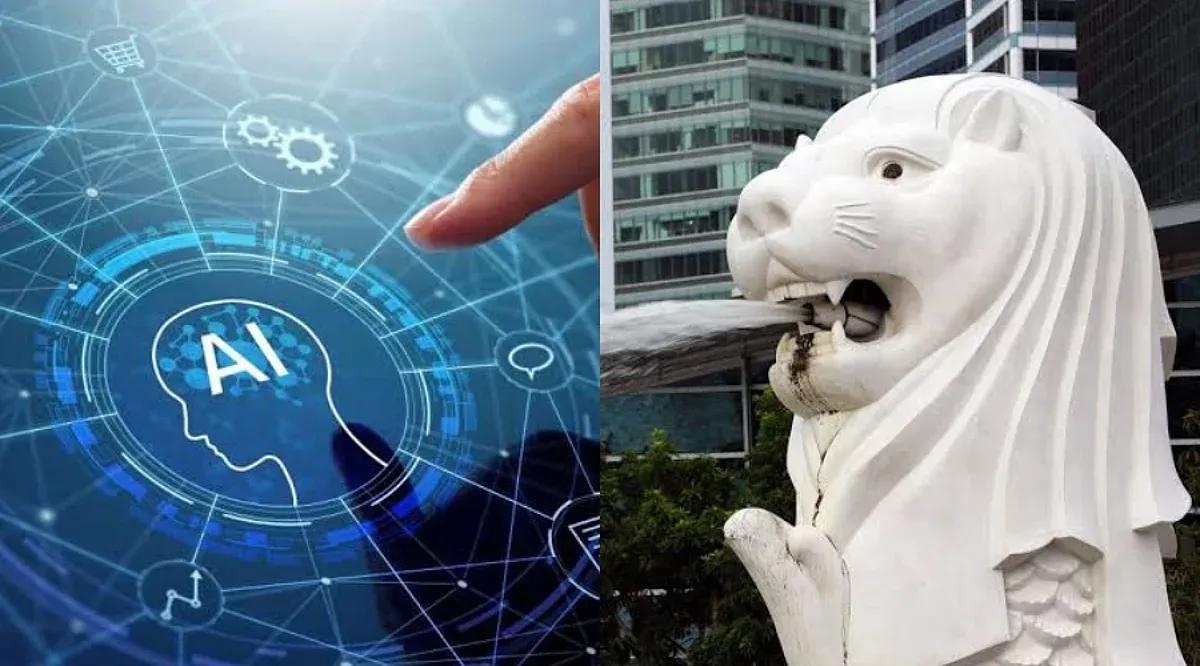
Singapore will test AI that catches scams across banks, helps small businesses borrow and makes payments on people's behalf, under three national missions for its financial sector announced on November 18
3
. Deputy Prime Minister Gan Kim Yong, who also chairs the Monetary Authority of Singapore, the country's central bank and financial regulator, unveiled them in a keynote at the Singapore FinTech Festival2
.
Source: Analytics Insight
Scam data across five banks
The first mission takes on scams that hop between institutions before anyone can stop them. "Scams are not confined within the boundary of one bank," Gan said
3
. The reason for sharing is speed, per Gan: stolen funds can pass through several institutions within minutes, so no single bank can chase them alone3
.Five Singapore banks have begun testing a setup that pools transaction data safely, so AI can scan for scam patterns no single bank would catch on its own
3
. The Monetary Authority plans a design study, starting in early 2027, into an industry-wide Scam Detection Utility that would let banks share information securely2
. Cross-border scams remain a challenge: the initial work covers only Singapore accounts and data, with international cooperation a possibility rather than a plan3
.Loans for small firms, agents in a sandbox
The second mission targets lending. AI could let lenders judge small and medium-sized businesses using bank account data, invoices, payments and government records
3
. That may speed up loan decisions and cut borrowing costs for firms with thin credit histories or few assets3
.The third mission covers AI agents that make payments and purchases for people and companies, within approved limits, with financial institutions held accountable
3
. The Future of Finance Institute, which supports the missions alongside the regulator, will build a sandbox, a controlled test environment, for these agentic payments1
. Planned uses include agent-initiated payments and treasury management1
. Four banks, among them Standard Chartered, are partners, and technology firms, AI labs and research institutions can apply for access to a shared synthetic dataset for scam-detection testing1
.
Source: Finextra Research
The contrast with some American banks is sharp: several there have begun this year to keep outside AI agents from moving customers' money over security concerns
2
. Singapore is choosing to test the technology under supervision instead.Related Stories

On its own terms
The missions extend a policy line the government set earlier this year, when it said banks should use AI to create jobs rather than cut them
2
. Finance is roughly 14% of the economy and employs about 200,000 people, per Bloomberg2
. Bloomberg frames the experiment as a test of whether a major financial hub can adopt AI without damaging jobs or trust2
.Gan framed the missions as a way to move fast without giving up trust: "Through these partnerships, we can innovate at speed, strengthen trust, enhance our financial sector's competitiveness, and make financial services work better for businesses and our people."
1
. The sandbox exists because, in his words, "greater autonomy must come with clear responsibility and accountability"3
.In August, Prime Minister Lawrence Wong put it this way: "We cannot stand still while others move ahead. But neither should we accept every new technology uncritically. Singapore will embrace these advances on our own terms."
2

Source: PYMNTS
References
Summarized by

Navi
[1]
[3]
Related Stories
Singapore pushes financial firms to use AI for job creation, not just cost-cutting
21 May 2026•Policy and Regulation

Singapore's central bank mandates independent AI review for all financial institutions
08 Oct 2026•Policy and Regulation

Singapore launches AI bootcamp to retrain 35,000 bankers as agentic AI reshapes finance jobs
08 Jan 2026•Business and Economy

Recent Highlights


Recent Highlights
Today's Top Stories









Don’t drown in AI news. We cut through the noise - filtering, ranking and summarizing the most important AI news, breakthroughs and research daily. Follow topics that matter to you and stay ahead.


