Six-Legged Robot Masters Walking by Learning from Stick Insect in Just One Hour


2 Sources
[1]
Stick insect-inspired robot adapts its gait across difficult terrain
Researchers have developed a six-legged robot that can learn to walk by mimicking a stick insect's movement patterns. The AI-powered system enables the robot to adapt its walking strategy across different surfaces and challenging environments. Researchers from Tohoku University in Japan and
[2]
Six-Legged Robot Learns to Walk from a Stick Insect | Newswise
Newswise -- Do you ever see an ant skittering across your kitchen counter and wonder how this little bug overcame all the obstacles in your home just to get there? Insects use their tiny nervous systems to walk with surprising dexterity - a skill that could be transferred to robots looking to do
Share
Copy Link
Researchers from Tohoku University and VISTEC developed a six-legged robot that learns to walk from a stick insect using AI. The system autonomously adapts its gait across uneven terrain and continues walking even after losing a leg, showing promise for disaster response applications.

Six-Legged Robot Learns to Walk from a Stick Insect Using AI
Researchers from Tohoku University in Japan and the Vidyasirimedhi Institute of Science and Technology (VISTEC) in Thailand have developed a six-legged robot that learns to walk autonomously by studying stick insect movement patterns
1
2
. The AI-powered system enables the robot to master walking in just one hour and adapt its gait across different surfaces without explicit programming2
. This approach could transform how robots navigate disaster zones and unpredictable environments where wheeled systems fail.Adversarial Inverse Reinforcement Learning Powers Autonomous Walking
The system uses adversarial inverse reinforcement learning (AIRL) combined with proximal policy optimization (PPO) to extract walking strategies from biological coordination patterns
1
. Researchers trained the AI on movement data from Medauroidea extradentata stick insects, capturing just three or four steps across 18 leg joints2
. Instead of copying each motion directly, the system learned underlying coordination principles that govern stable locomotion. During training, one neural network compares the robot's movements with insect demonstrations while another learns a reward structure encouraging behavior similar to the biological example1
. Associate Professor Dai Owaki from Tohoku University explains the fundamental shift: "We never told the robot how to walk. We asked what the insect was trying to achieve, and let the robot chase the same thing entirely on its own"2
.Robot Adapts Its Gait Across Uneven Terrain and Recovers from Leg Damage
The six-legged robot demonstrated remarkable adaptability when tested beyond its training conditions. Although trained exclusively on flat-ground walking data, it maintained stable movement across uneven terrain with only slight reductions in forward speed
1
. The system autonomously adjusted leg timing and coordination, producing a wave-like walking pattern suited to challenging surfaces. When researchers disabled one leg to simulate damage, the controller reorganized how the remaining legs worked together and redistributed the load to maintain stability—responding to a physical change absent from original training data1
. The robot learns to walk autonomously three times faster than standard reward-based methods, completing training in 70,000 steps compared to 200,000 steps for conventional velocity-based reward shaping1
.Related Stories

Transferable Learning Accelerates Adaptable Robotics Development
A critical breakthrough involves transferring learned principles between different robot models. The system splits learning into two categories: one holding universal principles applicable to any body, and another containing machine-specific information
2
. When researchers attempted direct policy transfer to a robot with different body proportions and joint configurations, it failed. However, transferring the AIRL-derived reward structure allowed the new robot to develop coordinated movement independently1
. This eliminates the slow, robot-specific design process that requires manual gait programming for each new machine. Owaki notes: "It's remarkable that a few steps from a single stick insect were enough to find a principle that works on a machine five times its size"2
. Preliminary tests on a physical RedMirror robot showed walking and body-coordination patterns qualitatively similar to simulation results1
.Implications for Disaster Response and Future Development
This research addresses a fundamental question: what is walking for, rather than simply how to make robots walk. At disaster zones where conventional wheeled robots cannot navigate debris and unstable surfaces, these adaptive six-legged systems could save lives
2
. The technology overcomes limitations of conventional robot gait systems that rely on fixed patterns, tuned parameters, and predefined rewards struggling on unfamiliar terrain1
. Researchers plan to add memory capabilities so robots can learn and build experience over time, moving toward highly mobile systems for disaster response efforts2
. The approach could extend beyond stick insects to other animals with high dexterity, potentially creating a new generation of robots that learn from nature's proven solutions. Watch for developments in transferable learning frameworks that could dramatically reduce development costs and accelerate deployment of adaptable robotics across industries requiring navigation through unpredictable environments.References
Summarized by

Navi
[1]
Related Stories
Animal-Inspired AI Robot 'Clarence' Learns to Navigate Unfamiliar Terrain Autonomously
12 Jul 2025•Science and Research

Robot dog learns to switch gaits like animals, tackling forests and stairs with new AI framework
16 Jul 2026•Science and Research
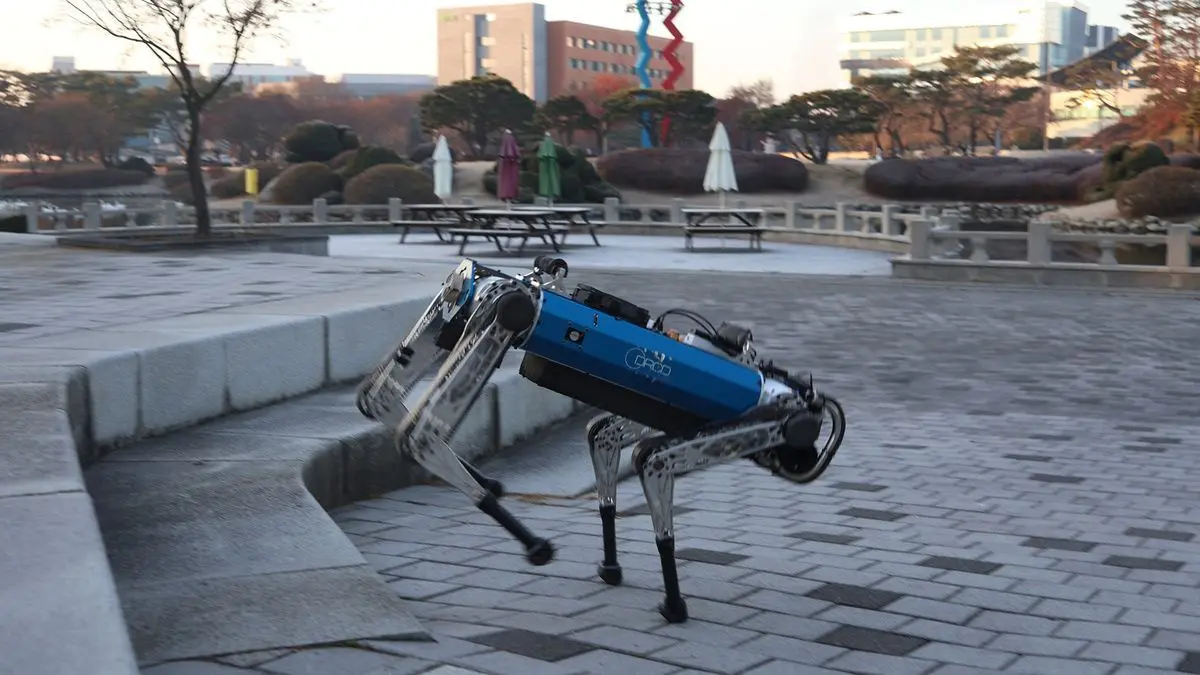
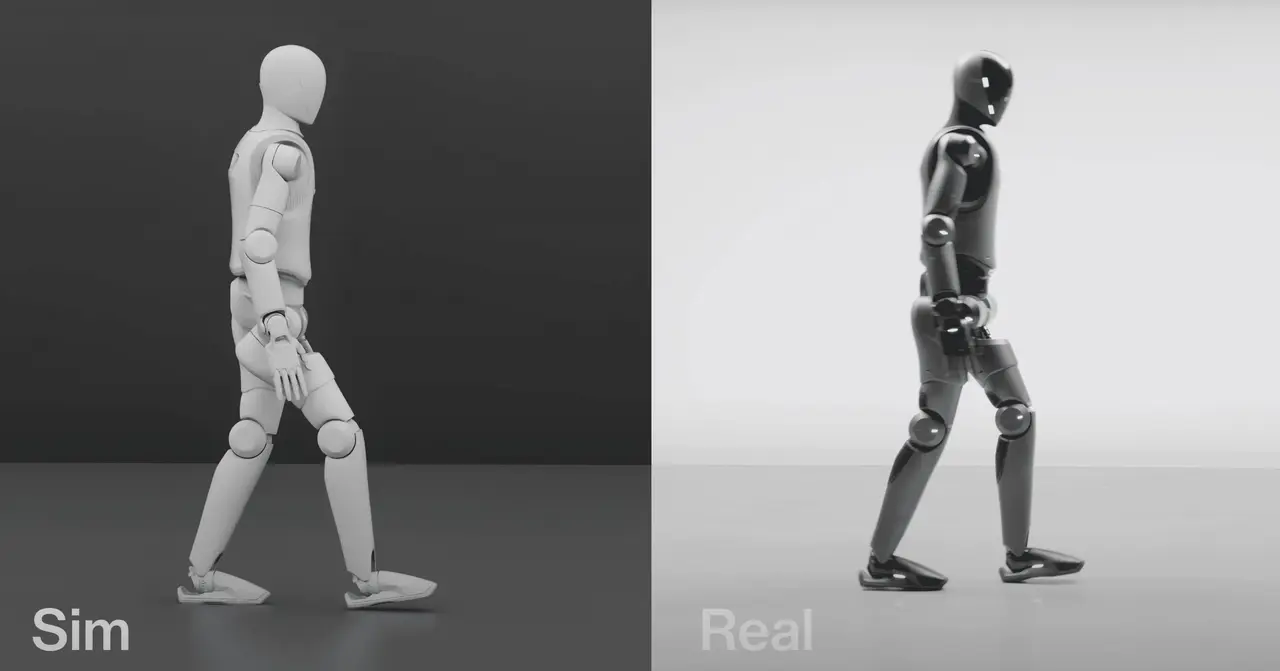
Figure AI's Humanoid Robot Achieves Natural Walking Through AI Simulation
26 Mar 2025•Technology
Recent Highlights
1
Meta Unveils Muse Wonder Frontier AI Models, Claims Performance Matching OpenAI and Anthropic
Technology

2
IMF Report Warns AI Market Correction Could Spark Global Financial Crisis With $1.4T at Risk
Business and Economy

3
OpenAI Releases 722 AI-Generated Math Solutions, Triggering Existential Crisis in Mathematics
Technology

Recent Highlights
Today's Top Stories









Don’t drown in AI news. We cut through the noise - filtering, ranking and summarizing the most important AI news, breakthroughs and research daily. Follow topics that matter to you and stay ahead.


