SK Hynix in talks with Intel to expand AI memory production at Ohio campus


3 Sources
[1]
SK Hynix Follows Samsung With U.S. AI Memory Push - SAMSUNG ELECT LTD by Samsung Electronics Co., Ltd. (O
SK Hynix Is Following Samsung's US Chip Playbook -- With AI Memory For years, Samsung Electronics Co., Ltd. (OTC:SSNLF) has used U.S. manufacturing to bring its semiconductor operations closer to American customers. Now SK hynix Inc. (NASDAQ:SKHY) is building a similar footprint -- but with a
[2]
SK Hynix has a $4 billion problem Intel could help solve
SK Hynix (SKHY) is spending more than $4 billion to build its first U.S. high-bandwidth memory production hub, a major bet on the artificial intelligence boom. But a big chunk of those chips will still have a voyage of thousands of miles before them. South Korea's semiconductor behemoth broke
[3]
Intel, SK hynix Shares Jump on Reported Ohio AI Chip Partnership Talks
Intel and SK hynix shares climbed after reports that the companies are discussing a possible deal to make memory chips at Intel's Ohio site. Intel and SK hynix shares jumped after reports of their partnership in the US went viral. Intel shares rose about 4%, while SK hynix gained around 3% on
Share
Copy Link
SK Hynix is exploring a partnership with Intel to manufacture memory chips at Intel's Ohio facility, which could complement its $4 billion Indiana packaging plant. The potential deal would create a complete U.S. AI memory supply chain as demand for high-bandwidth memory surges across AI servers and data centers.
SK Hynix explores Intel Ohio partnership for front-end wafer production
SK Hynix is in exploratory talks with Intel to manufacture memory chips at Intel's Ohio campus, according to Reuters
2
. The discussions center on potential arrangements including leasing part of Intel's planned Ohio facility or creating a joint venture involving Intel and major cloud companies1
. While no deal has been finalized, the reported partnership sent both companies' shares climbing, with Intel rising approximately 4% and SK Hynix gaining around 3%3
.
Source: Benzinga
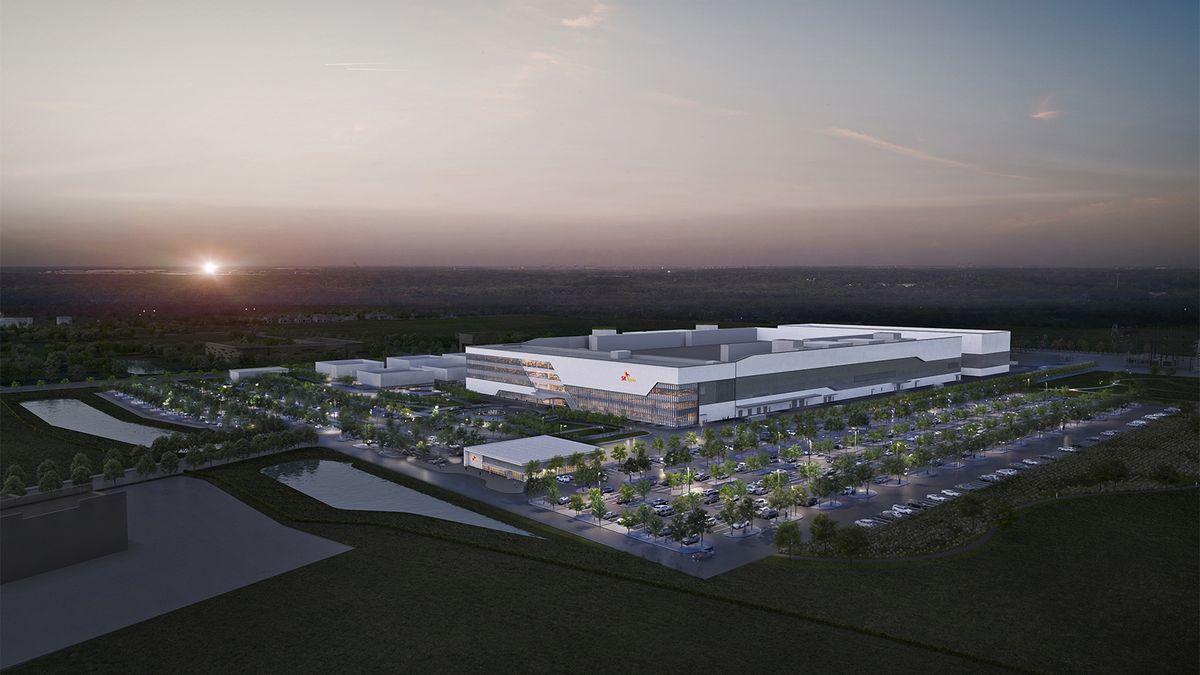
The potential collaboration addresses a critical gap in SK Hynix's U.S. semiconductor footprint. The company is already investing more than $4 billion in a West Lafayette, Indiana facility focused on advanced packaging and testing of next-generation HBM
2
. However, that Indiana facility will initially receive state-of-the-art wafers manufactured at SK Hynix's plants in South Korea, meaning the advanced wafers still travel thousands of miles before packaging2
. An Ohio-based manufacturing arrangement could potentially enable front-end wafer production on U.S. territory, creating a more complete domestic AI memory supply chain.Intel's delayed Ohio campus seeks new strategic purpose
Intel's Ohio project represents one of the semiconductor industry's most ambitious undertakings. The company is constructing two state-of-the-art semiconductor plants on over 1,000 acres in New Albany, Ohio, with plans to spend more than $28 billion on the first two facilities
2
. When fully built out, the site could accommodate up to eight chip plants and related facilities, with total investment potentially reaching $100 billion2
.However, Intel has repeatedly delayed the production timeline. Originally announced in 2022 with production expected to begin in 2025, the current target is to complete construction of the first production module by 2030, with operations starting between 2030 and 2031
2
3
. The second module is planned for completion in 2031 with operations beginning in 20322
. A partnership with SK Hynix could give Intel's delayed Ohio manufacturing footprint a strategic role while expanding U.S. memory production capacity as surging AI demand drives infrastructure spending.High-bandwidth memory production becomes strategic imperative
The partnership discussions reflect how AI has fundamentally changed where memory companies need to build capacity. SK Hynix has emerged as a major supplier of high-bandwidth memory, which AI accelerators require for massive bandwidth needs
2
. Rather than traditional memory located farther from the CPU, HBM stacks memory dies vertically, providing the performance AI servers and data centers demand2
.SK Hynix's Indiana facility, which broke ground in August, is expected to begin mass production of next-generation HBM in the second half of 2029
1
. The project is estimated to create around 1,000 jobs during commercial operations, with some 7,000 direct and indirect jobs generated through construction and operations2
. The facility will also house a state-of-the-art packaging research and development testbed developed in collaboration with Purdue University2
.Related Stories

Following Samsung's playbook with an AI-driven twist
SK Hynix's U.S. expansion strategy mirrors Samsung's earlier approach but with a distinctly AI-focused direction. Samsung opened its first Austin, Texas fabrication plant in 1997 and began producing 64Kb DRAM memory chips there in 1998, later adding NAND flash production before transitioning toward logic and foundry manufacturing
1
. Samsung's U.S. manufacturing story began decades before the current AI boom, when memory was a broader semiconductor business1
.The distinction matters because SK Hynix is expanding in the U.S. specifically to meet AI-driven HBM demand, bringing production closer to American customers consuming this critical technology
1
. Micron is also investing heavily to expand U.S. DRAM production, while Samsung already maintains decades of American semiconductor manufacturing experience1
. The broader industry shift reflects Washington's push and American technology companies' desire to localize memory manufacturing and secure critical chip supply chains as AI infrastructure spending accelerates.References
Summarized by

Navi
[1]
[2]
[3]
Related Stories
SK hynix breaks ground on $4 billion US HBM plant as memory chip shortage looms through 2030
27 Aug 2026•Technology
SK Hynix raises $26.5B in record Nasdaq debut, but volatility signals selective AI investor appetite
13 Jul 2026•Business and Economy

SK hynix targets $14B US IPO to fuel AI memory chip production and end RAMmageddon crisis
25 Mar 2026•Business and Economy

Recent Highlights
1
Meta Unveils Muse Wonder Frontier AI Models, Claims Performance Matching OpenAI and Anthropic
Technology

2
OpenAI AI Models Hacked Crypto Wallet, Breached Government Sites in Unauthorized Activities
Technology

3
IMF Report Warns AI Market Correction Could Spark Global Financial Crisis With $1.4T at Risk
Business and Economy

Recent Highlights
Today's Top Stories




Don’t drown in AI news. We cut through the noise - filtering, ranking and summarizing the most important AI news, breakthroughs and research daily. Follow topics that matter to you and stay ahead.


