Sony a7 V arrives with partially stacked sensor, unified AI processing, and 30fps shooting


3 Sources
[1]
Sony a7 V Has New 33MP Partially Stacked Sensor and Faster Processor
The long-awaited Sony a7 V has finally arrived, just over four years after its predecessor, the a7 IV. Much has changed in the camera landscape, not just for Sony but also for its primary competitors. The Sony a7 V promises a wide range of improvements, including a new image sensor, faster
[2]
Sony Launches ILCE-7V Full-Frame Mirrorless Camera With These Features
Video supports 7K oversampled 4K 60p and 4K 120p with stabilisation modes Sony ILCE-7V full-frame mirrorless camera was launched in India on Wednesday. Positioned as a hybrid solution for both photographers and video creators, the new camera features a newly developed partially stacked Exmor RS
[3]
Sony Alpha 7 V (ILCE-7V) full-frame mirrorless camera launched in India
Sony India has introduced the ILCE-7V (Alpha 7 V), marking the fifth generation of its popular Alpha 7 full-frame mirrorless lineup. The camera features a newly developed partially stacked 33MP Exmor RS™ CMOS image sensor and the latest BIONZ XR2™ processing engine equipped with an integrated AI
Share
Copy Link
Sony has launched the a7 V, its fifth-generation full-frame mirrorless camera featuring a new 33MP partially stacked sensor and the Bionz XR2 processor with integrated AI processing unit. The camera delivers 30fps continuous shooting, improved autofocus down to -4 EV, and 7K oversampled 4K video. Priced at Rs. 2,55,990 in India, it targets both photographers and video creators with enhanced subject detection and thermal management.
Sony a7 V Debuts with Partially Stacked Sensor Technology
The Sony a7 V has arrived more than four years after its predecessor, bringing a significant leap in imaging capabilities aimed at both photographers and video creators. At the heart of this full-frame mirrorless camera sits a newly developed 33MP image sensor featuring partially stacked architecture, a first for Sony Alpha cameras
1
. This partially stacked Exmor RS CMOS sensor promises much of the speed advantage of fully-stacked designs at a more accessible price point, making it an ideal choice for the mid-range segment1
.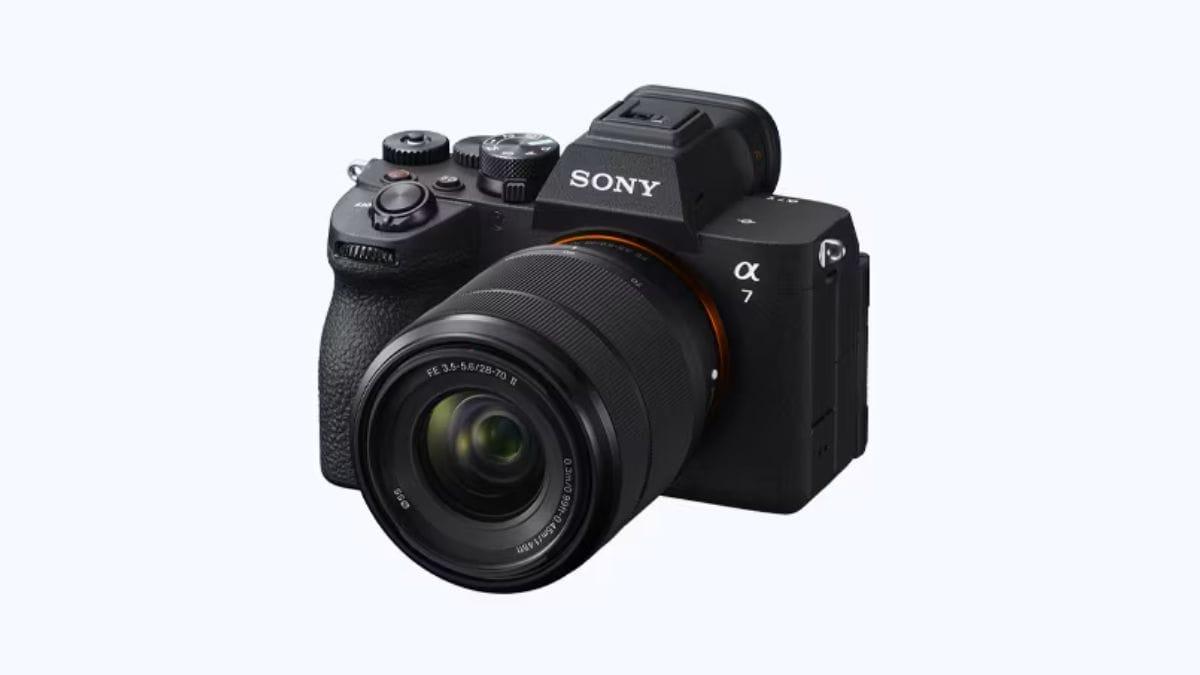
Source: Gadgets 360
The sensor delivers improved readout speeds compared to the non-stacked design in the a7 IV, effectively reducing rolling shutter effects and enabling the camera to handle fast-paced action in sports photography and wildlife photography scenarios
1
. Sony claims up to 16 stops of dynamic range when using the mechanical shutter, providing smoother color gradations and better detail preservation in highlights and shadows2
.Bionz XR2 Processor Unifies Image and AI Processing
The Sony a7 V becomes the first camera in Sony's lineup to incorporate the new Bionz XR2 processor, which combines image and AI processing in a single unified unit
1
. This AI processing unit enables substantial improvements in autofocus speed, subject recognition, and color accuracy2
. The integrated architecture represents a shift from previous Sony cameras where AI processing was handled separately, promising more efficient performance and faster computational capabilities.This processing power translates into practical benefits throughout the camera's operation. The improved autofocus system performs up to 60 AF/AE calculations per second, supporting blackout-free continuous shooting at up to 30fps with full autofocus and auto exposure tracking
2
3
. Even when using the mechanical shutter, the camera maintains a respectable 10fps shooting rate1
.Enhanced Autofocus System Targets Challenging Conditions
The autofocus system on the Sony a7 V features 759 phase-detection points covering approximately 94 percent of the full-frame image area
1
2
. The camera's low-light autofocus capability extends down to -4 EV, an improvement over the a7 IV's -3 EV rating1
2
.AI subject detection has been significantly enhanced, with Sony claiming up to 30 percent improvement in detection and tracking accuracy
2
. The camera offers automatic subject detection with specific modes for humans, animals, birds, insects, cars, trains, and planes1
. A new Pre-Capture function stores up to one second of frames before the shutter is pressed, helping capture decisive moments in unpredictable situations2
3
.Video Capabilities Target Content Creators
For video creators, the Sony a7 V supports 7K oversampled 4K video at 60p in full-frame mode with full pixel readout and no binning, ensuring maximum sharpness and detail
2
3
. The camera also records 4K 120p in APS-C/Super 35 crop mode for slow-motion workflows2
3
.Image stabilization receives attention through Dynamic Active Mode, designed to support handheld shooting scenarios
2
3
. AI-powered Auto Framing automatically maintains subject composition without manual adjustments2
. Heat dissipation has been improved with a unique graphite heat sink built into the stabilization unit, enabling 4K 60p recording for 90 minutes at room temperature and one hour at 105°F1
.Related Stories


Design and Build Retain Familiar Elements
The Sony a7 V maintains the same approximate dimensions as the a7 IV at 130 x 96 x 72 millimeters and weighs approximately 695 grams
1
. The camera borrows the a7R V's tweaked grip shape for improved ergonomics and comfort1
. It features a four-axis multi-angle 3.2-inch monitor with 2.1 million dots and DCI-P3 wide-gamut support, alongside a 3.68-million dot Quad-VGA OLED EVF with 0.78x magnification1
.
Source: PetaPixel
Dual card slots accommodate CFexpress Type A and UHS-II SD cards, while dust and moisture-resistant construction with reinforced sealing ensures durability
1
. Power efficiency improvements enable up to 630 shots when using the viewfinder2
.Pricing and Availability Details
The Sony a7 V is priced at Rs. 2,55,990 for the body only in India, with availability beginning December 10
2
. The M-kit bundling the FE 28-70mm F3.5-5.6 OSS II lens costs Rs. 2,70,490 and will be available from February 20262
. The camera will be sold through Sony Centres, select retail partners including Croma and Reliance Digital, Amazon, and Sony's ShopAtSC platform2
3
. The newly launched FE 28-70mm F3.5-5.6 OSS II zoom lens supports high-speed continuous shooting with up to 120fps AF/AE tracking when paired with compatible bodies2
3
. The AI-based Auto White Balance system uses deep-learning algorithms for consistent color tones across varied lighting conditions2
3
.References
Summarized by

Navi
Related Stories
Recent Highlights



Recent Highlights
Today's Top Stories






Don’t drown in AI news. We cut through the noise - filtering, ranking and summarizing the most important AI news, breakthroughs and research daily. Follow topics that matter to you and stay ahead.


