6 Sources
[1]
Sony's new Xperia phone gets an overdue redesign
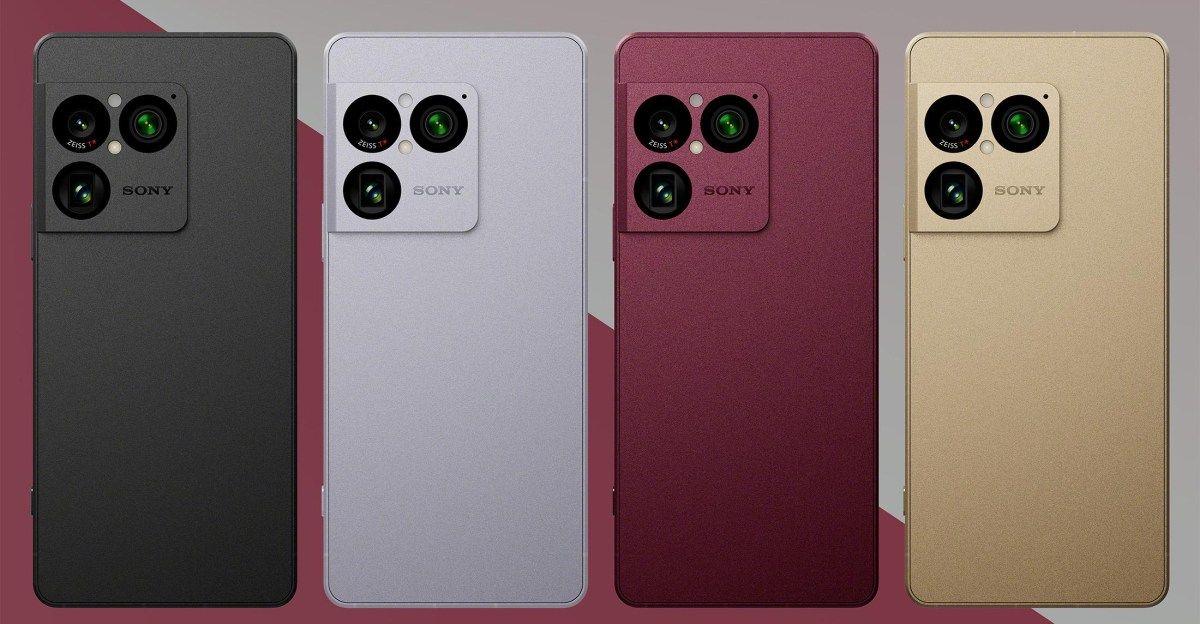
Sony's Xperia 1 flagships have looked more or less the same since 2020, but that's finally changing with the Xperia 1 VIII, which moves to a chunky square camera island. The phone also boasts what should be a substantially improved telephoto camera, along with an AI camera assistant that looks like an improved version of Google's Camera Coach. While every previous Xperia 1 phone has had three vertical cameras, and the last six have positioned them in the same top-left corner spot, the 1 VIII mixes things up. The three lenses are now laid out in a square block, together with the flash and a Sony logo, that's raised from the phone but slopes towards its edge. It's a little bit iPhone, but more closely resembles the design of some of Motorola's recent Edge phones, though with an angularity that feels distinct to Sony. It's the main part of an overdue design refresh, blowing fresh air into Sony's slick, but now slightly stale, aesthetic. It's a surprise too, not least because it doesn't at all match the Xperia 10 VII, which also got a whole new look recently, but adopted a horizontal camera bar instead. The Xperia 1 VIII is available in four colors: black, silver, red, and a gold that's exclusive to Sony's online store. There's a subtle texturing to the camera island, the frosted glass back, and the aluminum edges, along with a knurled finish on the dedicated camera shutter button. Like previous Sony phones there's a 3.5mm headphone jack too, plus a microSD slot and a combined IP65/68 resistance rating (this used to be the best around, though has since been bested by a number of IP68/69 phones). The redesign may be overdue aesthetically, but it probably serves practical purpose too, allowing Sony to fit in a substantially larger sensor for the phone's telephoto lens. The 1/1.56-inch-type sensor here is almost four times larger than the Xperia 1 VII's, much bigger than either Apple or Samsung's best, and close in size to those found in the Vivo X300 Ultra and Xiaomi 17 Ultra. With a relatively fast f/2.8 aperture and 48-megapixel resolution, this 70mm-equivalent lens could be one of the best telephotos around, so long as Sony nails the processing. The only downside is that to fit in the larger sensor, Sony has given up on the continuous optical zoom found on its last four flagships -- just as Xiaomi has copied the feature in its own 17 Ultra. The telephoto is joined by main and ultrawide cameras, both 48-megapixel and essentially unchanged from the previous phone. The camera system as a whole has been improved with a new RAW multi-frame processing pipeline, better bokeh, and updated macro shooting that's been incorporated into the default camera mode and now supports autofocus too. The other big camera upgrade is an AI camera assistant. When you're preparing to take a photo, this will suggest different options for filters, framing, and which lens to use, together with more fine-tuned tweaks like brightening the photo's subject, but not its background. The suggestions pop up before you take a photo, though Sony says you can turn the feature off entirely if you prefer. It seems much more powerful than the rather basic AI Camera Coach functionality on Google's Pixel 10 phones, though I suspect many will prefer the fact that Google's mode must be activated manually, while Sony's appears to be on by default. Sony has packed in a few other upgrades too. There are new full-stage stereo speakers, apparently tuned together with Sony Pictures and Sony Music, which are clearer and louder than before. The 5,000mAh battery and 30W charging are unchanged, though Sony says the phone will last an hour longer than before thanks to a few optimizations under the hood. It's now powered by the latest Snapdragon 8 Elite Gen 5, and comes with up to 16GB of RAM and 1TB of storage (though only in the online-only gold finish). One big downside is that it will only receive four years of OS updates, and six of security patches, fewer than almost any other comparable flagship. The Xperia 1 VIII starts from £1,399 / €1,499 (about $1,765) for the standard model with 12GB of RAM and 256GB of storage. The 16GB / 1TB model is a punchy £1,849 / €1,999 ($2,355). The phone is available to order now in Europe and Asia, but Sony has no plans for a North American launch.
[2]
Sony's Xperia 1 VIII has bigger camera sensors and a new look - Engadget
Sony has launched a new flagship phone, the Xperia 1 VIII, with its most notable features revolving around photography. The phone comes with the brand's new AI Camera Assistant powered by Xperia Intelligence. Sony says the assistant can suggest changes to your settings based on what you're photographing. When you point the camera at your subject, the assistant is supposed to automatically recognize the scene, the subject itself and the weather conditions to make suggestions on the best color tones, lens and bokeh effects to use. You can then tap on the suggestion to apply it to your photo. The new Xperia also features a new 1/1.56‑inch image sensor in its telephoto camera. Sony says it's approximately four times larger than the one it used in the previous model and enables detailed images even in low-light conditions. The phone applies RAW multi-frame processing, HDR and noise reduction for photos taken in low light. All of the device's rear cameras are now arranged in a square rather than on a vertical island. In front, there's a 12-megapixel camera for selfies. Aside from its photography-focused capabilities, another standout feature is the 3.5mm audio jack for wired headphones, which you rarely find on modern smartphones. Sony's Xperia 1 VIII has a 6.5-inch OLED display and is powered by Qualcomm's Snapdragon 8 Elite Gen 5 Mobile Platform. It will be available in Graphite Black, Iolite Silver, Garnet Red and Native Gold colors for 1,499 euros or £1,399 for the 12GB RAM/256GB storage configuration and for 1999 euros / £1,849 for the 16GB RAM/1TB storage configuration. You can pre-order the phone starting today and get it in June at the earliest, but only if you're in Europe. Sony has no plans to bring it to the US at the moment. If you do pre-order, you'll get Sony's WH-1000XM6 headphones for free.
[3]
Sony's New Xperia 1 VIII Phone Got a Photographer-Focused Refresh
Sony has officially announced the new Sony Xperia 1 VIII, and while the company's Xperia lineup has long catered to photographers with manual controls, shutter buttons, and Alpha-inspired features, this latest model may represent the biggest camera-focused shift in years. The Xperia 1 series has remained visually consistent since 2020, but the Xperia 1 VIII finally introduces a redesigned rear camera layout with a square camera island that replaces Sony's long-running vertical camera strip. The new look feels more modern while still maintaining Sony's understated industrial design language, complete with textured glass, knurled shutter button details, and practical touches like a microSD card slot and 3.5mm headphone jack. For photographers, however, the biggest story is not the design refresh. It is the new telephoto camera. Sony says the Xperia 1 VIII features a new 48-megapixel Type 1/1.56 Exmor RS telephoto sensor, which is nearly four times larger than the sensor used in the previous Xperia 1 VII. That is a substantial jump for a smartphone telephoto camera and puts Sony much closer to the larger-sensor approach seen in recent premium camera-centric phones from Chinese manufacturers. The telephoto system offers 70mm and 140mm equivalent focal lengths with macro capabilities and autofocus support. Sony says the redesigned module was necessary to fit the larger sensor while still keeping the phone relatively slim. For photographers accustomed to dedicated cameras, the focal length choices are notable. The 70mm perspective is a classic portrait length, while the 140mm reach pushes further into wildlife, detail, and compressed landscape territory than most flagship smartphones typically attempt. Sony claims the larger sensor significantly improves low-light performance, noise reduction, and dynamic range, especially when paired with its new RAW multi-frame processing pipeline. The Xperia 1 VIII also introduces a new AI Camera Assistant powered by what Sony calls "Xperia Intelligence." Unlike many AI camera systems that focus heavily on generative edits after capture, Sony's approach appears to be centered on helping photographers before the image is taken. The assistant can recommend framing adjustments, lens choices, bokeh settings, exposure tweaks, and color looks based on the scene, subject, and even weather conditions. Sony says photographers can further refine the suggested looks with manual adjustments to exposure, saturation, contrast, and white balance. The feature can also be disabled entirely for users who prefer a more traditional shooting experience. For photographers who already use Sony Alpha cameras, the overall philosophy will likely feel familiar. Sony continues to position the Xperia as a phone for creators who want more direct control rather than a purely point-and-shoot computational photography experience. Sony is continuing to lean heavily on its Alpha branding with the Xperia 1 VIII. The phone includes Real-time Eye AF, Real-time Tracking, RAW capture, manual exposure controls, 30fps burst shooting with autofocus and autoexposure, and 4K 120p HDR video recording. Creative Look color presets and S-Cinetone for mobile also return, giving users access to Sony's familiar cinematic color science directly from the phone. Macro shooting has also been expanded. The phone can now automatically switch into ultra-wide macro mode when users move close to a subject, while the telephoto lens supports telemacro shooting at a minimum focusing distance of roughly 15 centimeters. Sony's dedicated two-stage shutter button also remains, allowing half-press autofocus lock much like a dedicated camera. Beyond the cameras, Sony continues to preserve several hardware features that have disappeared from most flagship smartphones. The Xperia 1 VIII retains expandable storage via microSD, wired audio via a headphone jack, front-facing stereo speakers, and IP65/IP68 water- and dust-resistance. For hybrid creators who shoot both photo and video, especially while traveling, the microSD slot alone may remain a significant advantage. The phone is powered by Qualcomm's Snapdragon 8 Elite Gen 5 processor and includes up to 16GB of RAM and 1TB of storage, depending on the configuration. However, Sony's software support still trails behind competitors. The company promises four years of Android OS updates and six years of security patches, which is shorter than many rival flagship devices now offer. For photographers, the Xperia 1 VIII looks like Sony doubling down on a niche but loyal audience: creators who want a smartphone that behaves more like a camera rather than a fully automated computational imaging device. Despite the camera improvements, Sony once again has no plans to release the Xperia 1 VIII in North America. The device will launch in Europe and Asia, with pricing starting at £1,399 / €1,499 for the 12GB RAM and 256GB storage version. Sony is also offering a higher-end 16GB RAM and 1TB storage model in an exclusive gold finish for £1,849 / €1,999.
[4]
Sony Xperia 1 VIII launches with a Google Pixel-style camera assist feature and a new design
* Sony has launched the Xperia 1 VIII * It has a redesigned camera block, a new telephoto sensor, an AI camera assistant, and a top-end chipset * It also costs more than most high-end phones, and isn't available in much of the world Like clockwork, the Sony Xperia 1 VIII has now been announced, a year to the day after the Sony Xperia 1 VII. But while the day is the same, the details are different, as Sony has given its new phone a much-needed redesign. That's mostly meant changing the camera block, so instead of the vertical line of lenses in the top left corner that we've seen since the Sony Xperia 1 II, there's now a square camera block, with the metal housing wrapping around to the left edge of the phone. Other than some new gemstone-inspired shades (Graphite Black, Iolite Silver, Garnet Red, and Native Gold), that's the only major visual change, but it makes the new phone look dramatically different. The other big change this year also relates to the cameras, as they include a new AI Camera Assistant that will suggest things like lenses, bokeh effects, and color tones, based on the scene and subject, to help ensure your photos look their best. It sounds a bit like the Camera Coach feature on the Google Pixel 10 Pro series, so it's not a totally new idea, but it's a potentially useful implementation of AI anyway. The cameras, by the way, include a 48MP f/1.9 wide, a 48MP f/2.0 ultra-wide, a 48MP f/2.8 telephoto with a 70mm focal length, for roughly 2.9x optical zoom, and a 12MP f/2.0 front-facing camera. Those are largely the same lenses as last year, except for the telephoto, which was previously only 12MP and with a roughly four times smaller sensor, but which had a continuous optical zoom, so you could optically zoom to more distances. Instead, on the new phone, you can use sensor cropping to get near optical-quality zoom at other distances. Other specs of the Sony Xperia 1 VIII include a top-end Snapdragon 8 Elite Gen 5 chipset, a 5,000mAh battery with the promise of two days of life, a 6.5-inch 1080 x 2340 OLED screen with a 120Hz refresh rate, an IP68 rating, and full-stage stereo speakers, which likely means you'll get better audio from them than most phone speakers. It also continues to have features that the rest of the smartphone industry is largely abandoning, like a 3.5mm headphone port and a microSD card slot -- plus sizable bezels above and below the screen, rather than a punch-hole camera. A high price and relatively limited support Unfortunately, those bezels aren't the only bad element of the Sony Xperia 1 VIII, as it is also only promised four major Android operating system upgrades, along with six years of security updates. That's not terrible, but it's dwarfed by the likes of the Samsung Galaxy S26 series and the Google Pixel 10 line, both of which are promised seven years of Android updates. And it's not as if the Sony Xperia 1 VIII is a cheaper phone -- in fact, it costs more, with a starting price of £1,399 for a version with 12GB of RAM and 256GB of storage, rising to £1,849 for a model with 16GB of RAM and 1TB of storage. There's no availability in the US or Australia, but for comparison, the Samsung Galaxy S26 Ultra starts at $1,299 / £1,279 / AU$2,199, the Pixel 10 Pro XL starts at $1,199 / £1,199 / AU$1,999, and the iPhone 17 Pro Max starts at $1,199 / £1,199 / AU$2,149. So, Sony's phone costs more than any of these, likely making it hard to justify for most would-be buyers. If you do want the Sony Xperia 1 VIII, though, and you live somewhere that it's available, you'll be able to pre-order it now, with UK shipping estimates currently showing as June 19. And if you do pre-order, you will at least get a pair of Sony WH-1000XM6 headphones thrown in free, which are worth $449 / £399 / AU$699 in their own right. Follow TechRadar on Google News and add us as a preferred source to get our expert news, reviews, and opinion in your feeds. Make sure to click the Follow button! And of course you can also follow TechRadar on TikTok for news, reviews, unboxings in video form, and get regular updates from us on WhatsApp too.
[5]
Sony's Xperia 1 VIII is official, and it's one of the biggest redesigns in years - Phandroid
Sony doesn't make phones for everyone, and it's never really tried to. The Xperia 1 series has always been built for a specific kind of person. Someone who shoots in manual mode, records 4K video on a phone, and genuinely cares about a headphone jack in 2026. The Sony Xperia 1 VIII is now official, and this year it comes with one of the biggest visual overhauls the line has seen in a long time. The most obvious change is the camera module. Gone is the long vertical stack that's defined every Xperia 1 since the VII. The VIII switches to a square camera island, which is a significant shift for a lineup that's looked largely the same for years. Inside that new housing sits a triple 48MP system. That's a 24mm main, a 16mm ultrawide, and a new 70mm telephoto with a 1/1.56-inch sensor. That telephoto is roughly four times the size of last year's. It should make a real difference in low light and natural background blur. The trade-off is zoom range. Sony ditched the variable 85-170mm periscope zoom from the Xperia 1 VII in favor of a fixed 70mm lens. You gain a much better sensor, but you lose the flexibility at the long end. Elsewhere, the specs are what you'd expect from a 2026 Sony flagship. Snapdragon 8 Elite Gen 5, a 6.5-inch 120Hz FHD+ OLED display, 12GB of RAM with 256GB of storage you can expand via microSD, and a 5,000mAh battery. The headphone jack is still here. So is IP68 water resistance. A Sony Store exclusive 16GB/1TB model is also available if you want more headroom. Sony's also introducing an AI Camera Assistant. It analyses a scene and suggests settings or modes as you shoot. It's optional, and photographers who prefer full manual control can ignore it entirely. A dedicated physical button to summon Xperia AI is new too. Pricing in Europe starts at around £1,399 or €1,499. Pre-orders come with a pair of Sony WH-1000XM6 headphones bundled in. There are no plans for a US launch, same as last year.
[6]
Sony Xperia 1 VIII with 6.5'' FHD+ OLED 120Hz display, Snapdragon 8 Elite Gen 5, upgraded telephoto sensor announced
Sony has officially announced the launch of its latest flagship smartphone, the Xperia 1 VIII, as expected. The new device introduces several hardware and software upgrades, primarily focusing on an enhanced camera system, a redesigned chassis, and updated processing power. The standout feature of the Xperia 1 VIII is the introduction of the new AI Camera Assistant, powered by Xperia Intelligence. This system uses artificial intelligence to analyze subjects and weather conditions, subsequently suggesting optimal camera settings such as color tones, lens selections, and bokeh effects. These recommendations are integrated with Sony's "Creative Look" profiles, drawing from the company's Alpha camera line. Hardware upgrades include a significantly larger image sensor for the telephoto lens. The Xperia 1 VIII features what Sony refers to as the "ORE design," which incorporates textures inspired by natural materials and raw gemstones. The device is powered by the Snapdragon® 8 Elite Gen 5 Mobile Platform from Qualcomm. According to Sony, this chipset provides a 20% increase in overall performance compared to the previous generation, improving processing speeds for multitasking and content creation. It retains the 5000mAh battery. For battery life, Sony claims the Xperia 1 VIII can last up to two days on a single charge and maintains battery health for up to four years. To further improve efficiency, a new "Processing Optimization" feature has been implemented to reduce power consumption when using demanding applications, such as map and navigation software. Sony is also releasing an optional translucent case designed to complement the phone's aesthetic. The case features a built-in stand for both vertical and horizontal viewing and uses materials designed to resist yellowing over time.
Share
Copy Link
Sony has unveiled the Xperia 1 VIII with its first major camera redesign since 2020, swapping the signature vertical lens arrangement for a square camera module. The flagship smartphone features an AI Camera Assistant powered by Xperia Intelligence that suggests settings before you shoot, plus a dramatically larger telephoto sensor that's four times bigger than its predecessor.
Sony has officially launched the Sony Xperia 1 VIII, marking the most significant visual overhaul the Xperia 1 series has seen in years. The flagship smartphone abandons the vertical camera strip that has defined every Xperia 1 model since 2020, introducing instead a redesigned camera layout with a square camera module
1
. The new design features three 48-megapixel lenses arranged in a square block alongside the flash and Sony logo, raised from the phone but sloping toward its edge1
. While the aesthetic shift feels overdue for a lineup that has maintained visual consistency for half a decade, the camera redesign serves a practical purpose beyond mere looks.
Source: The Verge
The most significant upgrade in this photographer-focused refresh centers on the new telephoto sensor. Sony equipped the Xperia 1 VIII with a 48-megapixel Type 1/1.56 Exmor RS telephoto sensor that measures nearly four times larger than the sensor used in the previous Xperia 1 VII
3
. This substantial jump puts Sony much closer to the larger-sensor approach seen in premium camera-centric phones from manufacturers like Vivo and Xiaomi1
. The telephoto system offers 70mm and 140mm equivalent focal lengths with an f/2.8 aperture, providing classic portrait perspective and compressed landscape territory that most flagship smartphones don't typically attempt3
. Sony claims the larger sensor significantly improves low-light photography, noise reduction, and dynamic range, especially when paired with its new RAW multi-frame processing pipeline3
. The trade-off is that Sony sacrificed the continuous optical zoom found on its last four flagships to accommodate the larger sensor1
.Sony introduces an AI Camera Assistant that represents a significant departure from purely computational photography approaches. Powered by what Sony calls Xperia Intelligence, the assistant can suggest changes to settings based on what you're photographing
2
. When you point the camera at your subject, the system automatically recognizes the scene, the subject itself, and weather conditions to make recommendations on the best color tones, lens choices, bokeh effects, and exposure tweaks2
. This Google Pixel-style camera assist feature presents suggestions before you take a photo, allowing photographers to tap on recommendations to apply them or refine them with manual adjustments to exposure, saturation, contrast, and white balance3
. The feature can be disabled entirely for users who prefer traditional manual control4
.

Source: TechRadar
Related Stories
Sony continues preserving hardware features that have disappeared from most flagship smartphones. The Xperia 1 VIII retains a 3.5mm headphone jack, microSD card slot for expandable storage, dedicated two-stage shutter button with half-press autofocus lock, and IP65/IP68 water and dust resistance
3
. The phone includes Real-time Eye AF, Real-time Tracking, RAW capture, manual control, 30fps burst shooting with autofocus and autoexposure, and 4K 120p HDR video recording3
. It features a 6.5-inch OLED display with 120Hz refresh rate and full-stage stereo speakers tuned with Sony Pictures and Sony Music1
. Powered by Qualcomm's Snapdragon 8 Elite Gen 5 processor, the device comes with up to 16GB of RAM and 1TB of storage, though the highest configuration is exclusive to Sony's online store in Native Gold1
. The 5,000mAh battery with 30W charging promises two days of battery life4
.
Source: Phandroid
The Xperia 1 VIII faces limited availability, with Sony once again excluding North America from launch plans. The device will be available in Europe and Asia starting at £1,399 or €1,499 for the 12GB RAM and 256GB storage configuration, rising to £1,849 or €1,999 for the 16GB RAM and 1TB storage model
1
. This pricing positions it above competitors like the Samsung Galaxy S26 Ultra at $1,299 and the Google Pixel 10 Pro XL at $1,1994
. Pre-orders include Sony WH-1000XM6 headphones valued at £3994
. However, Sony promises only four years of Android OS updates and six years of security patches, fewer than the seven years offered by Samsung and Google4
. For creators who want a smartphone that behaves more like a camera rather than a fully automated computational imaging device, the Xperia 1 VIII represents Sony doubling down on a niche but loyal audience3
.Summarized by
Navi
[1]
[4]
1
Technology

2
Policy and Regulation

3
Technology

News Categories