South Korea readies its 2008 crisis fund as an AI sell-off spreads across Asia


3 Sources
[1]
Asian regulators rush to support sagging markets as AI trade falters
Shares of region's chipmakers and hardware suppliers especially vulnerable to turn in sentiment Regulators across east Asia, where the AI frenzy had fuelled a record run for shares of chipmakers and hardware suppliers, are now rushing to stem declines in their stock markets as confidence in the
[2]
Korea prepares market rescue fund amid fears of AI-fueled sell-off
A string of setbacks in the AI sector has rattled global markets, triggering a sell-off led by Wall Street and raising fears of a spillover into Korea. In response, Seoul decided on emergency measures to shore up its markets, including preparations to immediately activate a stock market
[3]
Asian Regulators Step Efforts to Calm AI-Driven Market Turmoil
Regulators and market operators in China, South Korea and Taiwan have rolled out emergency measures to arrest the turmoil sparked by the global rout in artificial-intelligence stocks. Asian markets remained volatile on Monday, though some improvements suggest the moves could be soothing worries
Share
Copy Link
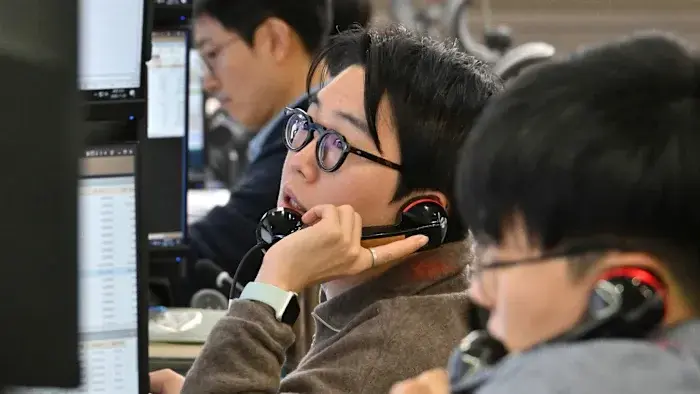
South Korea's finance ministry summoned the central bank and the country's top market regulators to an emergency meeting on Sunday afternoon, readying a stock market rescue fund that has sat unused since the 2008 financial crisis. The weekend scramble shows how seriously officials in Seoul judge the threat from an AI-driven sell-off that has now wiped trillions off markets worldwide.
Why the weekend
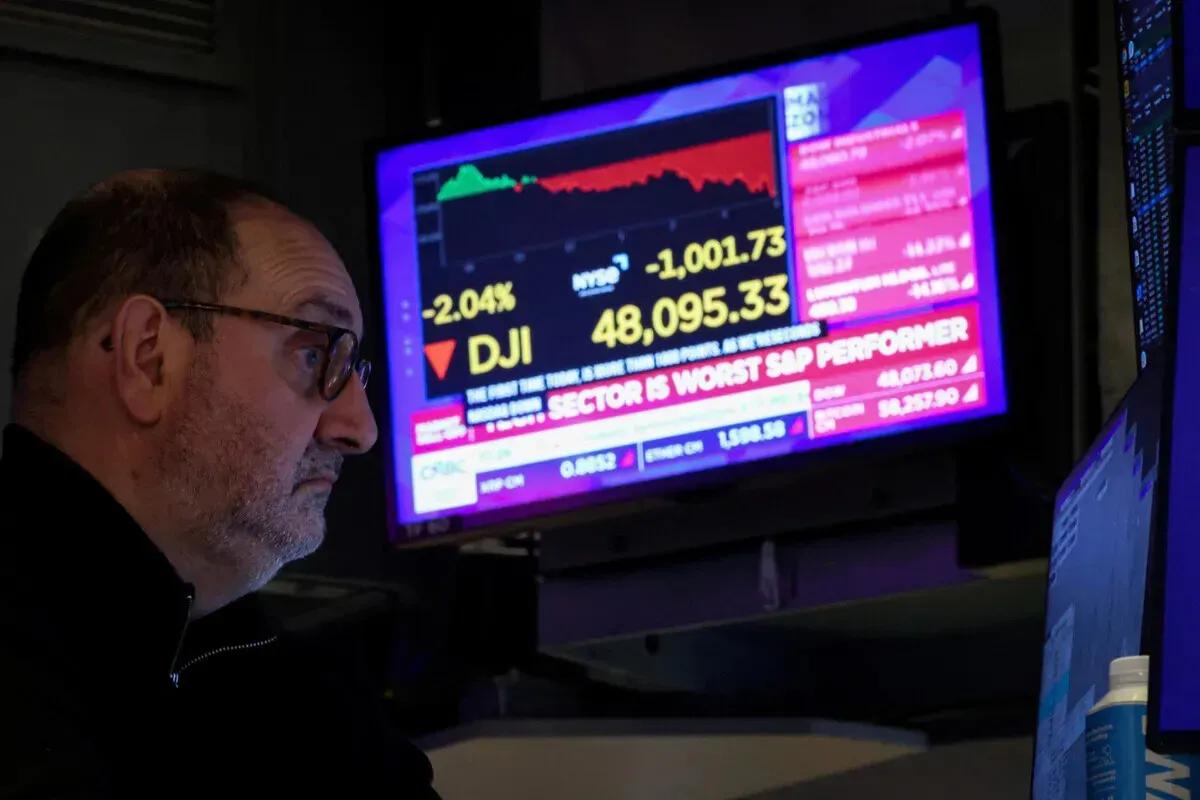
The trigger came from the United States on Friday, when the Standard & Poor's 500 index dropped 3.7%
2
. The Nasdaq fell 5.28%2
. Nvidia, described by one outlet as the tech sector's bellwether, fell 14.01% to $125.53, leaving the stock 48% below its October 6 peak2
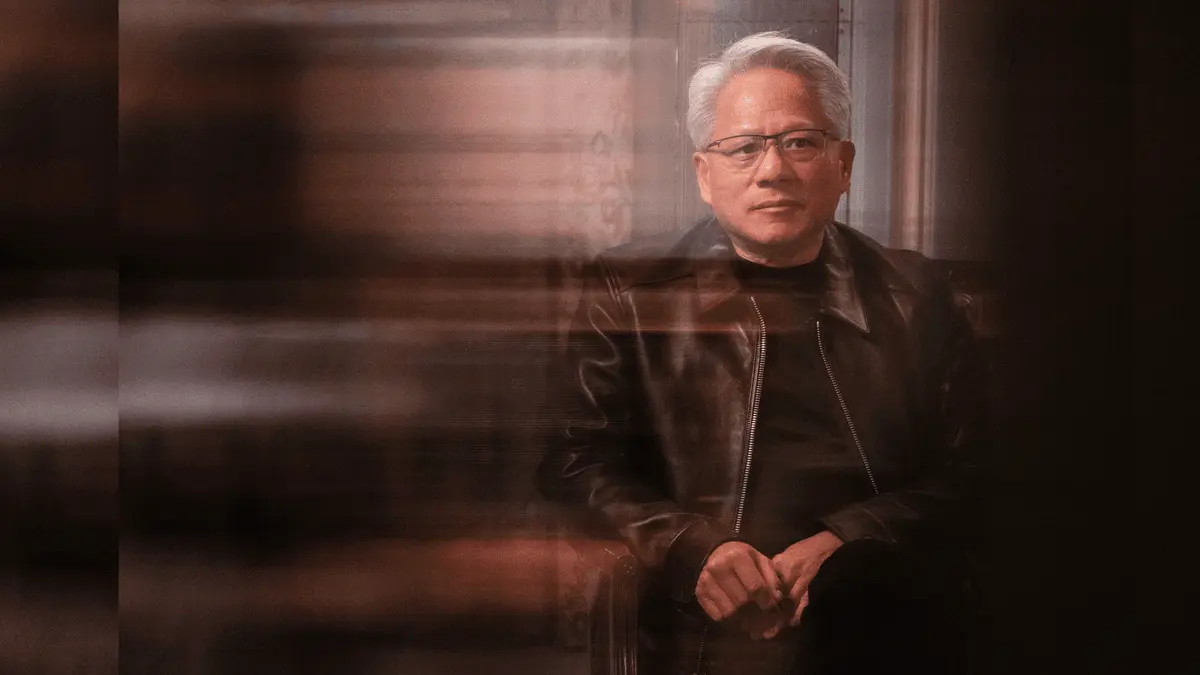
. Jensen Huang resigned as Nvidia's chief executive amid a scandal2
3
. One outlet links the subsequent selloffs in AI-related stocks to investor worries about the billions in financing he had orchestrated2
3
. Anthropic's turbulent stock market debut capped a roughly $4 trillion wipeout in US markets last week2
3
.
Source: Hankyoreh
The anxiety was already visible at home. Korea's overnight futures on the Kospi 200 index closed Saturday morning down 6.99% from the regular-session close, and the Kospi 200 Volatility Index ended Friday at 53.18
2
. That is what deputy prime minister and finance minister Lee Hyoung-il convened his Sunday meeting to head off2
1
. The heads of the financial regulator and the central bank were in the room2
1
.
Source: FT
The package, and the region moving with it
Korea's response has three parts. The stock market stabilization fund is being prepared for deployment, though it has not been switched on; whether it goes live depends on how markets behave. The fund, which buys shares with money from financial institutions, was last used in 2008, when the government injected 500 billion won
2
. Daily limits on share buybacks by listed companies will be eased for three months starting Tuesday, and monitoring of illegal short selling and market manipulation will step up2
1
3
. Officials said the measures aim to head off a potential plunge in domestic stocks2
1
. "Excessive anxiety or panic selling, as long-term growth expectations for the AI industry remain intact," read a joint statement by South Korean officials1
.Seoul is not acting alone. China, South Korea and Taiwan have all entered technical bear markets, with main indices down more than 20% from recent peaks
1
3
. Regulators in all three rolled out support measures within a week1
3
. Korea's Kospi has lost more than $1.8 trillion since its June peak and is down nearly 18% month to date, while Taiwan's Taiex had its worst week since 19901
3
. China's state-backed funds bought a record $13.8 billion worth of shares on Friday, Bloomberg data shows, topping the previous high of $13 billion set after the US 'liberation day' tariff announcement1
. China's exchanges will also cut the minimum margin financing requirement to 80% from November 30, which state media says could theoretically free up nearly $60 billion3
. The exchanges said the cut aims to moderately raise leverage and improve liquidity3
. Taiwan, ahead of South Korea, banned short sales priced below the prior day's close and raised the minimum margin requirement for shorts to 150% from 130%1
3
. Its stabilization fund, set up in 2000 with about $15 billion, has been supporting stocks since November 63
.Korea's Kospi fell as much as 5.8% in Monday trading before sitting 3.2% lower, an early sign the measures may be soothing worries
3
. Taiwan's Taiex rebounded 2.9%3
. China's ChiNext gained 1.2%3
. A Goldman Sachs gauge of panic climbed to 9 out of 10 after Friday's US sell-off, per Bloomberg, suggesting the risk of further selling remained elevated going into the week2
.The deeper worry is what the rout is about. Bloomberg reports growing investor skepticism that huge investments in AI infrastructure and computing capacity can generate returns justifying sector valuations
2
. South Korea's market is heavily concentrated in two chipmakers: Samsung Electronics and SK Hynix together make up 49% of the Kospi's market capitalization2
. "Stock prices are reflecting uncertainty over the sustainability of huge investments in AI and the burden of financing them," said Seo Sang-young, a managing director at the brokerage Mirae Asset Securities2
. Kim Sung-no, an analyst at BNK Securities, expects the pressure to persist: "Given this liquidity weakening, foreign selling on the Korean market is bound to continue for the time being"2
.Related Stories

What could decide it
The next test arrives quickly. The US October PCE price index, a key input for the Federal Reserve, lands on Wednesday
2
. Hewlett Packard Enterprise reports earnings Monday and Dell follows on Tuesday, numbers that will offer a read on actual AI demand and profitability2
. "If inflation in the US exceeds expectations, fears over more rate hikes and stronger upward pressure on Treasury yields will limit the momentum for a stock market rebound," said Lee Kyung-min, an analyst at Daishin Securities2
.References
Summarized by

Navi
[3]
Related Stories
AI Stock Sell-Off Hammers Chipmakers as South Korean Market Plunges 25% in Month
28 Jul 2026•Business and Economy
South Korea's AI stocks now set the tone for global markets as chipmaker swings ripple worldwide
17 Jul 2026•Business and Economy
AI Bubble Fears Trigger Global Semiconductor Selloff as SoftBank Plunges 40%
21 Nov 2025•Business and Economy

Recent Highlights


Recent Highlights
Today's Top Stories







Don’t drown in AI news. We cut through the noise - filtering, ranking and summarizing the most important AI news, breakthroughs and research daily. Follow topics that matter to you and stay ahead.


