South Korea's AI stocks now set the tone for global markets as chipmaker swings ripple worldwide


11 Sources
[1]
How Korean stocks turned from trusty bellwether to AI frenzy
SINGAPORE, July 17 (Reuters) - Billions of dollars in leveraged bets on South Korea's AI darlings have warped a stock market once revered as a reliable barometer of global growth into a wild casino, confounding both regulators and investors. That volatility, felt on dealing desks from Tokyo to New
[2]
Korea's AI chip market is now the opening bell for global stocks
Korea's market now sets global AI sentiment. The Kospi-Nasdaq correlation has nearly tripled. SK Hynix's US listing extended Korea's influence into 24-hour trading. Fund managers in London, New York, and Tokyo have added a new step to their morning routine: checking South Korean stocks. Korea's $4
[3]
Korea's AI-heavy market now sets the tone for global stocks | Fortune
For fund managers in London, New York and Tokyo, a new ritual has emerged before trading gets underway: checking South Korean stocks. Once a peripheral market for many global investors, Korea's $4 trillion equity market is offering an early read on risk appetite as AI-driven swings in Samsung
[4]
Asian shares mostly gain and South Korea and Japan recover some losses from AI stock sell-offs
HONG KONG (AP) -- Asian shares mostly gained on Tuesday, with markets in South Korea and Japan trading higher after recent declines due to heavy selling of stocks linked to artificial intelligence. U.S. futures edged higher, while oil prices slipped. South Korea's Kospi, which is heavily reliant
[5]

Asian Shares Mostly Gain and South Korea and Japan Recover Some Losses From AI Stock Sell-Offs
HONG KONG (AP) -- Asian shares mostly gained on Tuesday, with markets in South Korea and Japan trading higher after recent declines due to heavy selling of stocks linked to artificial intelligence. U.S. futures edged higher, while oil prices slipped. South Korea's Kospi, which is heavily reliant
[6]

South Korean shares fall over 5% on AI spending concerns and oil spike
South Korean shares declined significantly on Friday due to AI spending concerns. Mega US tech firms' moderation in AI outlays impacted Asian chipmakers' outlook. Oil prices exceeding $100 a barrel also contributed to the negative market sentiment. Major chipmakers like Samsung Electronics and SK
[7]
Global Market: Citi downgrades South Korea to neutral as AI chip volatility mounts
Citigroup has downgraded South Korea to neutral after a year-long overweight stance, citing heightened volatility in AI-linked chip stocks and stretched valuations. While remaining positive on the long-term AI theme, the brokerage retained an overweight rating on Taiwan and upgraded China,
[8]
South Korea's share market losses deepen as leveraged AI bets take a heavy toll
South Korean shares experienced a significant decline, triggering market-wide trading curbs. Investors are unwinding AI-linked trades, extending a sharp correction in the KOSPI index. This selloff highlights growing investor anxiety over leveraged bets on AI chipmakers. Markets also reacted to
[9]

South Korea's Kospi drops 4.5% as some AI stocks swoon, while oil keeps climbing
HONG KONG -- Asian shares were mostly lower on Monday and South Korea's Kospi fell 4.5 per cent as investors unloaded more stocks linked to artificial intelligence. Japan's markets were closed Monday for a holiday. U.S. futures edged lower. Oil prices jumped as the U.S. and Iran moved closer to
[10]

South Korean stocks emerge as key gauge for global AI sentiment By Investing.com
Investing.com -- South Korea's $4 trillion equity market has become an important early indicator of global risk appetite, as swings in Samsung Electronics Co Ltd (KS:005930) and SK Hynix Inc (KS:000660) spread across semiconductor and artificial intelligence stocks, Bloomberg reported. Fund
[11]
Global Market: South Korea's AI-driven stock frenzy fuels volatility, challenges market fundamentals
The sharp swings have unsettled investors and regulators alike, with market movements increasingly driven by leveraged investment products rather than corporate fundamentals. The volatility has also complicated the assessment of South Korean equities, particularly as the country remains a critical
Share
Copy Link
South Korea's $4 trillion equity market has transformed from a peripheral investment destination into a critical bellwether for global AI sentiment. Fund managers in London, New York, and Tokyo now start their day by checking Korean stocks, as swings in Samsung Electronics and SK Hynix ripple through chip markets worldwide. But the influence comes with extreme volatility driven by leveraged trading.
South Korea's Kospi Becomes Global AI Bellwether
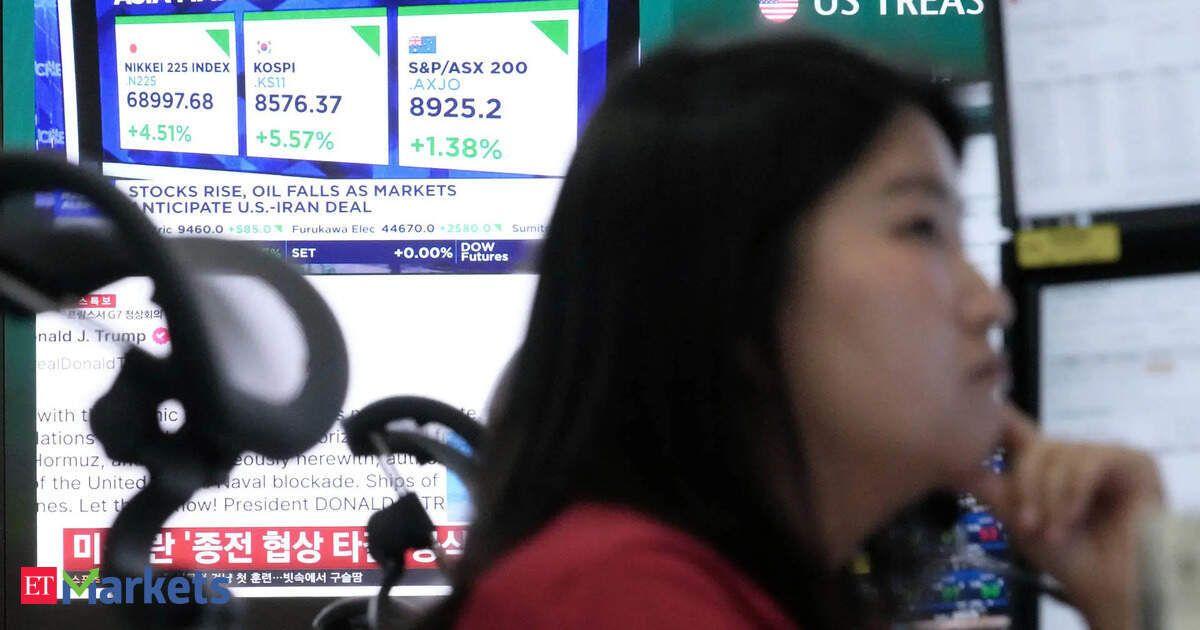
Fund managers across London, New York, and Tokyo have added an unexpected step to their morning routine: checking South Korea's stock market before their own trading begins. The country's $4 trillion equity market has transformed from a peripheral concern into a critical early indicator of global risk appetite for AI stocks
2
. "We are all Korean investors now," said Hani Redha, a London-based portfolio manager at PineBridge Investments3
. JPMorgan Asset Management's chief Asia market strategist presented on South Korea to the firm's global team for the first time in his 14 years on the job, underscoring how dramatically the market's influence has expanded2
.The data confirms this shift in global stock market sentiment. The 60-day correlation between the Kospi and the Nasdaq 100 has climbed to 0.46, near the highest level in two years and almost triple its five-year average of 0.16
2
3
. The linkage grows even stronger during selloffs: the Nasdaq 100's sensitivity to the Kospi during periods of Korean market weakness hit the highest level since 1990 on July 72
. SK Hynix's US listing has extended this influence into 24-hour trading, with Redha tracking Seoul, then SK Hynix's ADRs, then Korea-focused ETFs in New York throughout the day2
.
Source: ET
AI Chip Market Dominance Drives Global AI Supply Chain
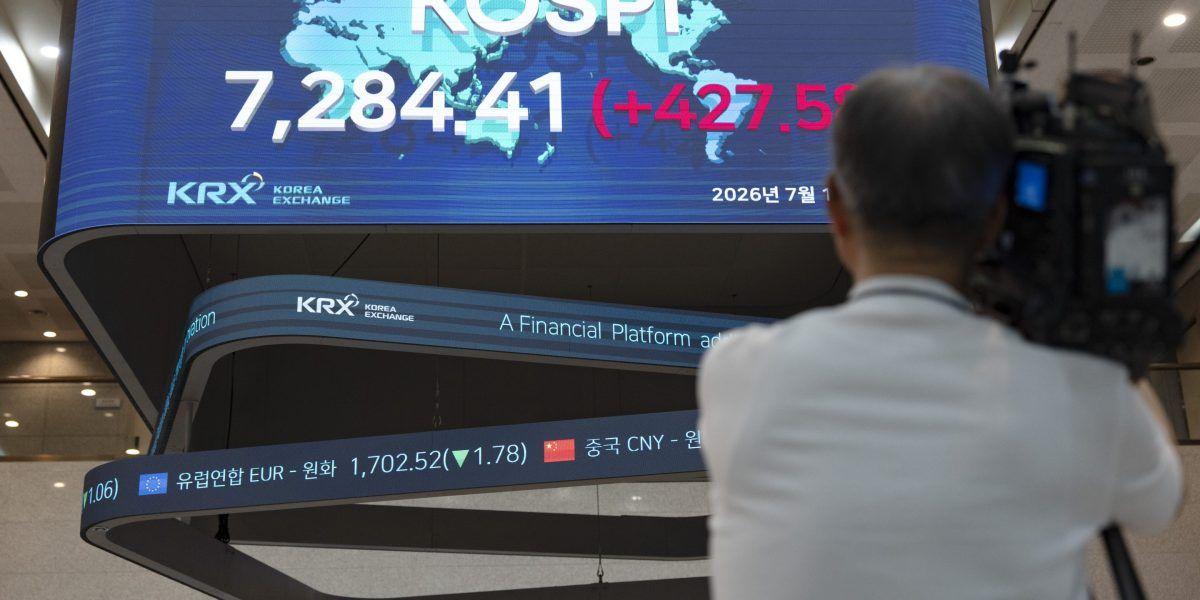
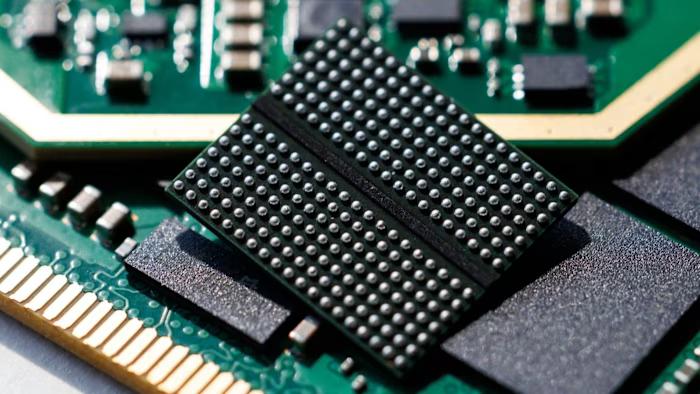
South Korea's outsized influence stems from its control over the global AI supply chain. Samsung Electronics and SK Hynix now account for more than half of the Kospi and control the majority of global memory chip supply
1
2
. This supply bottleneck means that sentiment shifts in Seoul directly affect every AI-linked stock that depends on memory chips, from Nvidia to TSMC. South Korea has committed $880 billion over a decade to chips, AI data centres, and robots, cementing its position at the heart of the AI boom2
.SK Hynix completed the biggest US capital raise by a foreign company on record last week, raising $26.5 billion, demonstrating how speculative capital is making permanent changes to companies
1
. The Kospi has gained more than 50% so far this year, ranking among the world's best performers despite recent turbulence4
5
. Ivan Feinseth, chief investment officer at Tigress Financial Partners, noted that South Korea is no longer "a distant emerging-market side show" but has "effectively become part of the same volatility ecosystem as the Nasdaq"3
.
Source: Fortune
Leveraged Trading Fuels Speculative Frenzy and Volatility
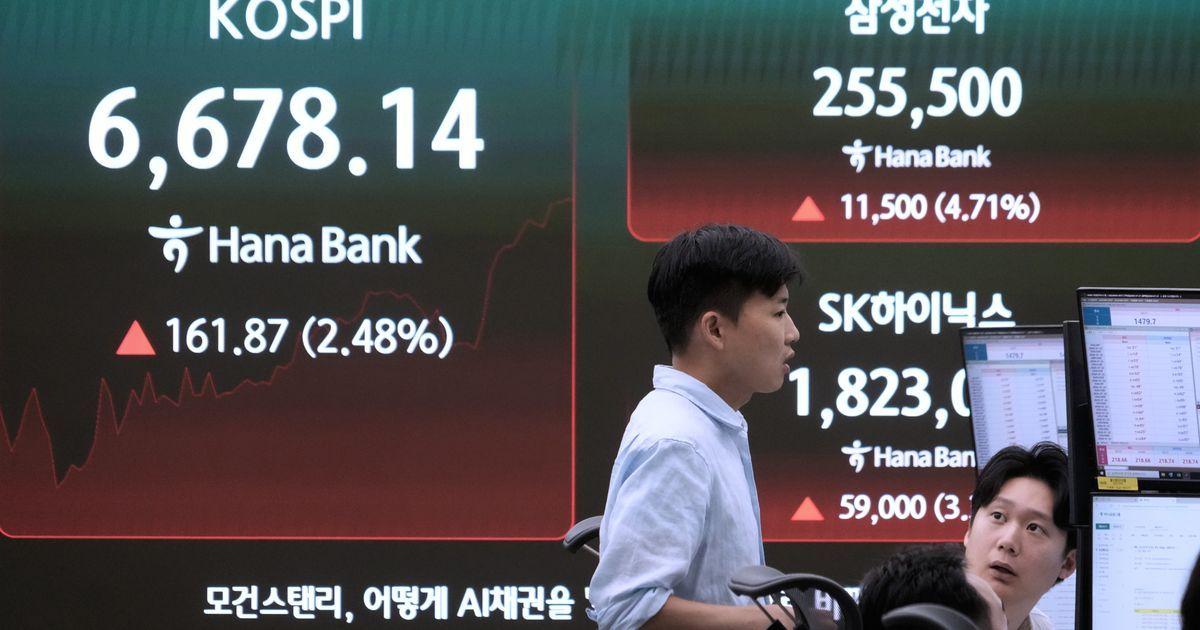
The AI-driven stock market's growing influence comes with a dangerous edge. Billions of dollars in leveraged bets on South Korea's AI stocks have transformed a market once revered as a reliable bellwether into what strategists describe as a "wild casino"
1
. More than half of all circuit breakers in Kospi history—trading curbs activated when the index loses more than 8% for at least a minute—have occurred in the past six months alone1
.South Korean retail investors had 34.37 trillion won ($23 billion) in margin loans at stake this week, slightly down from a June record of 38.6 trillion won
1
. The rally rests on concentrated bets routed through leveraged ETFs targeting chipmakers Samsung Electronics and SK Hynix. Assets in a Hong Kong-listed twice-levered SK Hynix fund ballooned more than 20 times since the start of the year to $7.78 billion, making it the largest such fund globally1
. "Some of the single-name leveraged ETFs have four times the average volume of the underlying stock," said Florian Neto, head of investment for Asia at Amundi1
.
Source: Seattle Times
Related Stories
AI Stock Sell-Offs Trigger Global Ripple Effects
The market's volatility has wreaked havoc with portfolios from Tokyo to New York. A Monday selloff driven by skepticism about AI demand triggered a near 9% Kospi drop that spilled into Wall Street, dragging SK Hynix's US shares down 9.3% and pulling down other major chip stocks
2
3
. The Kospi has tumbled 25% since its June peak, resulting in a $1 trillion wipeout2
3
. The index fell more than 20% over the past month as investors locked in profits, wary of an AI investment bubble4
."The index has decoupled from all of Korea's historical drivers," said Alexander Redman, chief equity strategist at CLSA. "Korea had been an easy market for strategists, with long-term faithful relationships to pick entry and exit points. Those relationships have since broken down"
1
. Price-to-earnings ratios at Samsung Electronics and SK Hynix have fallen to below 5, yet the market is neither pricing the full extent of future earnings nor responding to usually reliable economic correlations1
.Regulators Act to Curb Excess Without Triggering Panic
South Korea's regulators are attempting to walk a delicate line between damping excesses and avoiding a wholesale crackdown that could spook investors. The country temporarily halted new listings of single-stock leveraged exchange-traded products
2
3
. From August 5, the minimum cash balance required to trade single-stock leveraged ETFs—including those listed abroad—will be tripled to 30 million won ($20,300)1
."The volatility in the Korean equity market has been insane recently," said Mike Sell, head of global emerging market equities for London-based asset manager Alquity. "So measures to restore a focus on fundamentals can only be welcomed. A return to rationality will be positive for long-term investors"
1
. However, according to Bank of America's fund manager survey, an AI bubble ranks as the top tail risk facing markets, making movements in the Korean market critical for global investors1
.Chisa Kobayashi, Japan equity strategist at UBS, captured the new reality: "This is the new normal investors have to accept, as long as the AI rally continues. The fact that markets are being driven by a relatively immature market with leverage-related swings makes trading difficult because moves can deviate from fundamentals"
2
3
. The correlation between the Kospi and Japan's Nikkei 225 has also surged, prompting traders to add Korean stocks to their watch lists for the first time3
.As long as Samsung Electronics and SK Hynix maintain their grip on global memory chip supply, South Korea's sentiment-driven trading will continue setting the tone for AI stocks worldwide. The question facing investors is whether a market fueled by retail leverage and geopolitical risks should serve as the primary indicator for the health of the global AI sector.
References
Summarized by

Navi
[2]
[4]
Related Stories
AI Stocks Tumble as Investors Question Massive AI Infrastructure Spending and Valuations
13 Jul 2026•Business and Economy
KOSPI Rallies on Strong AI Demand as South Korean Exports Surge 68.7% in August
27 Aug 2026•Business and Economy
AI Stocks Crash as Asian Markets Plunge 7% Amid Growing Concerns Over AI Trade Sustainability
13 Oct 2026•Business and Economy

Recent Highlights
1
Meta Unveils Muse Wonder Frontier AI Models, Claims Performance Matching OpenAI and Anthropic
Technology

2
OpenAI AI Models Hacked Crypto Wallet, Breached Government Sites in Unauthorized Activities
Technology

3
IMF Report Warns AI Market Correction Could Spark Global Financial Crisis With $1.4T at Risk
Business and Economy

Recent Highlights
Today's Top Stories







Don’t drown in AI news. We cut through the noise - filtering, ranking and summarizing the most important AI news, breakthroughs and research daily. Follow topics that matter to you and stay ahead.


