3 Sources
[1]
South Korea budget 2027: South Korea proposes record $597 billion 2027 budget to supercharge AI investment
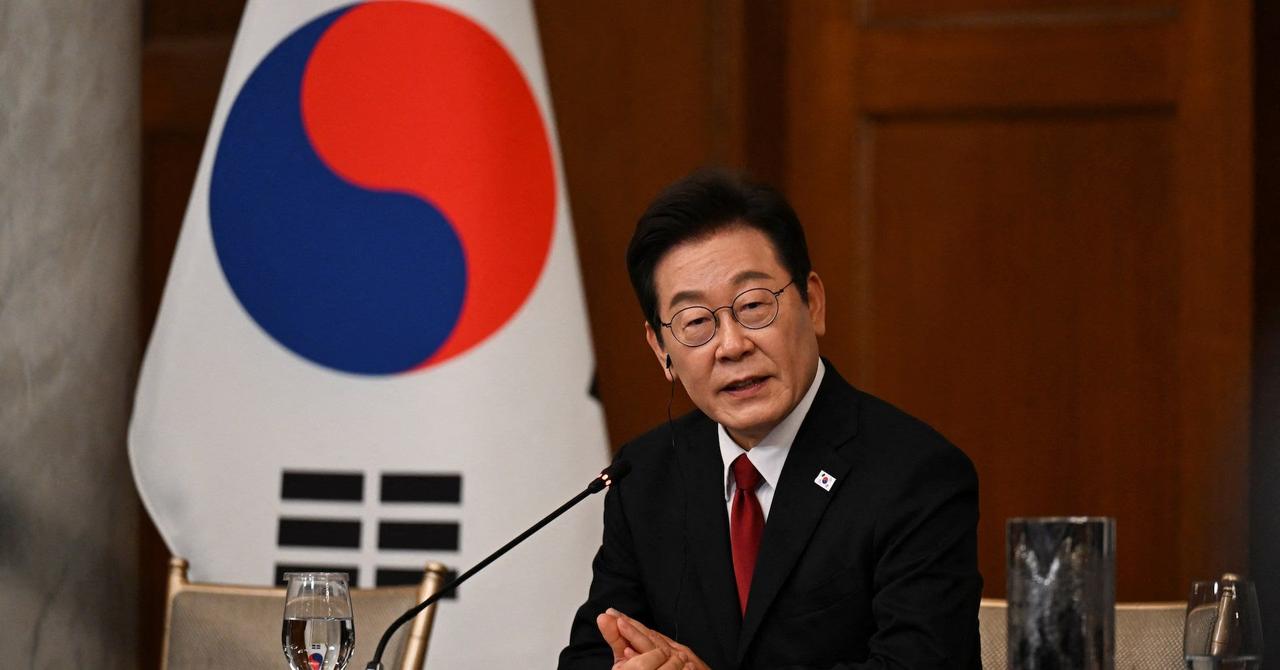
South Korea on Tuesday unveiled its most aggressive fiscal spending plan on record, setting total government expenditure for 2027 at 821 trillion won ($596.92 billion) to strengthen the country's technological edge amid the global AI race. In its annual budget proposal, the budget ministry said the spending plan represented a 12.8% rise from 2026, marking the largest year-on-year increase in the country's history. The proposal signals a shift in Asia's fourth-largest economy under President Lee Jae-myung, who has championed an expansionary fiscal policy since taking office in June last year, pivoting away from three years of fiscal austerity under his predecessor. The historic spending increase is possible thanks to a windfall from the country's semiconductor industry. Chipmakers Samsung Electronics and SK Hynix are generating unprecedented profits driven by global demand for high-bandwidth memory (HBM) used in the AI boom. Total tax revenue is seen increasing 40.7% next year to 584.4 trillion won, with corporate tax receipts alone projected to more than double to 216.7 trillion won. That revenue will help reduce South Korea's debt-to-GDP ratio by 3.3 percentage points to 48.3%, down from 51.6% estimated for this year. "The government plans to deploy fiscal resources preemptively and expansively, backed by the amplified national tax revenues projected for 2026 and 2027," Budget Minister Park Hong-keun told a news conference. "From 2028 onward, a period when these fiscal investments are expected to yield tangible economic returns, we will gradually stabilise the spending growth rate, tapering it down in stages to around the 5% level by 2030." The government earmarked 2.6 trillion won for a special semiconductor budget, Park said at the cabinet meeting, where the national budget for 2027 is scheduled to be reviewed and adopted. It also proposed 3.4 trillion won in spending for a nuclear-powered submarine programme and other strategic weapons, presentation material during the meeting showed. The budget proposal will require parliamentary approval. Meanwhile, President Lee Jae Myung said on Tuesday the economy is at a point where an interest rate rise is unavoidable, risking denting growth potential at a time the socially disadvantaged are feeling the impact of higher borrowing costs. FUTURE RESPONSE FUND Rather than channeling its projected 162.3 trillion won of excess tax revenue into short-term spending, the government plans to direct it into a strategic endowment called the Future Response Fund, designed for long-term investments. The fund will deploy 45.4 trillion won next year to expand initiatives in youth welfare, future growth engines and specialised education programmes. For 2027, a core pillar of spending will be to support next-generation semiconductor infrastructure. The government has allocated 21.3 trillion won for industrial water systems, power grids and logistics networks to strengthen national chip manufacturing and advance critical technology infrastructure nationwide. Part of the tax windfall will be allocated to reduce government bond issuance. Total government bond sales for next year will drop to 222.8 trillion won, down from 225.7 trillion won in this year's budget. Net bond issuance, which reflects the creation of fresh sovereign debt, will decline even more sharply by 13.1 trillion won to 96.3 trillion won, down from 109.4 trillion won this year. ($1 = 1,375.3900 won) (Reporting by Jack Kim, Heejin Kim and Joyce Lee Editing by Ed Davies)
[2]
Korea drafts record budget proposal aimed at using chip boom to boost growth
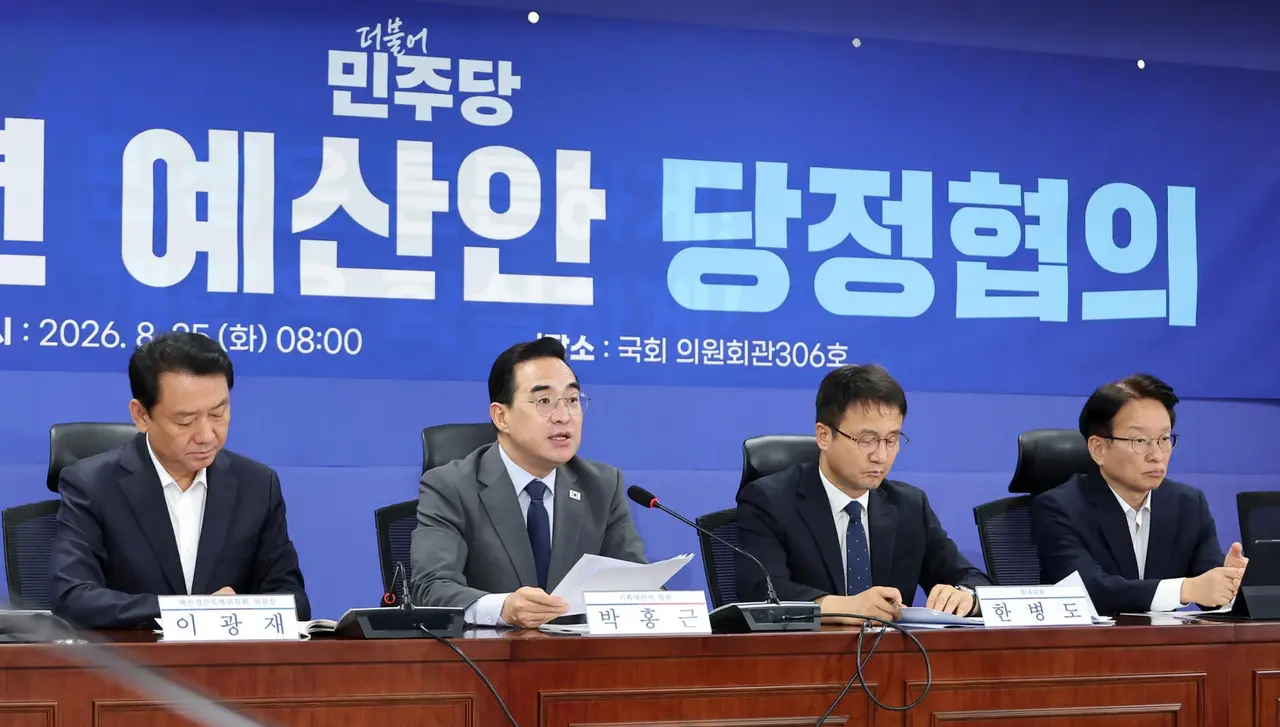
The Korean government has drawn up an 820.9 trillion won (US$601 billion) budget proposal for next year, up 12.8% from this year's original budget. The increase of 93 trillion won is the largest on record in both absolute and percentage terms, marking the Lee administration's second consecutive year of expansionary fiscal policy. A year ago, government spending was needed to help the economy recover from the slowdown following former President Yoon Suk-yeol's short-lived insurrection in December 2024. But this year is different, as the economic recovery has gained clear momentum. The government believes that the boom in tax revenue generated by the semiconductor supercycle presents an opportune time to channel fiscal resources into growth engines and boost the economy's potential growth rate. Rather than using 100 trillion won in additional tax receipts from chipmakers to repay government debt, it plans to save the money in a separate fund that will serve as a "fiscal reservoir." On Tuesday, the Cabinet reviewed and approved the 2027 budget proposal, identifying its chief objectives as raising the potential growth rate and reducing polarization. One remarkable part of the proposed budget is that despite the highest spending increase on record, which includes investments in growth drivers, Korea's economic growth and soaring tax revenues are expected to improve key indicators of fiscal health. The government projects that total revenue next year will rise 30.4% from this year's original budget to 880.8 trillion won. Fueled by the semiconductor boom, national tax revenue, including corporate and income taxes, is projected to jump by nearly 50% to 584.4 trillion won. With total revenue exceeding total expenditure, the fiscal balance will improve substantially. The consolidated fiscal balance -- calculated as total revenue minus total expenditure -- is projected to record a surplus of 59.9 trillion won next year. Korea is expected to post a deficit of just 3.1 trillion won in the managed fiscal balance (calculated as total revenue minus total expenditure minus social security fund surplus), a more rigorous measure that excludes current surpluses in the National Pension Service and other social security programs to give a clearer picture of the underlying fiscal position. That deficit is equivalent to 0.1% of gross domestic product (GDP), which comes fairly close to balancing the budget. That's also a 3.8-point improvement from the managed fiscal deficit of 3.9% of GDP in this year's original budget. That improvement is aided by a dramatic increase in nominal GDP, the denominator in the calculation. At the same time, Korea's national debt-to-GDP ratio is projected to fall 3.3 points from 51.6% to 48.3%. The debt itself will rise modestly by 106 trillion won from this year's original budget to 1.52 quadrillion won. The government cited the need to maintain stability in the bond market as its reason for not using tax revenue windfall to pay back more debt. Korea plans to issue a total of 222.8 trillion won in Korea Treasury bonds next year, with 96.3 trillion won in net bond issuance. The government explained that applying a big chunk of the increased tax revenue to repay debt would reduce bond issuance, potentially weakening liquidity and the trading base in the government bond market. "We sought to strike a balance between reducing debt and keeping the bond market stable," said an official from the Ministry of Planning and Budget. Instead, the government will establish what it calls a Future Response Fund with 162.3 trillion won in "extra" tax revenue, or the amount exceeding the 6.2% average annual growth rate in domestic tax revenue over the past decade. From that fund, 45.4 trillion won will be invested in four areas: young people, growth engines, balanced regional development, and education and talent. Another 12.5 trillion won or so will be used to reduce new government bond issuance. The government plans to hold the remaining 104.4 trillion won in reserve to address fluctuations in tax revenue or bolster fiscal capacity in the event of a revenue shortfall. The priority investment targets in next year's budget are the Lee administration's three "megaprojects" concerning semiconductors, physical AI and AI data centers, along with the AI sector more broadly. Funding for these areas will nearly double from 10.8 trillion won this year to 21.3 trillion won next year. The government will put 2 trillion won into a special account for semiconductors to accelerate the construction of production bases in the greater Seoul area and in the southwest. Additionally, more than 2 trillion won will be invested in speeding up the construction of semiconductor infrastructure, including power and water supplies and industrial complexes, while more than 3 trillion won will go toward R&D in physical AI and pilot projects applying it to manufacturing, construction and agriculture. Nearly 5 trillion won will be used to support the development of a domestic AI model through the purchase of 10,000 top-of-the-line graphics processing units (GPUs) based on Nvidia's Vera Rubin platform, among other initiatives. With that model, the government plans to provide a free public service called "AI for All." The government has further allocated 43.3 trillion won to provide broad spectrum support for young Koreans based on their needs at various points in their life, including education, jobs, assets, housing, marriage, and having and raising kids. The three-part package includes dropping income requirements and expanding eligibility for government-backed savings accounts designed to help young people build nest eggs, creating more (and bigger) public housing catered to young people near metro stops and other sought-after areas, and providing stipends for marriage and childbirth as well as basic child allowances. Another 33 trillion won will go to combat disparities between different regions in the country as part of the government response to K-shaped economic recovery. Around 10 trillion won will be used to foster growth engines in five regional hubs and three special regions, with the flagship program being a newly created special subsidy that will support up to 50% of construction costs for anchor companies that invest big in the provinces. The measures include restructuring long-overdue debts incurred by small businesses affected by COVID-19 and expanding the basic income program for rural areas to 35 population-declining regions from the current 17. After Tuesday's Cabinet meeting, the administration plans to submit the budget proposal to the National Assembly on Thursday for review, with final approval expected in early December. By Park Su-ji, staff reporter
[3]
Gov't bets big on AI, chips to break low-growth cycle, compete in global tech race - The Korea Times
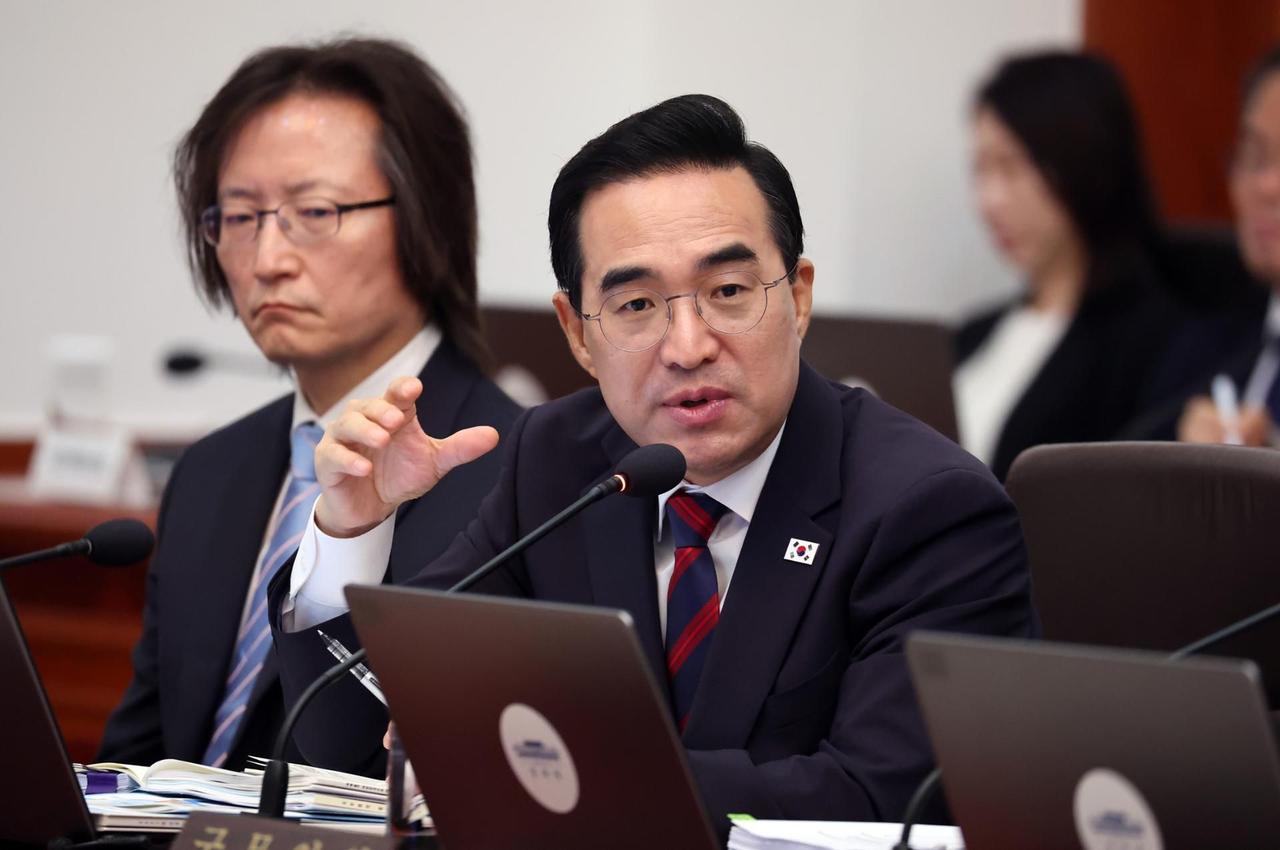
The government plans to significantly ramp up investment in artificial intelligence (AI) and semiconductors to prevent structurally low growth from becoming entrenched and strengthen Korea's position in the global race for technological dominance through its record 2027 budget of nearly 821 trillion won ($599 billion), the Ministry of Planning and Budget said Tuesday. It has designated semiconductors, physical AI and AI data centers as the three main pillars of its megaprojects to provide comprehensive support ranging from key infrastructure to technology development. President Lee Jae Myung said during a Cabinet meeting that the world is undergoing a major shift in the global industrial order as the AI revolution, energy transition and restructuring of global supply chains converge to reshape the global economy and industries. "Against the backdrop of these sweeping changes, next year's budget should serve as a solid foundation for Korea to emerge as a global leader in cutting-edge technologies," Lee said. Lee also said Korea is at a critical juncture, facing a choice between prolonged low growth and a rebound in its potential growth rate. "We need a productive fiscal strategy that uses expanded resources for future growth to enlarge the economic pie, strengthen industrial competitiveness and, in turn, create greater fiscal room," he added. According to Budget Minister Park Hong-geun, the 2027 budget proposal will establish a special account for semiconductors to maintain and strengthen Korea's technological edge, with funding directed toward expanding production capacity, securing core technologies and strengthening the industry ecosystem. "The government will also step up support for physical AI by investing 2.6 trillion won in demonstration projects and provide key infrastructure, including power, water and industrial complexes, to support the three megaprojects," Park said. "We will supply 10,000 graphics processing units, data and talent to help a national AI foundation model achieve globally competitive performance and develop AI services for the public." The budget proposal approved by the Cabinet calls for total revenue of 880.8 trillion won, with national tax revenue projected at 584.4 trillion won on higher corporate and income tax receipts fueled by the semiconductor boom. Total spending is set to rise 12.8 percent from this year to 820.9 trillion won. Despite the sharp increase in government spending, fiscal health is expected to improve. The fiscal deficit is projected to narrow to 0.1 percent of gross domestic product (GDP), an improvement of 3.8 percentage points from the previous year. The debt-to-GDP ratio is also expected to fall 3.3 percentage points from 51.6 percent to 48.3 percent. Park pledged to use increased tax revenue from the semiconductor boom to invest in economic and social innovation and future growth engines as global competition for AI leadership intensifies. He also vowed to support vulnerable groups, including young people and small business owners, to help reduce inequality. At the same time, the government plans to pursue sweeping spending reforms to tackle structural challenges such as the low birth rate, population aging and regional decline. It also aims to complete the repayment of public funds injected during the 1997-98 financial crisis next year. "This officially concludes the country's nearly 30-year journey to overcome the International Monetary Fund crisis while creating greater fiscal room for investment in future generations," Park said. As the first of five investment priorities in its budget proposal, the government identified full-scale support for three megaprojects, seeking to boost investment in advanced technologies and stave off a decline in potential growth caused by a shrinking working-age population and stagnant productivity. The second priority is securing future growth engines by focusing support on seven key national strategic technologies, including fusion energy, small modular reactors, quantum technology, aerospace and advanced biotechnology, as well as other industries seeking to maintain a technological edge. The third is to strengthen support for young people, focusing on education, jobs, entrepreneurship, housing, marriage, childbirth and child-rearing. The fourth priority is reducing inequality by expanding investment in industrial, medical, educational and living infrastructure in regional areas, while providing full tuition support at regional national universities and expanding the basic income program for rural and fishing communities. The government also plans to increase senior employment. The fifth priority is to strengthen public safety and economic security through measures including the acquisition of key military assets such as nuclear-powered submarines, improved support for military personnel and veterans, expanded disaster-prevention infrastructure, a comprehensive response to drug-related threats and efforts to stabilize supplies of key materials. Future Fund In addition, Minister Park said the government will revamp its fiscal framework and create a "Future Fund" to ensure more strategic use of public finances for future generations. The new fund is designed to channel a portion of the additional tax revenue generated by the semiconductor boom into productive investments while serving as a buffer against fluctuations in tax revenue. According to the budget ministry, the government will use 162.3 trillion won in additional tax revenue expected to exceed the 10-year trend in domestic tax revenue in 2027, allocating 45.4 trillion won to four areas -- youth, future growth engines, regional development, and education and talent. The remaining funds will be held as reserves to absorb revenue swings and shore up fiscal capacity if tax collections fall short of projections. Combined with the 821 trillion won in total spending under the 2027 budget and the more than 160 trillion won Future Fund, the government will have nearly 1,000 trillion won in fiscal resources at its disposal next year. Park also said the government will reform the link between the local education grant system and domestic tax revenue for the first time in 55 years to reflect changing economic and social conditions. The proposal calls for subsidy allocations to be calculated using 35 percent of the three-year average economic growth rate and the three-year average change in the school-age population, replacing the current system under which 20.79 percent of domestic tax revenue is automatically allocated. Funds freed up through the reform will be channeled into an "education and talent" account within the Future Fund and used mainly for early childhood, higher and lifelong education. "The 2027 budget will be a turning point in fiscal policy, as it would overhaul the fiscal management paradigm, make bold investments for the future and reform outdated spending structures that no longer reflect social changes," Park said. Under the National Finance Act, the government must submit the budget proposal to the National Assembly by Thursday, 120 days before the start of the fiscal year. The ruling Democratic Party of Korea and the main opposition People Power Party are expected to engage in a legislative battle over the budget and housing supply-related bills during the 100-day regular parliamentary session starting Tuesday.
Share
Copy Link
South Korea unveiled its largest-ever budget proposal of $597 billion for 2027, marking a historic 12.8% increase from 2026. The expansionary plan leverages unprecedented semiconductor profits from Samsung Electronics and SK Hynix to fuel AI investment and strengthen the nation's position in the global tech race.
South Korea has unveiled its most aggressive fiscal spending plan on record, proposing a total government expenditure of 821 trillion won ($596.92 billion) for 2027
1
. The record budget proposal represents a 12.8% rise from 2026, marking the largest year-on-year increase in the country's history2
. The increase of 93 trillion won is unprecedented in both absolute and percentage terms, signaling President Lee Jae-myung's commitment to expansionary policies since taking office in June last year2
. This pivot away from three years of fiscal austerity under his predecessor aims to strengthen South Korea's technological edge amid the global AI race1
.
Source: Hankyoreh
The historic spending increase is made possible by a windfall from the semiconductor industry, with chipmakers Samsung Electronics and SK Hynix generating unprecedented profits driven by global demand for high-bandwidth memory used in the AI boom
1
. Total tax revenue is projected to increase 40.7% next year to 584.4 trillion won, with corporate tax receipts alone expected to more than double to 216.7 trillion won1
. National tax revenue, including corporate and income taxes, is projected to jump by nearly 50% to 584.4 trillion won, fueled by the semiconductor boom2
. This revenue surge will help reduce South Korea's debt-to-GDP ratio by 3.3 percentage points to 48.3%, down from 51.6% estimated for this year1
.The government has designated semiconductors, physical AI, and AI data centers as the three main pillars of its megaprojects to provide comprehensive support ranging from key infrastructure to technology development
3
. Funding for these AI and semiconductor investments will nearly double from 10.8 trillion won this year to 21.3 trillion won next year2
. The government earmarked 2.6 trillion won for a special semiconductor budget to accelerate production base construction and maintain technological edge1
. More than 2 trillion won will be invested in speeding up construction of next-generation semiconductor infrastructure, including power and water supplies and industrial complexes2
. Additionally, more than 3 trillion won will go toward research and development in physical AI and pilot projects applying it to manufacturing, construction, and agriculture2
.Rather than channeling its projected 162.3 trillion won of excess tax revenue into short-term spending, the government plans to direct it into a strategic endowment called the Future Response Fund, designed for long-term investments
1
. The fund will deploy 45.4 trillion won next year to expand initiatives in youth welfare, future growth engines, and specialized education programs1
. From the Future Response Fund, 45.4 trillion won will be invested in four areas: young people, growth engines, balanced regional development, and education and talent2
. Another 12.5 trillion won will be used to reduce new government bond issuance, while the government plans to hold the remaining 104.4 trillion won in reserve to address fluctuations in tax revenue or bolster fiscal capacity in the event of a revenue shortfall2
.Related Stories

President Lee Jae-myung stated during a Cabinet meeting that Korea is at a critical juncture, facing a choice between prolonged low-growth cycle and a rebound in its potential growth rate
3
. The government plans to significantly ramp up investment to prevent structurally low growth from becoming entrenched and strengthen Korea's position in the global tech race3
. Budget Minister Park Hong-geun emphasized that the government will supply 10,000 GPUs, data, and talent to help a national AI foundation model achieve globally competitive performance and develop AI services for the public3
. The government seeks to boost industrial competitiveness and create greater fiscal room through productive fiscal strategy3
.
Source: Korea Times
Despite the sharp increase in government spending, fiscal health is expected to improve significantly. The consolidated fiscal balance is projected to record a surplus of 59.9 trillion won next year
2
. Korea is expected to post a deficit of just 3.1 trillion won in the managed fiscal balance, equivalent to 0.1% of gross domestic product, which comes fairly close to balancing the budget2
. This represents a 3.8-point improvement from the managed fiscal deficit of 3.9% of GDP in this year's original budget2
. Total government bond sales for next year will drop to 222.8 trillion won, down from 225.7 trillion won in this year's budget, with net bond issuance declining by 13.1 trillion won to 96.3 trillion won1
. The government cited the need to maintain stability in the bond market as its reason for not using the tax revenue windfall to pay back more debt2
. The budget proposal will require parliamentary approval before implementation1
.Summarized by
Navi
30 Aug 2025•Business and Economy

21 Aug 2026•Policy and Regulation

04 Nov 2025•Policy and Regulation