SpaceXAI Deploys Nvidia Vera CPUs for Grok's AI Agents and Orbital Data Centers in Space


10 Sources
[1]
SpaceXAI will deploy standalone Nvidia Vera CPUs for Grok's agentic workloads -- will use optimized Vera Rubin NVL72 in space with Starmind satellite
SpaceXAI becomes the second announced hyperscale customer for standalone Vera after Meta. Nvidia's 88-core Vera chip will be getting put to work for Elon Musk twice over, first and foremost as the standalone CPU orchestrating Grok's AI agents in SpaceXAI's data centers and, from the fourth quarter
[2]
SpaceX to use NVIDIA GPUs for its Starmind project -- Here's what they'll face in space - Engadget
SpaceX hopes the constellation will untether xAI's growth from "Earth's grid, land, and cooling constraints." Following a sun-synchronous orbit that keeps it facing the sun 98 percent of the time, AI1's massive solar panel array will reportedly to generate 210kW of power. In doing so, the company
[3]
SpaceXAI Adopts NVIDIA Vera CPU to Accelerate Agentic AI at Massive Scale
* SpaceXAI will deploy NVIDIA Vera CPUs to accelerate the work behind its next generation of agentic AI workloads. * SpaceXAI is expanding its AI infrastructure for Grok with the NVIDIA Vera Rubin platform as it scales toward gigawatts of computing capacity. * SpaceXAI plans to extend its use of
[4]
SpaceX AI System: SpaceX, Nvidia develop space-optimized AI system for orbital launch next year
SpaceX and Nvidia have developed a space-optimized Vera Rubin NVL72 AI system that is planned for launch into orbit in the fourth quarter of 2027, said Elon Musk. Nvidia's Vera Rubin NVL72 is an advanced rack-scale AI supercomputer system. It integrates advanced technologies, combining 72 Rubin
[5]

NASA Chief Jared Isaacman Wants Data Centers In Space as AI Devours Electricity, Says US Should Tap 'Free
NASA Administrator Jared Isaacman wants the U.S. to move artificial intelligence data centers into Earth orbit, arguing that abundant solar power could ease terrestrial energy constraints while strengthening America's position in the space and AI races. Isaacman Sees Orbit Easing AI Power
[6]

SpaceXAI Will Use NVIDIA Vera CPUs To Power Its Next-Gen Agentic AI Workloads, Also Bringing Vera Rubin Acceleration To Grok & Starmind AI Satellite
NVIDIA's Vera CPUs & Vera Rubin servers will be powering multiple SpaceXAI platforms such as its next-gen Agentic AI workloads, Grok AI, & Starmind AI satellite. SpaceXAI Doubles Down on NVIDIA's Latest AI Platforms As It Leverages Vera CPUs & Vera Rubin Servers To Accelerate Agentic AI Workflows,
[7]
SpaceX Wants Millions of AI Satellites in Orbit -- But Experts Say Elon Musk Must Solve a 'Crazy' Logistics
Space Exploration Technologies Corp. (NASDAQ:SPCX) had plans to launch orbital data centers into space as early as next year, using its towering Starship rocket. The ambitious project, however, is not without its share of technical and logistical hurdles. To achieve its goal on a large scale, the
[8]

SpaceX just gave Nvidia investors a new reason to watch
SpaceX CEO Elon Musk has never been shy about ambitious timelines, and his latest involves putting AI data centers in orbit. He offered the most specific schedule yet for exactly when that plan starts becoming real. The update landed just days before Nvidia reports its own quarterly results,
[9]
Elon Musk Says SpaceX Targeting Q4 2027 Launch for Nvidia-Powered AI System -- Touts 'Lower Cost, Denser and
SpaceXAI, the artificial intelligence arm of Space Exploration Technologies Corp. (NASDAQ:SPCX), is adopting Nvidia Corp.'s (NASDAQ:NVDA) Vera CPUs as Elon Musk touts a more cost-effective, space-optimized Vera Rubin system for orbital AI. Space-Optimized Vera Rubin On Monday, Musk took to the
[10]

SpaceX, NVIDIA Bet on AI Data Centers in Orbit for Computing
Orbital data centers could reduce energy, latency and terrestrial infrastructure pressures. The race to build bigger and more powerful artificial intelligence systems is moving beyond Earth. SpaceX and NVIDIA are developing orbital AI infrastructure that could eventually turn satellites into data
Share
Copy Link
SpaceXAI has committed to deploying Nvidia's 88-core Vera CPUs to power Grok's agentic AI workloads, becoming the second hyperscaler after Meta to adopt the chip. The company plans to extend this technology into orbit with its Starmind AI satellite launching in Q4 2027, marking a significant step toward space-based AI compute infrastructure.
SpaceXAI Commits to Nvidia Vera for Agentic AI Workloads
SpaceXAI has become the second hyperscaler to deploy Nvidia's standalone Vera CPUs, following Meta's February announcement
1
. The 88-core Vera chip will orchestrate Grok's AI agents in SpaceXAI's data centers and, starting in the fourth quarter of 2027, inside the company's first Starmind AI satellite4
. Nvidia claims the CPU for AI agents completes agentic AI, reinforcement learning, and data processing tasks up to 1.8 times faster than x86 processors, though this figure hasn't been independently verified1
.Why Vera Matters for AI Agent Performance
Agentic AI workloads spend significant runtime off the GPU. When a model writes code, it calls tools, queries databases, and parses results by leaning on the host CPU between every inference pass. Idle GPUs waiting on that work represent wasted capital
1
. Mike Nicolls, president of SpaceXAI, explained that Nvidia Vera provides the CPU performance and memory bandwidth to run enormous amounts of orchestration, code, and data processing while keeping GPUs doing what they do best3
. This architecture enables higher-performance AI agents and extracts more useful work from every watt of compute4
.
Source: NVIDIA
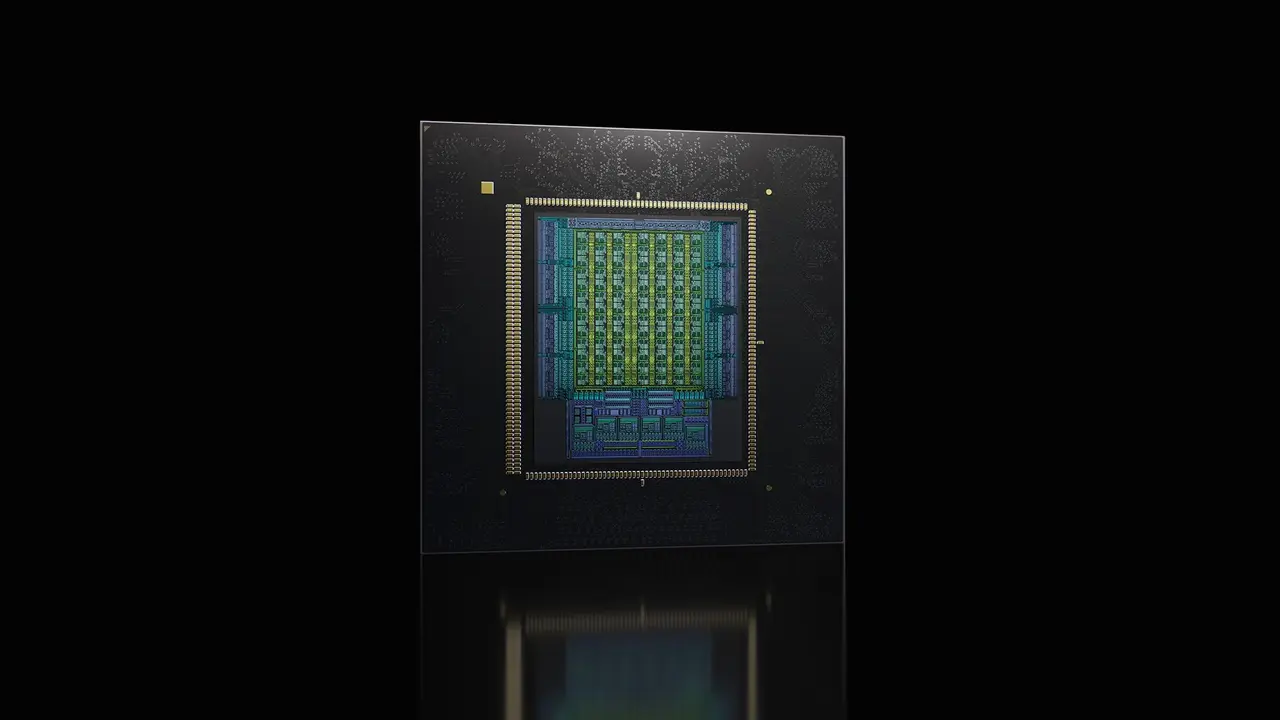
Nvidia Vera pairs 88 custom Olympus cores on a monolithic die with spatial multithreading and LPDDR5X memory delivering up to 1.2 TB/s of bandwidth
1
. The chip accelerates CPU-intensive work surrounding model inference, from tool use and code execution to data processing, orchestration and simulation3
.Expanding to Orbital AI Compute Infrastructure
SpaceXAI plans to expand its AI infrastructure for Grok with the Vera Rubin platform as it scales toward gigawatts of computing capacity
3
. The Vera Rubin NVL72 combines 72 Rubin GPUs and 36 Vera CPUs in a fully liquid-cooled rack1
. For orbital deployment, this space-optimized AI system must be reworked to handle radiation exposure, heat rejection through radiators rather than facility water loops, launch vibration, and the absence of hands-on servicing1
.Elon Musk narrowed the launch window to Q4 2027, with significant scale-up following in 2028
1
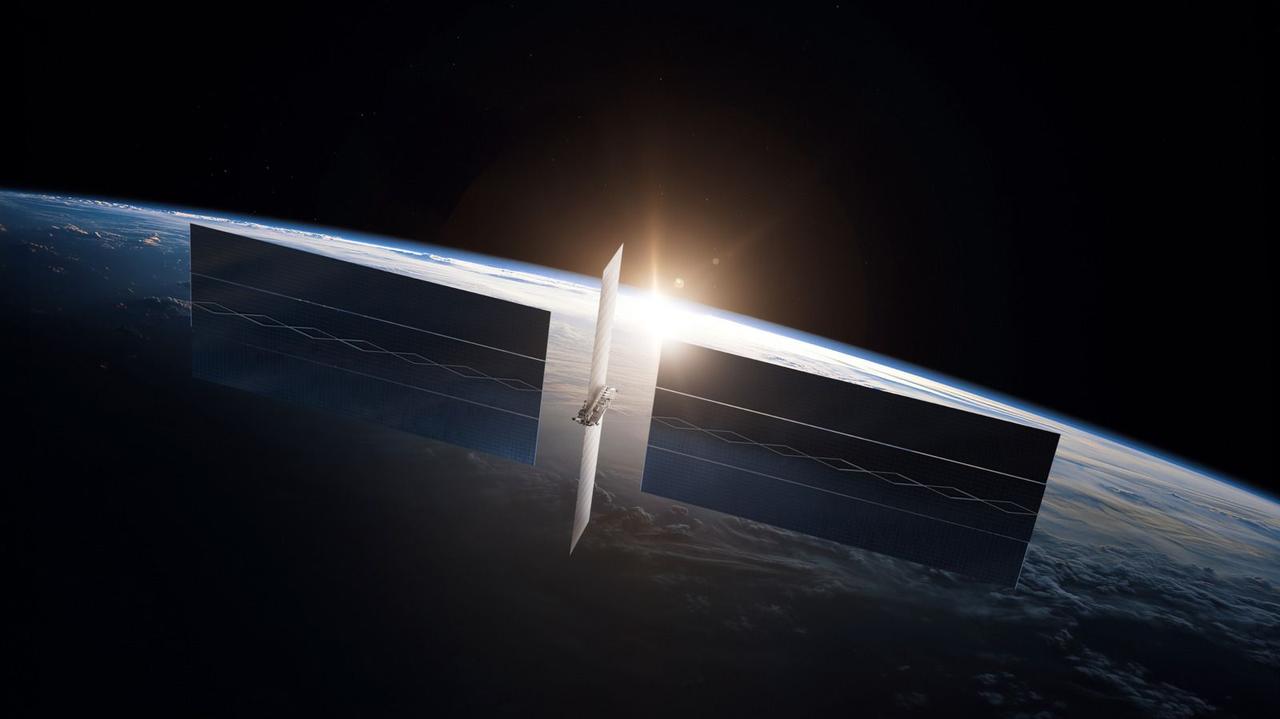
. SpaceXAI's first-generation AI1 satellite design carries a 120 kW compute payload, peaking at 150 kW, on a craft wider than a Boeing 7471
. Following a sun-synchronous orbit that keeps it facing the sun 98 percent of the time, AI1's massive solar panel array will reportedly generate 210kW of power2
. The satellites will manage thermal management with 1,700-square-foot liquid radiators that release heat freely into the vacuum of space2
.
Source: Engadget
Related Stories

Technical Challenges for AI in Space
Putting advanced AI chips in orbit presents unique challenges. Dr. Benjamin Lee, a professor at University of Pennsylvania's Department of Electrical and Systems Engineering, warned that using advanced chip architecture could expose satellites to unnecessary data corruption through bit flips
2
. Radiation from solar weather and other common events in low Earth orbit can force the ones and zeros that make up the chip's binary code to swap values. This susceptibility derives from smaller transistors in newer chips, as the amount of charge required to represent a one goes down as transistors get smaller2
.While AI systems are built to detect and correct these data corruption errors, the question isn't only whether Starmind will be able to detect and correct bit flip errors, but whether doing so will make orbital data centers comparatively inefficient
2
. Having to detect and correct errors repeatedly will slow down or add overhead to space-based computation, potentially creating inefficiencies inherently absent from terrestrial rivals2
.Industry Context and Competition
Nvidia has disclosed shipping hundreds of thousands of standalone Grace servers and more than 2.5 million Grace CPUs in total, and the SpaceXAI deal extends that dominance directly into territory held by AMD's EPYC and Intel's Xeon lines
1
. AMD has countered that its 256-core Zen 6 Venice processors beat Vera by 3.3 times in rack-level performance1
.NASA Administrator Jared Isaacman has advocated for moving data centers in space to address terrestrial energy constraints, arguing that orbital facilities could deliver immense benefits without competing for the same land and grid capacity as ground-based projects
5
. Lawrence Berkeley National Laboratory estimates data centers could consume 11.8 percent of U.S. electricity by 20305
. However, Amazon's AWS CEO Matt Garman has called the idea pretty far from reality, citing limited launch capacity and high payload costs5
. SpaceXAI has acknowledged that orbital compute at the scale it's targeting requires significantly more chips than it currently has access to1
.References
Summarized by

Navi
[1]
[2]
[4]
Related Stories
Nvidia unveils Vera Rubin Space Module for orbital AI data centers as space computing race heats up
17 Mar 2026•Technology

SpaceX commits exclusively to Nvidia GPUs as Musk plans orbital AI data centers with Vera Rubin
05 Aug 2026•Technology

Startups race to deploy orbital data centers for AI computing despite massive technical hurdles
01 Jul 2026•Technology

Recent Highlights



Recent Highlights
Today's Top Stories







Don’t drown in AI news. We cut through the noise - filtering, ranking and summarizing the most important AI news, breakthroughs and research daily. Follow topics that matter to you and stay ahead.


