3 Sources
[1]
Steve Eisman is starting to have doubts about AI. The 'Big Short' investor just sold a key tech stock
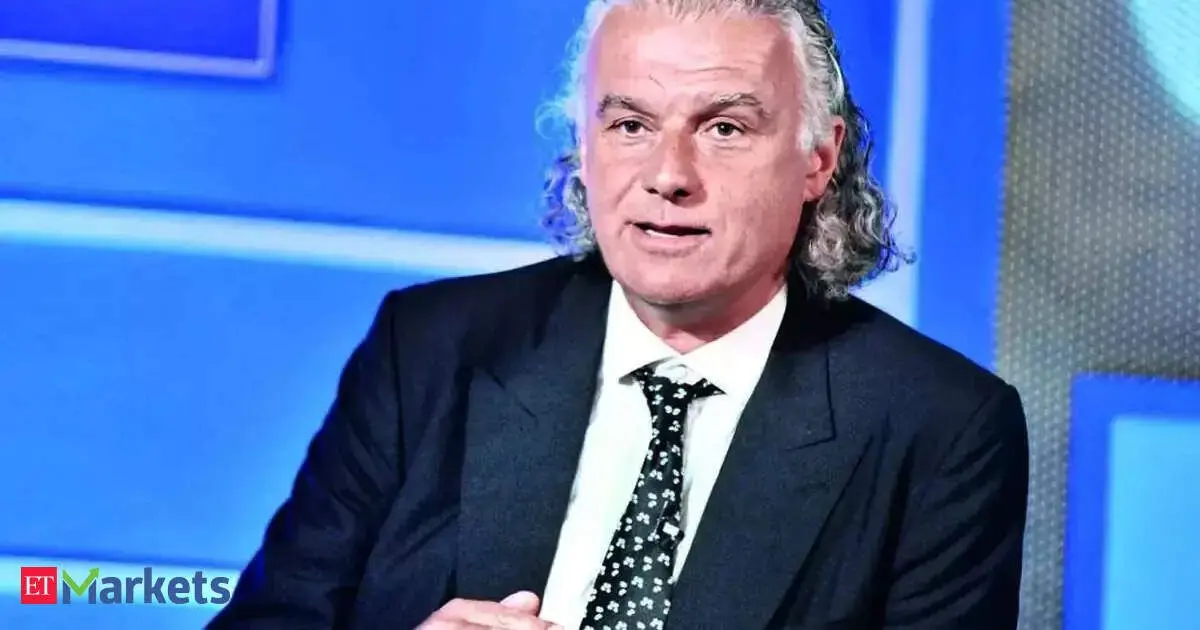
Steve Eisman, the investor made famous by The Big Short, said he has reduced his exposure to artificial intelligence after selling his longtime stake in Alphabet , warning that investors may be underestimating the risks if the AI boom fails to deliver on lofty expectations. "I've lightened up. I sold my Google a couple of months ago. I've owned Google. I can't even tell you how long I've owned Google," Eisman said Monday on CNBC's " Squawk Box ." "I wanted to reduce my exposure to AI." His comments came after the relentless rally in technology stocks took a breather. The S & P 500 and the Nasdaq Composite just suffered back-to-back weekly losses, falling 0.6% and 2.1%, respectively. Last week, Alphabet, the owner of Google and YouTube, fell nearly 8% after raising its capital spending forecast , underscoring the massive investment required to build AI infrastructure. Eisman said he hasn't redeployed the proceeds into defensive sectors, arguing that investors remain singularly focused on AI rather than consumer staples or other, traditionally safer corners of the market. "People either want to buy AI or they don't want to buy AI," he said. "They don't want to shift out of it to buy Clorox." When asked what happened if AI doesn't succeed, Eisman said "I think we have a big correction." Eisman said he is not betting against the broader market, but worries that investors have become overly concentrated in a single theme. "It's all one trade," he said. "Even people who think they're diversified, because they own 60% stocks and 40% bonds, are missing the fact that they're actually not diversified, because of their 60%, more than 50%, is of it is tech and AI related, and of the 40% of the bonds, most of the new issuance of bonds is AI related ... What's scares me is that it's all one trade." The investor said he is sitting on a lot of cash until he figures out what to do.
[2]
Big Short Legend Steve Eisman Says Google's $205-Billion AI Bill Finally Broke the Market's Patience - Al
Steve Eisman, the investor made famous by "The Big Short," says this week marked the moment investors stopped rewarding runaway AI spending, with Alphabet Inc. (NASDAQ:GOOGL) the biggest casualty. "A year ago, it was all rah-rah for AI. When companies raised their capex budgets, the market cheered," Eisman said on his podcast, The Real Eisman Playbook. Now, he says, "everyone is nervous and that nervousness was on full display this week." Strong Quarter, Negative Cash Flow Google's revenue climbed 24% and Cloud revenue hit $24.8 billion, up 82%. But the company raised its 2026 capex guidance to as much as $205 billion, well above the roughly $186 billion analysts expected, and free cash flow swung to negative $5.9 billion, its first quarterly outflow since 2004. Prediction market traders are not panicking yet. Polymarket's "AI bubble burst" market, with over $2.3 million in volume, prices just a 16% chance the bubble pops by the end of 2026. 'Like Fighting a Ghost' Even blowout results offer no escape. The nervousness is punishing strong operators too. ServiceNow grew revenue 24%, yet the stock is down 38% this year. "Fighting the AI narrative is like fighting a ghost," Eisman said. Blackstone, meanwhile, boasted on its earnings call that it is the biggest financier of AI data centers. That, Eisman said, "may or may not prove to be a great bet." Nowhere to Hide Even banks offer no shelter, Eisman argues, because the investment banking cycle now runs on AI financing. Owning Morgan Stanley, Goldman Sachs, and Bank of America "is just one more aspect of the AI trade," he said. Eisman previously flagged concerns about the sustainability of Nvidia's melt-up. This week, the market may have caught up with him. Image: Shutterstock Market News and Data brought to you by Benzinga APIs To add Benzinga News as your preferred source on Google, click here.
[3]
'Big Short' investor warns AI has become one dangerous trade
Investor Steve Eisman sold Alphabet and boosted cash, warning that crowded AI exposure could magnify a market correction. Artificial intelligence has propelled equities higher, filled corporate spending plans, and changed the bond market. Investor Steve Eisman now concerns himself that the two seemingly independent trends have turned into one trade. Eisman told CNBC he decreased his AI risk by selling his longtime stake in Alphabet (GOOGL). He has not bought defensive stocks to replace his Alphabet stake and is keeping cash while he considers what to do next. He isn't betting against the market. He frets about what happens if companies can't get an adequate return on the hundreds of billions of dollars being poured into AI infrastructure. "I think we have a big correction," Eisman said when asked what would happen if AI failed to deliver. He did not estimate how large the correction could be or when it might occur. Instead, Eisman claimed investors may be more concentrated than they perceive. A traditional portfolio of stocks and bonds could nevertheless be closely linked to the AI boom, with big tech companies dominating major indexes and AI infrastructure fueling significant corporate borrowing. Official index data backs up the wider concentration problem. The 10 largest businesses in the S&P 500 make up around 36.4% of the index, according to S&P Dow Jones Indices. The Federal Reserveindicated in its May financial stability report that they remained near the upper end of their historical range. The Fed's survey of market participants identified AI-related issues as one of the biggest potential threats to financial stability. Steve Eisman sold Alphabet as AI spending accelerated Eisman said he had possessed Alphabet so long he couldn't recall when he first got it. His sale wasn't necessarily a gloomy call on Google's operating company. It was a method to decrease exposure to a market increasingly driven by AI expenditure and expectations. The tension shows in Alphabet. The tech giant reported revenue of $119.8 billion for the second quarter, up 24%, and operating income of $40.8 billion, up 30%. Google Cloud sales soared 82% to $24.8 billion, suggesting the AI infrastructure is already fueling significant commercial development. The spending needed to achieve that increase is also becoming increasingly difficult to ignore. Alphabet spent $44.9 billion on capital expenditures in the quarter, mostly on servers, data centers, and networking equipment. That was above its operating cash flow of $39.1 billion and left quarterly free cash flow at negative $5.9 billion. Management boosted its 2026 capital-expenditure guidance to a range of $195 billion to $205 billion and predicted that spending would rise significantly again in 2027. Higher depreciation, electricity, and data center running costs are all likely to weigh on future profitability. These data points assist in explaining Eisman's reluctance. Alphabet is seeing significant sales and profit growth, but investors will have to weigh if those returns can continuously beat the cost of building up the infrastructure. Eisman isn't saying AI technology will be useless. He suggested it may be an outstanding technology without every firm or investment around it being successful. That difference is significant because stock prices reflect earnings, not just technological progress. He also questioned ever more complex agreements whereby AI developers, cloud providers, and chipmakers fund or assist each other's infrastructure buys. Eisman said Nvidia (NVDA) will probably sell its chips at a profit. His fear is that there is not enough end-customer profitability in the larger system to justify all the investment going into those sales. The AI trade reaches beyond Alphabet stock Alphabet isn't the only firm throwing its weight around. In the third quarter, Microsoft (MSFT) spent $31.9 billion in capital expenditures, with around two-thirds of that going toward shorter-lived assets like graphics processing units and central processing units. Infrastructure spending drove free cash flow of $15.8 billion. Microsoft also stated sustained investment in AI and greater product usage eroded its companywide gross margin. The cloud capacity continued to lag behind customer demand, a sign that the spending is related to real need and not speculative building. What investors should watch * Whether AI revenue continues growing faster than infrastructure costs. * Whether free cash flow recovers after the current construction surge. * Whether cloud demand remains greater than available computing capacity. * Whether customers become less willing to pay for expensive closed AI models. * Whether market gains broaden beyond the largest technology companies. That is the central divide for investors. The more bullish view is that demand for AI computing is so strong that Alphabet, Microsoft, Nvidia, and other companies can expand into their infrastructure expenditures. The negative view is that spending is outstripping profitable consumer demand, leaving enterprises with excess capacity, more depreciation, and poor returns. Bloomberg / Getty Images Eisman sees cash as an option, not a permanent strategy Eisman has not rotated into consumer staples or any other typically defensive sector. What investors seem to desire right now, he added, is either AI stocks or no theme exposure at all. Just because slow-growing defensive companies look safer doesn't mean that buying them presents appealing upside. For now, he's sitting in cash and waiting for more clarification. The posture implies prudence, not a blatant bet against the market. Eisman acknowledged that the question of AI profitability will take time to settle. So his caution is less about declaring a top now and more about knowing your portfolio's risk. Investors who own broad market funds may think they're diversified across hundreds of companies. But the biggest stocks and a huge chunk of the index's success are still tied to AI infrastructure, cloud computing, and demand for semiconductors. Bonds may not offer as much separation as expected when technology companies are borrowing to finance the same expansion, Eisman argued. The interview did not provide data supporting his specific characterization of AI-related bond issuance, so that claim should be treated as his assessment. The stock market result may eventually be determined by a relatively simple test. AI does not need to dazzle users. It has to generate enough sustainable income, profit, and cash flow to fund one of the biggest investment cycles in business history. That, Eisman figures, might let the market keep chugging higher. The danger is that too many investors have made the same assumption without realizing how much of their portfolio depends on it. The Arena Media Brands, LLC THESTREET is a registered trademark of TheStreet, Inc. This story was originally published July 28, 2026 at 1:33 PM.
Share
Copy Link
Steve Eisman, the Big Short investor, sold his longtime Alphabet stake and reduced AI exposure, warning that concentrated AI investment across stocks and bonds could trigger a significant market correction. With Alphabet raising capital expenditures to $205 billion and posting negative free cash flow, Eisman says investor expectations may be outpacing returns on massive AI infrastructure spending.
Steve Eisman, the investor who famously predicted the 2008 financial crisis in "The Big Short," has sold his longtime stake in Alphabet and is sounding alarms about concentrated AI investment across financial markets
1
. Speaking on CNBC's "Squawk Box," Eisman revealed he sold his Google position after holding it for years, stating bluntly: "I wanted to reduce my exposure to AI." The move comes as the S&P 500 and Nasdaq Composite suffered back-to-back weekly losses, falling 0.6% and 2.1% respectively, with Alphabet dropping nearly 8% after raising its capital spending forecast1
.
Source: Benzinga
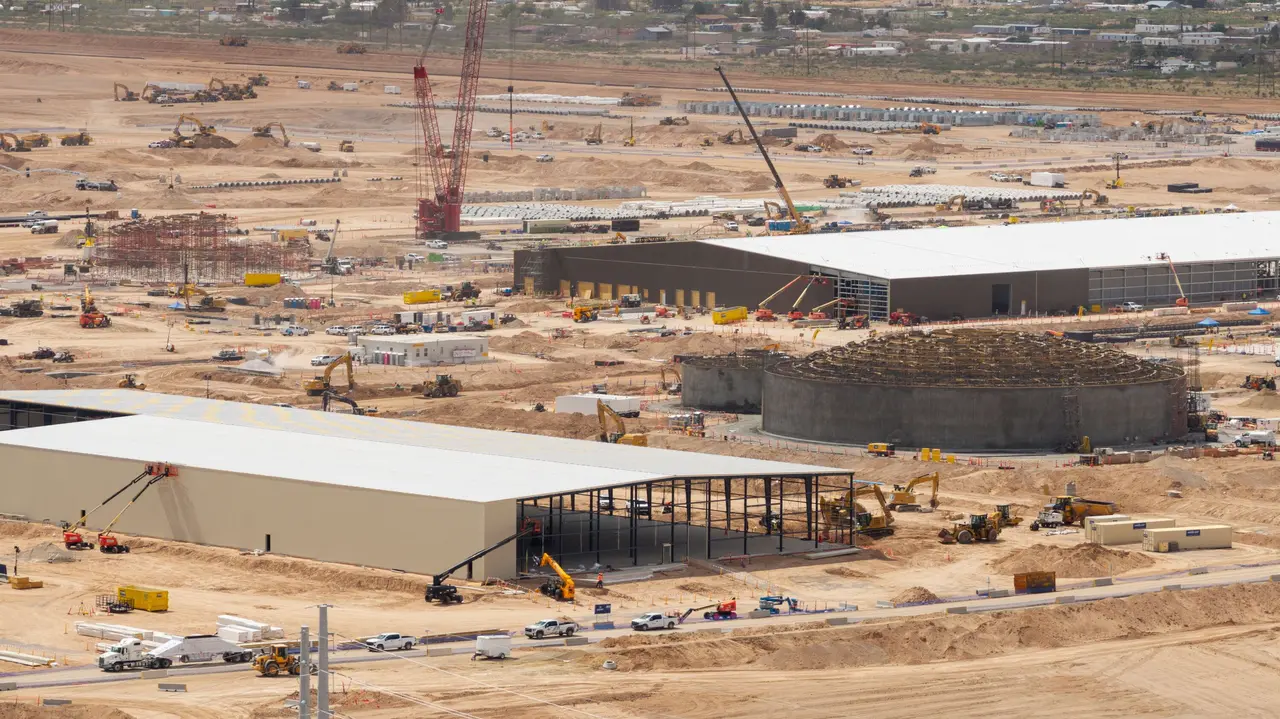
The catalyst for Eisman's decision centers on Alphabet's staggering AI spending trajectory. The company raised its 2026 capital expenditures guidance to as much as $205 billion, well above the roughly $186 billion analysts expected
2
. Despite Google reporting strong results with revenue climbing 24% and Cloud revenue hitting $24.8 billion—up 82%—the company posted negative free cash flow of $5.9 billion, its first quarterly outflow since 20042
. Eisman noted the dramatic shift in investor expectations: "A year ago, it was all rah-rah for AI. When companies raised their capex budgets, the market cheered. Now everyone is nervous and that nervousness was on full display this week"2
.What distinguishes Eisman's warning is his focus on how the AI boom has created hidden investor concentration that threatens financial stability. "It's all one trade," Eisman explained. "Even people who think they're diversified, because they own 60% stocks and 40% bonds, are missing the fact that they're actually not diversified, because of their 60%, more than 50% is tech and AI-related, and of the 40% of the bonds, most of the new issuance of bonds is AI related"
1
. Official data supports this concern: the 10 largest businesses in the S&P 500 comprise around 36.4% of the index3
. The Federal Fed identified AI-related issues as one of the biggest potential threats to financial stability in its May report3
.When asked what happens if AI doesn't succeed, Eisman was direct: "I think we have a big correction"
1
. The Big Short investor emphasized he isn't betting against the broader market but worries about what happens if companies can't generate adequate returns on hundreds of billions poured into AI infrastructure3
. Even strong performers aren't escaping the nervousness—ServiceNow grew revenue 24% yet the stock is down 38% this year2
. "Fighting the AI narrative is like fighting a ghost," Eisman said2
.Related Stories
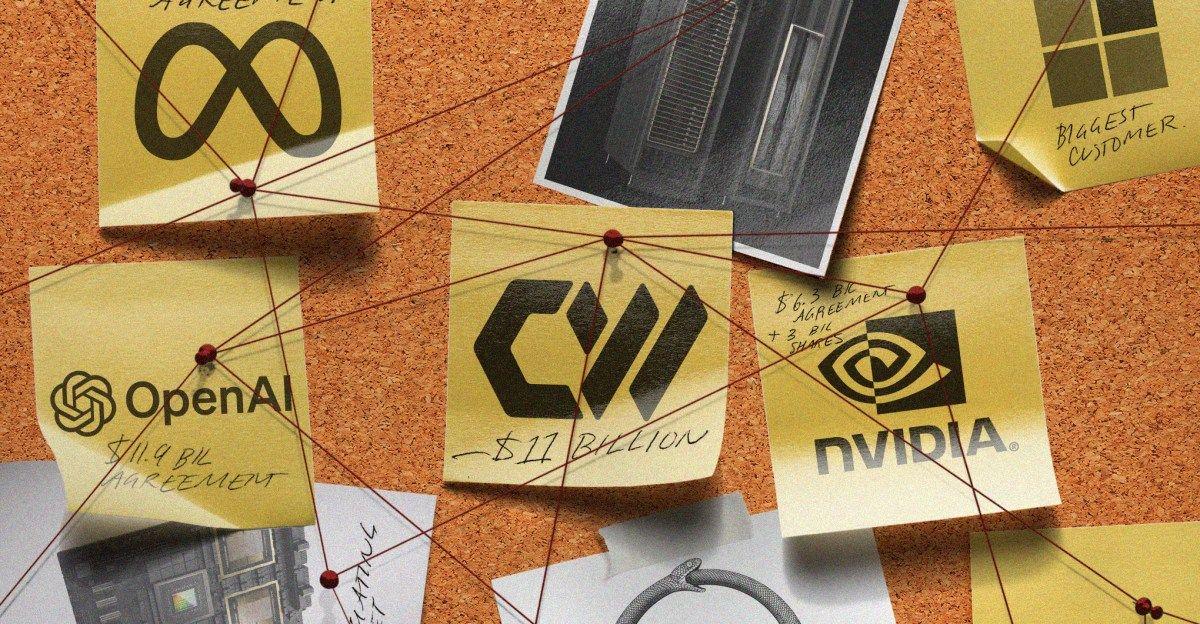
The AI infrastructure buildout extends across major technology companies, amplifying the concentration risk. Microsoft spent $31.9 billion in capital expenditures in the third quarter, with approximately two-thirds directed toward shorter-lived assets like graphics processing units and central processing units
3
. Microsoft also reported that sustained AI investment and greater product usage eroded its companywide gross margin, though cloud demand continued to exceed available capacity3
. Eisman questioned increasingly complex arrangements where AI developers, cloud providers, and chipmakers fund each other's infrastructure purchases, expressing concern that there isn't enough end-customer profitability to justify the investment cycle3
.Despite Eisman's warnings, prediction market traders remain relatively optimistic. Polymarket's "AI bubble burst" market, with over $2.3 million in volume, prices just a 16% chance the bubble pops by the end of 2026
2
. However, Eisman argues that even traditionally defensive positions offer no shelter from AI-related stocks exposure. He noted that owning investment banks like Morgan Stanley, Goldman Sachs, and Bank of America "is just one more aspect of the AI trade" because the investment banking cycle now runs on AI financing2
. Eisman said he hasn't redeployed proceeds into defensive sectors, noting that "people either want to buy AI or they don't want to buy AI. They don't want to shift out of it to buy Clorox"1
. The investor is sitting on substantial cash while determining his next move1
. Investors should monitor whether AI revenue continues growing faster than infrastructure costs, whether free cash flow recovers after the current construction surge, and whether cloud demand sustains current capacity constraints3
. The critical question remains whether diversified portfolios can withstand margin pressures if the AI boom fails to meet investor expectations.Summarized by
Navi
[2]
[3]
06 Jul 2026•Business and Economy

18 Jul 2024

18 Nov 2025•Business and Economy

1
Technology

2
Policy and Regulation

3
Technology