Superhuman acquires GPTZero to merge AI writing tools with detection capabilities


5 Sources
[1]
Superhuman acquires AI detection startup GPTZero
GPTZero, the three-year-old AI detection startup that Princeton grad Edward Tian first built as a senior thesis project, has been acquired by Superhuman, the companies announced on Tuesday. Terms of the deal were not disclosed, though Tian told Business Insider that GPTZero amassed more than 19
[2]
Superhuman has acquired AI authenticity service GPTZero - Engadget
It's an odd-seeming move for a company selling an AI writing assistant. Superhuman announced that it has acquired GPTZero. This AI identification business offers services such as hallucination and plagiarism detection as well as a nifty little tool that displays how much of the internet is
[3]
Grammarly parent Superhuman buys AI detector GPTZero
Superhuman Inc., the company formerly known as Grammarly, said today it has agreed to acquire GPTZero Inc., the startup whose detection tools tell teachers, editors and hiring managers when a piece of writing came from a machine. The acquisition price was not disclosed. The acquisition is
[4]
Superhuman acquires GPTZero to expand AI authenticity tools
Superhuman has acquired GPTZero, an AI authenticity service specializing in detecting AI-generated content. GPTZero provides services including hallucination and plagiarism detection, alongside a tool that shows the proportion of internet content generated by AI. Superhuman plans to integrate
[5]

Superhuman Acquires GPTZero to Strengthen Trust and Transparency in AI Workflows
Superhuman has acquired GPTZero, a startup known for AI-generated content detection. The deal brings together productivity software and AI verification capabilities as businesses increasingly seek tools that improve trust, transparency, and efficiency in AI-assisted workflows. GPTZero is valued at
Share
Copy Link
Superhuman has acquired GPTZero, the AI detection startup that helps identify AI-generated content. The deal brings together GPTZero's 19 million users and $30 million in annual recurring revenue with Superhuman's AI writing platform. The acquisition aims to build trust and transparency in AI workflows, though critics note the irony of an AI writing company buying an AI detector.
Superhuman Acquires GPTZero in Strategic AI Detection Move
Superhuman Inc., the company formerly known as Grammarly, announced it has acquired GPTZero Inc., marking a significant shift in how AI-generated content will be managed across its platform
1
. The deal brings together one of the most prominent AI writing assistant platforms with a leading AI authenticity service, though financial terms were not disclosed2
.
Source: SiliconANGLE
GPTZero, the three-year-old startup that Princeton graduate Edward Tian first built as a senior thesis project, has grown to serve 19 million registered users and generate $30 million in annual recurring revenue
1
. The company was valued at over $88 million by PitchBook prior to the acquisition3
. Tian and co-founder CTO Alex Cui, who had been friends since high school, raised just $13.5 million in venture funding, including a $3.5 million seed round led by Uncork Capital and a $10 million Series A in June 2024 led by Footwork co-founder Nikhil Basu Trivedi5
.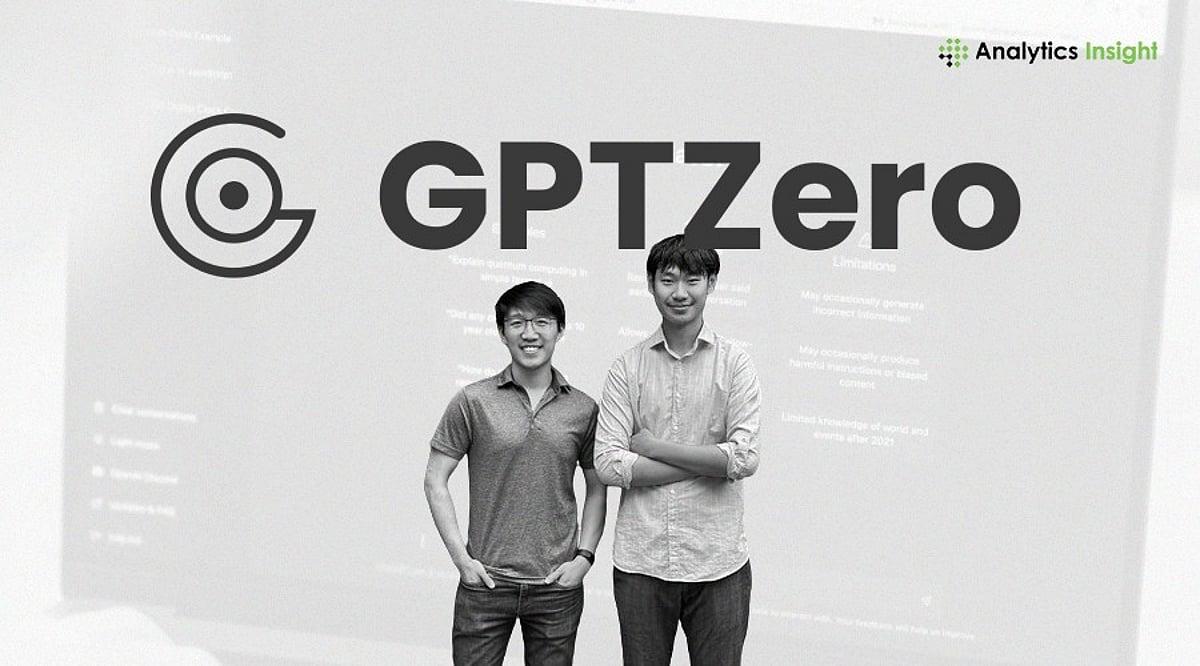
Source: Analytics Insight
Integration Plans for AI Writing Detection Tools
Superhuman plans to integrate GPTZero into Superhuman Go, its AI assistant that works across 1 million apps and websites
3
. The company positions this as building an "authenticity layer" that shows where content came from and whether to trust it. Shishir Mehrotra, chief executive of Superhuman, stated: "Together, we're bringing the most trusted writing tool and the most trusted AI detector into one platform, so that confidence in content becomes the default for writers and consumers"3
.Superhuman already had an AI detection tool built into its platform from the Grammarly days, which ranks first for quality on RAID, an independent benchmark that tests detectors against more than 670,000 samples
3
. The company argues that "two AI detectors are better than one," suggesting that multiple detectors trained on different data can catch more AI-generated content than a single system1
.Detecting AI-Generated Content Across Multiple Use Cases
GPTZero's mission has been to help humans detect and defend against AI slop, expanding beyond simple detection into comprehensive content authenticity verification
1
. The platform now offers plagiarism detection, hallucination detection that flags fake citations and made-up statistics, and verifies that cited sources actually exist3
. A tool called AI Vision, launched in February, scans social feeds for AI content, while another feature called Replay logs the keystroke history of a document to show how it was actually written3
.
Source: Engadget
Teachers and students will remain a priority audience for Superhuman following the acquisition
2
. GPTZero emphasized that Superhuman would help place its tools where people are already reading and writing, expanding its reach beyond educational settings into hiring, publishing, and compliance work2
.Related Stories

Trust and Transparency in AI Raises Questions
The acquisition presents an apparent contradiction that observers have noted. Superhuman actively encourages users to generate content with AI through its writing assistant, while GPTZero specializes in identifying AI-generated content
2
. This tension reflects broader industry challenges as AI becomes more prevalent in content creation. A Graphite study cited by Superhuman found that AI now writes about half of all newly published online articles3
.Superhuman has previously faced criticism for attempting to provide AI-generated feedback that mimicked the voices and styles of other writers, causing discontent within the writing community
2
. The acquisition of GPTZero may signal an attempt to address concerns about content authenticity while continuing to offer AI writing capabilities. However, detection tools remain imperfect and still produce false positives often enough to raise concerns about their reliability3
. Edward Tian, Alex Cui, and approximately 30 GPTZero staff members are joining Superhuman as part of the deal3
.References
Summarized by

Navi
[1]
[3]
[5]
Related Stories
Grammarly Acquires Superhuman: A Strategic Move Towards AI-Powered Productivity
01 Jul 2025•Business and Economy
Grammarly Rebrands as Superhuman, Launches AI-Powered Productivity Suite
29 Oct 2025•Business and Economy

Superhuman expands AI email features to pull calendar data and perform web research
03 Dec 2025•Technology
Recent Highlights
1
Microsoft and Nvidia Launch Surface Laptop Ultra: A $2,599 AI-Ready PC With RTX Spark Chip
Technology

2
OpenAI Releases 722 AI-Generated Math Papers on GitHub, Igniting Fury Among Mathematicians
Science and Research

3
Trump Consulted Grok AI Before Ordering Venezuela Invasion and Capture of Nicolás Maduro
Policy and Regulation

Recent Highlights
Today's Top Stories









Don’t drown in AI news. We cut through the noise - filtering, ranking and summarizing the most important AI news, breakthroughs and research daily. Follow topics that matter to you and stay ahead.


