8 Sources
[1]
Taiwan raids Supermicro and two supply-chain partners in widening Nvidia smuggling probe -- nine sites hit as six people summoned for questioning
Taiwan's Keelung District Prosecutors' Office raided Supernicro Computer's Taiwan office on Monday, along with the homes of six individuals and three affiliated company sites, expanding the island's first criminal investigation into the diversion of Nvidia AI chips to China. The six people searched were summoned for questioning, and Supermicro's shares fell 8% in U.S. trading, Bloomberg reports. The company said in a statement that it's cooperating with authorities and remains "committed to protecting our advanced technologies and intellectual property." The probe extends beyond Supermicro itself, with investigators also searching Supermicro distributor Albatron Technology and data center operator Chief Telecom, according to a person familiar with the matter, as cited by Bloomberg. Albatron confirmed in an exchange filing that it had been searched, reporting no financial or operational impact, and its shares fell 10% in Taipei. Meanwhile, Chief Telecom said its operations remained normal, and its stock slid more than 2%. Taiwanese law doesn't classify the unauthorized export of AI chips to China as a crime, so prosecutors are currently leaning on liberal interpretations of existing statutes to build their case. Raids from last month that opened the investigation ultimately led to charges being laid against three suspects for falsifying shipping documents -- not for breaching any export restrictions -- after authorities seized roughly 50 Supermicro servers bound for China, Hong Kong, and Macau. Monday's summonses follow the same pattern, with the six individuals questioned over document offenses rather than the exports themselves. Taipei is currently considering new legislation that would restrict AI chip sales to every customer in China, not only blacklisted firms such as Huawei and SMIC, a change that would let prosecutors charge smuggling as an export crime for the first time. The measure is under discussion in trade talks with the United States and has not been finalized, so, until and if it passes, every action by Taiwanese officials will need to rest on forgery and fraud charges. Meanwhile, the U.S. is prosecuting the same scheme under export-control law. A federal indictment charges Supermicro co-founder Yih-Shyan "Wally" Liaw with conspiring to divert roughly $2.5 billion in Nvidia-equipped servers to China through a Southeast Asian front company, using dummy servers and serial-number labels lifted with heat to deceive auditors. Liaw pleaded not guilty and was released on a $5 million bond, with a trial set for November 2nd, and faces up to 20 years if convicted. It's somewhat ironic that the jurisdiction that manufactures most of the world's advanced AI chips has the weakest legal mechanisms in place to stop their unlawful diversion. The GPUs at the core of both cases are fabbed by TSMC in Taiwan before assembly into Supermicro servers, yet to date, it's only the U.S. that has enshrined specific offences of smuggling in law. Monday's raids represent the first time that distribution itself has been hit, with efforts so far only concerning the execs accused of orchestrating the smuggling scheme. Supermicro had said the earlier case showed the risk that arises when its products pass through multiple downstream parties beyond its direct control, and neither Albatron nor Chief Telecom has yet been charged. Follow Tom's Hardware on Google News, or add us as a preferred source, to get our latest news, analysis, & reviews in your feeds.
[2]
Super Micro says two Taiwan staff detained in probe involving its AI servers
TAIPEI, July 2 (Reuters) - Super Micro (SMCI.O), opens new tab said on Wednesday that two workers at its Taiwan unit had been detained pending a court hearing and two others released on bail after being questioned by Taiwanese prosecutors investigating the alleged illegal export of advanced AI servers containing Nvidia (NVDA.O), opens new tab chips. The servers are made by Super Micro and contain Nvidia chips, which are subject to U.S. export controls prohibiting export to China. The four workers were among six people questioned earlier this week when Taiwan's Keelung District Prosecutors' Office said it had launched a second round of searches in the probe. The six people were questioned over alleged document forgery and breach of trust, it said, adding searches were conducted at 12 locations, including the homes of six suspects and the offices of three companies. The companies searched were Super Micro Taiwan, Albatron Technology (5386.TWO), opens new tab, Super Micro's distributor in Taiwan, and Chief Telecom (6561.TWO), opens new tab, a data centre operator. In a letter to customers issued in the United States on Wednesday, Super Micro Chief Revenue Officer Matthew Thauberger said the four employees had been questioned on June 29 in connection with what he described as a Taiwanese investigation regarding the company's sale of products to a technology company in Taiwan. "Two of the four employees have been detained pending a hearing, and the other two have been released on bail," Thauberger wrote in the letter. "Super Micro is not a target of this investigation," he said, adding that the company had been working with Taiwanese authorities for several months. Thauberger said the company had provided Taiwan authorities access to the employees' desks and electronic devices and had immediately placed all four employees on administrative leave, pending the outcome of the investigation. In May, Taiwanese prosecutors launched the first round of the investigation, detaining three people suspected of illegally exporting Super Micro's high-end AI servers, equipped with the Nvidia chips. Those three remain in detention. In a statement issued in May, Super Micro said it had been cooperating with Taiwan authorities in an investigation into the alleged diversion of its AI servers to the restricted Chinese market. The cooperation had led to the seizure of 50 servers, the company said, adding that they had been deceptively acquired after being sold to an authorised reseller. In March, the U.S. Justice Department charged three people associated with Super Micro, including one of its co-founders, with helping smuggle at least $2.5 billion worth of U.S. AI technology to China in violation of U.S. export laws. Semiconductor powerhouse Taiwan is the world's largest producer of advanced chips used in AI applications. Taiwan has tightened export controls in recent years to prevent advanced technology and know-how from reaching China, which claims the democratically governed island as its own territory despite Taiwan's strong objections. Reporting by Wen-Yee Lee; Editing by Anne Marie Roantree and Michael Perry Our Standards: The Thomson Reuters Trust Principles., opens new tab
[3]
Supermicro Taiwan offices raided in chip smuggling probe
Taiwanese authorities raided the Taiwan office of Supermicro on Monday as they probed the alleged smuggling of Nvidia's AI chips to China, sending the server maker's shares down about 8 per cent. Taiwan's Keelung District Prosecutors Office raided Supermicro's office as part of an ongoing investigation into allegedly illegal exports of the company's servers, according to a person familiar with the matter. Taiwan's Albatron Technology Co, a distributor for Supermicro, confirmed in a filing on Monday that it had also been the target of an official search. Supermicro said in a statement that it was "working closely with Taiwanese authorities on recent events", which it said underscored the importance of industry collaboration with governments to facilitate the enforcement of export laws. "Supermicro products continue to be targeted in these matters, and we continue to co-operate with law enforcement and government officials in Taiwan and other jurisdictions in which we operate to ensure our technology is distributed as lawfully intended," the company added. Supermicro had confirmed last month that it was co-operating with US and Taiwanese authorities to "prevent illicit diversion of server technology". Washington has long leaned on Taiwan to more proactively police China's access to American AI chip technology. Re-exporting chips from Taiwan to China is not a criminal offence in Taiwan, although authorities are reportedly considering stricter export controls to align with the US. In May, Supermicro said three suspects had been arrested and 50 servers had been seized in Taiwan after being sold by Supermicro to an authorised reseller of its products. The company has emphasised the risk of its products being diverted after they are sold to authorised customers. San Jose-based Supermicro, one of a number of companies that package Nvidia's AI chips into servers, has come under scrutiny from US investigators in recent months. In March, US prosecutors charged three people, including Supermicro co-founder and board member Wally Liaw, with smuggling $2.5bn of Nvidia's AI chip servers to Chinese customers. Liaw subsequently resigned from the company's board. Liaw and his co-defendant, contractor Willy Sun, have pleaded not guilty to charges at a New York federal court. A Taiwan-based Supermicro employee, Steven Chang, remained a fugitive, New York's federal prosecutor said at the time. Nvidia's most advanced AI chips, used for training and running AI models, are banned from sale in China under US export controls. Restrictions on the flow of these chips are part of the race between Washington and Beijing to control the technology that powers frontier models such as Anthropic's Claude and OpenAI's ChatGPT. Last week the FT reported that the prices of Nvidia's chips in China's black market had doubled this year as US authorities have cracked down on illicit exports. Nvidia did not immediately respond to a request for comment.
[4]
Super Micro says two Taiwan staff detained in probe involving its AI servers
A Keelung court ordered the detentions alongside an executive at distributor Albatron, the latest turn in a widening Nvidia chip smuggling investigation Taiwanese court has ordered the detention of two Super Micro employees as part of a widening investigation into whether AI servers built with Nvidia chips were illegally routed to China. The Keelung District Court detained the pair, identified in Taiwanese press as managers surnamed Wang and Lin, on the night of June 30 into July 1, alongside a vice president at Albatron Technology, a Super Micro distributor. Two additional employees at a separate firm, Chief Telecom, were questioned and released on bail, according to Taipei Times and Bloomberg reporting that both named the individuals involved. Prosecutors at the Keelung District Prosecutors' Office allege that export documents were falsified to disguise the true destination of high-end AI servers equipped with Nvidia's GB300 chips, with this particular tranche valued at roughly NT$700 million, or about $22 million. That figure is separate from, and considerably smaller than, the $2.5 billion smuggling scheme US federal prosecutors described in March when they indicted Super Micro co-founder Yih-Shyan "Wally" Liaw alongside two colleagues. This is now the third distinct enforcement action to touch Super Micro's Taiwan operations within months, following a raid on its Taiwan office in late June and the original detentions in May. Super Micro said in an open letter on July 1 that it has "zero tolerance for anyone who violates the law or our internal policies," and that "the relevant authorities have confirmed that Supermicro is not a target of this investigation." The company said it has been cooperating with Taiwanese authorities for several months and has placed all four employees questioned across the various probes on administrative leave pending the case's outcome. The case traces back to May 20, when Taiwan's Coast Guard, working with Keelung prosecutors, intercepted 50 Nvidia GB300-equipped servers at the port along with roughly NT$9 million in cash, leading to the detention of three men at the time. That seizure escalated on June 29, when prosecutors raided Super Micro's Taiwan office along with Albatron and Chief Telecom sites, a search covering as many as a dozen locations. Super Micro shares fell around 8% to 9% on the day of the raid, part of a monthly slide of roughly 37% that has coincided with the drumbeat of legal developments. The detentions also revive memories of Super Micro's rockier recent history. Short seller Hindenburg Research accused the company of accounting manipulation in August 2024, and Ernst & Young resigned as its auditor two months later, citing an inability to rely on management's representations. Super Micro narrowly avoided Nasdaq delisting by filing delayed financial statements before a November 2025 deadline, and an independent special committee found no evidence of fraud. PwC has since taken over as auditor, though the current smuggling allegations, unlike the accounting episode, centre on individual employees and a distributor rather than the company's own books. Super Micro's board has flagged an export-control review ahead of its next earnings report, due August 4. Taiwan's own earlier detentions in May and a related probe into a Japan transshipment route suggest prosecutors are tracing multiple paths by which restricted hardware may have reached buyers in China. Nvidia chief executive Jensen Huang has called smuggled data centres a dead end, arguing that national security concerns outweigh any short-term sales lost to export controls. No charges have yet been formally filed against the two detained employees, and Taiwanese procedure allows prosecutors months to build a case before deciding whether to indict. That leaves Super Micro in a familiar position: distancing itself from allegations involving its own branded hardware while insisting the underlying business remains untouched. Whether that distinction holds will depend on what investigators find as they work through the export paperwork at the centre of the case. Whether that cooperation extends to handing over internal export records has also not been disclosed publicly.
[5]
Taiwanese Authorities Reportedly Raid Supermicro in Move That Could Signal Big Change For AI Chip Exporters
Supermicro is a legitimate hardware company based in San Jose, California that nonetheless has a long list of brushes with legal controversy. And today, according to Bloomberg, it had its Taiwan office and about eight other locations raided as part of a U.S. federal case over alleged AI chip smuggling -- or to put it another way, noncompliance with U.S. export controls. Shares closed down about 8% if you care about that sort of thing. Bloomberg notes that the Taiwanese legal system has not criminalized AI chip exports to China. But the U.S. has reportedly been pressuring Taiwan to help its efforts to stop China from obtaining high-end AI chips. In other words, these raids could kick off an era in which Taiwan becomes the tip of the spear in the enforcement of these U.S. export controls. To refresh your memory, back in March, the U.S. feds charged two Supermicro employees and a Supermicro contractor with what seems to have been a half-sophisticated, half-hilariously crude scheme that (allegedly) went like this: * Supermicro employees allegedly pretended to be selling servers loaded with high-end, can't-be-sent-to-China Nvidia, chips to a company somewhere in Southeast Asia. * The Southeast Asia-based middleman company allegedly removed the serial numbers from the chip-laden servers using the old hair-dryer-on-the-stickers trick, and stuck the serial numbers onto dummy hardware. The dummies were then stashed in a warehouse. * Various bureaucratic goings on at the Southeast Asian middleman company seem to have triggered inspections, presumably on behalf of the U.S. Commerce Department. As noted by CNN, the inspections allegedly weren't all that thorough, perhaps because the individual "conducting the audit was 'off-site enjoying entertainment paid for' by the pass-through company, according to the indictment." So it seems like the serial number trick worked, at least for a while. * Meanwhile, the actual Nvidia chip-laden servers, sans serial numbers, were allegedly spirited away to China, and money allegedly changed hands. The dollar figure cited in reports about these allegations is $2.5 billion. "The conduct by these individuals alleged in the indictment is a contravention of the Company's policies and compliance controls, including efforts to circumvent applicable export control laws and regulations. Supermicro maintains a robust compliance program and is committed to full adherence to all applicable U.S. export and re-export control laws and regulations," Supermicro wrote in a statement back in March. Bloomberg's sources say Taiwan's effort on Monday, which involved raids on six residences and three "affiliated companies," included the Taiwan office of Super Micro Computer Inc. (The official name of the company operating the Supermicro brand). Keelung District Prosecutors in Taiwan apparently confirmed the raids, but not the part about Supermicro's involvement. Supermicro's latest statement to Bloomberg says it continues to "cooperate with law enforcement and government officials in Taiwan and other jurisdictions in which we operate to ensure our technology is distributed as lawfully intended."
[6]
Taiwan raids tech firms in China AI chip smuggling probe
Taipei (AFP) - Taiwanese investigators have raided the Taiwan offices of US company Super Micro Computer and two other tech firms, a prosecutor said Tuesday, as part of an expanded probe into the alleged smuggling of Nvidia AI chips to China. Prosecutors said in May they were investigating the shipment of "high-end" AI servers containing advanced Nvidia chips to China, Macau and Hong Kong, in violation of US export controls. Nine people are now under investigation, up from three previously, Huang Sheng, head prosecutor in the Keelung Prosecutors Office, told AFP. They are accused of forging documents so they could ship roughly 50 servers made by Super Micro Computer to China. Some of the servers were cleared by Taiwan customs and sent to China via Japan, an official previously told AFP on the condition of anonymity. Twelve sites were raided on Monday as part of the probe, the prosecutors office said in a statement. They included the homes of six people and offices of the companies they worked for -- Nasdaq-listed Super Micro Computer and Taiwan-listed firms Albatron Technology and Chief Telecom. The United States restricts the export of its most cutting-edge AI chips to China, partly over concerns the technology could be used by Beijing's military. But it is not a criminal offence in Taiwan -- a situation lawmakers and experts say needs to change -- with Taiwanese prosecutors relying on other laws to go after offenders. Lawmaker Chung Chia-pin, who belongs to President Lai Ching-te's Democratic Progressive Party (DPP), plans to propose an amendment to the Foreign Trade Act to include a "mainland China semiconductor chip clause" that would make exporting chips there illegal. Chung told AFP Tuesday that a loophole in the law was created under former president Ma Ying-jeou, who belongs to the Kuomintang party, and successive DPP-led governments have failed to close it. Shares fall sharply Top-end chips made by US titan Nvidia -- the world's most valuable company -- are used to train and run AI systems. In response to Washington's export restrictions, China has been accelerating efforts to develop its own AI chips and break away from reliance on US hardware. This month, Taiwanese Deputy Economic Affairs Minister Ho Chin-tsang said Taiwan and the United States "will work to implement our shared export control goals", but the government has not provided details. Chris McGuire, an expert on China and AI at the US-based Council on Foreign Relations, said chip smuggling was a "really significant problem" in Taiwan and Southeast Asia. "It's really, really important that allies align with the United States on all of these policies and also legal authorities," McGuire, who worked at the National Security Council under former US president Joe Biden, told a forum in Taipei this month. "It's not a criminal violation in Taiwan to export AI chips to China, obviously it is under US law, but it's not under Taiwanese law. That needs to change, right?" Super Micro Computer, Albatron Technology and Chief Telecom have said separately they are cooperating with investigators. Their shares have seen sharp falls this week. Prosecutors say it is too early to know if the case is linked to a Nvidia chip smuggling case involving Super Micro Computer employees in the United States. A US indictment unsealed in March showed employees of the company allegedly raked in billions of dollars diverting Nvidia AI chips to China in breach of export controls.
[7]
Taiwan Steps Up Probe Into AI Hardware Smuggling -- Update
By Yang Jie and Sherry Qin Taiwanese authorities escalated a probe into the unauthorized diversion of advanced artificial-intelligence servers made by Super Micro Computer, as part of efforts to crack down on the alleged smuggling of Nvidia chips to China. The sweep, spearheaded by prosecutors in Keelung, targeted six individuals who were subsequently summoned on Monday. While investigators didn't reveal their identities, the charges focus on document forgery and breach of trust. The raid stems from an investigation in May into allegations that three individuals illicitly exported the U.S. company's AI servers to China that were equipped with high-end Nvidia chips. Super Micro said in a statement that it is cooperating with authorities in Taiwan and other global jurisdictions to protect its technology and intellectual property. The company said its products continue to be targeted by illicit export networks, highlighting the need for deeper collaboration between the tech industry and governments to strengthen supply-chain visibility and enforce export controls. Shares of the Nasdaq-listed company tumbled 8% during Monday's trading session. Prosecutors in Taiwan also searched the offices of Chief Telecom, a data-center service provider, and of Super Micro distributor Albatron Technology on Monday. Both companies said they are cooperating with authorities and that the investigation won't have a material impact on their business operations. Albatron's shares slid 10% on Tuesday in Taipei, while Chief Telecom fell 1.5%. The illegal transporting of advanced AI hardware into restricted markets has become an international security flashpoint as nations battle for computing supremacy. As Western nations clamp down on access to high-performance processors, underground networks have increasingly relied on complex transshipment routes. This growing gray market has placed Taiwan under pressure to tighten regulatory boundaries, as the island manufactures the majority of the world's advanced computing components. In March, Super Micro said that co-founder Yih-Shyan "Wally" Liaw resigned from the server maker's board of directors after being indicted for his alleged role in a scheme to smuggle high-end Nvidia chips to China. Super Micro then launched an independent investigation in April led by members of its board on the indictment of two former employees and a contractor over the scheme.
[8]
Taiwan Steps Up Probe Into AI Hardware Smuggling
By Yang Jie and Sherry Qin Taiwanese authorities escalated a probe into the unauthorized diversion of advanced artificial-intelligence servers made by Super Micro Computer, as part of efforts to crack down on the alleged smuggling of Nvidia chips to China. The sweep, spearheaded by prosecutors in Keelung, targeted six individuals who were subsequently summoned on Monday. While investigators didn't reveal their identities, the charges focus on document forgery and breach of trust. The raid stems from an investigation in May into allegations that three individuals illicitly exported the U.S. company's AI servers to China that were equipped with high-end Nvidia chips. Super Micro said in a statement that it is cooperating with authorities in Taiwan and other global jurisdictions to protect its technology and intellectual property. The company said its products continue to be targeted by illicit export networks, highlighting the need for deeper collaboration between the tech industry and governments to strengthen supply-chain visibility and enforce export controls. The Nasdaq-listed company's shares tumbled 8% overnight. Prosecutors in Taiwan also searched the offices of Chief Telecom, a data-center service provider, and of SuperMicro distributor Albatron Technology on Monday. Both companies said they are cooperating with authorities and that the investigation won't have a material impact on their business operations. Albatron's shares slid 10% on Tuesday in Taipei, while Chief Telecom fell 1.5%. The illegal transporting of advanced AI hardware into restricted markets has become an international security flashpoint as nations battle for computing supremacy. As Western nations clamp down on access to high-performance processors, underground networks have increasingly relied on complex transshipment routes. This growing gray market has placed Taiwan under pressure to tighten regulatory boundaries, as the island manufactures the majority of the world's advanced computing components. In March, Super Micro said that co-founder Yih-Shyan "Wally" Liaw resigned from the server maker's board of directors after being indicted for his alleged role in a scheme to smuggle high-end Nvidia chips to China. Super Micro then launched an independent investigation in April led by members of its board on the indictment of two former employees and a contractor over the scheme.
Share
Copy Link
Taiwanese authorities raided Supermicro's Taiwan office and supply-chain partners in a widening Nvidia smuggling probe that has now detained two employees. The investigation centers on whether AI servers equipped with Nvidia chips were illegally exported to China through falsified documents, marking Taiwan's first criminal probe into the diversion of advanced AI technology despite lacking specific export control laws.
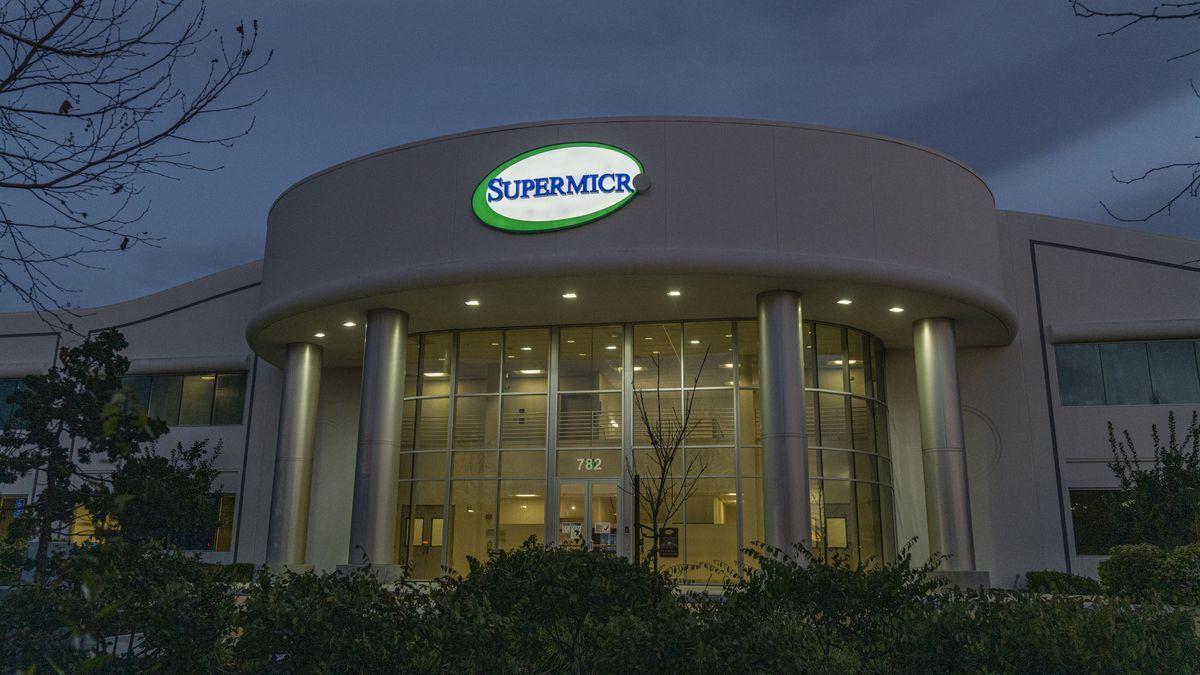
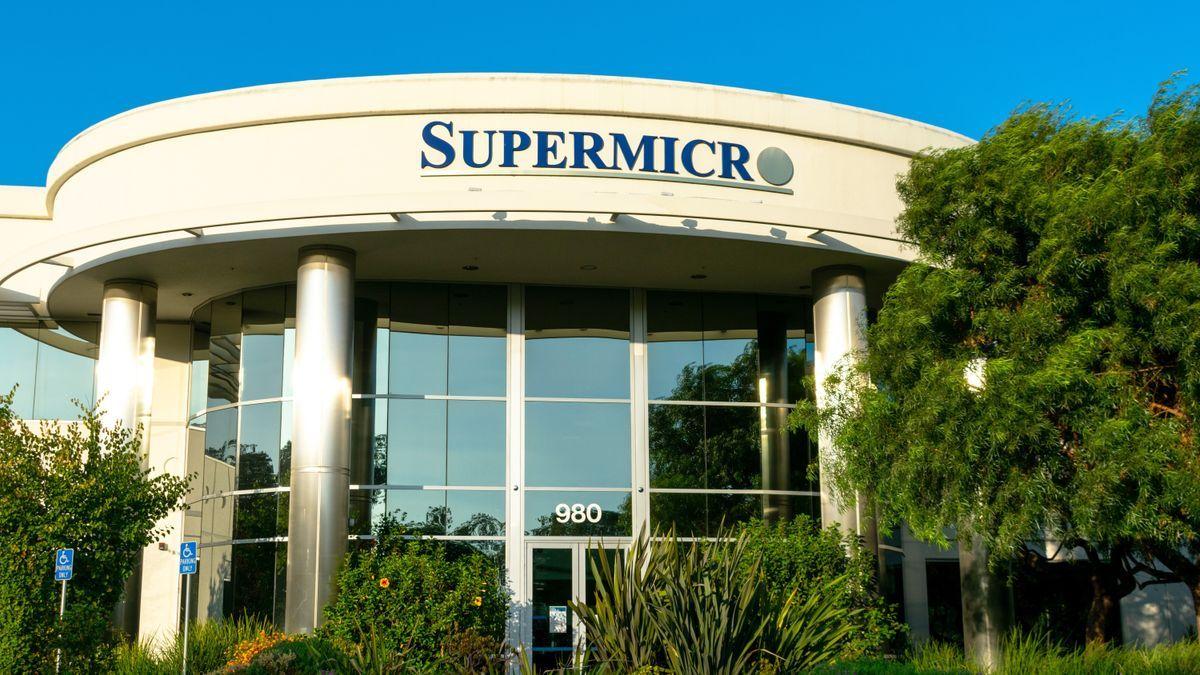
Taiwan's Keelung District Prosecutors' Office raided Supermicro Computer's Taiwan office on Monday, marking a significant escalation in the island's first criminal investigation into the diversion of Nvidia AI chips to China
1
. The operation extended to 12 locations, including the homes of six individuals and three affiliated company sites, with investigators questioning six people over alleged document forgery and breach of trust2
. Supermicro's shares fell 8% in U.S. trading following news of the raid, while the company stated it remains "committed to protecting our advanced technologies and intellectual property"1
.
Source: Tom's Hardware
The chip smuggling probe now involves multiple supply-chain partners, with searches conducted at Albatron Technology, Supermicro's distributor in Taiwan, and Chief Telecom, a data center operator
1
. Albatron confirmed the search in an exchange filing, reporting no financial or operational impact, though its shares fell 10% in Taipei1
. This represents the first time that distribution channels have been targeted, with previous efforts focusing solely on executives accused of orchestrating the smuggling scheme.In a significant development, the Keelung District Court ordered the detention of two Super Micro employees, identified in Taiwanese press as managers surnamed Wang and Lin, alongside a vice president at Albatron Technology
4
. Two additional employees from Chief Telecom were questioned and released on bail4
. In a letter to customers, Super Micro Chief Revenue Officer Matthew Thauberger confirmed that four employees had been questioned on June 29, with two detained pending a hearing and two released on bail2
.

Source: France 24
The company emphasized that "Super Micro is not a target of this investigation" and has been working with Taiwanese authorities for several months
2
. All four employees have been placed on administrative leave pending the outcome of the investigation, and the company provided authorities access to their desks and electronic devices2
. Prosecutors allege that export documents were falsified to disguise the true destination of high-end AI servers equipped with Nvidia's GB300 chips, with this particular tranche valued at approximately NT$700 million, or about $22 million4
.Taiwanese law doesn't classify the unauthorized export of AI chips to China as a crime, forcing prosecutors to rely on liberal interpretations of existing statutes to build their case
1
. The six individuals questioned face potential charges for falsifying shipping documents rather than breaching any export restrictions1
. This follows the pattern from raids last month that led to charges against three suspects for document offenses after authorities seized roughly 50 Supermicro servers bound for China, Hong Kong, and Macau1
.Taipei is currently considering new legislation that would restrict AI chip sales to every customer in China, not only blacklisted firms such as Huawei and SMIC
1
. This change would allow prosecutors to charge smuggling as an export crime for the first time, addressing what many see as an ironic situation where the jurisdiction manufacturing most of the world's advanced AI chips has the weakest legal mechanisms to stop their unlawful diversion1
. The measure is under discussion in trade talks with the United States but has not been finalized.Related Stories
While Taiwan grapples with legal limitations, the U.S. is prosecuting the same scheme under export-control law. A federal indictment charges Supermicro co-founder Yih-Shyan "Wally" Liaw with conspiring to divert roughly $2.5 billion in Nvidia-equipped servers to China through a Southeast Asian front company
1
. The alleged scheme involved using dummy servers and serial-number labels lifted with heat to deceive auditors1
. Liaw pleaded not guilty and was released on a $5 million bond, with a trial set for November 2nd, facing up to 20 years if convicted1
.
Source: Gizmodo
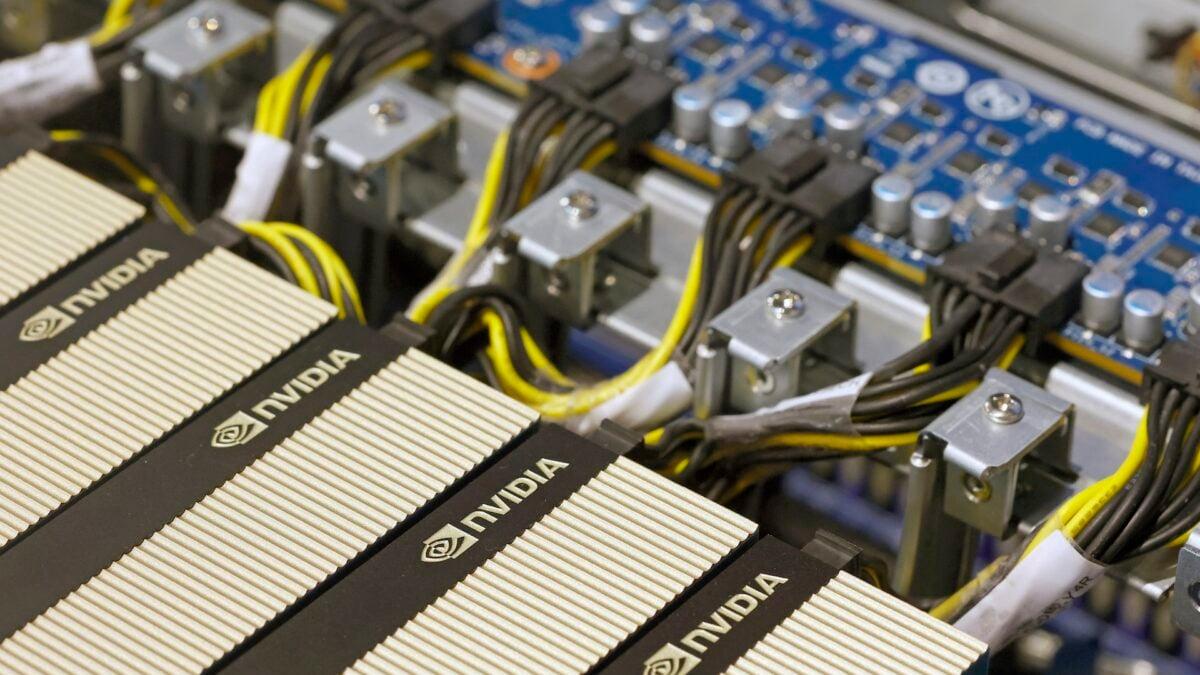
The illegal export of AI servers containing chips subject to US export controls on AI chips represents a critical concern for Washington, which has long pressured Taiwan to more proactively police China's access to American AI chip technology
3
. These raids could signal a new era in which Taiwan becomes central to enforcing U.S. export restrictions5
. The Financial Times reported that prices of Nvidia's chips in China's black market had doubled this year as U.S. authorities have cracked down on illicit exports3
, underscoring the economic pressures driving the widening Nvidia smuggling probe.The investigation highlights mounting geopolitical tensions over AI infrastructure access and control. Nvidia's most advanced AI chips, used for training and running AI models, are banned from sale in China under U.S. export controls as part of the race between Washington and Beijing to control the technology that powers frontier models
3
. Taiwan has tightened export restrictions in recent years to prevent advanced technology and know-how from reaching China, which claims the democratically governed island as its own territory2
.For companies operating in the AI supply chain, the case underscores risks when products pass through multiple downstream parties beyond direct control. Supermicro has emphasized this vulnerability, noting that the servers were "deceptively acquired after being sold to an authorised reseller"
2
. As Taiwan considers stricter legislation and coordinates more closely with U.S. authorities, companies should watch for increased scrutiny of distribution networks and enhanced compliance requirements across the semiconductor supply chain. The outcome of pending legislation in Taiwan could reshape how AI chip exports are monitored and prosecuted, potentially establishing new standards for the global AI hardware industry.Summarized by
Navi
[1]
21 May 2026•Policy and Regulation

01 Apr 2026•Policy and Regulation

20 Mar 2026•Policy and Regulation

1
Policy and Regulation

2
Policy and Regulation

3
Policy and Regulation