10 Sources
[1]
Nvidia employee detained in Taiwan as part of chip smuggling probe -- held on suspicion of falsifying business documents, company says smuggling 'a nonstarter'
Taiwan has no law criminalizing the export of AI chips to China. Taiwan's Keelung District Prosecutors' Office said on Tuesday it has detained a man surnamed Chang on suspicion of falsifying business documents, after investigators searched his home and his workplace on July 24 in connection with the AI chip smuggling case it opened in May. Bloomberg reports that Chang works for Nvidia and that the workplace search covered his desk at the company's Taipei office, which would make this the first known legal action against an Nvidia employee in a chip diversion case. Prosecutors said they consider him strongly suspected of the offenses and cited risks of flight, destruction of evidence, and collusion with witnesses, but haven't accused Nvidia of any wrongdoing. "Smuggling is a nonstarter," an Nvidia spokesperson told Tom's Hardware. "We primarily sell our products to well-known partners, including OEMs, who help us ensure that all sales comply with U.S. export control rules. Even relatively small exporters and shipments are subject to thorough review and scrutiny on both sides of the globe, and any diverted products would have no service, support, or updates." Taiwan doesn't treat the unauthorized export of AI chips to China as a crime, which is why every detention in the case has so far concerned fraud accusations. The three people arrested in May were pursued over shipping declarations rather than the shipments, and the six summoned during June's raids on Super Micro and two supply-chain partners were questioned on the same basis. Huawei and SMIC were among 601 entities added to the International Trade Administration's strategic high-tech commodities entity list in June last year, a designation that requires government approval before a Taiwanese company can ship to any of them. The list works off buyer names and carries no performance threshold, so a rack of accelerators sold to a company that isn't on it needs no approval. It was reported last month that Taipei is weighing performance-threshold controls modeled on Washington's, and the Ministry of Economic Affairs confirmed consultations with the U.S. on bringing advanced chips under regulation without setting a timeline. Seven weeks on, prosecutors are still building the case out of the Criminal Code. Senator Elizabeth Warren, ranking member of the Banking Committee, wrote to Nvidia general counsel Tim Teter and audit committee chair Brooke Seawell on June 1 asking what records support Jensen Huang's public claim that "there's no evidence of any AI chip diversion," and whether the committee had reviewed export compliance following March's indictment of Super Micro co-founder Yih-Shyan "Wally" Liaw over roughly $510 million in diverted servers. She set a June 18 deadline for answers. A legal channel into China has existed since December, when the Bureau of Industry and Security began reviewing H200 export licenses case by case under a 25% revenue share, clearing around 10 Chinese buyers for up to 75,000 units each. Commerce Under Secretary Jeffrey Kessler told the House Foreign Affairs Committee on July 14 that shipments under those licenses remain trivial. Blackwell parts stay off the table entirely, and Chinese demand for them has pushed five-year-old A100 servers to $82,000 on the domestic gray market. Follow Tom's Hardware on Google News, or add us as a preferred source, to get our latest news, analysis, & reviews in your feeds.
[2]
Nvidia Employee Reportedly Detained in Taiwan Over AI Chip Smuggling
Law enforcement in Taiwan has reportedly detained an Nvidia employee as part of an investigation into AI chip smuggling to China. On Tuesday, Taiwan's Keelung District Prosecutor's Office announced new progress in its efforts to trace how high-end servers from US company Supermicro, an Nvidia partner, were illegally exported to China. Investigators in Taiwan identified a new suspect with the surname Chang, executed search warrants for his home and company, and summoned him for questioning. The Prosecutor's Office did not name the man's company, but Bloomberg reports that Chang works at Nvidia. The statement from the Prosecutor's Office adds that Chang is suspected of submitting false information into professional records, suggesting he tried to hide the sensitive GPU exports from customs. "Following interrogation, the prosecutor determined that there was strong suspicion of Chang's involvement in the crime and a risk of flight, destruction of evidence, or collusion with accomplices and witnesses. Consequently, Chang was arrested on the spot," the announcement says in Chinese. The arrest comes a month after investigators in Taiwan also searched a dozen locations and detained four Supermicro employees for questioning. However, San Jose-based Supermicro stressed that it's been working with local authorities to crack down on illegal chip smuggling after the US indicted a Supermicro co-founder for allegedly supplying cutting-edge Nvidia GPUs to Chinese buyers in exchange for billions in sales. The US has banned Nvidia from exporting its most powerful GPUs to China over concerns the country could harness the technology to develop leading AI models that could benefit the Chinese military. In response to the latest arrest, Nvidia told PCMag: "Smuggling is a nonstarter. We primarily sell our products to well-known partners, including OEMs [original equipment manufacturers], who help us ensure that all sales comply with US export control rules. Even relatively small exporters and shipments are subject to thorough review and scrutiny on both sides of the globe, and any diverted products would have no service, support, or updates." Although Nvidia has been trying to address concerns about chip smuggling, US officials remain worried that Chinese companies are still finding ways to source its latest GPUs. Last week, a White House advisor accused the Chinese startup Moonshot AI of sourcing cutting-edge Nvidia Blackwell GPUs.
[3]
Taiwan detains Nvidia employee in Super Micro probe, Taiwan media says
TAIPEI, July 28 (Reuters) - Taiwan prosecutors detained a Nvidia (NVDA.O), opens new tab employee as part of a probe into alleged illegal exports of Super Micro (SMCI.O), opens new tab AI servers to China, Taiwan's local media reported. The Keelung District Prosecutors Office said in a statement on Tuesday that a suspect, surnamed Chang, was questioned after authorities searched his home and workplace on July 24. It did not say where he was employed. Chang was later detained after prosecutors argued there was a risk he could flee, destroy evidence or collude with accomplices or witnesses, the prosecutors said. The servers were equipped with Nvidia chips subject to U.S. export controls, the prosecutors said. These curbs imposed by Washington since 2022 make it illegal for these semiconductors to be exported or sold in mainland China. Taiwan's Mirror Media reported on Tuesday that the suspect Chang is an Nvidia employee. Nvidia did not confirm whether the suspect was its employee. In a statement to Reuters, the company said: "We primarily sell our products to well-known partners, including OEMs (original equipment manufacturers), who help us ensure that all sales comply with U.S. export control rules." EXTENDED PROBE INTO SUPERMICRO The latest action was part of a third round of searches in the investigation, following earlier rounds in May and June. In May, Taiwanese prosecutors launched the first round, opens new tab, detaining three people suspected of illegally exporting Super Micro's high-end AI servers equipped with restricted Nvidia chips to China. In late June, Taiwanese prosecutors launched a second round, detaining two Super Micro workers at its Taiwan unit. In March, the U.S. Justice Department charged, opens new tabthree people associated with Super Micro, including one of its co-founders, with helping smuggle at least $2.5 billion worth of U.S. AI technology to China in violation of U.S. export controls. Semiconductor powerhouse Taiwan is the world's largest producer of advanced chips used in AI applications. Taiwan has tightened export controls in recent years to prevent advanced technology and know-how from reaching China, which claims the democratically governed island as its own territory despite Taiwan's strong objections. Reporting by Wen-Yee Lee; Editing by Tom Hogue and Raju Gopalakrishnan Our Standards: The Thomson Reuters Trust Principles., opens new tab
[4]
Taiwan detains an Nvidia employee as its chip-smuggling probe reaches the chipmaker
The Keelung investigation began with Super Micro and its distributors. It has now, for the first time, touched Nvidia itself. Taiwan's investigation into smuggled AI hardware, which began with Super Micro and had spent months working through the island's distributors, has now reached inside Nvidia itself. On July 28, prosecutors detained an Nvidia employee as part of the probe into whether restricted AI servers were being routed to China, Bloomberg first reported, the first time the widening case has touched the company whose processors sit at the centre of it. The employee, whom local media identified as a senior business-development manager, was held by the Keelung District Prosecutors' Office, which has driven the case since spring. Prosecutors allege he signed off on end-user and "know your customer" documents that helped restricted Nvidia servers clear export review before the hardware was diverted to China, according to Taiwanese press accounts of the case. He has not been charged, and the allegations have not been tested in court. Much of this began as the first criminal probe of its kind on the island. The investigation grew out of something unrelated. Coast Guard officers working a drug-smuggling case stumbled onto an underground supply chain, and the chip thread has since pulled in Super Micro and several of its Taiwanese distribution and data-centre partners. Investigators say roughly 50 servers built around Nvidia's GB300 Grace Blackwell Ultra chips, together worth about NT$700 million, or some $21 million, were seized in May. Prosecutors allege shell companies placed the orders and the machines were then parked in a Taiwanese data centre to look as though they had never left the island, before being routed onward through third countries. Earlier reporting pointed to Japan as one such transshipment point on the way to Hong Kong and mainland China. Because Taiwan has no law that directly criminalises exporting AI chips to China, prosecutors have leaned on charges of document forgery and breach of trust. "It's not a criminal violation in Taiwan to export AI chips to China, obviously it is under US law," Chris McGuire, a fellow at the Council on Foreign Relations, told Bloomberg. A proposed amendment to Taiwan's Foreign Trade Act would close that gap, though it has not yet passed, which leaves prosecutors building a smuggling case on paperwork offences rather than on the exports themselves. The detention widens a case that had, until now, centred on Super Micro. Prosecutors moved to detain three people in May, including Super Micro co-founder Yih-Shyan "Wally" Liaw, and held further Super Micro staff through July. The company has said it is cooperating, that it is not itself a target of the investigation, and that it suspended four Taiwan-based employees connected to the matter. The Taiwanese proceedings run in parallel with a US case. In March, the Justice Department unsealed an indictment alleging a $2.5 billion scheme to divert Nvidia-powered servers to China through falsified documents and decoy shipments, with Liaw among those charged. That case turned on falsified end-user paperwork, unmarked boxes, and a pass-through firm, a set of tactics that echoes the document offences Taiwanese prosecutors are now pursuing. Washington has restricted sales of Nvidia's most advanced processors to China since 2022, and enforcement has struggled to keep pace with demand, a gap the dummy-server indictment laid bare. Nvidia has consistently said it complies with export controls and cannot service or support products that reach customers through illicit channels. Jensen Huang has called black-market data centres assembled from smuggled parts a dead end, arguing that diverted chips are effectively useless without the company's continued technical support. The company had not commented publicly on the detention of its own employee at the time of writing. What happens next runs through the Keelung court, which will decide whether the Nvidia employee is held further or released on bail while the inquiry continues. For a case that started with a drug bust and a shipping container, it has travelled a long way up the supply chain.
[5]
Taiwan detains Nvidia employee in Super Micro chip smuggling probe
The detention marks the first known instance of authorities taking legal action against an Nvidia employee in a chip smuggling case Taiwan prosecutors detained an Nvidia $NVDA employee on Tuesday as part of an investigation into the alleged smuggling of AI servers equipped with restricted Nvidia chips to China, expanding a probe that has now ensnared seven people. The Keelung District Prosecutors Office said investigators searched the home and workplace of a suspect identified only by the surname Chang on July 24. Prosecutors successfully sought Chang's detention, telling the court he could flee the country, tamper with evidence, or coordinate with others involved in the case, according to the prosecutors office. Taiwan's Mirror Media identified the suspect as an Nvidia employee, according to Reuters. Nvidia did not confirm whether Chang is its employee. As far as is publicly known, no government had previously moved against an Nvidia employee over chip smuggling, making the detention potentially unprecedented, according to Bloomberg. Investigators searched Chang's desk at Nvidia's Taipei office, Bloomberg added, citing unnamed sources. Chang now sits in custody after a court approved the detention request, with forgery and breach of trust among the allegations cited. Chang came to investigators' attention through material collected in prior operations focused on Super Micro, a source familiar with the case told AFP. According to prosecutors, the defendants falsified paperwork to facilitate the export of around 50 Super Micro servers to China, and an official told AFP that a portion of those units passed through Taiwan customs before continuing on through Japan. In a statement, Nvidia said: "Smuggling is a nonstarter. We primarily sell our products to well-known partners, including OEMs, who help us ensure that all sales comply with U.S. export control rules. Even relatively small exporters and shipments are subject to thorough review and scrutiny on both sides of the globe, and any diverted products would have no service, support, or updates." The Taiwan investigation, covering three rounds of raids and detentions, began in May when prosecutors announced they were looking into exports of high-end AI servers to China, Macau, and Hong Kong in violation of U.S. export controls. A second round in late June swept up two Super Micro workers at its Taiwan unit. Tuesday's action marks the third round. Seven people are now in custody, including two Super Micro employees and one employee of Taiwan-listed Albatron Technology. The Taiwan probe runs alongside a separate U.S. case. Federal authorities charged Super Micro co-founder Yih-Shyan "Wally" Liaw and two others in March with diverting roughly $2.5 billion in Nvidia-equipped servers to China. Prosecutors in Taiwan have said it is too early to determine whether the two investigations are connected. The United States has barred Nvidia's advanced AI chips from reaching China since 2022, citing fears that the technology could strengthen Beijing's armed forces. Taiwan does not currently have its own restrictions on AI chip sales to China, though President Lai Ching-te's administration is weighing tighter policies.
[6]
Taiwanese authorities detain Nvidia employee for alleged attempt to smuggle AI chips into China
According to reports, an Nvidia employee has been detained in Taiwan over claims of alleged AI chip smuggling into China. The employee is identified only by their last name, 'Chang.' On Tuesday, local investigators searched both Chang's residence as well as their desk in Nvidia's Taipei office. Nvidia itself has not been accused of any wrongdoing, though Chang faces allegations of breach of trust and forgery. Chang's detainment was carried out as part of a larger investigation into the alleged smuggling of AI chips into China. According to Bloomberg, this is just one investigation of at least eight similar probes into potential smuggling routes across four different jurisdictions. This latest probe out of Taiwan specifically concerns the falsification of documents in order to export about 50 Super Micro servers containing Nvidia AI chips to Chinese shores. Taiwanese prosecutors allege that the defendants had already smuggled chips into China via Japan previously. The US government previously charged three Super Micro employees -- including the company's co-founder -- with attempting to smuggle AI chips back in March. An Nvidia spokesperson said in a statement, "Smuggling is a nonstarter," before adding, "We primarily sell our products to well-known partners, including [original equipment manufacturers], who help us ensure that all sales comply with US export control rules." The spokesperson went on to say, "Even relatively small exporters and shipments are subject to thorough review and scrutiny on both sides of the globe, and any diverted products would have no service, support, or updates." To briefly recap, the US government has sought to restrict the flow of AI chips into China since at least 2022. Nvidia has not always been keen on such measures. Besides the company previously calling the Biden administration's AI diffusion rule 'rigged' and 'misguided,' Nvidia CEO Jensen Huang has also been very vocally pro spreading 'American AI technology around the world'. Huang also said back in May that he hopes the aforementioned Super Micro will "enhance and improve their regulation compliance" in the future. Unlike the US, Taiwan does not currently have export restrictions in place to limit the flow of AI chips to China (though it may introduce these in future). However, as the home of the largest semiconductor manufacturer in the world, the island has often sought to protect its place on the technological world stage. For instance, a former manager at TSMC was the first to be indicted under the island's National Security Act for allegedly attempting to leak core Taiwanese chipmaking technologies to China. As AI continues to stoke global competition, Taiwan will continue to take such infractions very seriously.
[7]
Taiwan detains Nvidia worker in chip smuggling probe: source familiar with case
Taipei (AFP) - Prosecutors in Taiwan have detained an Nvidia employee as part of an investigation into the smuggling of the US tech giant's AI chips to China, a source familiar with the case told AFP on Tuesday. The man was detained after investigators raided his home and workplace on July 24, Keelung District Prosecutors Office said in a statement without mentioning Nvidia. He is suspected of offences including "the falsification of business documents under the Criminal Code", the prosecutors said in a statement. The United States restricts exports to China of the most cutting-edge silicon chips used to power artificial intelligence systems, designed by industry leader Nvidia. Officials said in May they were investigating the shipment of "high-end" AI servers made by Nasdaq-listed Super Micro Computer and containing advanced Nvidia chips to China, Macau and Hong Kong, in violation of US export controls. "This Nvidia employee was identified as a person involved in the case after investigators analysed the relevant evidence following the previous round of searches targeting Super Micro," the source told AFP. There was no immediate response from Nvidia. Prosecutors said the detained person is "strongly suspected of having committed the offences, and that there is a risk of flight, destruction of evidence, and collusion with accomplices or witnesses". Seven people are now being held as part of the probe, including the Nvidia employee, two from Super Micron and one from Taiwan-listed Albatron Technology. They are accused of forging documents to ship roughly 50 servers made by Super Micro to China. Some of the servers were cleared by Taiwan customs and sent to China via Japan, an official previously told AFP on the condition of anonymity. Taiwan prosecutors have said it is too early to know if the case is linked to an Nvidia chip smuggling case involving Super Micro Computer employees in the United States and Singapore. Singapore police seized a luxury bungalow this month worth more than US$40 million as part of fraud investigations linked to the alleged transfer of AI chips. A US indictment unsealed in March showed employees of the company allegedly raked in billions of dollars diverting Nvidia AI chips to China in breach of export controls.
[8]
Taiwan arrests Nvidia worker over alleged illegal export of tech
This is the latest arrest in a months-long investigation conducted by Taiwanese authorities over suspicion of illegal exports. A Taiwanese national, reported to be an Nvidia employee, was arrested on Tuesday (28 July) on suspicion of illegally exporting high-end AI servers manufactured by Supermicro. According to a translated statement from Taiwan's Keelung District Prosecutors Office, the defendant, named Chang, is suspected of multiple crimes, including making false entries in business documents. Investigation into his activity began on 24 July, and authorities conducted searches into his residence and business. Chang was later brought into questioning. Authorities detained Chang after determining him to be a flight risk. Concerns were also raised around the defendant potentially destroying evidence or colluding with accomplices. The prosecutor's office did not mention Nvidia in its statement, however, multiple news publications have reported that the Supermicro AI servers in question were equipped with chips from the company, which are subject to US export controls and cannot be transported into China. Nvidia did not confirm whether the detainee was its employee. "We primarily sell our products to well-known partners, including OEMs (original equipment manufacturers), who help us ensure that all sales comply with US export control rules," the company said in a statement to Reuters. This is the latest arrest in a months-long investigation conducted by Taiwanese authorities over suspicion of illegal exports. The latest action was part of a third round of searches in the investigation. Earlier in July, Supermicro said that two of its workers at its Taiwan unit were arrested as part of the investigation into the alleged illegal exports, meanwhile a previous round saw three people being detained. In March, the US government arrested three people associated with Supermicro, including co-founder Yih-Shyan Liaw, over allegations of helping smuggle at least $2.5bn of AI technology into China. Don't miss out on the knowledge you need to succeed. Sign up for the Daily Brief, Silicon Republic's digest of need-to-know sci-tech news.
[9]
Taiwan detains Nvidia employee in Super Micro probe, Taiwan media says
Taiwanese authorities have taken into custody an Nvidia employee as part of an investigation concerning the unlawful export of AI servers. These servers, which included Nvidia chips, fall under United States export restrictions established in 2022. This detention is linked to a wider investigation into the shipment of Super Micro AI servers to China, following the earlier arrests of three individuals for similar breaches of export laws. Taiwan prosecutors detained a Nvidia employee as part of a probe into alleged illegal exports of Super Micro AI servers to China, Taiwan's local media reported.The Keelung District Prosecutors Office said in a statement on Tuesday that a suspect, surnamed Chang, was questioned after authorities searched his home and workplace on July 24. It did not say where he was employed. Chang was later detained after prosecutors argued there was a risk he could flee, destroy evidence or collude with accomplices or witnesses, the prosecutors said. The servers were equipped with Nvidia chips subject to U.S. export controls, the prosecutors said. These curbs imposed by Washington since 2022 make it illegal for these semiconductors to be exported or sold in mainland China. Taiwan's Mirror Media reported on Tuesday that the suspect Chang is an Nvidia employee. Nvidia did not confirm whether the suspect was its employee. In a statement to Reuters, the company said: "We primarily sell our products to well-known partners, including OEMs (original equipment manufacturers), who help us ensure that all sales comply with U.S. export control rules." EXTENDED PROBE INTO SUPERMICRO The latest action was part of a third round of searches in the investigation, following earlier rounds in May and June. In May, Taiwanese prosecutors launched the first round, detaining three people suspected of illegally exporting Super Micro's high-end AI servers equipped with restricted Nvidia chips to China. In late June, Taiwanese prosecutors launched a second round, detaining two Super Micro workers at its Taiwan unit. In March, the U.S. Justice Department charged three people associated with Super Micro, including one of its co-founders, with helping smuggle at least $2.5 billion worth of U.S. AI technology to China in violation of U.S. export controls. Semiconductor powerhouse Taiwan is the world's largest producer of advanced chips used in AI applications. Taiwan has tightened export controls in recent years to prevent advanced technology and know-how from reaching China, which claims the democratically governed island as its own territory despite Taiwan's strong objections.
[10]
Nvidia Employee Detained in Taiwan as Prosecutors Allege AI Chip Smuggling to China: Report - NVIDIA (NAS
According to the news agency, the man was detained after investigators raided his home and workplace on July 24, the Keelung District Prosecutors Office said in a statement, without naming Nvidia directly. He is suspected of falsifying business documents, prosecutors said. Nvidia did not immediately respond to Benzinga's request for comment. Seven Now Detained According to AFP, prosecutors said the detained person is "strongly suspected of having committed the offences, and that there is a risk of flight, destruction of evidence, and collusion with accomplices or witnesses". They are accused of forging documents to ship roughly 50 Super Micro servers containing advanced Nvidia chips to China, with some cleared through Taiwan customs and routed via Japan. A Widening Global Case The detention in Taiwan follows a broader crackdown. U.S. authorities unsealed an indictment in March alleging Super Micro employees diverted Nvidia AI chips to China worth billions of dollars. Singapore police separately seized a luxury bungalow worth more than $40 million this month as part of linked fraud investigations. Price Action: Nvidia's shares were down about 1% to $194.49 in pre-market trading on Tuesday, having gained about 4% so far this year. Image via Shutterstock Market News and Data brought to you by Benzinga APIs To add Benzinga News as your preferred source on Google, click here.
Share
Copy Link
Taiwan prosecutors detained an Nvidia employee suspected of falsifying documents to smuggle AI servers to China, marking the first known legal action against an Nvidia staffer in such a case. The Keelung District Prosecutors' Office searched the employee's home and Taipei office desk, citing flight risk and evidence tampering concerns. Seven people now sit in custody as the investigation expands beyond Super Micro into Nvidia itself.
Taiwan's Keelung District Prosecutors' Office detained an Nvidia employee detained on suspicion of falsifying business documents, marking the first known instance of authorities taking legal action against an Nvidia staffer in an AI chip smuggling case
1
2
. Investigators searched the home and workplace of the suspect, identified only by the surname Chang, on July 24, with the workplace search covering his desk at Nvidia's Taipei office1
. Prosecutors argued there was strong suspicion of Chang's involvement and cited risks of flight, destruction of evidence, and collusion with witnesses, leading to his detention2
. Taiwan's Mirror Media identified Chang as a senior business-development manager at Nvidia4
.
Source: PC Gamer
The Taiwan probe began in May when prosecutors launched investigations into the illegal export of AI servers equipped with restricted Nvidia chips to China, Macau, and Hong Kong
5
. The investigation initially focused on Supermicro and its distributors but has now reached inside Nvidia itself for the first time4
. Prosecutors allege Chang signed off on end-user and "know your customer" documents that helped restricted Nvidia servers clear export review before the hardware was diverted to China4
. Investigators seized roughly 50 servers built around Nvidia's GB300 Grace Blackwell Ultra chips in May, worth approximately NT$700 million or about $21 million4
.
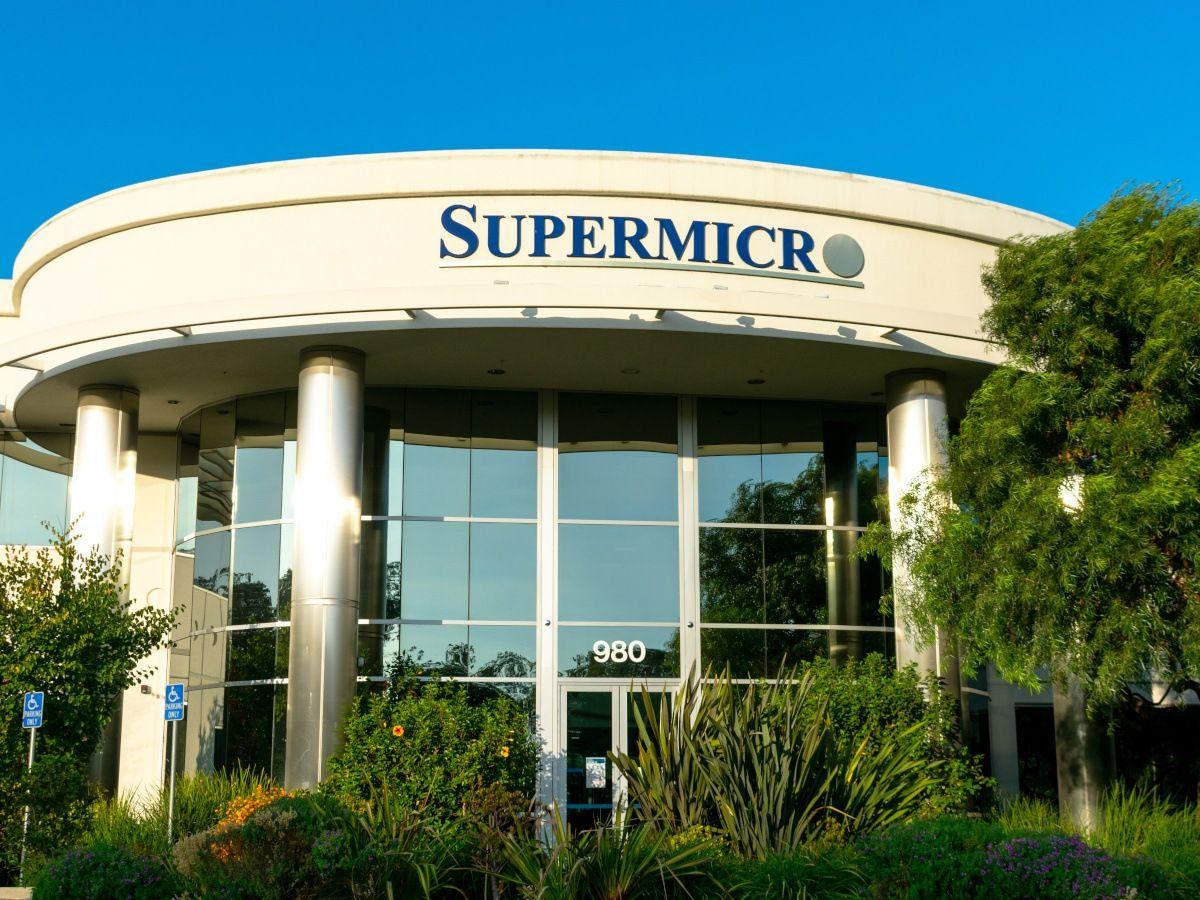
Source: Silicon Republic
The detention marks the third round of enforcement actions in the smuggling of AI hardware to China case. In May, prosecutors detained three people suspected of illegally exporting Super Micro's high-end AI servers
3
. A second round in late June swept up two Super Micro workers at its Taiwan unit5
. Seven people now sit in custody, including two Super Micro employees and one employee of Taiwan-listed Albatron Technology . Prosecutors allege shell companies placed orders and machines were parked in Taiwanese data centers to appear as though they never left the island before being routed through third countries, with Japan identified as one transshipment point to Hong Kong and mainland China4
.The United States has barred Nvidia's advanced AI chips from reaching China since 2022, citing national security concerns that the technology could strengthen Beijing's armed forces
5
. The servers were equipped with Nvidia chips subject to U.S. export controls, which make it illegal for these semiconductors to be exported or sold in mainland China3
. Huawei and SMIC were among 601 entities added to the International Trade Administration's strategic high-tech commodities entity list in June last year, requiring government approval before Taiwanese companies can ship to them1
. These geopolitical tensions have intensified scrutiny of semiconductor supply chains between Taiwan and China.
Source: Benzinga
Taiwan has no law criminalizing the export of AI chips to China, which is why every detention has concerned fraud accusations rather than the shipments themselves
1
. Prosecutors have leaned on charges of document forgery and breach of trust because it's not a criminal violation in Taiwan to export AI chips to China, though it is under U.S. law4
. Taiwan's Ministry of Economic Affairs confirmed consultations with the U.S. on bringing advanced chips under regulation without setting a timeline1
. A proposed amendment to Taiwan's Foreign Trade Act would close this gap, though it has not yet passed4
.Related Stories
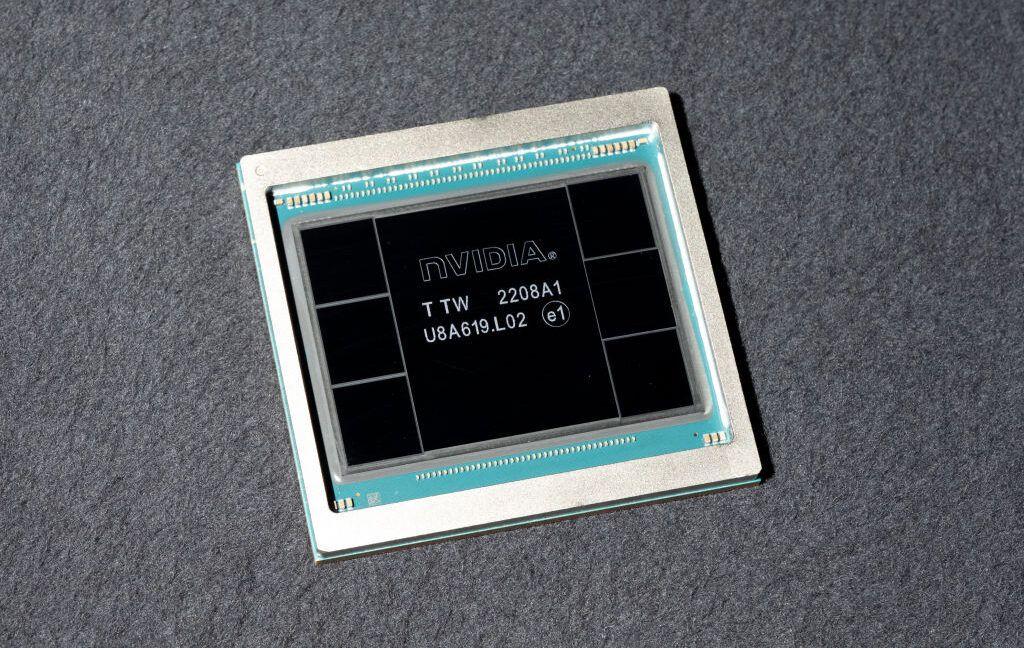
Nvidia responded that "smuggling is a nonstarter," stating the company primarily sells products to well-known partners, including OEMs, who help ensure all sales comply with export control rules
1
5
. The company emphasized that even relatively small exporters and shipments are subject to thorough review and scrutiny on both sides of the globe, and any diverted products would have no service, support, or updates1
. Prosecutors haven't accused Nvidia of any wrongdoing1
. Nvidia did not confirm whether Chang is its employee3
.The Taiwan probe runs alongside a separate U.S. case. In March, the Justice Department charged three people associated with Super Micro, including co-founder Yih-Shyan "Wally" Liaw, with helping smuggle at least $2.5 billion worth of U.S. AI technology to China in violation of U.S. export controls
3
4
. That case turned on falsified end-user paperwork, unmarked boxes, and pass-through firms, tactics that echo the document offenses Taiwanese prosecutors are now pursuing4
. Senator Elizabeth Warren wrote to Nvidia's general counsel and audit committee chair on June 1 asking what records support Jensen Huang's public claim that "there's no evidence of any AI chip diversion," setting a June 18 deadline for answers1
.A legal channel into China has existed since December, when the Bureau of Industry and Security began reviewing H200 export licenses case by case under a 25% revenue share, clearing around 10 Chinese buyers for up to 75,000 units each
1
. Commerce Under Secretary Jeffrey Kessler told the House Foreign Affairs Committee on July 14 that shipments under those licenses remain trivial, while Blackwell parts stay off the table entirely1
. Chinese demand for restricted Nvidia GPUs has pushed five-year-old A100 servers to $82,000 on the domestic gray market1
. Last week, a White House advisor accused Chinese startup Moonshot AI of sourcing cutting-edge Nvidia Blackwell GPUs2
. What happens next runs through the Keelung court, which will decide whether the Nvidia employee is held further or released on bail while the inquiry continues4
.Summarized by
Navi
[1]
21 May 2026•Policy and Regulation

30 Jun 2026•Policy and Regulation

06 Aug 2025•Technology

1
Technology

2
Policy and Regulation

3
Technology