55 Sources
[1]
Sam Altman responds to 'incendiary' New Yorker article after attack on his home | TechCrunch
OpenAI CEO Sam Altman published a blog post on Friday evening responding to both an apparent attack on his home and an in-depth New Yorker profile raising questions about his trustworthiness. Early Friday morning, someone allegedly threw a Molotov cocktail at Altman's home. No one was hurt in the incident, and a suspect was later arrested at OpenAI headquarters, where he was threatening to burn down the building, according to the San Francisco Police Department. While the police have not identified the suspect publicly, Altman noted that the incident came a few days after "an incendiary article" was published about him. He said someone had suggested that the article's publication "at a time of great anxiety about AI" could make things "more dangerous" for him. "I brushed it aside," Altman said. "Now I am awake in the middle of the night and pissed, and thinking that I have underestimated the power of words and narratives." The article in question was a lengthy investigative piece written by Ronan Farrow (who won a Pulitzer for his reporting that revealed many of the sexual abuse allegations around Harvey Weinstein) and Andrew Marantz (who's written extensively about technology and politics). Farrow and Marantz said that during interviews with more than 100 people who have knowledge of Altman's business conduct, most described Altman as someone with "a relentless will to power that, even among industrialists who put their names on spaceships, sets him apart." Echoing other journalists who have profiled Altman, Farrow and Marantz suggested that many sources raised questions about his trustworthiness, with one anonymous board member saying he combines "a strong desire to please people, to be liked in any given interaction" with "a sociopathic lack of concern for the consequences that may come from deceiving someone." In his response, Altman said that looking back, he can identify "a lot of things I'm proud of and a bunch of mistakes." Among the mistakes, he said, is a tendency towards "being conflict-averse," which he said has "caused great pain for me and OpenAI." "I am not proud of handling myself badly in a conflict with our previous board that led to a huge mess for the company," Altman said, presumably referring to his removal and rapid reinstatement as OpenAI CEO back in 2023. "I have made many other mistakes throughout the insane trajectory of OpenAI; I am a flawed person in the center of an exceptionally complex situation, trying to get a little better each year, always working for the mission." He added, "I am sorry to people I've hurt and wish I had learned more faster." Altman also acknowledged that there seems to be "so much Shakespearean drama between the companies in our field," which he attributed to a "'ring of power' dynamic" that "makes people do crazy things." Of course, the correct way to deal with the ring of power is to destroy it, so Altman added, "I don't mean that [artificial general intelligence] is the ring itself, but instead the totalizing philosophy of 'being the one to control AGI.'" His proposed solution is "to orient towards sharing the technology with people broadly, and for no one to have the ring." Altman concluded by saying that he welcomes "good-faith criticism and debate," while reiterating his belief that "technological progress can make the future unbelievably good, for your family and mine." "While we have that debate, we should de-escalate the rhetoric and tactics and try to have fewer explosions in fewer homes, figuratively and literally," he said.
[2]
Man Behind OpenAI Molotov Cocktail Attack Feared Humanity's Extinction
When he's not battling bugs and robots in Helldivers 2, Michael is reporting on AI, satellites, cybersecurity, PCs, and tech policy. The 20-year-old man accused of throwing a molotov cocktail at Sam Altman's house appears to have been motivated by fears that AI would lead to humanity's extinction. On Monday, the Justice Department formally identified and charged the suspect, Daniel Moreno-Gama from Texas, after he allegedly threw the molotov cocktail and threatened to burn down OpenAI's office in San Francisco. As evidence, federal officials released stills from surveillance footage that seem to show Moreno-Gama throwing the molotov cocktail outside Altman's house in San Francisco last Friday morning, and then trying to enter OpenAI's offices. "Moreno-Gama attempted to break the glass doors of the building with a chair and stated that he had come to burn down the location and kill anyone inside," the Justice Department added. When San Francisco police arrived at the scene, they also found the 20-year-old suspect with a "jug of kerosene, a blue lighter and a document," an apparent manifesto. "The first part of the document, entitled 'Your Last Warning' by Daniel Moreno-Gama, advocated against AI and for the killing and commission of other crimes against CEOs of AI companies and their investors, listing names and addresses that purported to belong to multiple CEOs and investors," the Justice Department added. "In the document, Moreno-Gama admitted to attempting to kill the victim CEO and requested others to join his movement." Moreno-Gama also emailed the same document to people at his former college in Texas. The 10-page criminal complaint adds that the document was a three-part series. The second part was titled "Some more words on the matter of our impending extinction," where he discusses the danger AI poses to humanity. The third part of the document seems to be addressed to OpenAI's CEO, Sam Altman. The complaint notes: "'To [Victim-1's name] if you make it' in which MORENO-GAMA states 'If by some miracle you live, then I would take this as a sign from the divine to redeem yourself...'" Although Moreno-Gama allegedly only damaged property, US attorney Craig Missakian said, "if the evidence shows that Mr. Moreno-Gama executed these attacks to change public policy or to coerce government and other officials, we will treat this as an act of domestic terrorism and together with our law enforcement partners prosecute him to the fullest extent allowed by law." Moreno-Gama now faces a maximum sentence of 20 years in prison for damage and destruction of property by means of explosives and a maximum sentence of 10 years for possession of an unregistered firearm. Altman himself published his own blog post on Friday responding to the incident. "Thankfully it (the molotov cocktail) bounced off the house and no one got hurt," he wrote. His blog post also addresses the backlash facing AI. "A lot of the criticism of our industry comes from sincere concern about the incredibly high stakes of this technology. This is quite valid, and we welcome good-faith criticism and debate. I empathize with anti-technology sentiments and clearly technology isn't always good for everyone. But overall, I believe technological progress can make the future unbelievably good, for your family and mine," he wrote. "While we have that debate, we should de-escalate the rhetoric and tactics and try to have fewer explosions in fewer homes, figuratively and literally."
[3]
Texas Man Charged With Throwing Molotov Cocktail at Altman Home
Federal prosecutors filed criminal charges against the man arrested Friday for allegedly throwing a Molotov cocktail at the home of OpenAI Chief Executive Officer Sam Altman. Daniel Moreno-Gama of Texas was charged with possession of an unregistered firearm and attempted damage and destructive property by means of explosives, according to a criminal complaint filed Monday in federal court in San Fransisco. No one was injured in the attack. Moreno-Gama, 20, was separately charged Monday by local prosecutors with attempted murder, the Associated Press reported. Law enforcement officers recovered a document from the man at the time of his arrest that detailed his opposition to artificial intelligence companies and appeared to target various leaders, according to the complaint. The document was divided into three parts. The first was titled "Your Last Warning" and included a list of the names and addresses of board members, chief executive officers and investors of various AI companies. No identifying information was included in the complaint. The second part detailed the author's views that AI poses a risk to humanity, and the third part was a letter addressed to Altman, in the event that he survived the attack. The complaint included a brief excerpt from the letter: "If by some miracle you live, then I would take this as a sign from the divine to redeem yourself..." Police said they were called to Altman's residence in San Francisco early Friday morning, after a man threw an incendiary device at the home and caused a fire at an exterior gate on the property, before fleeing on foot. Later that morning, the same individual threatened to burn down OpenAI's headquarters in a different part of the city. The federal criminal complaint filed by the Department of Justice does not name Altman or OpenAI but both have confirmed they were the targets of the attack. OpenAI, which is preparing for a massive initial public offering, recently faced protests outside its San Francisco offices after it announced a deal with the Defense Department in February. Other groups have also protested on concerns around the rapid pace of AI development, job losses and its environmental impacts. Altman posted a blog entry in response to the incident, writing that he welcomes valid criticism and debate about the "high stakes of this technology." "I empathize with anti-technology sentiments and clearly technology isn't always good for everyone," Altman wrote. "But overall, I believe technological progress can make the future unbelievably good, for your family and mine."
[4]
Man charged after Molotov cocktail attack on OpenAI CEO Sam Altman's home
April 13 (Reuters) - A Texas man was charged with hurling a Molotov cocktail at the home of OpenAI CEO Sam Altman and attempting to set fire to the AI firm's headquarters. Daniel Moreno-Gama, 20, was captured on surveillance video throwing an incendiary device outside Altman's San Francisco residence, according to a Federal Bureau of Investigation affidavit filed in federal court on Monday. They said Moreno-Gama was carrying a self-authored "anti-AI" document when the San Francisco Police Department arrested him. According to the FBI, the document Moreno-Gama wrote - which was cited as evidence of motive - contained threats directed at Altman. "We are only at the beginning of this investigation, but if the evidence shows that Mr. Moreno-Gama executed these attacks to change public policy or to coerce government and other officials, we will treat this as an act of domestic terrorism and together with our law enforcement partners prosecute him to the fullest extent allowed by law," U.S. Attorney Craig Missakian said in a statement. OpenAI faces growing scrutiny for its role in national security, including criticism of a proposed deal with the U.S. government to allow its artificial intelligence technology to be used in classified military operations. Moreno-Gama is charged with attempted damage and destruction of property by means of explosives and possession of an unregistered firearm. Police said he traveled from Texas to California before carrying out the attacks and they recovered multiple incendiary devices, kerosene and a lighter at the time of his arrest. Moreno-Gama told security personnel at the company's headquarters that he intended to burn the building and harm the people inside, according to court records. If convicted, he faces a mandatory minimum sentence of five years and up to 20 years in prison on the explosives charge, and up to 10 years in prison on the unregistered firearm charge, court filings showed. Reporting by Harshita Mary Varghese in Bengaluru; Editing by Pooja Desai Our Standards: The Thomson Reuters Trust Principles., opens new tab
[5]
The public sours on AI and data centers as Anthropic, OpenAI look to IPO and tech keeps spending
The latest signal of negative sentiment was extreme. OpenAI CEO Sam Altman was targeted at his San Francisco home last week, where prosecutors say a man threw a lit Molotov cocktail at his driveway gate. The San Francisco District Attorney said the crime was motivated by hate of AI technology. The suspect, 20-year-old Daniel Moreno-Gama of Texas, faces charges including attempted murder. He is also accused of threatening to burn down OpenAI's headquarters. Altman responded to the attack over the weekend, acknowledging a time of "great anxiety about AI" and called for a de-escalation of rhetoric and tactics. "I empathize with anti-technology sentiments and clearly technology isn't always good for everyone," Altman wrote. "But overall, I believe technological progress can make the future unbelievably good, for your family and mine."
[6]
Suspect in Molotov attack at Sam Altman's California home set to appear in court
SAN FRANCISCO (AP) -- The man accused of trying to kill OpenAI CEO Sam Altman by throwing a Molotov cocktail at his San Francisco home is set to make an initial court appearance Tuesday. Daniel Moreno-Gama, of Spring, Texas, traveled to San Francisco last week and hurled the incendiary device at Altman's home Friday, setting an exterior gate on fire before fleeing on foot, authorities said. Less than an hour later, Moreno-Gama went to OpenAI's headquarters about 3 miles (5 kilometers) away and threatened to burn down the building, they said. No one was injured at Altman's home or the company's offices. Authorities said Moreno-Gama, 20, expressed hatred of artificial intelligence in his writings, describing it as a danger to humanity and warning of "impending extinction," according to court filings. "This was not spontaneous. This was planned, targeted and extremely serious," FBI San Francisco Acting Special Agent in Charge Matt Cobo said during a news conference Monday. Moreno-Gama is charged in California state court with two counts of attempted murder and attempted arson, San Francisco District Attorney Brooke Jenkins said. He tried to kill both Altman and a security guard at Altman's residence, she alleged. Officials have not said whether Altman was home at the time. Online state court records do not yet show whether Moreno-Gama has an attorney who can speak on his behalf. Jenkins said the state charges carry penalties ranging from 19 years to life in prison. On Monday morning, FBI agents went to Moreno-Gama's home in a Houston suburb where they spent several hours before leaving. He has also been charged by federal prosecutors with possession of an unregistered firearm and damage and destruction of property by means of explosives. Those charges carry respective penalties of up to 10 years and 20 years in prison. "We will treat this as an act of domestic terrorism, and together with our partners, prosecute him to the fullest extent of the law," U.S. Attorney Craig Missakian said when announcing the federal charges Monday. The federal court documents do not list an attorney for Moreno-Gama, and he has not yet had his first appearance in federal court. The document in which Moreno-Gama discussed his opposition to AI also made threats against Altman and executives at other AI companies, officials said. "If I am going to advocate for others to kill and commit crimes, then I must lead by example and show that I am fully sincere in my message," Moreno-Gama wrote, according to authorities. Advocacy groups that have issued grave warnings about AI's risks to society condemned the violence. Anthony Aguirre, president and CEO of the Future of Life Institute, said in a written statement Friday that "violence and intimidation of any kind have no place in the conversation about the future of AI." Another group, PauseAI, said in a statement that the suspect had no role in the group but joined its forum on the social media platform Discord about two years ago and posted about 34 messages there, none containing explicit calls to violence but one that was flagged as "ambiguous." Discord said Monday that it has banned Moreno-Gama for "off-platform behavior."
[7]
A.I. Has a Message Problem of Its Own Making
In the early-morning hours last Friday, a Molotov cocktail-style projectile hit a gate outside of the San Francisco mansion of Sam Altman, the founder and C.E.O. of OpenAI. Soon after, the suspected assailant, a twenty-year-old Texas man named Daniel Alejandro Moreno-Gama, was detained at OpenAI headquarters after allegedly threatening to burn the office down and kill anyone inside. According to a federal affidavit, Moreno-Gama had compiled a list with the names and addresses of other A.I. executives. Online, he left a trail of anti-A.I. writings. In a January post on Substack, he wrote that "the Intelligence race is likely to lead to human extinction." Last year, in an anti-A.I. activist chat on Discord -- where he supposedly goes by the name "Butlerian Jihadist," referencing a fictional war against intelligent machines in "Dune" -- he posted, "We are close to midnight it's time to actually act." Moreno-Gama is apparently not the only one harboring such beliefs. Early Sunday morning, Altman's home was attacked again, with a round of bullets fired from the street; a twenty-five-year-old and a twenty-three-year-old were later arrested for negligent discharge of weapons. And earlier this month a person fired a gun at the front door of Ron Gibson, an Indianapolis city councilman who had recently voted to approve rezoning that would allow the construction of a local data center to power A.I.; the perpetrator left a note that read "NO DATA CENTERS." (As of this writing, none of those arrested have entered pleas.) These are all inexcusable and counterproductive acts of violence. They are also signs that the A.I. industry is inspiring extreme levels of hostility and mistrust. On Friday evening, Altman wrote a post on his personal blog acknowledging the incident and included a photograph of his husband and child, appealing to a shared sense of humanity. He alluded to a recent "incendiary article," presumably The New Yorker's investigation, by my colleagues Andrew Marantz and Ronan Farrow, exposing Altman's pattern of deceptive leadership at OpenAI. "We should de-escalate the rhetoric and tactics," Altman wrote. What he failed to acknowledge is that much of the heightened, sometimes glibly apocalyptic rhetoric about the powers of A.I. has come from within the industry itself and, indeed, straight from his own mouth. (To quote just one indelible line, from 2015, "I think A.I. will probably most likely lead to the end of the world, but in the meantime there'll be great companies created with serious machine learning.") Even in his recent blog post, Altman wrote that "the fear and anxiety about AI is justified; we are in the process of witnessing the largest change to society in a long time, and perhaps ever." Who, exactly, does he think is to blame for stoking hysteria? If you tell people often enough that your product is going to upend their way of life, take their jobs, and very possibly pose an existential threat to humanity, they just might start to believe you. A recent Gallup survey of Gen Z found that forty-two per cent of respondents felt "anxiety" about A.I. and thirty-one per cent felt "anger." The messaging behind A.I. companies has always relied on a self-serving paradox: the technology under development is so potentially dangerous that the public's only choice is to put blind faith in the handful of opaque businesses rapidly developing it. (Or, as the Onion recently put it, "Sam Altman: 'If I Don't End the World, Someone Far More Dangerous Will.' ") It's become increasingly clear that the corporate machinations of A.I. founders influence how our economy grows, how we fight wars, and how political messaging spreads, and that the founders expect to oversee A.I.'s societal transformations with only self-determined levels of transparency. The economics writer Noah Smith recently wondered whether A.I. executives might become "de facto emperors of the world." This month, OpenAI released an industrial-policy plan that proclaims its intention to "keep people first" in the age of A.I. The document calls for sweeping systemic changes including a public wealth fund invested in the success of A.I.; a pivot toward the "care and connection economy" to bolster jobs, such as elder care, that are less likely to become outmoded by A.I.; and social benefits that are not tied to employers (presumably because employment itself will be a less sure bet once bots become truly "agentic"). The paper's tone is patronizing at best, professing concern that the "economic gains" from A.I. could "concentrate within a small number of firms like OpenAI," as if that isn't exactly what is already happening by design.
[8]
Man who vandalized Sam Altman's home claimed AI would end humanity, charged with attempted murder
Serving tech enthusiasts for over 25 years. TechSpot means tech analysis and advice you can trust. What just happened? The person behind the Molotov cocktail attack on Sam Altman's home who also threatened to burn down OpenAI's offices over the weekend was motivated by the belief that AI would lead to humanity's extinction. Daniel Moreno-Gama, from Texas, is facing several charges for his actions, including attempted murder. Twenty-year-old Moreno-Gama threw a bottle containing a flaming rag at the metal gate of 855 Chestnut Street at around 3:40 am on Friday. He was later detained outside of OpenAI's Third Street offices after threatening to burn down the building. The Department of Justice has now charged Moreno-Gama. The release includes photos appearing to show him holding the Molotov and throwing it at Altman's residence. There are also images of Moreno-Gama hitting the OpenAI office's glass door with a chair. He said at the time that he had come to burn down the location and kill anyone inside. In addition to a jug of kerosene and a blue lighter, San Francisco Police Department officers found a three-part document on Moreno-Gama. The first section is titled "Your Last Warning." It advocates the killing of, and the commission of other crimes against, CEOs of AI companies and their investors and lists multiple names and addresses. Moreno-Gama admitted to attempting to kill Altman in the document and requested others to join his movement. A second section, titled "some more words on the matter of our impending extinction," mentions the risks to humanity posed by AI. The document ends with a letter addressed to the OpenAI boss that reads: "If by some miracle you live, then I would take this as a sign from the divine to redeem yourself..." On the same day he committed the attack, Moreno-Gama emailed a version of the document to representatives at his former college, Lone Star College, back in Montgomery, Texas. The San Francisco District Attorney said on Monday that Moreno-Gama is being charged with attempted murder. He is also facing federal charges that include attempted damage and destruction of property by means of explosives and possession of an unregistered firearm. Altman responded to the incident on Friday by publishing a post that included a photo of his husband and their child. "I am sharing a photo in the hopes that it might dissuade the next person from throwing a Molotov cocktail at our house, no matter what they think about me," he wrote. He admitted in his post that "the fear and anxiety about AI is justified." Two days after the attack took place, a second incident occurred targeting Altman's property. The police report states that on Sunday at 1:40 am, a Honda sedan with two people inside stopped in front of Altman's property. The person in the passenger seat then put their hand out the window and appeared to fire a round at the house before the car fled. Two suspects, Amanda Tom, 25, and Muhamad Tarik Hussein, 23, were arrested and booked for negligent discharge. Three firearms were located and seized at the residence where the suspects were arrested.
[9]
Man charged with attempted murder in attack on home of OpenAI's Sam Altman
A Texas man accused of throwing a Molotov cocktail at the San Francisco home of Open AI boss Sam Altman is facing multiple state charges, including two counts of attempted murder. Daniel Morena-Gama is scheduled to hear those charges at an arraignment on Tuesday afternoon. At the same time, the 20-year-old is facing federal felony charges that include possession of an unregistered firearm and attempted damage and destruction of property using explosives. The US justice department alleges he was found with documents advocating against artificial intelligence (AI) and calling for crimes to be committed against AI executives and investors. "Violence cannot be the norm for expressing disagreement, be it with politics or a technology or any other matter," said Acting Attorney General Todd Blanche. "These alleged actions - which damaged property and could well have taken lives - will be aggressively prosecuted." Open AI said in a statement that "to ensure society gets AI right, we need to work through the democratic process" and "we welcome a good faith debate" but added that "there is no place in our democracy for violence against anyone, regardless of the AI lab they work at or side of the debate they belong to". Local and federal authorities did not identify the person or house that was the subject of the attempted attacks, but on Friday, a spokeswoman for OpenAI confirmed to the BBC that the related incident had occurred at Altman's home. In their criminal complaint, federal prosecutors allege that Moreno-Gama set fire to an exterior gate at Altman's home around 4:00 local time (12:00 BST) Friday before fleeing on foot. Moreno-Gama is also accused to trying to set fire to the San Francisco headquarters of OpenAI, which makes ChatGPT, about an hour later. Security personnel on site stated Moreno-Gama tried to use a chair to strike the glass doors of the building, according to the complaint. The justice department also said officers had recovered incendiary devices, a jug of kerosene, a and a lighter from Moreno-Gama. Moreno-Gama allegedly carried documents discussing potential risks that AI poses to humanity, with a section titled: "Some more words on the matter of our impending extinction." The documents also allegedly stated "if I am going to advocate for others to kill and commit crimes, then I must lead by example and show that I am fully sincere in my message", and included the names and addresses of board members, CEOs, and investors at various AI companies. The criminal complaint includes several images taken from surveillance cameras that show Moreno-Gama at both locations. No one was injured in the incidents. "I'm grateful that Mr Altman, his family, and his employees were uninjured in these attacks and are safe," San Francisco District Attorney Brooke Jenkins said at a Monday press conference on the state charges. Earlier Monday, the FBI conducted a raid in Texas related to the incident, according to a post on X from FBI Director Kash Patel. Last week, Altman was the subject of a investigative profile in The New Yorker Magazine that called into question his trustworthiness and fitness to lead a company developing controversial AI technology. Hours after the incident at his home on Friday, Altman cited what he called the "incendiary article about me" and said "we should de-escalate the rhetoric and tactics and try to have fewer explosions in fewer homes, figuratively and literally." Altman later posted on X that he regretted linking the article and the alleged attack after receiving criticism on social media. OpenAI's 2022 release of ChatGPT unleashed a wave of consumer interest in AI chatbots. Since then, the industry has drawn a massive wave of financial investment which has left many investors and observers sceptical. Sign up for our Tech Decoded newsletter to follow the world's top tech stories and trends. Outside the UK? Sign up here.
[10]
Man Who Attacked OpenAI C.E.O.'s Home Had List of Other A.I. Executives
A 20-year-old Texas man was charged on Monday with attempted murder and attempted arson, after the authorities said he threw a Molotov cocktail-like device at the San Francisco home of Sam Altman, OpenAI's chief executive, and threatened the company's offices a few miles away. The man, Daniel Moreno-Gama, also appeared to have written a document that "identified views opposed to artificial intelligence" and "discussed the purported risk A.I. poses to humanity," according to a federal affidavit. The document included the names and addresses of other executives, investors and board members of A.I. companies, but prosecutors did not name them. "If I am going to advocate for others to kill and commit crimes, then I must lead by example and show that I am fully sincere in my message," Mr. Moreno-Gama wrote in the document, according to the affidavit. As early as the summer of 2024, Instagram and Substack accounts with Mr. Moreno-Gama's name had shared posts warning about A.I. The accounts also recommended papers and books by A.I. safety researchers. "If we do nothing very soon we will die, I'm very sure of that," a post on the Instagram account said in December. In January, an essay on the Substack account discussed the "existential risk" posed by A.I. and said that the chief executives of A.I. companies "appear to lack strong morals." "These people are almost nothing like you," the essay said. "They are most likely sociopathic/psychopathic and, in the case of Altman, consistently reported to be a pathological liar." Mr. Moreno-Gama faces both state and federal charges, including possession of an unregistered firearm. The police did not find a gun on him when he was arrested. Federal prosecutors said the attack could be treated as an act of domestic terrorism. Mr. Moreno-Gama traveled from Texas to California this month and attacked Mr. Altman's home on Friday, according to the federal affidavit. After throwing the explosive device at Mr. Altman's home early Friday morning, Mr. Moreno-Gama traveled to OpenAI's offices. There, Mr. Moreno-Gama used a chair to hit the building's glass doors and was approached by security officers while holding a jug of kerosene, according to the federal affidavit. The office's security staff said that Mr. Moreno-Gama had told them he was there "to burn it down and kill anyone inside." Shortly after, the San Francisco police arrested Mr. Moreno-Gama. The F.B.I. said it had searched Mr. Moreno-Gama's home in Spring, Texas, on Monday. The 11 charges Mr. Moreno-Gama faces in California could carry a sentence of 19 years to life in prison, Brooke Jenkins, San Francisco's district attorney, said during a news conference on Monday. Among these charges is the attempted murder of Mr. Altman. Federal prosecutors charged Mr. Moreno-Gama with two additional crimes related to the attack on Mr. Altman's home, said Craig Missakian, the U.S. attorney for the Northern District of California. The federal charges could also lead to a lengthy prison sentence. "If the evidence shows that Mr. Moreno-Gama executed these attacks to change public policy or coerce government or other officials, we will treat this as an act of domestic terrorism," Mr. Missakian said. At the news conference, local officials said that a shooting near Mr. Altman's home on Sunday appeared unrelated to the attack on Friday. Two people, who have since been arrested, drove "past a residence when the gunfire erupted," said Derrick Lew, chief of the San Francisco Police Department. No one was injured, he said. "At this time, we do not have any evidence to suggest this incident was related to the case on Friday," he said. "But both cases remain active." (The New York Times sued OpenAI and Microsoft in 2023, accusing them of copyright infringement of news content related to A.I. systems. The two companies have denied those claims.)
[11]
Two arrested after gunfire near Sam Altman's home, days after Molotov attack
Two people were arrested after shots were fired near Sam Altman's San Francisco home on Sunday, two days after a separate suspect threw a Molotov cocktail at the property and threatened to burn down OpenAI's headquarters. The attacks coincided with a critical New Yorker profile of the OpenAI CEO, who responded with a blog post calling for de-escalation of anti-AI rhetoric. Two people have been arrested after a gun was discharged near Sam Altman's San Francisco home early on Sunday morning, the second security incident at the OpenAI chief executive's Russian Hill property in three days. The San Francisco Police Department confirmed the arrests of Amanda Tom, 25, and Muhamad Tarik Hussein, 23, both booked on charges of negligent discharge of a firearm. Officers responding to reports of gunfire at around 1:40am on Sunday traced a vehicle to a nearby address, where Tom and Hussein were detained without incident. Three firearms were seized from the property. According to the SF Standard, a Honda sedan with two occupants stopped in front of Altman's compound and the passenger appeared to fire a round on the Lombard Street side of the property. An OpenAI spokesperson, however, told Fox News Digital that the incident was unrelated to Altman and that there was no indication his home had been targeted. The SFPD has not publicly confirmed whether the shooting was directed at the property or coincidental. The shooting came 48 hours after a far more serious attack. In the early hours of Friday, 20-year-old Daniel Alejandro Moreno-Gama allegedly threw a Molotov cocktail at Altman's home, setting fire to an external gate. No one was injured. Roughly an hour later, police arrested Moreno-Gama at OpenAI's San Francisco headquarters, where he had allegedly gone to threaten to burn the building down. Moreno-Gama was charged with attempted murder, arson of an inhabited structure, criminal threats, and possession of an incendiary device. His writings on Substack, dating back to January, expressed what investigators described as an existential fear that artificial intelligence would lead to human extinction. He had also been active in a Discord server run by PauseAI, a nonprofit that advocates for a temporary halt to frontier AI development. PauseAI issued a statement saying Moreno-Gama held no official role with the organisation and had been banned from the server after the attack. A moderator had previously warned him that advocating violence was grounds for removal. The attacks bookended the publication of a lengthy New Yorker investigation by Ronan Farrow and Andrew Marantz, based on interviews with more than 100 people, that examined Altman's consolidation of power at OpenAI. Altman responded to both events in a Friday evening blog post that included a photograph of his husband and their child, a deliberate departure from his usual privacy, he said, intended to humanise the target. "I underestimated the power of words and narratives," he wrote, calling for a de-escalation of rhetoric around artificial intelligence. He acknowledged a pattern of conflict aversion that had "caused great pain for me and OpenAI," referencing his removal and rapid reinstatement as chief executive in November 2023. The property itself speaks to the scale of the tensions now surrounding AI leadership. Altman purchased the Russian Hill compound, spanning 855 Chestnut Street and the adjoining 952 and 954 Lombard Street, in January 2025, through an affiliate managed by his cousin. The multi-lot acquisition, in one of San Francisco's most visible neighbourhoods, has made him a conspicuous figure in a city where anti-technology sentiment has been intensifying. The Molotov cocktail attack has forced an uncomfortable conversation within the AI safety community. PauseAI, which organises protests and lobbying campaigns calling for a moratorium on frontier model training, moved quickly to distance itself from Moreno-Gama. Its official statement noted that the organisation had previously warned him about violent rhetoric. But the incident has exposed a tension that safety advocates have long navigated: the line between urgently communicating existential risk and language that tips vulnerable individuals toward action. Moreno-Gama's Substack posts, which framed advanced AI as an imminent threat to human survival, drew on arguments that circulate widely in safety-focused communities, the difference being his apparent willingness to act on them. For organisations that have spent years arguing that AI development poses catastrophic risks, the attack creates a messaging problem that no press release can fully resolve. The incidents at Altman's home are not occurring in isolation. A Fortune analysis published in December 2025 warned that Silicon Valley's dismissive response to public anxiety about AI would have consequences in 2026, noting the widening gap between how the technology is framed by its builders and how it is experienced by the public. Public polling has consistently shown that a majority of Americans view AI's trajectory with apprehension rather than optimism, and the rapid deployment of AI-generated content, automated hiring tools, and autonomous agents has made the technology's impact tangible in ways that abstract safety debates never could. The attacks also arrive at a moment of extraordinary flux for OpenAI itself. The company is in the process of converting from a nonprofit to a for-profit structure, a move that has drawn scrutiny from attorneys general in multiple US states. Its valuation has climbed past $300 billion. Altman, who controls no voting shares but wields outsized influence over the organisation's direction, has become a lightning rod for anxieties that extend well beyond any single company. The question of whether Sunday's shooting was connected to Friday's Molotov cocktail attack, or whether it was a coincidence of timing and geography, remains formally unresolved. What is not in dispute is the sequence: a critical investigation, a firebombing, a plea for calm, and then gunfire, all within 72 hours. For the chief executive of the world's most prominent AI company, the abstract debate about the technology's risks has become acutely personal. Tom and Hussein remain in custody. Moreno-Gama's arraignment is pending. The SFPD says both investigations are ongoing.
[12]
Suspect arrested after Molotov cocktail attack at OpenAI CEO Sam Altman's home
April 10 (Reuters) - A person was arrested by San Francisco police for allegedly throwing a Molotov cocktail at OpenAI CEO Sam Altman's home and for making threats outside the artificial intelligence startup's headquarters, the company said on Friday. "Thankfully, no one was hurt. We deeply appreciate how quickly SFPD responded and the support from the city in helping keep our employees safe," an OpenAI spokesperson said. The company is assisting law enforcement agencies with their investigation, it added. Reporting by Harshita Mary Varghese in Bengaluru; Editing by Anil D'Silva Our Standards: The Thomson Reuters Trust Principles., opens new tab
[13]
DA wants Sam Altman arson suspect Daniel Moreno-Gama held without bail
Sam Altman, chief executive officer of OpenAI Inc., speaks during BlackRock's 2026 Infrastructure Summit in Washington, DC, US, on Wednesday, March 11, 2026. Prosecutors plan to ask a judge Tuesday to ask a San Francisco judge to hold the man accused of trying to murder OpenAI CEO Sam Altman held without bail because of the "public safety risk he poses," they said. Daniel Moreno-Gama, a 20-year-old Texas resident, allegedly threw a lit Molotov cocktail at Altman's home and threatened to burn down OpenAI's headquarters last week because of his hatred for artificial intelligence technology. Moreno-Gama, who is scheduled to be arraigned in San Francisco Superior Court at 4:30 p.m., is charged with attempted murder, attempted arson and exploding or igniting a destructive device with intent to murder. He is separately charged by federal prosecutors with attempted damage and destruction of property by means of explosives and possession of an unregistered firearm. San Francisco Police Department officers arrested Moreno-Gama on Friday and recovered a document in his possession that detailed his intentions, according to a complaint filed in San Francisco federal court on Monday.
[14]
Man accused in Molotov cocktail attack of OpenAI CEO's home opposed AI, court documents say
SPRING, Texas (AP) -- The man accused of throwing a Molotov cocktail at OpenAI founder Sam Altman's home in San Francisco was opposed to artificial intelligence and had list of other AI tech executives, according to court documents. Authorities allege Daniel Moreno-Gama threw the incendiary device about 4 a.m. Friday, setting an exterior gate at Altman's home alight before fleeing on foot, police said. Less than an hour later, Moreno-Gama allegedly went to OpenAI's headquarters and reportedly threatened to burn down the building. He has been charged with possession of an unregistered firearm and damage and destruction of property by means of explosives When Moreno-Gama was arrested Friday, officials found a document on him in which he wrote that "identified views opposed to Artificial Intelligence (AI) and the executives of various AI companies," court documents say. In the document, Moreno-Gama allegedly "discussed the purported risk AI poses to humanity," according to a criminal complaint. On Monday morning, FBI agents went to Moreno-Gama's home in Spring, Texas, a suburb of Houston. They spent several hours there before leaving.
[15]
Man accused in Molotov cocktail attack of OpenAI CEO's home charged with attempted murder
SAN FRANCISCO (AP) -- The man accused of throwing a Molotov cocktail at OpenAI CEO Sam Altman's home had written about AI's purported risk to humanity and traveled from Texas to San Francisco intending to kill Altman, authorities said Monday. Authorities allege 20-year-old Daniel Moreno-Gama threw the incendiary device about 4 a.m. Friday, setting an exterior gate at Altman's home alight before fleeing on foot, police said. Less than an hour later, Moreno-Gama allegedly went to OpenAI's headquarters about 3 miles (4.83 kilometers) away and threatened to burn down the building. Moreno-Gama is opposed to artificial intelligence, writing about AI's purported risk to humanity and "our impending extinction," according to a federal criminal complaint. "This was not spontaneous. This was planned, targeted and extremely serious," said FBI San Francisco Acting Special Agent in Charge Matt Cobo during a press conference. No one was injured at Altman's home or the company offices, authorities said. Moreno-Gama faces state and federal charges Moreno-Gama faces charges including two counts of attempted murder and attempted arson in California state court, San Francisco District Attorney Brooke Jenkins. He tried to kill both Altman and a security guard at Altman's residence, she alleged. He is set to appear in court Tuesday, and online state court records do not yet show if he has an attorney. Jenkins said the state charges carry penalties ranging from 19 years to life in prison. On Monday morning, FBI agents went to Moreno-Gama's home in Spring, Texas, a suburb of Houston, where they spent several hours before leaving. He has been charged by federal prosecutors with possession of an unregistered firearm and damage and destruction of property by means of explosives. Those charges carry respective penalties of up to 10 years and 20 years in prison. The federal court documents do not list an attorney for Moreno-Gama, and he has not yet had his first appearance in federal court. Authorities allege Moreno-Gama traveled from his home in Texas to San Francisco and visited Altman's home early Friday morning. Authorities say Moreno-Gama was opposed to artificial intelligence When Moreno-Gama was arrested Friday, officials found a document on him in which he "identified views opposed to Artificial Intelligence (AI) and the executives of various AI companies," court documents say. The document discussed AI's purported risk to humanity and "our impending extinction," according to the criminal complaint. Surveillance video images included in the criminal complaint show a person dressed in a dark hoodie and pants that the FBI alleges is Moreno-Gama approaching the driveway of Altman's home. In various images, the person can be seen tossing the Molotov cocktail, which landed at the top of a metal gate and started a small fire. Surveillance video images from outside OpenAI's headquarters allegedly show Moreno-Gama grabbing a chair and using it to hit a set of glass doors. Authorities said Moreno-Gama was approached by the building's security personnel, who told investigators he "stated in sum and substance" that he came to the headquarters "to burn it down and kill anyone inside," according to the complaint. San Francisco police arrested Moreno-Gama and recovered "incendiary devices, a jug of kerosene, a blue lighter, and a document." Moreno-Gama was being held Monday in the San Francisco County Jail on the state charges, and was expected to appear in court on Tuesday. U.S. Attorney Craig Missakian said authorities "will treat this as an act of domestic terrorism, and together with our partners, prosecute him to the fullest extent of the law." Authorities say Moreno-Gama's anti-AI document contained threats against Altman The document in which Moreno-Gama discussed his opposition to AI also made threats against Altman, officials said. "Also if I am going to advocate for others to kill and commit crimes, then I must lead by example and show that I am fully sincere in my message," Moreno-Gama is alleged by authorities to have written in the document. Advocacy groups that have issued grave warnings about AI's risks to society condemned the violence. Anthony Aguirre, president and CEO of the Future of Life Institute, said in a written statement Friday that "violence and intimidation of any kind have no place in the conversation about the future of AI." Another group, PauseAI, said in a statement that the suspect had no role in the group but joined its forum on the social media platform Discord about two years ago and posted about 34 messages there, none containing explicit calls to violence but one that was flagged as "ambiguous." Discord said Monday that it has banned Moreno-Gama for "off-platform behavior." Altman addressed the threats in a blog post Hours after the attack on his house, Altman posted a photo of his husband and their toddler in a blog post addressing the threats against him. "Normally we try to be pretty private, but in this case I am sharing a photo in the hopes that it might dissuade the next person from throwing a Molotov cocktail at our house, no matter what they think about me," Altman wrote. He added that "fear and anxiety about AI is justified" but it was important to "de-escalate the rhetoric and tactics and try to have fewer explosions in fewer homes, figuratively and literally." Altman has become a preeminent voice in Silicon Valley on the promise and potential dangers of artificial intelligence. The attack comes days after The New Yorker published an in-depth investigation that touched on concerns some people have about him and the company. Debate about the impact of AI is growing The attack came at a time of growing debate about the societal effects of AI assistants like OpenAI's ChatGPT that millions of people are turning to for information, advice, writing help and to do work on their behalf. An annual report published Monday by Stanford University called the AI index found that most people believe AI's benefits outweigh its drawbacks, "but nervousness is growing and trust in institutions to manage the technology remains uneven."
[16]
Police arrest 20-year-old after Molotov cocktail thrown at Sam Altman's San Francisco home
In short: A 20-year-old man was arrested in the early hours of Friday, 10 April 2026, after throwing a Molotov cocktail at the San Francisco home of OpenAI chief executive Sam Altman, then travelling across the city to OpenAI's offices on Third Street and threatening to burn the building down. No one was injured. The suspect's name has not been released, charges are pending, and no motive has been publicly disclosed. At around 3:40 a.m. on Friday, a person approached the metal gate of 855 Chestnut Street, a 5,400-square-foot home on San Francisco's Russian Hill that Sam Altman purchased in January 2025, and threw a bottle containing a flaming rag at it. The improvised incendiary device set the gate alight. Security guards at the property extinguished the fire before it spread. No one was hurt. The incident was captured on surveillance cameras, and San Francisco Police Department officers arrived shortly after 4 a.m. responding to what the department initially described as a fire investigation. The property, a five-bedroom home built in 1924 set half a block from the famously crooked section of Lombard Street, was acquired by Altman through an LLC managed by his cousin Jennifer Serralta, according to property records and reporting by the SF Standard. It sits in one of San Francisco's most sought-after residential streets, and its proximity to the city's tech executive community has made the neighbourhood a shorthand for the industry's concentration of wealth. Less than an hour after the attack on Altman's home, San Francisco police were dispatched to OpenAI's offices on Third Street in the city's Mission Bay district after a man reportedly threatened to burn the building down. When officers arrived, they recognised the man from the surveillance footage captured at Chestnut Street and immediately detained him. The suspect is a 20-year-old male. The San Francisco Police Department has not released his name. As of Friday afternoon, charges had not been filed, and the department described the investigation as open and active. OpenAI confirmed the incidents in a statement from spokesperson Jamie Radice. "We deeply appreciate how quickly SFPD responded and the support from the city in helping keep our employees safe," Radice said. "The individual is in custody, and we're assisting law enforcement with their investigation." No motive has been publicly disclosed, and no connection between the suspect and any organised movement has been confirmed. Any such inference would remain speculation at this stage. The attack lands at a moment of extraordinary visibility and controversy for OpenAI and for Altman personally. On 31 March 2026, OpenAI closed a $122 billion funding round at an $852 billion valuation, the largest private fundraise in history, extending participation to retail investors for the first time. The round confirmed Altman's position as the most powerful figure in the AI industry and made OpenAI's scale a matter of daily public conversation. Four days before the attack, on 6 April, OpenAI published a 13-page policy blueprint calling for robot taxes, a public wealth fund, and a four-day week, a document framing approaching superintelligence as an economic disruption comparable to the Progressive Era. The paper drew widespread attention and sharp criticism from those who saw it as self-serving regulatory positioning from a company simultaneously driving the very displacement it proposed to cushion. OpenAI has also found its infrastructure facing threats on a global scale: Iran's IRGC threatened to destroy OpenAI's $30 billion Stargate data centre in Abu Dhabi in the event of US military action against Iranian civilian infrastructure, and OpenAI paused its Stargate UK data centre project citing industrial electricity prices four times higher than in the US and unresolved AI copyright rules. Friday's attack on Altman's home is something categorically different from a geopolitical threat or a regulatory battle, but it arrives inside the same climate of intense pressure around AI's concentration of power, capital, and ambition. Investigations into incidents of this kind frequently take days or weeks before a full picture of motive and circumstance emerges. SFPD confirmed the arrest and declined to provide further detail. OpenAI said it is cooperating with law enforcement. Altman has not commented publicly. The suspect remains in custody pending charges. What is established is the sequence of events: an incendiary device thrown at a private residence, a threat made at a corporate office, and an arrest made the same morning on the basis of surveillance evidence. What is not established is why. The backlash against AI's leading figures has taken many forms over the past two years, from lawsuits and regulatory hearings to street protests outside company headquarters. Whether Friday's attack belongs to any of those currents, or represents something altogether more isolated, is a question that remains open. 2025 established AI as the defining technology of the decade, and with that designation has come a level of public scrutiny and anger directed at its architects that the industry has not previously had to navigate at this scale.
[17]
AI backlash grows as industry splits on how to tell its story
Why it matters: The narrative around artificial intelligence -- and those who are viewed as controlling it -- has reached a crescendo. State of play: Protests in Washington, D.C., San Francisco and communities targeted for new data centers are becoming more common. * On Monday, the man arrested for allegedly throwing a Molotov cocktail at Altman's home was charged with attempted murder. He was planning to harm other AI executives, board members and investors, according to court documents. * In Indianapolis last week, a legislator said his home was hit by gunfire, with a note left behind saying "No Data Centers." Between the lines: At the center of AI's perception problem are three of AI's most influential voices -- Altman, Anthropic's Dario Amodei and Google's Sundar Pichai -- each advancing a different framing of what AI is and what it means. * Altman has compared AI to the "ring of power" but has also positioned the technology as an inevitable transformative force like electricity or the internet. He's been blunt about the rapid pace of progress and the benefits AI could bring if society "gets it right." * Amodei has adopted the most safety-focused stance among major AI leaders, emphasizing risk, strict guardrails and worst-case scenarios. But some critics argue that Anthropic's more dramatic claims rely on limited evidence and serve more as narrative framing than reality. * Pichai, in a recent "60 Minutes" appearance, took a more measured tone, framing AI as an extension of existing products that are gradually being integrated into daily life. He avoids sweeping predictions, instead selling normalization and positioning AI as a manageable evolution. The big picture: Every CEO at every company is navigating how to integrate AI into core operations and how to explain that shift to employees, investors and customers. * The gap between executive optimism and public anxiety is forcing companies to sharpen their messaging on jobs, altered operations and long-term impact. * AI strategy is now inseparable from AI narrative, and missteps in either can carry reputational risk. What to watch: The question is whether the industry coalesces around a shared narrative and policy agenda that can influence both regulators and the broader public. * The future of AI will be shaped as much by Washington and public opinion as in the lab.
[18]
Texas man accused of throwing molotov cocktail at Sam Altman home charged
FBI alleges Daniel Moreno-Gama, 20, captured on camera throwing explosive device outside home of OpenAI chief A Texas man was charged with hurling a molotov cocktail at the home of OpenAI chief executive Sam Altman and attempting to set fire to the AI firm's headquarters. Daniel Moreno-Gama, 20, was captured on surveillance video throwing an incendiary device outside Altman's San Francisco residence, according to a Federal Bureau of Investigation affidavit filed in federal court on Monday. They said Moreno-Gama was carrying a self-authored "anti-AI" document when the San Francisco police department arrested him. According to the FBI, the document Moreno-Gama wrote - which was cited as evidence of motive - contained threats directed at Altman. "We are only at the beginning of this investigation, but if the evidence shows that Mr Moreno-Gama executed these attacks to change public policy or to coerce government and other officials, we will treat this as an act of domestic terrorism and together with our law enforcement partners prosecute him to the fullest extent allowed by law," US attorney Craig Missakian said in a statement. OpenAI faces growing scrutiny for its role in national security, including criticism of a proposed deal with the US government to allow its artificial intelligence technology to be used in classified military operations. Moreno-Gama is charged with attempted damage and destruction of property by means of explosives and possession of an unregistered firearm. Police said he traveled from Texas to California before carrying out the attacks and they recovered multiple incendiary devices, kerosene and a lighter at the time of his arrest. Moreno-Gama told security personnel at the company's headquarters that he intended to burn the building and harm the people inside, according to court records. If convicted, he faces a mandatory minimum sentence of five years and up to 20 years in prison on the explosives charge, and up to 10 years in prison on the unregistered firearm charge, court filings showed.
[19]
The Sam Altman attack is putting two anti-AI groups under scrutiny -- but the story is more complicated | Fortune
Still, the incident, in which Moreno-Gama also went to OpenAI's headquarters and tried to shatter the building's glass doors with a chair and threatened to burn the facility, surfaced his activity on Pause AI's Discord server and renewed scrutiny of Stop AI's direct actions targeting OpenAI last year. Pause AI, founded in Utrecht, Netherlands in May 2023 by Joep Meindertsma, aims to halt what it calls "dangerous frontier AI" and staged its first protest outside Microsoft's lobbying office in Brussels. The group, whose name was inspired by an open letter from the Future of Life Institute in March 2023 (which is also now its largest single funder), has since grown into a global grassroots movement with local chapters. That includes a separate organization called Pause AI US, led by the Berkeley, CA-based Holly Elmore, who has a Ph.D in evolutionary biology from Harvard and previously worked at a think tank focused on wildlife animal welfare. Moreno-Gama was linked to comments on Pause AI's Discord server, including one post, dated Dec. 3, 2025, that read: "We are close to midnight, it's time to actually act." Pause AI said the suspect joined its server two years ago and posted a total of 34 messages, none of which "contained explicit calls to violence." Elmore told Fortune that she had been on her way to Washington, DC last week to finish preparing for a peaceful demonstration on Capitol Hill and meetings with members of congress when the attempted firebombing occurred. "When I landed, suddenly I was getting these questions about somebody who had attacked Sam Altman's house," she said. "It's been back and forth between working on something that I feel really proud and positive about, and it's just exactly the right kind of change to be making democratic change through democratic means, and then having to comment on this horrible event and additionally being really smeared with a connection to this event." The group has "no reason to think that this person had much to do with us," she added, pointing out that Pause AI's stance on violence "has always been incredibly clear" and explicitly prohibits it. She also emphasized that the activity occurred on a public, global Discord server distinct from Pause AI US's organizing channels, and said the suspect "didn't get any further in onboarding or having any official role." Elmore added that Pause AI deliberately vets volunteers and keeps tight control over its messaging to avoid being associated with extreme views. But Nirit Weiss-Blatt, an independent researcher who has long-followed the two groups and writes the newsletter AI Panic, pointed to a 2024 documentary, Near Midnight in Suicide City, in which For Humanity podcast host John Sherman interviews Holly Elmore, who holds up a sign reading, "Humanity can't survive smarter-than-human AI." Weiss-Blatt said the film shows Elmore urging activists to understand what she describes as an urgent timeline toward potential human extinction. "She's never advocating violence, but is raising the stakes about doom," Weiss-Blatt said. "When prominent AI doomers like Eliezer Yudkowsky -- author of If Anyone Builds It, Everybody Dies -- keep insisting that human extinction is imminent, it should not be surprising when someone is driven to extreme action," she added. "Young, anxious followers, looking for purpose, can be radicalized by apocalyptic AI rhetoric, even without explicit calls for violence." However, Mauro Lubrano, a lecturer at the University of Bath and author of Stop the Machines: The Rise of Anti-Technology Extremism, cautioned that there is a clear distinction between groups that seek to eradicate technology violently and those advocating for regulation or a pause. "I think it's easy to conflate all of these groups and movements that are trying to raise awareness of some of the dangers of AI," he said. The incident at Sam Altman's home occurred about five months after OpenAI told employees at its headquarters to shelter in place because a 27-year-old man named Sam Kirchner threatened to go to several OpenAI offices in San Francisco to "murder people," according to callers who notified police that day. Kirchner was a cofounder of Stop AI, a group he founded in 2024 with 45-year-old Guido Reichstadter, both of whom had previously been involved in Pause AI. "I kicked them out," said Elmore, who added the split stemmed from disagreements over tactics, with Stop AI's founders pushing for civil disobedience that would involve breaking the law -- something Pause AI explicitly rejects. After founding Stop AI, Reichstadter and Kirchner took part in protests targeting OpenAI, while Reichstadter also staged a hunger strike outside Anthropic's headquarters (he had a long history of civil disobedience actions, including chaining himself to a security fence and climbing to the top of a Washington, DC bridge in protest against the Supreme Court's decision on Roe v. Wade in 2022. Reichstadter was booked into San Francisco County Jail in early December for allegedly violating a judge's order barring him from OpenAI premises following a previous arrest. And Stop AI previously made national headlines in November when a member of its defense team served a subpoena to Sam Altman while he was onstage at San Francisco's Sydney Goldstein Theater with Golden State Warriors head coach Steve Kerr. But the group's momentum unraveled after co-founder Sam Kirchner disappeared following an alleged assault on one of Stop AI leaders, Matthew Hall, during an internal dispute in which he reportedly suggested abandoning nonviolence. He is still missing. In a post yesterday on X, Stop AI wrote that both Reichstadter and Kirchner were removed from the group in 2025. It said it "has always adhered to nonviolent activism" and that "the current leadership of Stop AI is deeply committed to non-violence in both actions and statements." To set the record straight about Mareno-Gama, Stop AI wrote that he had "joined the Stop AI public online forum, introduced himself, then asked, 'Will speaking about violence get me banned?' After he was given a firm 'Yes' he ceased all activities on our forum. This was several months before his alleged criminal activities." Valerie Sizemore, one of five co-leaders for Stop AI, told Fortune that some of its members are now feeling anxious and worried about getting too associated with the OpenAI incident. "But personally, I think it's all the more important for the non-violent organizing we're doing, to give people something other than violence to do," she said. The organization remains focused on its San Francisco-based efforts to protest at frontier lab headquarters, Sizemore added, and also participated in a local "Stop the AI Race" protest last month. Lubrano, the University of Bath lecturer, pointed out that anti-technology activism, and anti-technology extremism, has been around for a long time - even as far back as the Luddites, the 19th century English textile workers who opposed machinery and industrialization. For many, AI represents the sum of all fears when it comes to technology, he explained. "Technology is viewed as a system, and all parts are dependent on one another," he said. "With AI being deployed in warfare, to monitor worker performance, to monitor people taking part in demonstrations or to ensure that they behave - there's an element of this technological oligarchy wanting to control us and converging thanks to AI." He advised engaging with anti-AI groups rather than dismissing them as technophobes or anti-technology. "The Luddies were not against technology - they were against the unmitigated introduction of technology because it was disrupting their lives. And these concerns were not heard, and eventually the Luddites turned to violence." Ignoring those concerns, he warned, can fuel resentment and, at the margins, lead to more extreme behavior -- though it would be wrong to blame acts of violence on the mere existence of such groups. Still, independent researcher Weiss-Blatt insisted that the views and actions of groups like Pause AI and Stop AI can still lead to radicalization, which can, in turn, lead to bad outcomes. "The warning signs were there all along, including the November 2025 lockdown at OpenAI's offices," she said. "The real question is how long the people fueling AI panic expect to avoid responsibility for where that radicalization leads, especially for the most vulnerable." Pause AI's Elmore said she believes public understanding of AI issues is likely to deepen, making it harder to conflate peaceful activism with isolated acts of violence. While the topic is still new and often viewed as a single, undifferentiated space, she expects it to become a major focus of national attention. "People will see it's not so easy to paint [all of us] with one brush," she said.
[20]
Man Who Threw Molotov at Sam Altman's House Warned AI Will Exterminate Humankind
Can't-miss innovations from the bleeding edge of science and tech We're learning more about the guy who allegedly lobbed a Molotov cocktail at OpenAI CEO Sam Altman's house late last week -- and as we do, he's sounding less like a spur-of-the moment crank and more like a time traveler who caught a glimpse of a coming dystopia. The incident unfolded last Friday before dawn, when Daniel Moreno-Gama is alleged to have attempted to firebomb the tech CEO's San Francisco mansion. Police later found and arrested the suspected arsonist outside OpenAI's headquarters in San Francisco's Mission District, booking him on charges including arson and attempted murder, the San Francisco Standard reported. On top of the firebomb, housekeepers at the hotel Morena-Gama stayed at found a 9mm pistol and a laptop. When police took him into custody, they reportedly found a three-part manifesto in his pockets warning of the existential threat AI poses to humanity, per the Standard. Altman's life, the manifesto declared, was all that stood between a relatively normal future and one that sounds more like a ham-fisted "Terminator" sequel. "If by some miracle you live, then I would take this as a sign from the divine to redeem yourself," one line addressed to the OpenAI CEO declared. That document also listed the names and addresses of other tech industry CEOs and investors, according to the Standard. Morena-Gama was also found to be a member of the Discord server for PauseAI, an international advocacy group calling for a "temporary pause on the training of the most powerful general AI systems." Speaking to the Standard, a spokesperson for the organization said that "PauseAI exists because we believe everyone deserves to be safe, including Sam Altman and his loved ones. Violence against anyone is antithetical to everything we stand for." A few days after Morena-Gama's alleged Molotov attack on Altman's mansion, two more suspects were arrested for a separate incident. Per local reporting, two people were arrested and charged with negligent discharge of a firearm after allegedly pulling off a drive-by shooting on Altman's home -- though unlike with Morena-Gama, it's not clear what the motivations were behind that attack.
[21]
Suspect in attack at Sam Altman's house aimed to kill OpenAI CEO, warned of humanity's extinction from AI
OpenAI CEO Sam Altman attends an event to pitch AI for businesses in Tokyo, Feb. 3, 2025. A man accused of throwing a lit Molotov cocktail at the home of OpenAI CEO Sam Altman's home last week was trying to kill him, and was motivated by hatred of artificial intelligence technology, prosecutors said Monday. The suspect, Daniel Moreno-Gama, is being charged with attempted murder in the case, the San Francisco District Attorney said on Monday. Moreno-Gama is also facing federal charges, including attempted damage and destruction of property by means of explosives and possession of an unregistered firearm, according to a release from the Department of Justice. "The charges announced today reflect a deeply concerning escalation from intent to action targeting a private residence and a technology company with violence," FBI Acting Special Agent in Charge Matt Cobo said in a statement. In a press conference on Monday, Cobo said, "This was not spontaneous. This was planned, targeted and extremely serious." After Moreno-Gama was arrested following his attack on Friday, San Francisco Police Department officers recovered a document in his possession that detailed his intentions, according to a complaint filed in San Francisco federal court on Monday. Moreno-Gama expressed his aim to kill Altman and warned of humanity's "impending extinction" from AI. Altman is not directly named in the filing, but it describes "Victim-1" as the chief executive of "a research company that deploys and develops artificial intelligence (AI) and operates in interstate and foreign commerce." In the first section of the document, titled "Your Last Warning," Moreno-Gama "stated he 'killed /attempted to kill' Victim-1." He also listed the names and addresses of several additional AI executives, board members and investors, the complaint said. The second section of the document explored the purported risks that AI poses to humanity, and was titled "some more words on the matter of our impending extinction," according to the filing. Moreno-Gama closed the document by writing a letter directly to Altman, according to the filing, stating that, "if by some miracle you live, then I would take this as a sign from the divine to redeem yourself." FBI Director Kash Patel said Monday that the agency and its partners conducted an operation in Texas that was related to the attack on Altman's home.
[22]
Suspect Arrested After Molotov Cocktail Thrown at Sam Altman's San Francisco Home - Decrypt
No one was injured, and police say the investigation remains ongoing. San Francisco police arrested a suspect early Friday after a Molotov cocktail was thrown at the home of OpenAI CEO Sam Altman. According to a report by NBC News, police responded to Altman's home in San Francisco's North Beach neighborhood around 4:12 a.m. PT after receiving a report of a fire. Investigators said an unknown man threw an incendiary device, causing a fire on an exterior gate before fleeing the scene. Police described the device as a Molotov cocktail or similar incendiary device. Officers later detained the suspect near OpenAI's headquarters after he allegedly threatened to burn down the building. When officers arrived, they recognized the individual as the same suspect from the earlier incident and detained him. According to reports, the police did not name the suspect but described them as a 20-year-old man. Authorities said charges are still pending and the case remains an active investigation. "Early this morning, someone threw a Molotov cocktail at Sam Altman's home and also made threats at our San Francisco headquarters," an OpenAI spokesperson told Decrypt. "Thankfully, no one was hurt. We deeply appreciate how quickly SFPD responded and the support from the city in helping keep our employees safe." OpenAI is assisting law enforcement with their investigation, they added. The attack comes amid a rise in threats tied to artificial intelligence development, including a recent case in Indiana where shots were fired into the home of a city council member who supported building a data center, with a note left at the scene reading, "No data centers." Altman has not publicly commented on the incident, and authorities said the investigation remains ongoing. The incident follows another security scare in November reported by Wired, in which OpenAI locked down its San Francisco offices after receiving a violent threat linked to an anti-AI activist who had previously visited the company's facilities and was suspected of planning harm against employees.
[23]
OpenAI firebomber was trying to kill boss Sam Altman: prosecutors
San Francisco (United States) (AFP) - A man who allegedly threw a Molotov cocktail at Sam Altman's luxury California home was trying to kill the boss of artificial intelligence giant OpenAI, US officials said Monday. The claims came as prosecutors levied federal charges against Daniel Moreno-Gama, 20, over the attack on Friday in San Francisco. The Department of Justice said Moreno-Gama had travelled from his home in Texas to carry out the attack on Altman, whose company is behind the popular ChatGPT chatbot. "Violence cannot be the norm for expressing disagreement, be it with politics or a technology or any other matter," said Acting Attorney General Todd Blanche. "These alleged actions -- which damaged property and could well have taken lives -- will be aggressively prosecuted." Prosecutors say that after lobbing a firebomb at the gates of Altman's home, Moreno-Gama fled on foot to the San Francisco headquarters of OpenAI, where he tried to smash the glass doors of the building with a chair. The complaint says that when police arrived they found Moreno-Gama with a jug of kerosene, a lighter and a document entitled "Your Last Warning" which "advocated against AI and for the killing and commission of other crimes against CEOs of AI companies and their investors." Prosecutors say he ended the document, which included an admission he was trying to kill Altman, with the phrase: "If by some miracle you live, then I would take this as a sign from the divine to redeem yourself." Moreno-Gama faces one charge of damage and destruction of property by means of explosives, and one of possession of an unregistered firearm. No one was injured in the home and office attacks, which came as Altman's profile has risen with the increasing use of AI. The CEO and his firm have become targets for people protesting the technology as a threat to society. Detractors have been particularly troubled by OpenAI's decision to provide its know-how to the US Department of Defense. In a rare post on his personal blog in the aftermath of the attack, Altman shared a photo of his husband and their baby "in the hopes that it might dissuade the next person from throwing a Molotov cocktail at our house." The OpenAI chief defended his convictions and called for a de-escalation of rhetoric on the topic. "I empathize with anti-technology sentiments and clearly technology isn't always good for everyone," Altman wrote. "But overall, I believe technological progress can make the future unbelievably good, for your family and mine." OpenAI last month said it was valued at $852 billion after a funding round that raised $122 billion. The figure reflects the surging costs of computing power and came amid lingering questions about whether OpenAI and rival companies can generate sufficient revenue to cover expenses. ChatGPT claims the top position in consumer AI, with more than 900 million weekly active users and some 50 million subscribers. Use of ChatGPT's online search engine has tripled over the course of a year, according to OpenAI.
[24]
Man accused in Molotov cocktail attack of Sam Altman's home opposed AI, court documents say
SPRING, Texas (AP) -- The man accused of throwing a Molotov cocktail at OpenAI founder Sam Altman's home in San Francisco was opposed to artificial intelligence and had list of other AI tech executives, according to court documents. Authorities allege Daniel Moreno-Gama threw the incendiary device about 4 a.m. Friday, setting an exterior gate at Altman's home alight before fleeing on foot, police said. Less than an hour later, Moreno-Gama allegedly went to OpenAI's headquarters and reportedly threatened to burn down the building. On Monday morning, FBI agents went to Moreno-Gama's home in Spring, Texas, a suburb of Houston, where they spent several hours before leaving. He has been charged with possession of an unregistered firearm and damage and destruction of property by means of explosives. When Moreno-Gama was arrested Friday, officials found a document on him in which he "identified views opposed to Artificial Intelligence (AI) and the executives of various AI companies," court documents say. Moreno-Gama wrote of AI's purported risk to humanity and "our impending extinction," according to the criminal complaint. Advocacy groups that have issued grave warnings about AI's risks to society condemned the violence. Anthony Aguirre, president and CEO of the Future of Life Institute, said in a written statement Friday that "violence and intimidation of any kind have no place in the conversation about the future of AI." Hours after the attack on his house, Altman posted a photo of his husband and their toddler in a blog post addressing the threats against him. "Normally we try to be pretty private, but in this case I am sharing a photo in the hopes that it might dissuade the next person from throwing a Molotov cocktail at our house, no matter what they think about me," Altman wrote. He added that "fear and anxiety about AI is justified" but it was important to "de-escalate the rhetoric and tactics and try to have fewer explosions in fewer homes, figuratively and literally."
[25]
AI tensions reach turning point after Sam Altman home attacks
Why it matters: There's no clear trend of AI-related violence to date, but the acts aimed at Altman and OpenAI in the past week raise new questions about how dissent around AI is evolving. Catch up quick: Daniel Alejandro Moreno-Gama, has been charged with attempted murder and arson for targeting Altman's home with a Molotov cocktail last Friday before attempting to burn down OpenAI's Mission Bay headquarters and kill those inside, per the Justice Department. * Investigators say the 20-year-old was motivated by fears that AI could threaten to destroy humanity, documented in a written manifesto claiming responsibility for the attack, the SF Standard reported Tuesday. * Some dissenters, feeling shut out of the ongoing conversation between powerful tech titans and politicians, may be turning to vigilante violence as a justification -- representing what the Standard referred to as the AI industry's "Mangione moment." The incident has intensified concerns in Silicon Valley that AI-related violence could become more frequent as the technology's reach expands and debate around it grows more polarized. * It has also prompted new scrutiny of the tone surrounding AI, with leaders and critics alike questioning whether apocalyptic narratives are contributing to a more volatile environment, per the Washington Post. Meanwhile, fears have increased over potential copycat attacks. * Just days after the first incident, Altman's home was the target of a second attack in which a passenger in a vehicle appeared to have fired a gun toward his property. Violent AI opposition has surfaced elsewhere as well. * An Indianapolis councilman said someone shot 13 rounds at his home last week and left a "no data centers" note behind after he supported a rezoning petition from a data center developer., per the AP. The big picture: These incidents come amid heightened tension around AI's rapid development, with public anxiety over its political and economic implications rising even as companies continue to push the technology forward. Threat level: AI is being cast in increasingly existential terms, including by its own creators. Warnings over the chaos the technology could unleash have become part of mainstream discourse, alongside promises of sweeping economic transformation. * This dual promise of disruption and progress has helped elevate AI into one of the most consequential policy debates in the world, but also one of the most emotionally charged. * OpenAI has positioned itself at the center of conversations around economic growth and global governance under AI, as laid out in a recent 13-page report -- a move that's made its leadership, including Altman, more prominent and polarizing. What they're saying: Altman struck a notably personal tone this weekend in a blogged response to the attack, sharing a photo of his partner and child in the hopes it might discourage another act of violence. * While he acknowledged the criticism and disagreement over AI as valid, given the "incredibly high stakes of this technology," Altman argued the focus should remain on good-faith debate, not personal harm. * "We should de-escalate the rhetoric and tactics and try to have fewer explosions in fewer homes, figuratively and literally," he wrote. The bottom line: The future of AI largely remains a policy fight, but the Altman attack highlights how quickly rhetoric and fear can escalate into real-world consequences. 📨 Do you work in AI? What's your take on where the technology is headed, how it's shaping San Francisco and how leaders should respond to the growing tensions around it?
[26]
OpenAI CEO's attacker faces attempted murder charges after throwing a device at Sam Altman's home
Moreno-Gama faces state and federal charges Moreno-Gama faces charges including two counts of attempted murder and attempted arson in California state court, San Francisco District Attorney Brooke Jenkins. He tried to kill both Altman and a security guard at Altman's residence, she alleged. He is set to appear in court Tuesday, and online state court records do not yet show if he has an attorney. Jenkins said the state charges carry penalties ranging from 19 years to life in prison. On Monday morning, FBI agents went to Moreno-Gama's home in Spring, Texas, a suburb of Houston, where they spent several hours before leaving. He has been charged by federal prosecutors with possession of an unregistered firearm and damage and destruction of property by means of explosives. Those charges carry respective penalties of up to 10 years and 20 years in prison. The federal court documents do not list an attorney for Moreno-Gama, and he has not yet had his first appearance in federal court. Authorities allege Moreno-Gama traveled from his home in Texas to San Francisco and visited Altman's home early Friday morning. Authorities say Moreno-Gama was opposed to artificial intelligence When Moreno-Gama was arrested Friday, officials found a document on him in which he "identified views opposed to Artificial Intelligence (AI) and the executives of various AI companies," court documents say. The document discussed AI's purported risk to humanity and "our impending extinction," according to the criminal complaint. Surveillance video images included in the criminal complaint show a person dressed in a dark hoodie and pants that the FBI alleges is Moreno-Gama approaching the driveway of Altman's home. In various images, the person can be seen tossing the Molotov cocktail, which landed at the top of a metal gate and started a small fire. Surveillance video images from outside OpenAI's headquarters allegedly show Moreno-Gama grabbing a chair and using it to hit a set of glass doors. Authorities said Moreno-Gama was approached by the building's security personnel, who told investigators he "stated in sum and substance" that he came to the headquarters "to burn it down and kill anyone inside," according to the complaint. San Francisco police arrested Moreno-Gama and recovered "incendiary devices, a jug of kerosene, a blue lighter, and a document." Moreno-Gama was being held Monday in the San Francisco County Jail on the state charges, and was expected to appear in court on Tuesday. U.S. Attorney Craig Missakian said authorities "will treat this as an act of domestic terrorism, and together with our partners, prosecute him to the fullest extent of the law." Authorities say Moreno-Gama's anti-AI document contained threats against Altman The document in which Moreno-Gama discussed his opposition to AI also made threats against Altman, officials said. "Also if I am going to advocate for others to kill and commit crimes, then I must lead by example and show that I am fully sincere in my message," Moreno-Gama is alleged by authorities to have written in the document. Advocacy groups that have issued grave warnings about AI's risks to society condemned the violence. Anthony Aguirre, president and CEO of the Future of Life Institute, said in a written statement Friday that "violence and intimidation of any kind have no place in the conversation about the future of AI." Another group, PauseAI, said in a statement that the suspect had no role in the group but joined its forum on the social media platform Discord about two years ago and posted about 34 messages there, none containing explicit calls to violence but one that was flagged as "ambiguous." Discord said Monday that it has banned Moreno-Gama for "off-platform behavior."
[27]
Sam Altman's attacker had a kill list of AI executives. Experts warn this is just the beginning | Fortune
OpenAI CEO Sam Altman's San Francisco home was attacked twice in three days -- first with a Molotov cocktail, then with gunfire -- the first attack of which was motivated by hatred of artificial intelligence, according to authorities, and marks a sharp escalation in anti-AI sentiment. On Friday, a 20-year-old man who had reportedly publicized anti-AI thoughts on a personal Substack allegedly threw a Molotov cocktail at Altman's San Francisco home in the middle of the night. A federal complaint alleges that the suspect, Daniel Moreno-Gama, intended to kill Altman and then tried to set fire to OpenAI's headquarters nearby. On his alleged Substack, Moreno-Gama predicted that AI would cause human extinction. When arrested, Moreno-Gama was carrying a "manifesto" that detailed his anti-AI beliefs and listed the names of other AI executives, according to the complaint. Two days later, a 25-year-old and a 23-year-old allegedly shot at Altman's house from a car before fleeing. The pair was later apprehended. It's unclear if they targeted Altman specifically. The two incidents are the most visible attacks on the CEO of an AI company to date, and yet they come amid a wave of backlash, sometimes violent and other times not, against data centers and those who support AI's physical infrastructure. The grievances fueling anti-AI sentiment are broad and overlapping. Workers in creative industries -- writers, illustrators, voice actors, musicians -- say the technology is already being used to replace them, trained on their own work without consent or compensation. Communities near planned data centers are pushing back against facilities that consume enormous amounts of electricity and water, straining local power grids and competing with residents for resources in regions already dealing with drought or aging infrastructure. Others worry about a more existential threat: that increasingly powerful systems could slip beyond human control, a fear stoked by prominent researchers who have warned that AI poses a risk to humanity's survival. Attacks on Altman show an escalating pattern of violence. Earlier this month, someone shot the home of a city councilmember from Indianapolis 13 times and left behind a note saying" no data centers, after the councilmember had voiced support for a data center project. A town near St. Louis, Mo., of just 12,000 people also voted out all the incumbents on its town council last week after they approved a data center project, Politico reported. Aleksandar Tomic, an economist and the associate dean for strategy, innovation, and technology at Boston College, told Fortune the escalating threats against AI are reminiscent of the upheaval ushered in by the second Industrial Revolution more than 100 years ago. "As tempting as it is to say this is just a disturbed individual, which most likely it is, I really think we see the parallels to then," Tomic said. "Technology is moving really fast. A lot of people are feeling very anxious, but the institutions are lagging. And, you know, Sam Altman for better or worse, is kind of the face of AI." The last time there was so much technological change so quickly, "it took us about 50 years to figure it out, and two world wars," Tomic said. The second Industrial Revolution, which lasted from the late 1800s until the early 1900s, spurred massive change as people migrated from the countryside to the cities across countries including the U.S. At the time, many people who had previously toiled in the fields shifted to working long shifts in cramped, and often, dangerous manufacturing and textile facilities while increasingly resenting the industrialists who owned the factories. This tumult gave rise to the political philosophies of communism and anarchism, as well as the early labor movement. Tomic argues we're seeing a similar era of technological change now, and the changes may be even more pronounced due to the rapid advancement of AI. "It's happening much quicker, and it's happening at a much larger scale," he said. A Stanford report published Monday shows public sentiment may be turning against AI. The percentage of people globally who are "nervous" about AI-powered products and services increased by 2 percentage points to 52% in 2025. Among the countries surveyed, 64% of people in the U.S. reported being nervous about the technology, more than 10 percentage points above the global baseline. Much of this may have to do with AI's rapid development, and the fact that nearly two-thirds of Americans, according to the Stanford study, believe the technology will lead to fewer jobs over the next 20 years. The leaders of AI companies tend to agree. Anthropic CEO Dario Amodei has previously predicted that half of all white-collar jobs will be eliminated due to AI. On Monday, Anthropic cofounder Jack Clark went further, predicting sweeping changes caused by AI. "If we're correct, this technology really is going to change the world in a vast way. It will change how businesses start, how business is done, aspects of national security, how we even relate to one another as people, and it's impossible to reconcile that with a world where the economy doesn't change in substantial ways as well," Clark said during the Semafor World Economy conference. To tackle potential mass layoffs, Tomic said the government will have to step in, much as it did last century with Social Security during a time of widespread poverty and changing demographics in the U.S., which saw the end of multigenerational living. Other shifts may occur this time, including policies that unlink healthcare from a person's employer -- which is how the majority of Americans receive healthcare -- as formal employment becomes more uncertain. "In addition to just making sure that we do implement the technology, and so on, we need to find a way to put people first, because otherwise, I think we have already undesirable effects," he said. Altman, the CEO of OpenAI, expressed some empathy for those who hold anti-AI views in a blog post following the first attack on his home on Friday. In the post, Altman said the fear and anxiety around AI are justified, as it will bring about the biggest change for society, possibly ever. He also encouraged "new policy" to "help navigate through a difficult economic transition." Yet, he also said overall, technological progress will make the future "unbelievably good" and called for a good-faith criticism and debate on the topic. "While we have that debate, we should de-escalate the rhetoric and tactics and try to have fewer explosions in fewer homes, figuratively and literally," he wrote.
[28]
Someone Just Threw a Molotov Cocktail At Sam Altman's House
Can't-miss innovations from the bleeding edge of science and tech San Francisco police say they've arrested a suspect who allegedly attacked the home of OpenAI CEO Sam Altman and then made threats outside the company's headquarters. At around 3:43 am on Friday, officers responded to a report of a person throwing an incendiary weapon at the home of a CEO, San Francisco Chronicle reported, which was later identified as Altman's. A suspect, whose identity has not been released, was later arrested. No one was hurt. OpenAI's security team alerted employees about the apparent attack, Wired reported. "At approximately 3:45 am PT, an unidentified individual approached Sam's residence and threw an incendiary device toward the property," the security team's note to staff reads. "The device landed nearby and extinguished. There were no injuries and only minimal damage was reported." "Shortly afterward, an individual matching the suspect's description was contacted by security outside MB1," it continues, referring to the company's HQ in the Mission Bay neighborhood. "This person made threatening statements about the building." In a statement to Wired, an OpenAI spokesperson described the incendiary weapon as a Molotov cocktail. "Early this morning, someone threw a Molotov cocktail at Sam Altman's home and also made threats at our San Francisco headquarters. Thankfully, no one was hurt," the spokesperson said. "We deeply appreciate how quickly SFPD responded and the support from the city in helping keep our employees safe. The individual is in custody, and we're assisting law enforcement with their investigation." Security are keeping on their toes. Though the headquarters remains open, the security team informed staff that employees may notice an increased police and security presence around the building on Friday, and employees were cautioned to "not let anyone tailgate into the building," per Wired. The alleged attack comes after heightened backlash against OpenAI for Altman's agreement with the Department of Defense to deploy its AI systems across the military. The company has periodically faced protests outside its headquarters, including one last month. In November, its San Francisco office went on lockdown after it allegedly received a violent threat from an activist.
[29]
Sam Altman's house hit with Molotov cocktail, OpenAI San Francisco headquarters threatened
A man was arrested for allegedly throwing a Mmolotov cocktail at OpenAI CEO Sam Altman's home and then threatening to burn down the artificial intelligence company's San Francisco headquarters on Friday, police said. An OpenAI spokesperson confirmed the attack in a statement and said, "Thankfully, no one was hurt." According to a post on X from the San Francisco Police Department, officers responded to a fire at Altman's North Beach residence after a suspect threw an "incendiary destructive device" at his home at around 4 a.m. The device caused a fire on an exterior gate and the suspect fled on foot. About an hour later, officers responded to a man threatening arson at the AI company's office, recognizing the person as the same suspect from the attack at Altman's home, according to the statement. Officers detained the 20-year-old male suspect and arrested him, with charges still pending. "We deeply appreciate how quickly SFPD responded and the support from the city in helping keep our employees safe," OpenAI said in its statement "The individual is in custody, and we're assisting law enforcement with their investigation."
[30]
Suspect in Molotov attack at Sam Altman's California home set to appear in court
SAN FRANCISCO (AP) -- The man accused of trying to kill OpenAI CEO Sam Altman by throwing a Molotov cocktail at his San Francisco home is set to make an initial court appearance Tuesday. Daniel Moreno-Gama, of Spring, Texas, traveled to San Francisco last week and hurled the incendiary device at Altman's home Friday, setting an exterior gate on fire before fleeing on foot, authorities said. Less than an hour later, Moreno-Gama went to OpenAI's headquarters about 3 miles (5 kilometers) away and threatened to burn down the building, they said. No one was injured at Altman's home or the company's offices. Authorities said Moreno-Gama, 20, expressed hatred of artificial intelligence in his writings, describing it as a danger to humanity and warning of "impending extinction," according to court filings. "This was not spontaneous. This was planned, targeted and extremely serious," FBI San Francisco Acting Special Agent in Charge Matt Cobo said during a news conference Monday. Moreno-Gama is charged in California state court with two counts of attempted murder and attempted arson, San Francisco District Attorney Brooke Jenkins said. He tried to kill both Altman and a security guard at Altman's residence, she alleged. Officials have not said whether Altman was home at the time. Online state court records do not yet show whether Moreno-Gama has an attorney who can speak on his behalf. Jenkins said the state charges carry penalties ranging from 19 years to life in prison. On Monday morning, FBI agents went to Moreno-Gama's home in a Houston suburb where they spent several hours before leaving. He has also been charged by federal prosecutors with possession of an unregistered firearm and damage and destruction of property by means of explosives. Those charges carry respective penalties of up to 10 years and 20 years in prison. "We will treat this as an act of domestic terrorism, and together with our partners, prosecute him to the fullest extent of the law," U.S. Attorney Craig Missakian said when announcing the federal charges Monday. The federal court documents do not list an attorney for Moreno-Gama, and he has not yet had his first appearance in federal court. The document in which Moreno-Gama discussed his opposition to AI also made threats against Altman and executives at other AI companies, officials said. "If I am going to advocate for others to kill and commit crimes, then I must lead by example and show that I am fully sincere in my message," Moreno-Gama wrote, according to authorities. Advocacy groups that have issued grave warnings about AI's risks to society condemned the violence. Anthony Aguirre, president and CEO of the Future of Life Institute, said in a written statement Friday that "violence and intimidation of any kind have no place in the conversation about the future of AI." Another group, PauseAI, said in a statement that the suspect had no role in the group but joined its forum on the social media platform Discord about two years ago and posted about 34 messages there, none containing explicit calls to violence but one that was flagged as "ambiguous." Discord said Monday that it has banned Moreno-Gama for "off-platform behavior."
[31]
OpenAI CEO's California home hit by Molotov cocktail, man arrested
San Francisco (United States) (AFP) - The luxury San Francisco home of OpenAI boss Sam Altman was hit by a Molotov cocktail on Friday, the company said, as police announced the arrest of a suspect. No one was injured in the incident, and the firm behind the popular ChatGPT artificial intelligence chatbot would not confirm if the CEO was home at the time. The motive for the attack, and subsequent threats to set fire to OpenAI's San Francisco headquarters -- apparently by the same man -- were not immediately known. But they come as Altman's profile has risen with the increasing use of AI both in the workplace and in the US military, amid fears it could massively disrupt employment patterns and cause irreversible societal changes. Police in San Francisco, a hub for tech development, said they had responded after reports that someone had tried to set fire to a gate at the sprawling home. A statement from the San Francisco Police Department said officers were dispatched to the home just after 4:00 am (1100 GMT). "At the scene, officers learned that an unknown male subject threw an incendiary destructive device at a home, causing a fire to an exterior gate. The suspect then fled on foot," SFPD said. A short time later they were called to the firm's offices where a man was making threats. "When officers arrived on scene, they recognized the male to be the same suspect from the earlier incident and immediately detained him," the statement said. The man they arrested has not been named, but police said he was 20 years old. A spokesman for OpenAI confirmed the attack on the chief executive's residence and the threats to the San Francisco headquarters. "We deeply appreciate how quickly SFPD responded and the support from the city in helping keep our employees safe," the spokesman told AFP. "The individual is in custody, and we're assisting law enforcement with their investigation." Altman and OpenAI have become targets for people protesting AI as a threat to humans. Protesters have been particularly troubled by OpenAI's decision to provide its technology to the US Department of Defense. OpenAI last month said it was valued at $852 billion after a funding round that raised $122 billion. The figure reflects the surging costs of computing power and came amid lingering questions about whether OpenAI and rival companies can generate sufficient revenue to cover expenses. ChatGPT claims the top position in consumer AI, with more than 900 million weekly active users and some 50 million subscribers. Use of ChatGPT's online search engine has tripled over the course of a year, according to OpenAI.
[32]
Altman attack suspect suggested 'Luigi'ing some tech CEOs' in online chat
The suspect accused of attempting to murder OpenAI CEO Sam Altman expressed interest in "Luigi'ing" technology leaders in an online chat late last year, seemingly referring to Luigi Mangione, the man accused of killing United Health CEO Brian Thompson. A team member of the podcast "The Last Invention" first made contact with the suspect, Daniel Moreno-Gama, on Discord last December, when Moreno-Gama asked about violence on the server of an anti-AI group, according to chat screenshots obtained by The Hill. When asked what he meant by violence, Moreno-Gama responded "Luig'ing some tech CEOs," and the two made arrangements to record an interview, the screenshots showed. Moreno-Gama was arrested and charged with attempted murder and attempted arson after allegedly throwing a Molotov cocktail at Altman's San Francisco house last Friday. During the January recording with podcast host Andy Mils, Moreno-Gama said the comment "shouldn't be taken too literally," according to a recording shared with The Hill. "People kind of say that all the time. I didn't really mean that as a threat or anything," Moreno-Gama said. When Mills suggested Moreno-Gama was being "provocative," he responded, "Yes, that's kind of my idea. I'd rather be provocative with my statements than actually promote something like that." Mills responds, "So you don't really think it would be wise for someone to say 'let's kill Sam Altman?'" to which Moreno-Gama said "no," and later that "it's not worth it." Mills said in a piece published in The Free Press Wednesday that Moreno-Gama told him he did not agree with the murder of Thompson, but, "I think we saw with Mangione is a lot of people were able to excuse it. I think that's interesting." Stop AI, a grassroots movement opposing AI, confirmed Moreno-Gama originally posted on their Discord server, asking whether "speaking about violence" will get him banned. Media startup Longview released an edited form of the podcast Wednesday in the wake of last week's attack. Mills said the interview was intended to be part of a series "documenting debates around the attempt to create artificial general intelligence." "In our series, we've been attempting to cover all sides and all the beliefs shaping our world's view of this fascinating, bewildering technological moment," Mills wrote. The Hill reached out to Moreno-Gama's lawyer for comment. HIs attorney told the court on Tuesday that he was experiencing a "mental health crisis." The attack on Altman, combined with a shots fired incident at the home of an Indianapolis city councilman over data centers, has prompted new fears over whether the debate around the technology has turned dangerous. Altman, in a blog post following the attack, said he "underestimated the power of words and narratives" and pointed to a recent "incendiary article" about him published days earlier. He did not list the article, though several online users speculated it was a New Yorker investigative piece on Altman released days earlier. "A lot of the criticism of our industry comes from sincere concern about the incredibly high stakes of this technology. This is quite valid, and we welcome good-faith criticism and debate. I empathize with anti-technology sentiments and clearly technology isn't always good for everyone," Altman said. "While we have that debate, we should de-escalate the rhetoric and tactics and try to have fewer explosions in fewer homes, figuratively and literally." The Wall Street Journal first reported the podcast recording.
[33]
Suspect in Molotov Attack at Sam Altman's California Home Set to Appear in Court
SAN FRANCISCO (AP) -- The man accused of trying to kill OpenAI CEO Sam Altman by throwing a Molotov cocktail at his San Francisco home is set to make an initial court appearance Tuesday. Daniel Moreno-Gama, of Spring, Texas, traveled to San Francisco last week and hurled the incendiary device at Altman's home Friday, setting an exterior gate on fire before fleeing on foot, authorities said. Less than an hour later, Moreno-Gama went to OpenAI's headquarters about 3 miles (5 kilometers) away and threatened to burn down the building, they said. No one was injured at Altman's home or the company's offices. Authorities said Moreno-Gama, 20, expressed hatred of artificial intelligence in his writings, describing it as a danger to humanity and warning of "impending extinction," according to court filings. "This was not spontaneous. This was planned, targeted and extremely serious," FBI San Francisco Acting Special Agent in Charge Matt Cobo said during a news conference Monday. Moreno-Gama is charged in California state court with two counts of attempted murder and attempted arson, San Francisco District Attorney Brooke Jenkins said. He tried to kill both Altman and a security guard at Altman's residence, she alleged. Officials have not said whether Altman was home at the time. Online state court records do not yet show whether Moreno-Gama has an attorney who can speak on his behalf. Jenkins said the state charges carry penalties ranging from 19 years to life in prison. On Monday morning, FBI agents went to Moreno-Gama's home in a Houston suburb where they spent several hours before leaving. He has also been charged by federal prosecutors with possession of an unregistered firearm and damage and destruction of property by means of explosives. Those charges carry respective penalties of up to 10 years and 20 years in prison. "We will treat this as an act of domestic terrorism, and together with our partners, prosecute him to the fullest extent of the law," U.S. Attorney Craig Missakian said when announcing the federal charges Monday. The federal court documents do not list an attorney for Moreno-Gama, and he has not yet had his first appearance in federal court. The document in which Moreno-Gama discussed his opposition to AI also made threats against Altman and executives at other AI companies, officials said. "If I am going to advocate for others to kill and commit crimes, then I must lead by example and show that I am fully sincere in my message," Moreno-Gama wrote, according to authorities. Advocacy groups that have issued grave warnings about AI's risks to society condemned the violence. Anthony Aguirre, president and CEO of the Future of Life Institute, said in a written statement Friday that "violence and intimidation of any kind have no place in the conversation about the future of AI." Another group, PauseAI, said in a statement that the suspect had no role in the group but joined its forum on the social media platform Discord about two years ago and posted about 34 messages there, none containing explicit calls to violence but one that was flagged as "ambiguous." Discord said Monday that it has banned Moreno-Gama for "off-platform behavior."
[34]
Meet the man accused of throwing a Molotov cocktail at Sam Altman: a 20-year-old AI doomer | Fortune
Authorities allege 20-year-old Daniel Moreno-Gama threw the incendiary device about 4 a.m. Friday, setting an exterior gate at Altman's home alight before fleeing on foot, police said. Less than an hour later, Moreno-Gama allegedly went to OpenAI's headquarters and reportedly threatened to burn down the building. On Monday morning, FBI agents went to Moreno-Gama's home in Spring, Texas, a suburb of Houston, where they spent several hours before leaving. He has been charged by federal prosecutors with possession of an unregistered firearm and damage and destruction of property by means of explosives. The FBI's office in Houston confirmed agents were at the scene but declined further comment. Neighbors described the homeowners as "very nice people" who were involved with their church. The criminal complaint does not name Altman or OpenAI but both have confirmed they were the targets of the attack. No injuries were reported. When Moreno-Gama was arrested Friday, officials found a document on him in which he "identified views opposed to Artificial Intelligence (AI) and the executives of various AI companies," court documents say. The document discussed AI's purported risk to humanity and "our impending extinction," according to the criminal complaint. Authorities allege Moreno-Gama traveled from his home in Texas to San Francisco and visited Altman's home early Friday morning. Surveillance video images included in the criminal complaint show a person dressed in a dark hoodie and pants that the FBI alleges is Moreno-Gama approaching the driveway of Altman's home. In various images, the person can be seen tossing the Molotov cocktail, which landed at the top of a metal gate and started a small fire. Surveillance video images from outside OpenAI's headquarters allegedly show Moreno-Gama grabbing a chair and using it to hit a set of glass doors. Authorities said Moreno-Gama was approached by the building's security personnel, who told investigators he "stated in sum and substance" that he came to the headquarters "to burn it down and kill anyone inside," according to the complaint. San Francisco police arrested Moreno-Gama and recovered "incendiary devices, a jug of kerosene, a blue lighter, and a document." Moreno-Gama was being held Monday in the San Francisco County Jail on various state charges, including possession or manufacture of combustible material or an incendiary device and arson. The document in which Moreno-Gama discussed his opposition to AI also made threats against Altman, officials said. "Also if I am going to advocate for others to kill and commit crimes, then I must lead by example and show that I am fully sincere in my message," Moreno-Gama is alleged by authorities to have written in the document. Advocacy groups that have issued grave warnings about AI's risks to society condemned the violence. Anthony Aguirre, president and CEO of the Future of Life Institute, said in a written statement Friday that "violence and intimidation of any kind have no place in the conversation about the future of AI." Another group, PauseAI, said in a statement that the suspect had no role in the group but joined its forum on the social media platform Discord about two years ago and posted about 34 messages there, none containing explicit calls to violence but one that was flagged as "ambiguous." Discord said Monday that it has banned Moreno-Gama for "off-platform behavior." Hours after the attack on his house, Altman posted a photo of his husband and their toddler in a blog post addressing the threats against him. "Normally we try to be pretty private, but in this case I am sharing a photo in the hopes that it might dissuade the next person from throwing a Molotov cocktail at our house, no matter what they think about me," Altman wrote. He added that "fear and anxiety about AI is justified" but it was important to "de-escalate the rhetoric and tactics and try to have fewer explosions in fewer homes, figuratively and literally." Altman has become a preeminent voice in Silicon Valley on the promise and potential dangers of artificial intelligence. The attack comes days after The New Yorker published an in-depth investigation that touched on concerns some people have about him and the company. ___ Lozano reported from Houston. Associated Press journalist Matt O'Brien contributed to this story from Providence, Rhode Island.
[35]
OpenAI CEO Sam Altman addresses attack on his home and AI backlash
Hours after a Molotov cocktail was thrown at his San Francisco home, OpenAI Chief Executive Sam Altman addressed the criticism surrounding artificial intelligence that appears to have been the impetus for the attack. In a lengthy blog post, Altman shared a family photo of his husband and child, stating he hopes it might convince people not to repeat the attack despite their opinions on him. The San Francisco Police Department arrested a 20-year-old man in connection with the Friday morning attack but did not publicly comment on the motivation. Altman and his company, the maker of ChatGPT, have been at the center of a heated debate about whether AI will change the world for better or worse. "While we have that debate, we should de-escalate the rhetoric and tactics and try to have fewer explosions in fewer homes, figuratively and literally," Altman wrote. The rise of AI chatbots that can generate text, images and code has raised concerns about whether there are enough guardrails around the development of the powerful technology. From job displacement to the effects of AI on mental health and war, critics have been vocal about their fears. Families have also sued technology companies including OpenAI and Google, alleging in lawsuits that their chatbots contributed to the death of their loved ones. OpenAI has faced backlash after striking a deal with the Department of Defense shortly after its rival Anthropic raised AI safety concerns and lost its contract. Politicians in California and other states have been passing new laws that target AI safety. And groups that aim to stop the development of AI have regularly protested outside OpenAI's San Francisco headquarters. In the blog post, Altman acknowledged the fear and anxiety surrounding AI was "justified" because "we are in the process of witnessing the largest change to society in a long time, and perhaps ever." But he also said that people will do "incredible things" with AI and that "technological progress can make the future unbelievably good." Altman has become a controversial figure as companies race to advance AI. In 2023, OpenAI's board of directors fired Altman, stating that he wasn't "consistently candid" in his communications with the board and that board members had lost confidence in his ability to lead the company. OpenAI's mission is to "ensure that artificial general intelligence benefits all humanity," the board said at the time. Facing pressure from its employees and investors, OpenAI reinstated Altman as chief executive less than a week after he was pushed out. A new board was put in place and members who supported ousting Altman left. Altman said in the blog post that he has made mistakes and done things he's not proud of, describing himself as "conflict-averse." "I am not proud of handling myself badly in a conflict with our previous board that led to a huge mess for the company," he wrote. Since his return, OpenAI has expanded its presence in healthcare, retail, defense and other industries. But controversy has followed the company. OpenAI is currently in a legal battle with billionaire Elon Musk, who has accused the company of abandoning its nonprofit founding mission in a case that's expected to head to trial. Musk, a co-founder and early investor in OpenAI, alleges he was manipulated into funding what he thought was a nonprofit but turned into a "moneymaking endeavor." OpenAI alleges that Musk, who runs rival xAI, is suing to slow down a competitor. Last week, the New Yorker published a lengthy story about Altman that posed the question about whether he could be trusted. In his blog post, Altman referenced an "incendiary article" published about him but didn't name the publication, adding that "words have power." OpenAI didn't immediately respond to a request for comment on Saturday. On the social media site X, Altman said he regretted using certain words in his blog after an editor from the AI newsletter Transformer pointed out that Altman implied that a critical piece of journalism was responsible for the attack. Altman said the attack happened at 3:45 a.m. on Friday but the Molotov cocktail "bounced off the house and no one got hurt." The San Francisco Police Department and OpenAI previously confirmed the attack on Friday. The suspect allegedly made threats to OpenAI's headquarters after the attack at Altman's home. Several news outlets, including the San Francisco Chronicle, identified the suspect as Daniel Alejandro Moreno-Gama. Moreno-Gama was booked on Friday on suspicion of making criminal threats, arson, attempted murder, possession of a destructive device and other charges. The Chronicle also cited a Substack that appeared to be from the suspect that includes posts titled "AI Existential Risk." The Times asked the San Francisco Police Department on Saturday whether the account belonged to the suspect. "At this time we have no further updates to provide," the department said in an e-mail. This story originally appeared in Los Angeles Times.
[36]
Why Daniel Moreno-Gama wanted to kill Sam Altman: 20-year-old Texas man's AI fears and mental health claim explained
An individual is accused of attempting to attack Sam Altman's residence and threatening AI leaders. Defense lawyers suggest mental health issues, while prosecutors allege a plot to kill the OpenAI CEO due to hatred for artificial intelligence. Authorities recovered a document detailing the alleged intentions. Altman responded by calling for de-escalation. Why did Daniel Moreno-Gama allegedly target OpenAI CEO Sam Altman? Authorities and defense lawyers are offering contrasting explanations after the 20-year-old was accused of attempting to attack Altman's $27 million home and threatening violence. The accused also went to OpenAI's headquarters and tried to shatter the building's glass doors with a chair and threatened to burn the facility. A lawyer representing Moreno-Gama said the alleged actions might be driven by a mental health episode. San Francisco Deputy Public Defender Diamond Solange Ward told reporters that the defense team is still investigating the circumstances. "Our defense team is just now beginning our investigation, and what's becoming clear is that Daniel's actions appear to have been driven by an acute mental health crisis," Ward said in the courthouse hallway, quotes CNBC. Ward added, as reported by the outlet, that Moreno-Gama has a history of autism and described the case as "clearly overcharged." However, a federal criminal complaint paints a far more serious picture. According to the DOJ filing, Moreno-Gama, of Spring, Texas, allegedly traveled to San Francisco "in order to kill the CEO of a major Artificial Intelligence ("AI") company." Prosecutors say he also threatened to burn down OpenAI's headquarters and kill anyone inside due to his hatred for artificial intelligence technology. "Moreno-Gama attempted to break the glass doors of the building with a chair and stated that he had come to burn down the location and kill anyone inside." San Francisco District Attorney Brooke Jenkins pushed back against the defense claim, saying there was no evidence supporting it. "It wouldn't matter if this was a billionaire or CEO or any average San Franciscan," Jenkins said as quoted by CNBC. She also said the office has "no evidence of him having a mental health issue." San Francisco Police Department officers arrested Moreno-Gama on Friday and recovered a document titled "Your Last Warning" by Daniel Moreno-Gama outlining his intentions, according to a complaint filed in federal court. Authorities said the document expressed his aim to kill Altman and warned of humanity's "impending extinction" from AI. He concluded the document with a letter addressed to Altman, writing, "If by some miracle you live, then I would take this as a sign from the divine to redeem yourself..." The complaint also stated that he listed the names and addresses of several additional AI executives, board members, and investors. Altman later addressed the incident in a blog post, describing the period as an "extremely intense, chaotic, and high-pressure few years." He shared a photo of his family and called for de-escalation of "the rhetoric and tactics" within the AI industry. With this, he, however, justified the fear of AI and voted in favor of democratizing it: "The fear and anxiety about AI is justified; we are in the process of witnessing the largest change to society in a long time, and perhaps ever." "AI has to be democratized; power cannot be too concentrated. Control of the future belongs to all people and their institutions. AI needs to empower people individually, and we need to make decisions about our future and the new rules collectively."
[37]
The 'Techlash' Against AI Is Here. Have We Hit a Tipping Point?
Last Monday, 20-year-old Daniel Moreno-Gama was charged with attempted murder and arson after allegedly throwing a Molotov cocktail at the San Francisco home OpenAI CEO Sam Altman shares with his husband and one-year-old. Authorities say that after launching the explosive device, the Texas man then traveled to OpenAI's offices and threw a chair at the building's glass doors, threatening to burn the building down and kill anyone inside. He was arrested while holding a jug of kerosene. According to court documents, he'd written about AI's existential risk to humanity's "impending extinction," and authorities say they found a document on him listing other AI companies as targets. (His attorney has said he was experiencing a mental health crisis.) Two days later, two suspects were arrested after allegedly firing a gun near the CEO's property. Earlier this month, someone fired 13 shots at the front door of an Indiana councilman, and left behind a note that read "No Data Centers" on his doorstep. Outspoken critics of Altman have condemned the violence and expressed their sympathy. Alex Bores, an ex-Palantir employee turned pro-AI regulation congressional candidate, called the Molotov attack "unwarranted and unacceptable." "Sam and I may disagree on many things," he said, "but we are all human and we cannot allow ourselves to lose the humanity at the heart of the debate over the future of AI safety." But on social media, some not only eschewed empathy, but celebrated the attacks. Commenters asked how they could support Moreno-Gama's bail fund, while others joked they hoped the Molotov cocktail was okay. "I care about Sam Altman's humanity as much as he cares about mine," wrote one X user. "Trying to stop the AI apocalypse is a heroic action, not a criminal one," wrote another. "The criminals are the AI CEOs who want to kill humanity & replace us with robots." The celebratory reaction to the rash of violent acts reflects the public's growing anger and resentment against AI companies, data centers, and tech billionaires. AI experts who have been sounding the alarm within the tech community about the harms of building AI without guardrails see the public's reaction as an escalation of the mistrust toward AI that has been simmering for years. Stanford's 2026 AI Index Report found that 64 percent of U.S. adults think AI will lead to fewer jobs. Fifty-two percent say that products and services using AI make them nervous, and 79 percent say these products and services should disclose AI use. Digital media professor Safiya Noble, author of the book Algorithms of Oppression, says, "We are solidly in the 'techlash,' which is the backlash against the tech sector and tech billionaires, who are obsessed and preoccupied with their sci-fi fantasies of the future." THE PUBLIC'S NEGATIVE PERCEPTION of artificial intelligence has been building for years, says Alondra Nelson, who previously led the Biden administration's Office of Science and Technology Policy. "The negative sentiment around AI has been growing steadily, and what's changed is that the public has developed both the vocabulary and the lived experience to name what's bothering them," Nelson says. "Energy costs, job displacement, discrimination, the concentration of power in a handful of companies, harm to our young people and a profound sense of a lack of agency and empowerment in the face of all of this." As AI companies have grown, so have their plans to build massive data centers across the country. The facilities, which use enormous amounts of water and electricity and have displaced residents, particularly across the south where construction has been concentrated, have become increasingly unpopular. Maine recently passed the first statewide ban on them, and Bernie Sanders and Alexandria Ocasio-Cortez have introduced legislation to put a stop to them until more regulation is in place. "Data centers are the physical manifestation of AI infrastructure, and they've become a flashpoint precisely because they're tractable," Nelson says. "They exist in specific places, they consume specific resources, they can be seen and pointed to." While data centers represent tangible ways in which AI is changing our lives, the more abstract and ambiguous fears are coming to a boil, as well. "There is a growing concern, broadly," says Suresh Venkatasubramanian, director of the Center for Tech Responsibility at Brown University. "Going back to the horrible events last summer with teenagers getting sucked into AI-fueled psychosis and committing suicide. That, together with a lot of the rhetoric around the cost savings that will come with replacing people by machines -- that is being, frankly, pushed by all the tech companies -- is creating a lot of fear in every sector of society." Noble says industry leaders declaring how AI is going to get rid of labor has sparked a significant reaction. "They've stolen all the works of humanity, the books, the art, everything we've ever put on Reddit, they've turned around and tried to monetize and sell it back to us and defund education, libraries, public health institutions," Noble says. "People are not stupid, and there are many fronts where people have been talking about what faulty tech products do to destabilize communities and institutions, and I think we will continue to see more backlash grow." Venkatasubramanian points out that the reaction to the attacks on Altman's house were eerily reminiscent of what happened following the murder of United HealthCare CEO Brian Thompson in Manhattan. Over the weekend, commenters on social media joked about volunteering mock alibis for Moreno-Gama, like they did when prime suspect Luigi Mangione was arrested in December 2024. And the Wall Street Journal reports Moreno-Gama mentioned Mangione and the United HealthCare CEO shooting in an online chat months before the Altman attack. OpenAI's offices reportedly have a note reminding employees to hide their badges as they leave, similar to United HealthCare's policies. THERE'S A LONG HISTORY OF THE GENERAL public responding strongly to advances in technology, explains economist Carl Benedikt Frey, author of The Technology Trap, which focuses on the history of technological progress from the Industrial Revolution to the advent of AI. "If a technology threatens people's jobs and skills, which is essentially what most people derive their income from, they're quite likely to resist it, and rightly so," Frey says. "The Luddites" -- 19th century British textile workers who destroyed automated looms -- "are often portrayed as these irrational enemies of progress, but that they were not the ones who stood to benefit from mechanized factories and so their opposition made sense." Frey explains that economists often say technology can make people better off in the long run, by making goods more readily available and cheaper, but people "live in the present" and if they see a threat to their jobs, it's natural to be resistant and skeptical. "A difference this time, relative to previous episodes of technological change, is even that the makers of the technology are actively warning about this risk," Frey says. He points to Dario Amodei, the CEO of Anthropic, warning that AI could displace half of all entry level white collar jobs and "worst case destroy all life on Earth." Frey adds that society's resistance to automation tends to coincide with economic downturns, like during the Great Depression, or recessions in the 1960s. The war in Iran, higher interest rates, and an unstable job market could amp up anxiety. Frey adds that communities also get frustrated if they don't see their views reflected in policies. "If people feel that, showing up at the ballot box, they're not getting they're voice heard, they may use other means to try to get the voice heard, not that I'm condoning that sort of violence," Frey says. "One shouldn't be surprised that if people feel that they are not likely to benefit from a technology, they are going to resist it. And if they feel that the political system is not delivering or responding to their concerns, then you're more likely to see activism, which should preferably be nonviolent." That's why AI safety experts like Venkatasubramian say it's important for tech companies to build back trust. "Everyone, collectively, is feeling this sense of the world is shifting around us," Venkatasubramanian says. "We don't know how it's going to play out, but the people we look to, whether it's [national] politicians or tech leaders seem to have no answers or don't care." AI ethicists for years have been saying that building guardrails and protections around AI tools is like adding seatbelts to cars and lanes to highways, he points out. The regulation allows people to go fast in a safer way. "You don't get to a place of trust by just convincing people to trust companies and others, you get to it by acting," Venkatasubramanian says. "And those actions at the national level have been few and far between. The states have tried very hard to legislate, but they're also being hampered, ironically, by the very tech companies who parachute into states and block them from doing anything to build more trust and to put up guardrails on AI." In addition to regulation of energy use, pollution, and environmental impact, there must also be genuine corporate accountability, Nelson says. "Actual governance structures with teeth," Nelson says. "The path forward is not better messaging. It's sharing power."
[38]
Tensions over AI reach new high after violent attacks
Two violent attacks against OpenAI CEO Sam Altman and a city council member are prompting new fears over whether the debate around the technology has turned dangerous. Tensions reached a new high this week as technology leaders in Washington, D.C., and Silicon Valley quickly blamed the anti-AI rhetoric for the recent violence, while AI opposition groups condemned the attacks. The violence and subsequent debate is the latest example of the country's growing divide over AI, especially regarding its impact on the workforce, economy and environment, and how the government should regulate its development. "AI and related topics -- specifically data centers, how they are approved, and their impacts on communities -- are emerging as an increasingly contentious issue," said Shannon Hiller, the executive director of Princeton University's Bridging Divides Initiative, a research initiative tracking political violence. "By itself, this doesn't mean the issue will necessarily lead to more violence." "But in the current climate of hostility in our politics, and the speed at which decisions are moving on AI and data centers, we're seeing an uptick in cases of harassment and threats around this issue, even at the local level," Hiller added. Altman's San Francisco home was targeted in an attack last Friday when a 20-year-old Texas man allegedly threw a Molotov cocktail at the house, setting a gate on fire before fleeing, according to authorities. The suspect, Daniel Moreno-Gama, then went to OpenAI's headquarters about an hour later and threatened to burn down the building, authorities said. Moreno-Gama was charged with attempted murder and attempted arson in a California state court and is also facing federal charges. In a manifesto recovered by officials, Moreno-Gama threatened Altman and other AI leaders, writing, "If I am going to advocate for others to kill and commit crimes, then I must lead by example and show that I am fully sincere in my message." Three days earlier, Indianapolis City-County Council member Rob Gibson said his home was shot at 13 times and a note reading "No Data Centers" was left on his doorstep. A week earlier, Gibson supported a local commission's approval of a rezoning petition for a data center project, The Associated Press reported. Altman, in a blog post following the attack, said he "underestimated the power of words and narratives" and pointed to a recent "incendiary article" about him published days earlier. He did not list the article, though several online users speculated it was a New Yorker investigative piece on Altman released days earlier. "A lot of the criticism of our industry comes from sincere concern about the incredibly high stakes of this technology. This is quite valid, and we welcome good-faith criticism and debate. I empathize with anti-technology sentiments and clearly technology isn't always good for everyone," Altman said. "While we have that debate, we should de-escalate the rhetoric and tactics and try to have fewer explosions in fewer homes, figuratively and literally." Concerns about the danger of AI have largely centered on how the technology could take away jobs, harm the environment through data center energy consumption and disrupt entire industries. Conservative technology leaders, including some in President Trump's orbit, blamed this messaging for the attack at Altman's house. "I think the doomers need to take a serious look at what they have helped incite and not just rely on 'we condemn this and have said this is not the rational response,'" Sriram Krishnan, the White House's senior policy adviser on AI, wrote Sunday on the social platform X. "This is the logical outcome of 'If we build it everyone dies,'" Krishnan added, referring to the book, "If Anyone Builds It, Everyone Dies," written by AI researchers Eliezer Yudkowsky and Nate Soares. Dean Ball, a former AI adviser of the Trump White House, wrote in a lengthy X post Monday that "no one should be surprised there is violence happening." "In the eyes of many safetyists, some amount of rogue violence is an acceptable tradeoff of their heated rhetoric, since they believe the heated rhetoric to be true," Ball wrote. "So long as they do not see themselves as directly contributing to it, and indeed so long as they actively condemn the violence when it does occur, they see themselves as making the tradeoff appropriately." Nathan Leamer, executive director of the AI advocacy group Build American AI, reposted a new clip of Yudkowsky saying AI will cause the "abrupt extermination" of humanity, and wrote on Wednesday, "And we wonder why there is a dramatic increase in anti AI rhetoric and violence." Several anti-AI groups pushed back on this narrative and maintained they do not advocate for violence as part of their opposition to the technology. Valerie Sizemore, a co-leader of the grassroots movement Stop AI, told The Hill the attack on Altman's home does not represent the movement. "We actually see it as underlying how important our work actually is because there's a lot of groups getting involved, there are a lot of conservative groups getting involved on this, and [we give] people nonviolent actions to do that are organized and planned and pointed goals that might actually achieve something," Sizemore said. "[This] is even more important than some call to action to ask people to sit back and wait on the experts to figure out what to do." Stop AI said the suspect in Altman's attack joined the group's public online forum months ago and asked "Will speaking about violence get me banned," and when he was told "yes," he stopped all activity on the forum. Stop AI co-founders Guido Reichstadter and Sam Kirchner, who made "provocative statements regarding violence," were removed from the organization last year, the group added. Kirchner, who allegedly threatened to "murder people" at OpenAI's San Francisco office, has been missing since last November, according to multiple media reports. PauseAI, an organization calling for an international halt of AI development, also confirmed the suspect joined its public Discord server about two years ago, though he had no role in the organization and did not attend any events. Nonetheless, data released this week shows a growing disconnect between the tech industry and the public, which could serve as a wake-up call as the AI industry fine-tunes its own messaging. Stanford University on Monday released its annual AI Index Report, showing AI experts and the U.S. public have drastically different views on AI's societal impact, while nervousness on AI products increased slightly. "Public views of AI are now shaped by a central tension, as optimism about the technology's benefits often coexists with anxiety about its broader effects," the report stated.
[39]
Man Charged After Molotov Cocktail Attack on OpenAI CEO Sam Altman's Home
April 13 (Reuters) - A Texas man was charged with hurling a Molotov cocktail nL4N40T1GB at the home of OpenAI CEO Sam Altman and attempting to set fire to the AI firm's headquarters. Daniel Moreno-Gama, 20, was captured on surveillance video throwing an incendiary device outside Altman's San Francisco residence, according to a Federal Bureau of Investigation affidavit filed in federal court on Monday. They said Moreno-Gama was carrying a self-authored "anti-AI" document when the San Francisco Police Department arrested him. According to the FBI, the document Moreno-Gama wrote - which was cited as evidence of motive - contained threats directed at Altman. "We are only at the beginning of this investigation, but if the evidence shows that Mr. Moreno-Gama executed these attacks to change public policy or to coerce government and other officials, we will treat this as an act of domestic terrorism and together with our law enforcement partners prosecute him to the fullest extent allowed by law," U.S. Attorney Craig Missakian said in a statement. OpenAI faces growing scrutiny for its role in national security, including criticism of a proposed deal with the U.S. government to allow its artificial intelligence technology to be used in classified military operations. Moreno-Gama is charged with attempted damage and destruction of property by means of explosives and possession of an unregistered firearm. Police said he traveled from Texas to California before carrying out the attacks and they recovered multiple incendiary devices, kerosene and a lighter at the time of his arrest. Moreno-Gama told security personnel at the company's headquarters that he intended to burn the building and harm the people inside, according to court records. If convicted, he faces a mandatory minimum sentence of five years and up to 20 years in prison on the explosives charge, and up to 10 years in prison on the unregistered firearm charge, court filings showed. (Reporting by Harshita Mary Varghese in Bengaluru; Editing by Pooja Desai)
[40]
OpenAI CEO Sam Altman Targeted By Molotov Cocktail Attack -- SF Police Arrest Suspect After Threats Near Co
On Friday morning, San Francisco police arrested a 20-year-old man suspected of throwing a Molotov cocktail at the home of OpenAI CEO Sam Altman in the city's North Beach neighborhood. The suspect was also issuing threats near the artificial intelligence startup's headquarters. Suspect Arrested After Early Morning Attack According to the San Francisco Police Department, officers responded to reports of an incendiary device thrown at a residence around 4:12 a.m. The suspect fled the scene on foot. Roughly an hour later, police detained a man after receiving a separate call about an individual threatening to set another building on fire. Authorities said evidence links the suspect to both incidents. No injuries were reported. OpenAI Responds, Assists Investigation OpenAI confirmed the incident and said it is cooperating with law enforcement. "Thankfully, no one was hurt. We deeply appreciate how quickly SFPD responded and the support from the city in helping keep our employees safe," a company spokesperson told Reuters. The spokesperson added that OpenAI is assisting authorities as the investigation continues. OpenAI did not immediately respond to Benzinga's request for comments. Incident Comes Amid Rising AI Tensions The attack comes at a time of heightened scrutiny for OpenAI and the broader artificial intelligence industry. The company has been facing criticism over its reported agreement to support U.S. government use of its technology in classified military operations. Altman addressed the incident in a blog post, acknowledging the concerns surrounding AI while urging restraint. "A lot of the criticism of our industry comes from sincere concern about the incredibly high stakes of this technology," he wrote. "While we have that debate, we should de-escalate the rhetoric and tactics and try to have fewer explosions in fewer homes, figuratively and literally," Altman added. Disclaimer: This content was partially produced with the help of AI tools and was reviewed and published by Benzinga editors. Image via Shutterstock Market News and Data brought to you by Benzinga APIs To add Benzinga News as your preferred source on Google, click here.
[41]
Suspect in Molotov attack at Sam Altman's California home set to appear in court - The Economic Times
The man accused of trying to kill OpenAI CEO Sam Altman by throwing a Molotov cocktail at his San Francisco home is set to make an initial court appearance Tuesday.The man accused of trying to kill OpenAI CEO Sam Altman by throwing a Molotov cocktail at his San Francisco home is set to make an initial court appearance Tuesday. Daniel Moreno-Gama, of Spring, Texas, traveled to San Francisco last week and hurled the incendiary device at Altman's home Friday, setting an exterior gate on fire before fleeing on foot, authorities said. Less than an hour later, Moreno-Gama went to OpenAI's headquarters about 3 miles (5 kilometers) away and threatened to burn down the building, they said. No one was injured at Altman's home or the company's offices. Authorities said Moreno-Gama, 20, expressed hatred of artificial intelligence in his writings, describing it as a danger to humanity and warning of "impending extinction," according to court filings. "This was not spontaneous. This was planned, targeted and extremely serious," FBI San Francisco Acting Special Agent in Charge Matt Cobo said during a news conference Monday. Moreno-Gama is charged in California state court with two counts of attempted murder and attempted arson, San Francisco District Attorney Brooke Jenkins said. He tried to kill both Altman and a security guard at Altman's residence, she alleged. Officials have not said whether Altman was home at the time. Online state court records do not yet show whether Moreno-Gama has an attorney who can speak on his behalf. Jenkins said the state charges carry penalties ranging from 19 years to life in prison. On Monday morning, FBI agents went to Moreno-Gama's home in a Houston suburb where they spent several hours before leaving. He has also been charged by federal prosecutors with possession of an unregistered firearm and damage and destruction of property by means of explosives. Those charges carry respective penalties of up to 10 years and 20 years in prison. "We will treat this as an act of domestic terrorism, and together with our partners, prosecute him to the fullest extent of the law," US Attorney Craig Missakian said when announcing the federal charges Monday. The federal court documents do not list an attorney for Moreno-Gama, and he has not yet had his first appearance in federal court. The document in which Moreno-Gama discussed his opposition to AI also made threats against Altman and executives at other AI companies, officials said. "If I am going to advocate for others to kill and commit crimes, then I must lead by example and show that I am fully sincere in my message," Moreno-Gama wrote, according to authorities. Advocacy groups that have issued grave warnings about AI's risks to society condemned the violence. Anthony Aguirre, president and CEO of the Future of Life Institute, said in a written statement Friday that "violence and intimidation of any kind have no place in the conversation about the future of AI." Another group, PauseAI, said in a statement that the suspect had no role in the group but joined its forum on the social media platform Discord about two years ago and posted about 34 messages there, none containing explicit calls to violence but one that was flagged as "ambiguous." Discord said Monday that it has banned Moreno-Gama for "off-platform behavior."
[42]
Sam Altman Confirms Molotov Cocktail Incident and Responds to "Incendiary" New Yorker Investigation
Close Encounters at 50K Feet? Kacey Musgraves Alleges UFOs Followed Her Plane San Francisco police arrested an individual on Friday after they allegedly threw a Molotov cocktail at the home of OpenAI's Sam Altman and made threats outside his company's headquarters. No injuries were reported, per OpenAI, which confirmed the incident in a statement, adding, "We deeply appreciate how quickly SFPD responded and the support from the city in helping keep our employees safe. The individual is in custody, and we're assisting law enforcement with their investigation." Hours later, Altman himself confirmed the incident by way of a personal blog post seemingly sparked by both the shock of the Molotov incident and his headline-making week in the wake of a damning investigation by Ronan Farrow and Andrew Marantz in The New Yorker. "Images have power, I hope. Normally we try to be pretty private, but in this case I am sharing a photo in the hopes that it might dissuade the next person from throwing a Molotov cocktail at our house, no matter what they think about me," Altman wrote in opening the blog post, which featured a photo of husband Oliver Mulherin and their child. "The first person did it last night, at 3:45 am in the morning. Thankfully it bounced off the house and no one got hurt." "Words have power too," Altman continued. "There was an incendiary article about me a few days ago. Someone said to me yesterday they thought it was coming at a time of great anxiety about AI and that it made things more dangerous for me. I brushed it aside. Now I am awake in the middle of the night and pissed, and thinking that I have underestimated the power of words and narratives. This seems like as good of a time as any to address a few things." Altman then turned his attention to "what I believe," some personal reflections and more thoughts about the AI industry at large, including artificial general intelligence. He covered a lot of ground in the post, writing up top that not all will "go well" as the AI industry continues to roll out it's world-shifting tools. As such, "the fear and anxiety about AI is justified; we are in the process of witnessing the largest change to society in a long time, and perhaps ever. We have to get safety right, which is not just about aligning a model -- we urgently need a society-wide response to be resilient to new threats. This includes things like new policy to help navigate through a difficult economic transition in order to get to a much better future." To get there, he writes that "AI has to be democratized; power cannot be concentrated," and that it isn't right for only a few AI labs to make "the most consequential decisions about the shape of our future." Altman also acknowledges his issues with the OpenAI board -- the founder was fired only to be re-hired following an investigation -- and apologizes for his past behavior. "I am not proud of handling myself badly in a conflict with our previous board that led to a huge mess for the company. I have made many other mistakes throughout the insane trajectory of OpenAI; I am a flawed person in the center of an exceptionally complex situation, trying to get a little better each year, always working for the mission. We knew going into this how huge the stakes of AI were, and that the personal disagreements between well-meaning people I cared about would be amplified greatly. But it's another thing to live through these bitter conflicts and often to have to arbitrate them, and the costs have been serious. I am sorry to people I've hurt and wish I had learned more faster," he writes. That said, he is "extremely proud" of being able to now deliver on the company's mission. "Against all odds, we figured out how to build very powerful AI, figured out how to amass enough capital to build the infrastructure to deliver it, figured out how to build a product company and business, figured out how to deliver reasonably safe and robust services at a massive scale, and much more. A lot of companies say they are going to change the world; we actually did."
[43]
Man Accused in Molotov Cocktail Attack of OpenAI CEO's Home Opposed AI, Court Documents Say
SPRING, Texas (AP) -- The man accused of throwing a Molotov cocktail at OpenAI founder Sam Altman's home in San Francisco was opposed to artificial intelligence and had list of other AI tech executives, according to court documents. Authorities allege Daniel Moreno-Gama threw the incendiary device about 4 a.m. Friday, setting an exterior gate at Altman's home alight before fleeing on foot, police said. Less than an hour later, Moreno-Gama allegedly went to OpenAI's headquarters and reportedly threatened to burn down the building. On Monday morning, FBI agents went to Moreno-Gama's home in Spring, Texas, a suburb of Houston, where they spent several hours before leaving. He has been charged with possession of an unregistered firearm and damage and destruction of property by means of explosives. When Moreno-Gama was arrested Friday, officials found a document on him in which he wrote that "identified views opposed to Artificial Intelligence (AI) and the executives of various AI companies," court documents say. In the document, Moreno-Gama allegedly "discussed the purported risk AI poses to humanity," according to a criminal complaint. Hours after the attack on his house, Altman posted a photo of his husband and their toddler in a blog post addressing the threats against him. "Normally we try to be pretty private, but in this case I am sharing a photo in the hopes that it might dissuade the next person from throwing a Molotov cocktail at our house, no matter what they think about me," Altman wrote. He added that "fear and anxiety about AI is justified" but it was important to "de-escalate the rhetoric and tactics and try to have fewer explosions in fewer homes, figuratively and literally."
[44]
Man accused in Molotov cocktail attack of OpenAI CEO's home opposed AI, court documents say
Authorities allege Daniel Moreno-Gama threw the incendiary device about 4 a.m. Friday, setting an exterior gate at Altman's home alight before fleeing on foot, police said. Less than an hour later, Moreno-Gama allegedly went to OpenAI's headquarters and reportedly threatened to burn down the building. The man accused of throwing a Molotov cocktail at OpenAI founder Sam Altman's home in San Francisco was opposed to artificial intelligence and had list of other AI tech executives, according to court documents. Authorities allege Daniel Moreno-Gama threw the incendiary device about 4 a.m. Friday, setting an exterior gate at Altman's home alight before fleeing on foot, police said. Less than an hour later, Moreno-Gama allegedly went to OpenAI's headquarters and reportedly threatened to burn down the building. He has been charged with possession of an unregistered firearm and damage and destruction of property by means of explosives When Moreno-Gama was arrested Friday, officials found a document on him in which he wrote that "identified views opposed to Artificial Intelligence (AI) and the executives of various AI companies," court documents say. In the document, Moreno-Gama allegedly "discussed the purported risk AI poses to humanity," according to a criminal complaint. On Monday morning, FBI agents went to Moreno-Gama's home in Spring, Texas, a suburb of Houston. They spent several hours there before leaving.
[45]
Student accused of trying to murder Sam Altman is 'well-informed' 'AI doomer,' says podcast host who interviewed him
In January, podcaster Andy Mills interviewed an AI doomer who had advocated on Discord for killing tech execs. Still, when news broke last week that a 20-year-old had been arrested for attempting to murder OpenAI CEO Sam Altman, Mills was shocked. "When I saw that they had released the name of this guy," Mills told The Post, "I was like, 'Holy s-t. It's Dan.'" On Monday, Daniel Moreno-Gama was arrested for throwing a Molotov cocktail at Altman's San Francisco house on April 10, then attempting to burn down OpenAI's headquarters some four miles away. Investigators allege he was carrying an anti-AI manifesto that read, "If I am going to advocate for others to kill and commit crimes, then I must lead by example ... ." The DOJ has charged him with attempted murder and arson. The interview, "Sam Altman's Attacker, In His Own Words," debuted Thursday. Mills, host of the podcast "The Last Invention," which explores different schools of thought about artificial intelligence, found Moreno-Gama on a Discord channel, Pause AI, dedicated to talking about the dangers of AI. Hiding behind the username Butlerian Jihadist -- the title of a novel in the "Dune" series by Brian Herbert and Kevin J. Anderson -- the Spring, Texas, college student was anonymously flirting with using violence against tech executives. "Will speaking about violence get me banned?" he asked moderators. "[I] reached out and said, 'Hey, man, what did you have in mind when you talk about violence?'" Mills told The Post. "And he said, 'How about Luigi-ing some tech CEOs?'" -- a reference to Luigi Mangione, who is accused of murdering United Healthcare CEO Brian Thompson in December 2024. During the interview, when the host asked if the Lone Star College student really thought violence against AI executives was a good idea, Moreno-Gama softened a bit. "I didn't really mean that as a threat or anything," Moreno-Gama said. "I think before we even think about violence, we need to exhaust all our peaceful means first. I think protesting, I think sharing information -- I think that needs to come way before we even consider [violence]." Mills pressed: "Do you think that if we continue to see the industry move in the direction it's moving now, that by whatever means necessary, we have to stop the extinction of the human race?" Moreno-Gama paused for several seconds before replying, "I'll say no comment." "He seemed earnest and intelligent, and very informed," Mills recalled. "He was incredibly well informed on the AI doomer position." In their conversation, Moreno-Gama distanced himself from calls to violence and instead advocated for policies that would regulate the size and number of data centers. "I don't believe I'm a violent person," Moreno-Gama said. "I would normally only advocate for violence as the absolute final, like, I don't want to say final solution, but you know, the final ... final ... OK, you get what I'm saying." Moreno-Gama recalled first encountering AI as a high-schooler. "When ChatGPT came out, at first I thought it was the greatest thing on Earth. I thought, this is awesome. I get to basically cheat on everything," he said. "I wasn't thinking about the repercussions that might have on learning at the time. I was just a sophomore [in high school]." But soon, he took to YouTube and encountered the warnings of people like Eliezer Yudkowsky -- a researcher and author who has said artificial general intelligence could threaten human life: "If anyone builds it, everyone dies." "If most people were as educated as me on this topic, if they knew the amount of information, the amount of statistics I knew, they would probably lean towards my position pretty heavily, I'm guessing," Moreno-Gama told Mills. "Like, if there was a bridge where the engineer said there's a 25% chance that it collapses, most people probably wouldn't take that." He also admitted that he felt compelled to "do something to... get [AI doomerism] to be part of the public conscious a little bit more than it is currently." Still, Mills walked away from the interview with no sense that Moreno-Gama would actually act on the fantasy of "Luigi-ing" CEOs. "I've talked to violent offenders plenty of times in my career," the host told The Post. "He did not strike me as someone on the edge of violence... People say s-t on the internet all the time, like, 'F-k ICE, let's kill them.' But how many people would actually do it?" But he did detect a desire for notoriety. "The guy was not only down to do [an interview], he was, like, pumped about it," Mills recalled. "He was so eager to come on our podcast, he even followed up with us afterwards, being like, 'When's it gonna publish? When's it gonna publish?'" He also believes Moreno-Gama carried a hint of martyrdom. "I think that there's elements in his behavior that resemble some of what we see out of school shooters -- this sort of desire to 'Make sure people know it was me and I was a warrior.'"
[46]
Second Attack at Sam Altman's Residence Sparks AI Anxiety Amid Security Concerns
Sam Altman, the OpenAI CEO, faced two security breaches at his residence in San Francisco within 48 hours, according to local police. The incidents, involving a firebomb attempt followed by a shooting, have raised fresh concerns about the safety of high-profile technology executives. The timing is significant, as leaders in artificial intelligence increasingly occupy the center of . Law enforcement agencies have acknowledged the seriousness of the situation, noting that the proximity of the two events points to a potential escalation rather than isolated disturbances.
[47]
Molotov thrown at Sam Altman's home; OpenAI CEO raises concerns
Altman has linked the incident to rising tensions around AI, public narratives about his role, and a recent critical article about him. Saying that the fear and anxiety about AI is justified, he called for a policy initiative to lead the AI transition in society. OpenAI chief executive Sam Altman said a suspect threw a Molotov cocktail at his home early Saturday, an incident he linked to rising tensions around artificial intelligence (AI) and public narratives about his role. The attack took place at around 3:45 am, according to a blog post by the AI leader. The device struck the house but bounced off, and no injuries were reported, Altman confirmed, adding that the damage was limited. A Molotov cocktail is a crude firebomb, typically a bottle filled with a flammable liquid and fitted with a cloth wick that is lit before being thrown. The suspect attempted to set fire to Altman's home using this device. Making the incident public, Altman said he hoped disclosure would deter similar attacks. San Francisco police arrested a suspect, the company said on Friday. Altman added that the incident followed a recent critical article about him and came amid heightened public anxiety over AI. He said he had dismissed earlier warnings that such coverage could increase risk but now believes "words and narratives" can escalate situations. "I am awake in the middle of the night and pissed, and thinking that I have underestimated the power of words and narratives," Altman wrote. Source: Sam Altman's blog post AI rhetoric and Altman Amidst the incident, Altman outlined his core views on AI, describing it as a high-impact, general-purpose technology with both large upside and real risk. "The fear and anxiety about AI is justified; we are in the process of witnessing the largest change to society in a long time, and perhaps ever." Additionally, he called for a policy initiative to lead the AI transition in society. "We urgently need a society-wide response to be resilient to new threats. This includes things like a new policy to help navigate through a difficult economic transition in order to get to a much better future," Altman added. Companies should act as stakeholders, not sole decision-makers, Altman continued. OpenAI Saga under Altman Altman included personal remarks on his tenure at OpenAI, citing both progress and internal challenges. "Working towards prosperity for everyone, empowering all people, and advancing science and technology are moral obligations for me," he said. "I have made many other mistakes throughout the insane trajectory of OpenAI; I am a flawed person in the centre of an exceptionally complex situation, trying to get a little better each year, always working for the mission." Musk's influence minimised Recalling his beef with founder Elon Musk, he said he was "proud of" resisting early efforts by Musk to secure unilateral control of OpenAI, calling it a key decision that allowed the organisation to continue. He described OpenAI's growth from a small lab to a major platform as rapid and often chaotic, requiring more structured operations going forward. Towards the AGI race Altman said competition in AI has become high-stakes, especially around the pursuit of artificial general intelligence (AGI). "Once you see AGI, you can't unsee it," he said, describing the competition as having a "ring of power" dynamic, where the goal of controlling such technology can push organisations toward extreme positions. Altman said the issue is not the technology itself, but the idea of being the entity that controls it. "The only solution I can come up with is to orient towards sharing the technology with people broadly, and for no one to have the ring. The two obvious ways to do this are individual empowerment and making sure the democratic system stays in control." The development comes as OpenAI faces scrutiny after striking a deal with the US government to deploy its AI systems in military environments, amid an escalating dispute between Washington and rival firm Anthropic. The US Department of Defense blacklisted Anthropic, labelling it a "supply chain risk" following disagreements over how its AI models could be used in military operations. Also Read: OpenAI's Altman says world 'urgently' needs AI regulation
[48]
Twisted messages expose real reason tech titan's mansion was firebombed -- and who inspired it
The 20-year-old who threw a Molotov cocktail at OpenAI CEO Sam Altman's home was inspired by Luigi Mangione and believed AI will destroy humanity, texts reveal. Messages, first reported by The Wall Street Journal, show Daniel Moreno-Gama talked about "Luigi'ing tech CEOs" in online conversations with producers of "The Last Invention" podcast -- hosted by Andy Mills and Gregory Warner, which explores the history and future of artificial intelligence. However, earlier this year, when the Texas college student recorded the podcast, he said he didn't mean it literally. "I understand the frustration with a person who might advocate for that, but it's not practical," Moreno-Gama said. "It's not worth it." Mangione is the 27-year-old former valedictorian and Ivy League graduate accused of murdering CEO Brian Thompson in New York City on December 4, 2024. He was arrested in Pennsylvania after a national manhunt and has pleaded not guilty. His New York state trial is set for September 8, with a federal trial expected in late 2026 or early 2027. Moreno-Gama did not enter a plea last week to charges of attempting to kill Altman. Federal prosecutors said Moreno-Gama, of Spring, Texas, carried a three-part manifesto when he traveled to the Bay Area to carry out attacks on Altman's home and OpenAI's headquarters. His Texas home was raided by the FBI on Monday. In part one of the screed, titled "Your Last Warning," he wrote: "If I am going to advocate for others to kill and commit crimes, then I must lead by example and show that I am fully sincere in my message," according to federal charging documents. Moreno-Gama also had a list of the "names and addresses of apparent board members and chief executive officers of AI companies and investors," prosecutors said. In the manifesto's second part, titled "Some more words on the matter of our impending extinction," Moreno-Gama "discussed the purported risk AI poses to humanity," according to charging documents. The third part included a letter to Altman that read: "If by some miracle you live, then I would take this as a sign from the divine to redeem yourself..." In response, the tech giant released a statement with a picture of his husband and child, which he said was meant to deter copycats. Cops said the incendiary device Moreno-Gama threw at Altman's home failed to ignite the property and instead exploded at the front gate. Less than an hour later, Moreno-Gama showed up at OpenAI's San Francisco headquarters, where surveillance video allegedly shows him trying to smash the building's front windows. He is scheduled to return to court May 5 at 9 a.m., when he is expected to face formal charges. San Francisco District Attorney Brooke Jenkins said her office will seek to keep him in custody without bail due to the public safety risk he poses. He will be prosecuted separately on federal charges. If convicted on the state charges, Moreno-Gama faces life in prison.
[49]
Suspect arrested after Molotov cocktail attack at OpenAI CEO Sam Altman's home - The Economic Times
San Francisco police arrested a person for allegedly throwing a Molotov cocktail at OpenAI CEO Sam Altman's home and for making threats outside the artificial intelligence startup's headquarters, the company said on Friday. In a post on X, the San Francisco Police Department said an unknown male threw an incendiary device at a North Beach residence at 4:12 AM and then escaped on foot. The 20-year-old suspect was detained about an hour later after police received a call about a man threatening to burn down another building. Police did not immediately comment on the suspect's potential motive. "Thankfully, no one was hurt. We deeply appreciate how quickly SFPD responded and the support from the city in helping keep our employees safe," an OpenAI spokesperson said. The company is assisting law enforcement agencies with their investigation, the spokesperson added. The incident came as OpenAI faces intense pressure. The company recently faced backlash over its move to strike a deal with the US government to let it use its technology in classified military operations, after rival Anthropic and Washington got into a dispute. A recent NBC News poll found that AI is less popular than US Immigration and Customs Enforcement. Altman addressed the incident in a blog post published on Friday afternoon. "A lot of the criticism of our industry comes from sincere concern about the incredibly high stakes of this technology," he wrote. "While we have that debate, we should de-escalate the rhetoric and tactics and try to have fewer explosions in fewer homes, figuratively and literally," he later added. San Francisco police said officers investigating the fire at Altman's house found signs that the 20-year-old was involved.
[50]
Man charged after Molotov cocktail attack on OpenAI CEO Sam Altman's home
April 13 (Reuters) - A Texas man was charged with hurling a Molotov cocktail nL4N40T1GB at the home of OpenAI CEO Sam Altman and attempting to set fire to the AI firm's headquarters. Daniel Moreno-Gama, 20, was captured on surveillance video throwing an incendiary device outside Altman's San Francisco residence, according to a Federal Bureau of Investigation affidavit filed in federal court on Monday. They said Moreno-Gama was carrying a self-authored "anti-AI" document when the San Francisco Police Department arrested him. According to the FBI, the document Moreno-Gama wrote - which was cited as evidence of motive - contained threats directed at Altman. "We are only at the beginning of this investigation, but if the evidence shows that Mr. Moreno-Gama executed these attacks to change public policy or to coerce government and other officials, we will treat this as an act of domestic terrorism and together with our law enforcement partners prosecute him to the fullest extent allowed by law," U.S. Attorney Craig Missakian said in a statement. OpenAI faces growing scrutiny for its role in national security, including criticism of a proposed deal with the U.S. government to allow its artificial intelligence technology to be used in classified military operations. Moreno-Gama is charged with attempted damage and destruction of property by means of explosives and possession of an unregistered firearm. Police said he traveled from Texas to California before carrying out the attacks and they recovered multiple incendiary devices, kerosene and a lighter at the time of his arrest. Moreno-Gama told security personnel at the company's headquarters that he intended to burn the building and harm the people inside, according to court records. If convicted, he faces a mandatory minimum sentence of five years and up to 20 years in prison on the explosives charge, and up to 10 years in prison on the unregistered firearm charge, court filings showed. (Reporting by Harshita Mary Varghese in Bengaluru; Editing by Pooja Desai)
[51]
OpenAI CEO Sam Altman's California home hit by Molotov cocktail, man arrested - VnExpress International
The luxury San Francisco home of OpenAI boss Sam Altman was hit by a Molotov cocktail on Friday, the company said, as police announced the arrest of a suspect. No one was injured in the incident, and the firm behind the popular ChatGPT artificial intelligence chatbot would not confirm if the CEO was home at the time. The motive for the attack, and subsequent threats to set fire to OpenAI's San Francisco headquarters -- apparently by the same man -- were not immediately known. But they come as Altman's profile has risen with the increasing use of AI both in the workplace and in the U.S. military, amid fears it could massively disrupt employment patterns and cause irreversible societal changes. Police in San Francisco, a hub for tech development, said they had responded after reports that someone had tried to set fire to a gate at the sprawling home. A statement from the San Francisco Police Department said officers were dispatched to the home just after 4:00 a.m. "At the scene, officers learned that an unknown male subject threw an incendiary destructive device at a home, causing a fire to an exterior gate. The suspect then fled on foot," SFPD said. A short time later they were called to the firm's offices where a man was making threats. "When officers arrived on scene, they recognized the male to be the same suspect from the earlier incident and immediately detained him," the statement said. The man they arrested has not been named, but police said he was 20 years old. A spokesman for OpenAI confirmed the attack on the chief executive's residence and the threats to the San Francisco headquarters. "We deeply appreciate how quickly SFPD responded and the support from the city in helping keep our employees safe," the spokesman told AFP. "The individual is in custody, and we're assisting law enforcement with their investigation." Altman and OpenAI have become targets for people protesting AI as a threat to humans. Protesters have been particularly troubled by OpenAI's decision to provide its technology to the U.S. Department of Defense. OpenAI last month said it was valued at $852 billion after a funding round that raised $122 billion. The figure reflects the surging costs of computing power and came amid lingering questions about whether OpenAI and rival companies can generate sufficient revenue to cover expenses. ChatGPT claims the top position in consumer AI, with more than 900 million weekly active users and some 50 million subscribers. Use of ChatGPT's online search engine has tripled over the course of a year, according to OpenAI.
[52]
Twisted manifesto of accused firebomber who attacked Sam Altman's SF home
The young Texas man who authorities said traveled to San Francisco to firebomb Sam Altman's mega-mansion wrote a manifesto saying he must "lead by example" in killing the OpenAI founder, court documents show. Daniel Moreno-Gama, 20, is accused of throwing a Molotov cocktail at Altman's $27 million Russian Hill home at around 3:30 a.m. Friday morning. He is scheduled to be arraigned Tuesday afternoon in San Francisco Superior Court on two counts of attempted murder and other felonies related to the incident. He faces federal charges including possession of an unregistered firearm and destruction of property using explosives. Federal prosecutors said Moreno-Gama, from Spring, Texas, carried a three-part manifesto with him when he traveled to the Bay Area to unleash attacks on Altman's home and the headquarters of OpenAI. His Texas home was raided by the FBI on Monday. In part one of the screed, titled "Your Last Warning," he stated: "If I am going to advocate for others to kill and commit crimes, then I must lead by example and show that I am fully sincere in my message," according to federal charging documents. Moreno-Gama also had a list featuring the "names and addresses of apparent board members and chief executive officers of AI companies and investors," prosecutors said. In the manifesto's second part, titled "Some more words on the matter of our impending extinction," Moreno-Gama "discussed the purported risk AI poses to humanity," according to the charging documents. The third part included a letter to Altman saying: "If by some miracle you live, then I would take this as a sign from the divine to redeem yourself..." Cops said the incendiary device Moreno-Gama threw at Altman's compound failed to ignite the property and exploded on a front gate at the residence. Less than an hour after the attempt, Moreno-Gama turned up at OpenAI's San Francisco headquarters, where surveillance video showed him trying to bash in the building's front windows. When officers arrived, they found Moreno-Gama in with incendiary devices, a jug of kerosene, a blue lighter and the manifesto. San Francisco District Attorney Brooke Jenkins said her office will ask to keep him in custody without bail because of the public safety risk he poses. He will be prosecuted separately on the federal charges. If convicted on the state-level charges, Moreno-Gama faces life in prison. Two days after the Molotov cocktail attack, cops said the Altman's home was targeted again, this time by a pair of suspects who drove by his property and fired a gunshot from their vehicle. Amanda Tom, 25, and Muhamad Tarik Hussein, 23, were arrested at the scene. Cops confirmed the car belonged to Tom and three guns were seized. Altman published a breezy blog post defending AI on social media following Moreno-Gama's alleged attack. The post included a picture of Alman's husband and their child. "I am sharing a photo in the hopes that it might dissuade the next person from throwing a Molotov cocktail at our house, no matter what they think about me," wrote Altman.
[53]
Eerie movements of baby-faced bomber accused of launching Molotov cocktails at tech titan's mansion
Chilling security camera footage shows the movements of the alleged Molotov cocktail bomber who tried to torch Sam Altman's San Francisco mega-mansion hours before the crazed attack. Daniel Moreno-Gama, 20, checked into a San Francisco hotel on April 6 and allegedly lay in wait for four days before tossing the incendiary device at the OpenAI CEO's Russian Hill property early Friday morning, hotel staffers told the San Francisco Standard. He was filmed pacing the halls late Thursday night, fidgeting and running his hands through his hair, according to surveillance footage obtained by the outlet. Hours later, Moreno-Gama emerged from his room dressed in black and carrying a backpack. Housekeepers later found a 9mm handgun in the young man's room, the Standard reported. He then allegedly travelled to Altman's home and tossed a Molotov cocktail at the property before moving to OpenAI's Mission Bay headquarters and trying to burn the building down. Prosecutors say the accused firebug had travelled from his home in Texas for the "willful, deliberate and premeditated" attack. He faces charges of attempted murder of Altman and a security guard, along with multiple arson and explosives-related offenses. No one was injured in the attack, which set an exterior gate on fire. Cops found him with incendiary devices, a jug of kerosene, and a three-part manifesto urging readers to track down and kill AI CEOs, law enforcement sources told Fox News. "If by some miracle you live, then I would take this as a sign from the divine to redeem yourself," Moreno-Gama allegedly told Altman in his manifesto, according to the Standard. He also wrote a string of Substack posts earlier this year warning that AI would lead to the extinction of humanity, the San Francisco Chronicle reported. On Monday morning, FBI agents searched Moreno-Gama's home in Spring, Texas, near Houston, remaining there for several hours.
[54]
FBI raids Texas home of suspect accused of throwing Molotov cocktail at Sam Altman's San Francisco house
SPRING, Texas - The FBI raided the Texas home of a 20-year-old suspect who is accused of throwing a Molotov cocktail at OpenAI CEO Sam Altman's house in San Francisco last week, Fox News has learned. Fox News was exclusively on the ground as agents gathered evidence while executing a search warrant in Spring, Texas, on Monday morning. The suspect, identified as Daniel Moreno-Gama, is accused of traveling from Texas to San Francisco to try and kill the OpenAI CEO. Sources close to the investigation tell Fox News that Moreno-Gama was driven by his anti-AI views and was carrying a manifesto when he was arrested in San Francisco. The document, described as a "three-part series," includes a list of other AI executives and investors along with their names and addresses, sources said. San Francisco District Attorney Brooke Jenkins also warned about increasingly heated rhetoric surrounding artificial intelligence, saying the case should serve as a reminder to "turn down the temperature" in public discourse and avoid language that could incite violence. According to San Francisco police, Moreno-Gama threw a Molotov cocktail at Altman's house early Friday morning, setting the front gate on fire. No one was hurt. Police say he then went to OpenAI headquarters, where he was captured on surveillance video throwing a chair at the glass doors. Security told police he said he planned to burn the building down and kill anyone inside. Moreno-Gama was arrested outside the building by San Francisco police and has remained in custody. Investigators say he was carrying a jug of kerosene and a lighter. The Justice Department filed federal charges Monday afternoon for attempted damage and destruction of property by means of explosives and possession of an unregistered firearm. Moreno-Gama is already charged with multiple state felonies, including attempted murder, in connection to the incident at Altman's home. On Monday, San Francisco prosecutors outlined additional details, charging Moreno-Gama with attempted murder of Altman and a security guard, along with multiple arson and explosives-related offenses. Jenkins said the attack was "willful, deliberate and premeditated," adding that authorities view it as a direct attempt on Altman's life. Prosecutors also filed charges tied to a second incident at OpenAI headquarters, including attempted criminal threats and attempted arson. Federal authorities said the suspect's actions were not spontaneous. Acting FBI Special Agent in Charge Matt Cobo said Moreno-Gama traveled across state lines in what investigators believe was a "planned" and targeted attack. Altman responded to the attack on his blog with a picture of his family saying, "I love them more than anything," and, "normally we try to be pretty private, but in this case I am sharing a photo in the hopes that it might dissuade the next person from throwing a Molotov cocktail at our house, no matter what they think about me." Over the weekend, two more people were arrested in a separate incident, after reports of gunfire near Altman's home, according to San Francisco Police. "The SFPD takes crimes involving guns extremely seriously, and anyone committing acts like these will be arrested and prosecuted to the fullest extent of the law," said Chief Derrick Lew. "I want to thank our officers whose swift actions identified these suspects, took them into custody, and got dangerous weapons off our streets." An OpenAI spokesperson told Fox News Digital Monday morning that the incident was unrelated and had no connection to Altman, adding that there was no indication that Altman's home was being targeted.
[55]
Maniac who threw Molotov cocktail at Sam Altman's SF mega-mansion kept terrifying list of other AI execs: court docs
The man arrested for throwing a Molotov cocktail at OpenAI chief Sam Altman's San Francisco mega-mansion had a disdain for artificial intelligence and drew up a list naming other AI executives, court documents show. On Friday, Daniel Moreno-Gama is accused of throwing the incendiary device at Altman's multimillion-dollar home in the Russian Hill neighborhood around 4 a.m. The weapon set an exterior gate on fire before Moreno-Gama allegedly fled on foot, according to the Associated Press. Less than an hour later, the suspect allegedly went to OpenAI's headquarters and threatened to burn down the building. Police arrested him later that day. Upon his arrest, officers found a document pn him that "identified views opposed to Artificial Intelligence (AI) and the executives of various AI companies," court documents said. On Monday morning, FBI agents searched Moreno-Gama's home in Spring, Texas, near Houston, remaining there for several hours. Moreno-Gama faces federal charges, including possession of an unregistered firearm and destruction of property using explosives. Hours after the attack on his home, Altman shared a blog post addressing the threats, including a photo of his husband and their toddler. "Normally we try to be pretty private, but in this case I am sharing a photo in the hopes that it might dissuade the next person from throwing a Molotov cocktail at our house, no matter what they think about me," Altman wrote. He also acknowledged public concerns about artificial intelligence, adding that "fear and anxiety about AI is justified," but stressed the need to "de-escalate the rhetoric and tactics and try to have fewer explosions in fewer homes, figuratively and literally." Altman's home was targeted again two days later, when a pair drove by the property and fired a gunshot from the vehicle. Amanda Tom, 25, and Muhamad Tarik Hussein, 23, were arrested at the property. Cops confirmed the car belongs to Tom and three guns were seized.
Share
Copy Link
A 20-year-old Texas man threw a Molotov cocktail at OpenAI CEO Sam Altman's San Francisco home and threatened to burn down the company's headquarters, driven by fears that AI would lead to humanity's extinction. The suspect faces attempted murder and domestic terrorism charges. Altman responded by calling for de-escalation while defending technological progress.
OpenAI CEO Sam Altman became the target of a violent attack early Friday morning when Daniel Moreno-Gama, a 20-year-old from Texas, allegedly threw a Molotov cocktail at his San Francisco residence
1
. The incendiary device bounced off the house and caused a fire at an exterior gate, but no one was injured in the incident . Surveillance footage captured the attack, providing federal investigators with clear evidence of the assault4
. Later that same morning, Moreno-Gama appeared at OpenAI headquarters, where he attempted to break glass doors with a chair and threatened to burn down the building and kill anyone inside2
. San Francisco police arrested him at the scene, recovering a jug of kerosene, a blue lighter, and a document described as an anti-AI manifesto2
.
Source: New York Post
The Justice Department formally charged Moreno-Gama on Monday with possession of an unregistered firearm and attempted damage and destruction of property by means of explosives . He also faces attempted murder charges from local prosecutors . The document recovered from Moreno-Gama was a three-part manifesto that revealed his motivation. The first section, titled "Your Last Warning," advocated for violence against CEOs of AI companies and their investors, listing names and addresses of multiple targets
2
. The second part, "Some more words on the matter of our impending extinction," detailed his belief that AI poses an existential threat to humanity . The third section was addressed directly to Sam Altman, stating: "If by some miracle you live, then I would take this as a sign from the divine to redeem yourself" . Moreno-Gama had traveled from Texas to California specifically to carry out these attacks and had emailed the same document to people at his former college .
Source: New York Post
U.S. Attorney Craig Missakian indicated that prosecutors may treat the incident as domestic terrorism. "If the evidence shows that Mr. Moreno-Gama executed these attacks to change public policy or to coerce government and other officials, we will treat this as an act of domestic terrorism and together with our law enforcement partners prosecute him to the fullest extent allowed by law," Missakian stated . If convicted on the explosives charge alone, Moreno-Gama faces a mandatory minimum sentence of five years and up to 20 years in prison, plus an additional 10 years for the unregistered firearm charge
4
. The severity of the potential domestic terrorism charges reflects growing concerns about violence motivated by anti-AI sentiments5
.Related Stories
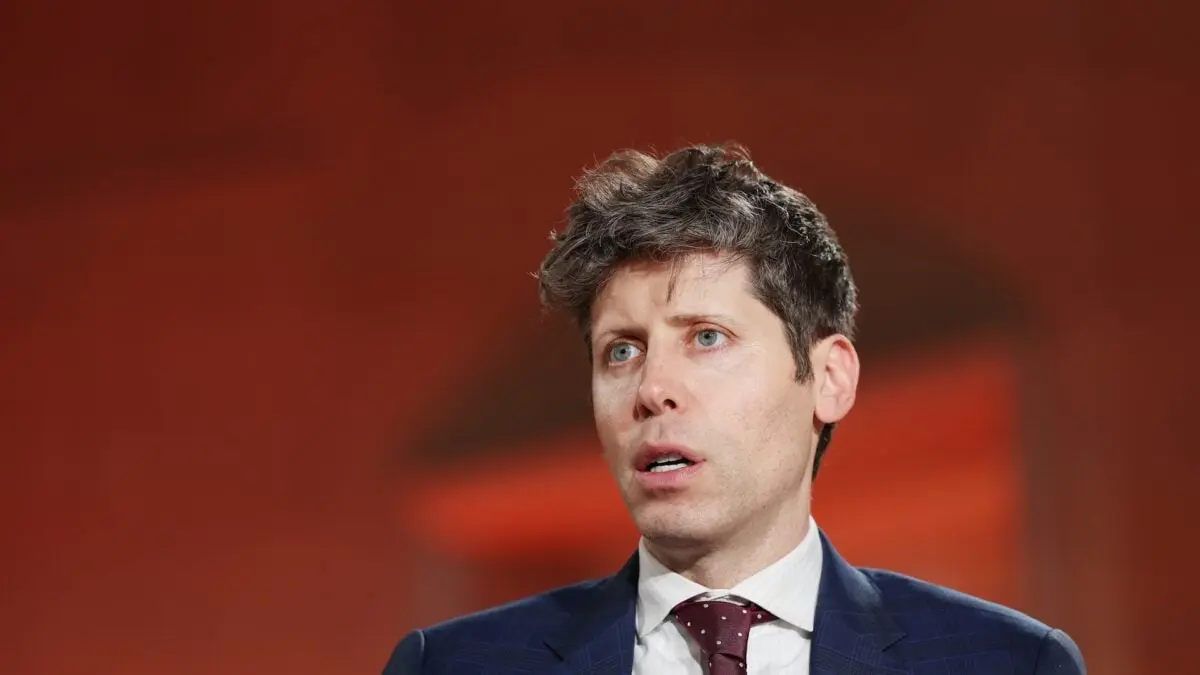
Sam Altman published a blog post Friday evening responding to both the attack and a critical New Yorker profile that had been published days earlier
1
. He described the article as "incendiary" and acknowledged that he had initially brushed aside concerns that it could make things "more dangerous" for him during a time of "great anxiety about AI"1
. "Now I am awake in the middle of the night and pissed, and thinking that I have underestimated the power of words and narratives," Altman wrote1
. He reflected on his own mistakes, including being "conflict-averse" and handling himself "badly in a conflict with our previous board that led to a huge mess for the company," referring to his 2023 removal and rapid reinstatement as OpenAI CEO1
. Altman also addressed what he called a "ring of power dynamic" around Artificial General Intelligence (AGI), stating that the solution is "to orient towards sharing the technology with people broadly, and for no one to have the ring"1
.
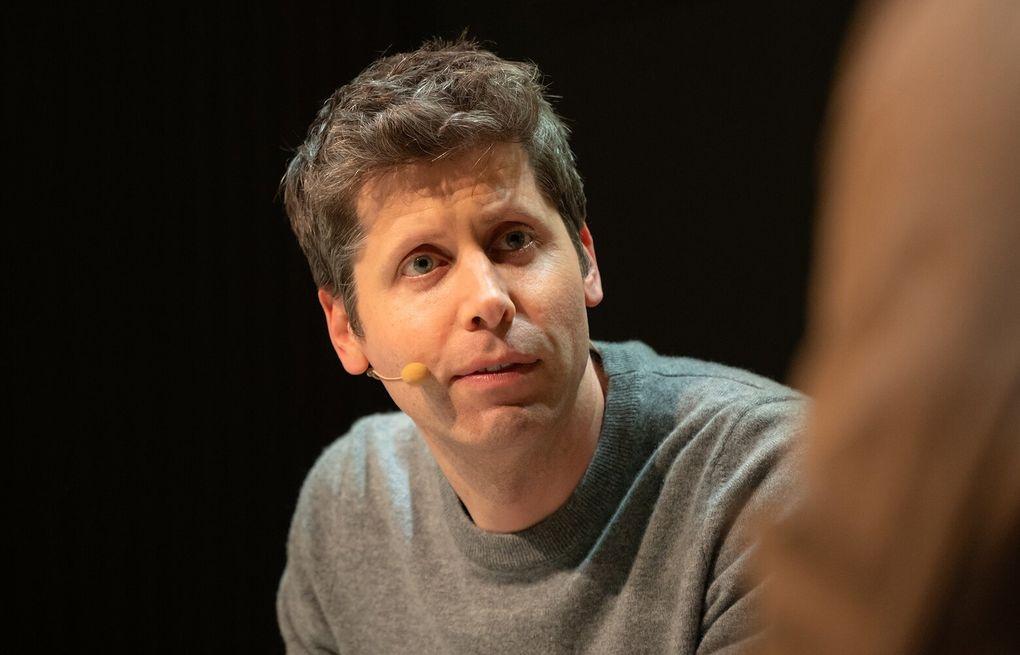
Source: Seattle Times
The attack on Sam Altman represents an extreme manifestation of growing public anxiety about AI technology and its implications
5
. OpenAI has recently faced protests outside its San Francisco offices following the announcement of a deal with the Defense Department in February, and other groups have demonstrated concerns about the rapid pace of AI development, job losses, and environmental impacts . In his response, Altman acknowledged these concerns while defending technological progress. "I empathize with anti-technology sentiments and clearly technology isn't always good for everyone," he wrote. "But overall, I believe technological progress can make the future unbelievably good, for your family and mine"1
. He concluded by calling for measured discourse: "While we have that debate, we should de-escalate the rhetoric and tactics and try to have fewer explosions in fewer homes, figuratively and literally"1
. As OpenAI prepares for a massive initial public offering, the incident raises questions about security for AI leaders and the potential for escalating tensions between technology advocates and those who view AI as an existential threat .Summarized by
Navi
[1]
05 May 2026•Entertainment and Society

07 Apr 2026•Entertainment and Society

11 Apr 2026•Business and Economy

1
Health

2
Technology

3
Policy and Regulation