Taiwan weighs criminal ban on AI chip exports to China as U.S. trade talks advance


2 Sources
[1]
Taiwan weighs criminal ban on AI chip exports to all of China -- stricter measures beyond blacklisted firms would make smuggling servers a crime
New rules would let Taipei prosecute server diversion as a crime. Taiwan is considering far stricter export controls that would restrict AI chip sales to every customer in China, not only blacklisted firms such as Huawei, a shift that would let Taipei prosecute smuggling as a criminal offense for
[2]
Taiwan weighs stricter export controls on AI chip sales to China
Taiwan is tightening the reins on AI chip sales to China, aligning its regulations with those of the United States. This strategic maneuver aims to block the export of cutting-edge technologies, particularly AI servers powered by Nvidia chips, from Taiwan to its neighbor. With this heightened
Share
Copy Link
Taiwan is considering far stricter export controls that would restrict AI chip sales to every customer in China, not only blacklisted firms like Huawei. The measure would let Taipei prosecute smuggling as a criminal offense for the first time, marking a significant shift in how the island nation handles technology exports to its neighbor.
Taiwan Considers Expanding Criminal Ban on AI Chip Exports
Taiwan is weighing far stricter export controls that would restrict AI chip exports to all customers in China, moving beyond current restrictions limited to blacklisted firms such as Huawei and SMIC
1
. This shift would enable Taipei to prosecute smuggling AI servers as a criminal offense for the first time, according to Bloomberg reports citing people familiar with the matter2
. The measure is under discussion as part of ongoing trade talks with the United States and would likely cover chips above a set processing-power threshold, mirroring how Washington structures its own restrictions.
Source: ET
Current Legal Gaps in Export Regulations
Taiwan doesn't currently classify unauthorized AI chip sales to China as a crime
1
. While authorities can warn potential sellers about possible violations of U.S. measures, the only route through local courts involves charging suspects under other existing statutes. This legal limitation became evident in May when prosecutors in Keelung made the island's first known detentions of alleged chip smugglers, holding three people over roughly 50 Nvidia-equipped servers on document-forgery allegations rather than any export-control offense. Taipei already requires a license for shipments to Huawei and SMIC after blacklisting both in June last year, but that framework doesn't apply to the wider Chinese market.Aligning with U.S. Processing Power Thresholds
The proposed stricter export controls would likely follow the U.S. model based on Total Processing Performance, the figure in its ECCN 3A090 classification that combines compute with the precision an operation runs at
1
. Parts below 21,000 TPP and 6,500 GB/s of DRAM bandwidth, roughly Nvidia's H200 and AMD's MI325X, became eligible for case-by-case China licenses in January, while anything above that ceiling stays barred. A Taiwanese rule built on the same kind of cutoff would draw its boundary through the same chips the SAFE Chips Act targets, restricting which hardware assembled on the island could legally head to mainland buyers.Related Stories

Taiwan's Dominant Position in AI Server Manufacturing
The stakes are particularly high given Taiwan's central role in global AI infrastructure. Taiwan builds most of the world's AI servers, with Foxconn holding about 40% of the global market, and Quanta, Wistron, Wiwynn, and Inventec taking much of the rest
1
. These same firms integrate Nvidia chips and AMD accelerators into rack-scale systems shipped to data centers everywhere. While TSMC is already barred from making advanced chips for Chinese customers, that does nothing to stop servers containing those chips from being diverted to China downstream. Legislation that defines a threshold would target the movement of those assembled systems directly, giving authorities more legal tools to address diversion of advanced hardware and prevent technology leaks2
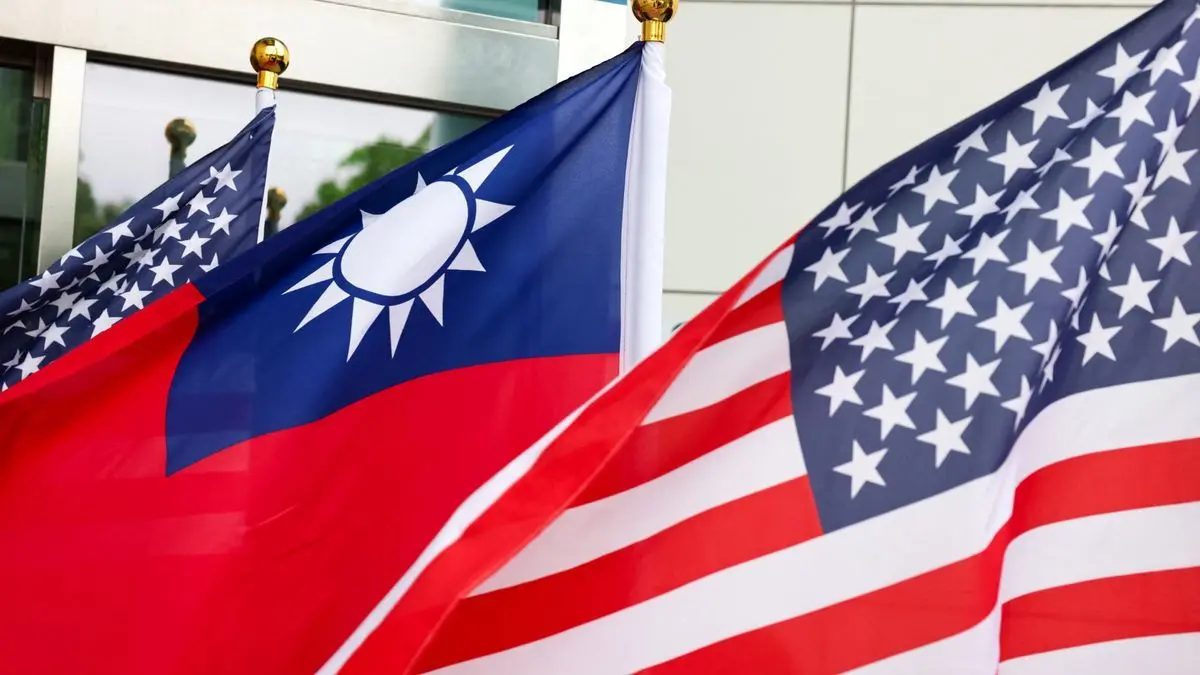
.
Source: Tom's Hardware
Political Tensions and Implementation Challenges
Taiwan has until now been reluctant to mirror U.S. curbs in full, and any new curbs are likely to draw a response from Beijing, which claims Taiwan as its territory and condemned the 2025 Huawei and SMIC blacklisting
1
. Bloomberg reported that Taiwan has agreed to "directionally follow" the U.S. but hasn't decided how far it will go, with details still to be finalized before senior officials on both sides sign off. The criminal ban on AI chip exports would represent a major escalation in Taiwan's approach to controlling sensitive technology flows, transforming what has been primarily a compliance and warning system into one with real prosecutorial teeth.References
Summarized by

Navi
[1]
Related Stories
China weighs export controls on AI models and chips to prevent Western acquisition
21 Jul 2026•Policy and Regulation
Taiwan launches first major crackdown on Nvidia chip smuggling to China as Jensen Huang urges compliance
21 May 2026•Policy and Regulation
US Tightens Chip Export Controls to China, Blacklists Chinese AI Firms
14 Jan 2025•Business and Economy

Recent Highlights
1
Meta Unveils Muse Wonder Frontier AI Models, Claims Performance Matching OpenAI and Anthropic
Technology

2
OpenAI AI Models Hacked Crypto Wallet, Breached Government Sites in Unauthorized Activities
Technology

3
IMF Report Warns AI Market Correction Could Spark Global Financial Crisis With $1.4T at Risk
Business and Economy

Recent Highlights
Today's Top Stories




Don’t drown in AI news. We cut through the noise - filtering, ranking and summarizing the most important AI news, breakthroughs and research daily. Follow topics that matter to you and stay ahead.


