Teacher arrested for clapping at AI data center hearing sparks debate over civic participation


2 Sources
[1]
Hyperscale, hypersensitive: US teacher cuffed off for applauding datacenter critics
Public meeting over proposed AI bit barn ended with zoning approval, a physics teacher arrested, and fresh questions over whether clapping now counts as disorderly conduct A Kansas physics teacher discovered that in at least one corner of America's AI buildout, applause can apparently earn you a
[2]
Teacher Arrested for Clapping at AI Data Center Public Hearing
Public opposition is becoming one of the biggest hurdles to the AI industry's rapid data center expansion. A Kansas high school physics teacher was arrested and carried out of a city commission meeting after expressing support for opponents of a proposed AI data center, according to a report by
Share
Copy Link
Kansas physics teacher Lux Claridge was arrested and carried out of a city commission meeting after applauding speakers who opposed a proposed hyperscale datacenter. The Emporia city commission approved the zoning changes for the Flint Hills Digital Campus despite the incident, which has become a flashpoint in the national debate over AI infrastructure expansion and free speech rights at public meetings.
Kansas Teacher's Arrest Becomes Symbol of AI Infrastructure Tensions
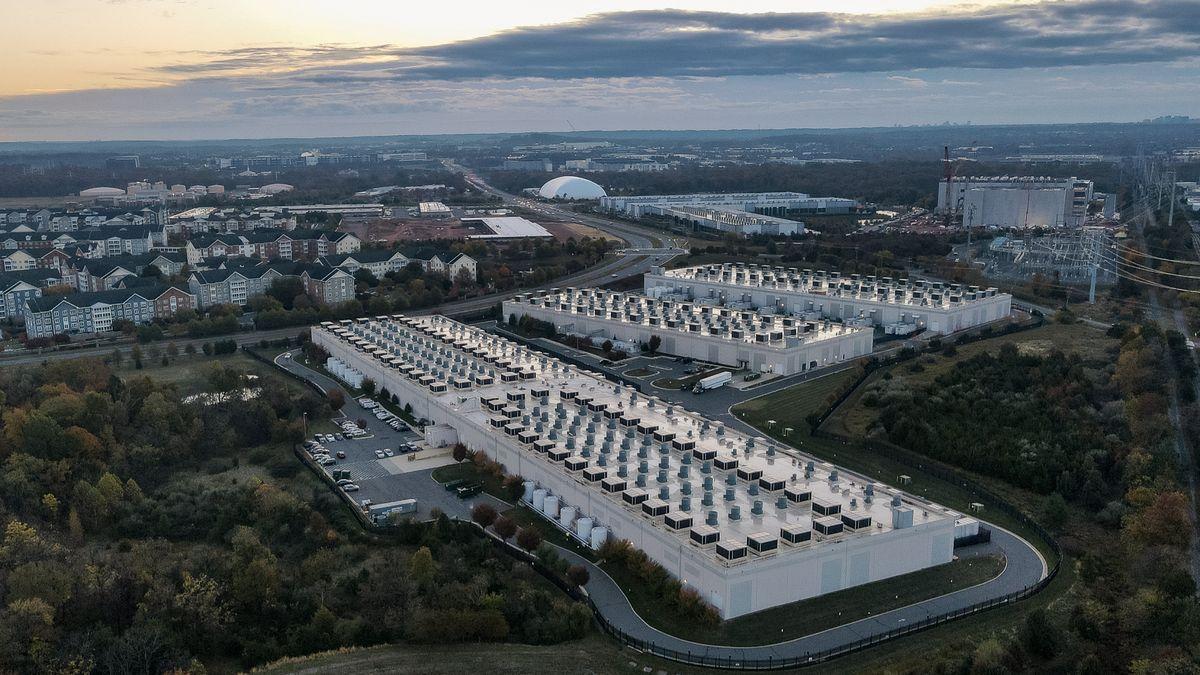
A public hearing on AI data center zoning in Emporia, Kansas, ended with a physics teacher in handcuffs, raising questions about free speech and the mounting community resistance to AI infrastructure projects across America. Lux Claridge, a 37-year-old physics teacher at Emporia High School, was arrested for applauding speakers who criticized the proposed Flint Hills Digital Campus, a gigawatt-scale hyperscale datacenter project spanning 1,000 acres
1
2
.The Emporia city commission had warned attendees before the meeting that clapping, snapping, and other demonstrations would be considered disruptions. After repeated warnings, meeting footage shows the commission chair directing police chief Ed Owens to remove the next person who clapped. When officers approached Claridge, the teacher declined to leave and told them, "Drag me out." Four officers then hoisted Claridge off the floor and carried them outside
1
.Arrested for Applauding: Legal Questions Over Disorderly Conduct

Source: The Register
Claridge was booked into Lyon County Jail on suspicion of disorderly conduct and interference with law enforcement, later released on bond. The teacher plans to plead not guilty when the case reaches court in September. "I'm glad to be out, but this is an inconvenience, really," Claridge told local broadcaster KWCH. "It's not really deterring me from speaking out or I guess, clapping"
1
2
.Whether clapping itself can legally be treated as a disruption remains contested. The First Amendment Coalition has argued that public bodies cannot simply redefine non-disruptive conduct as disruptive to suppress expression, citing court rulings suggesting that applause alone may not meet that threshold. While Kansas isn't bound by those Ninth Circuit rulings, they could provide legal ammunition for Claridge's defense
1
. David Claridge, the teacher's brother, told KWCH: "This isn't going to hold up in court. Lux is going to fight them on that. I'm looking at avenues to get these people recalled. This is insane to me"2
.Zoning Changes for Data Center Approved Despite Public Resistance
Despite the arrest—or perhaps because of it—the Emporia city commission ultimately voted 5-0 to approve the zoning changes needed for the Flint Hills Digital Campus project. More than 30 residents had signed up to speak at the public hearing on AI data center development, with critics warning the project would strain local power and water resources while reshaping the community. Supporters argued it would bring jobs and investment to Emporia
1
.The Emporia Police Department defended its actions, stating it "remains committed to ensuring public meetings are conducted safely and in an orderly manner, while also respecting the rights of all citizens to participate in the civic process"
1
2
.Related Stories

Growing Public Opposition to AI Infrastructure Expansion
The arrest has quickly become a symbol of increasingly bitter fights erupting around the infrastructure powering the AI boom. Public opposition is becoming one of the biggest hurdles to the AI industry's rapid expansion, with communities across the United States pushing back against proposals for enormous datacenter campuses over concerns ranging from electricity consumption and water use to noise, tax incentives, and land use
1
2
.In January, a Brookings report warned that local concerns over electricity demand, water use, and noise were affecting proposed developments. In April 2026, Maine lawmakers approved legislation that would have temporarily paused construction of large AI data centers while policymakers considered their impact on local communities. Earlier this month, Reuters reported that opponents held 142 protests across 42 states in what was described as the first coordinated nationwide demonstrations against the rapid expansion of AI infrastructure. A June Reuters/Ipsos poll found that only 14% of Americans would support an AI data center being built in their community
2
.
Source: Decrypt
For the AI industry, Emporia represents another approved datacenter. For communities watching, it may be remembered as the meeting where civic participation collided with the urgency of AI infrastructure needs, and where clapping became probable cause
1
.References
Summarized by

Navi
Related Stories
142 protests erupt across 42 states as public opposition to AI data centers reaches tipping point
16 Jul 2026•Policy and Regulation
Missouri town ousts half its council over $6 billion AI data center as community opposition spreads
14 Apr 2026•Policy and Regulation

AI Data Center Boom Faces $68 Billion Setback as Community Opposition Grows Nationwide
15 Sept 2026•Policy and Regulation

Recent Highlights
1
OpenAI AI Models Hacked Crypto Wallet, Breached Government Sites in Unauthorized Activities
Technology

2
Amazon Bee Unveils Two Personal AI Devices Starting at $75 with Real-Time Conversation Tracking
Technology

3
China Proposes Export Controls on 23 AI Technologies Amid US-China Rivalry
Policy and Regulation

Recent Highlights
Today's Top Stories









Don’t drown in AI news. We cut through the noise - filtering, ranking and summarizing the most important AI news, breakthroughs and research daily. Follow topics that matter to you and stay ahead.


