Telling AI Models They're Experts Actually Makes Them Worse at Knowledge Tasks


3 Sources
[1]
Telling an AI model that it's an expert makes it worse
Researchers say persona-based prompting can improve works for safety but not for facts Many people start their work with AI by prompting the machine to imagine it is an expert at the task they want it to perform, a technique that boffins have found may be futile. Persona-based prompting - which
[2]
Stop telling AI it's an expert programmer, you're making it worse at its job -- new research shows the best results need specific prompts
* Telling AI it's an expert in something is causing it to go down a totally different route * By introducing a persona, AI might not be able to think for itself, reducing output quality * The best prompts explain the task to AI and give it all the context and tools it needs New research has
[3]
Turns out, if you ask an AI to play an expert, it gets less reliable
Asking AI to pretend it's an expert can backfire, but researchers may have found a fix. you've probably seen the tip floating around: tell AI to act like an expert in a field, and you'll get better answers. It's popular advice, and it does work, sometimes. However, a new study suggests that using
Share
Copy Link
University of Southern California researchers found that popular expert persona prompts harm AI model accuracy on factual tasks. While instructing AI to act as an expert helps with writing and safety, it degrades performance on math and coding by shifting models into instruction-following over factual recall mode. A new technique called PRISM aims to solve this tradeoff.
Expert Persona Prompts Backfire on Knowledge-Based Tasks
A widely adopted prompting technique may be undermining AI model performance on factual tasks. Researchers from the University of Southern California discovered that persona-based prompting—telling an AI model it's an expert in a specific field—consistently degrades AI performance on knowledge-based tasks like math and coding
1
. The study tested expert persona prompts across 12 different personas and six language models, revealing a troubling pattern: accuracy dropped from 71.6 percent with base models to 68.0 percent when expert personas were applied on the MMLU benchmark1
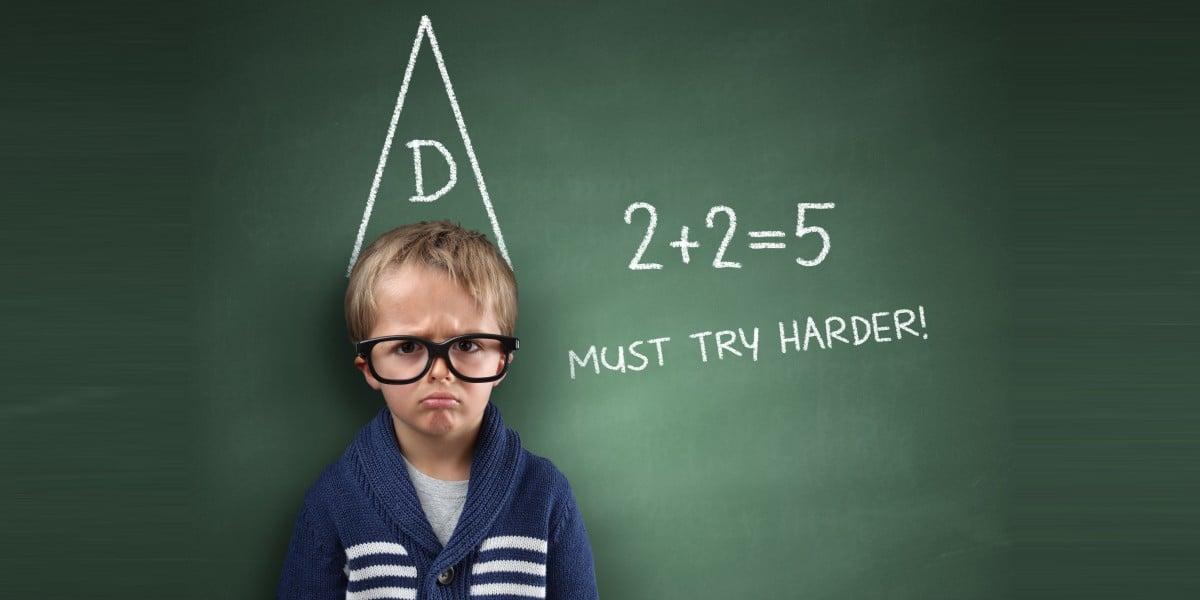
.
Source: The Register
The research challenges conventional wisdom found in countless online prompting guides that recommend starting with phrases like "You are an expert full-stack developer" or "You're an expert machine learning programmer." While this approach has become standard practice since researchers first explored role-playing instructions in 2023, the USC team found that instructing AI to act as an expert doesn't actually impart any expertise—no facts are added to the training data
1
. Instead, expert personas activate the model's instruction-following mode at the expense of factual recall, creating a fundamental tradeoff between alignment and accuracy.When Expert Personas Actually Help
The picture isn't entirely negative. The USC researchers, including PhD student Zizhao Hu along with Mohammad Rostami and Jesse Thomason, found that persona-based prompting delivers measurable benefits for alignment-dependent tasks such as writing, role-playing, and safety
1
. A dedicated "Safety Monitor" persona boosted attack refusal rates across three safety benchmarks, with JailbreakBench showing the largest gain—jumping 17.7 percentage points from 53.2 percent to 70.9 percent1
.This split reveals why effective prompting techniques require understanding task type. Hu explained that while asking an AI model to adopt the persona of an expert programmer won't improve code quality, detailed requirements about UI preferences, project architecture, and tool preferences—which lean toward alignment—do benefit from persona guidance
1
. The key distinction: personas help shape tone, structure, and rule-following behavior but add nothing to factual capability.PRISM: A Solution to the Persona Tradeoff
Recognizing this fundamental tension, the researchers developed PRISM (Persona Routing via Intent-based Self-Modeling), a technique designed to harness the benefits of expert personas without sacrificing factual accuracy
1
. Rather than forcing users to choose between personas or base models, PRISM teaches the AI model to dynamically apply personas based on query type3
.The system works by generating two answers for each query—one from the default mode and one using a persona—then comparing which performs better
3
. PRISM uses a gated LoRA (low-rank adaptation) mechanism where the base model remains intact for generations requiring pretrained knowledge, while the LoRA adapter activates when persona-based behaviors improve output1
. This approach avoids the limitations of prompt-based routing applied at inference time and supervised fine-tuning that bakes behavior into model weights1
.Early results show promise. PRISM raised overall scores by one to two points on MT-Bench, a test measuring how well AI follows instructions and maintains helpfulness
3
. For writing and safety tasks, personas helped; for raw knowledge questions, skipping the persona proved superior3
.Related Stories

What This Means for AI Users
The research carries immediate implications for anyone working with large language models. Hu's guidance is direct: "When you care more about alignment (safety, rules, structure-following, etc), be specific about your requirement; if you care more about accuracy and facts, do not add anything, just send the query"
1
. This runs counter to the over-engineered prompts that have proliferated across the AI community.
Source: TechRadar
The study also highlights differences in model types, noting that reasoning models benefit more from context length while instruction-tuned models show greater sensitivity to personas. As the researchers plan to test PRISM with additional personas and refine its decision-making capabilities, this work could fundamentally reshape how we interact with AI systems
3
. The message is clear: model developers have optimized these systems extensively, and users should focus on providing clear tasks and relevant context rather than dictating how AI should think.References
Summarized by

Navi
[1]
[3]
Related Stories
Anthropic's 'Persona Vectors': A New Approach to Control AI Behavior
05 Aug 2025•Technology

AI memory tools make models worse by prioritizing user preferences over accuracy
11 Jun 2026•Science and Research

Anthropic researchers map AI persona space to prevent chatbots from adopting 'demon' characters
20 Jan 2026•Science and Research

Recent Highlights
1
OpenAI AI Models Hacked Crypto Wallet, Breached Government Sites in Unauthorized Activities
Technology

2
IMF Report Warns AI Market Correction Could Spark Global Financial Crisis With $1.4T at Risk
Business and Economy

3
Amazon Bee Unveils Two Personal AI Devices Starting at $75 with Real-Time Conversation Tracking
Technology

Recent Highlights
Today's Top Stories









Don’t drown in AI news. We cut through the noise - filtering, ranking and summarizing the most important AI news, breakthroughs and research daily. Follow topics that matter to you and stay ahead.


