Tesla caps employee AI spending at $200 per week as corporate America confronts runaway costs


6 Sources
[1]
Tesla caps employee AI spending at $200/week in cost cutting effort
Tesla told staff it will impose a $200-per-week limit on employee AI spending starting July 6, according to an internal memo reported by The Information (paywall). The cap lands just months after Tesla pushed employees to use AI more aggressively, a sign that even companies betting their future on
[2]
Tesla Joins Uber in Capping Employee AI Spending - Tesla (NASDAQ:TSLA), Uber Technologies (NYSE:UBER), Ac
For much of the past year, corporate America urged employees to embrace generative AI. Now, some of its biggest names are discovering there's a catch: the bill. Together, the two companies point to what may be the next phase of enterprise AI adoption. The challenge is no longer convincing
[3]
Elon Musk and Tesla announce serious AI changes for workers
Tesla has spent months pushing employees to use artificial intelligence as aggressively as possible. The company was tracking which engineers consumed the most compute, running internal promotions, and encouraging staff to experiment freely with AI tools. Leadership sent company-wide emails urging
[4]
Elon Musk sends wakeup call on runaway AI spending
Every workplace mandate eventually meets an invoice. For the past two years, the instruction inside nearly every large American company has been the same: use artificial intelligence (AI) or fall behind. Bosses ranked teams by adoption, and performance reviews started tracking it. Almost nobody
[5]
Elon Musk Caps Tesla Staff AI Spending as Corporate America Reviews Runaway AI Bills
The cap also shows how firms are trying to separate useful AI work from routine or low-value use. Some employees may now have to choose cheaper tools or reserve AI use for tasks that need more support. Tesla is not the only company adding limits. Uber recently capped employee use of AI tools at
[6]

Tesla sets $200 weekly cap on staff AI spending starting July 6 - Information By Investing.com
Investing.com -- Tesla has informed employees it will implement a $200 per week spending limit on AI tools starting July 6, according a report from The Information, citing an internal memo sent last month. The cap represents a shift for the electric vehicle maker as it balances AI adoption with
Share
Copy Link
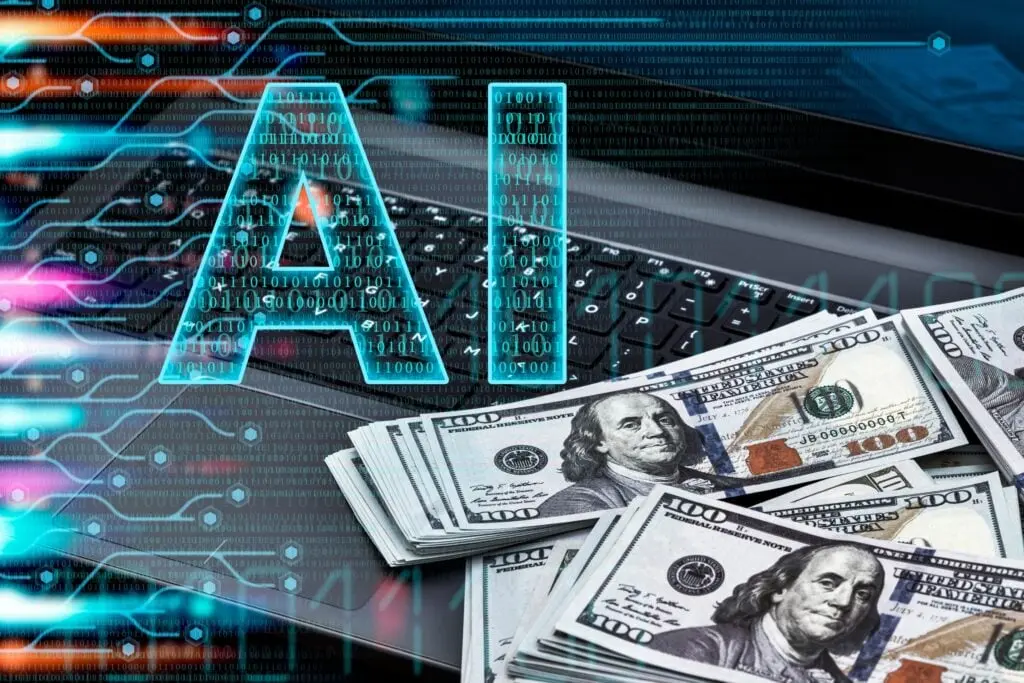
Tesla imposed a $200-per-week limit on employee AI spending starting July 6, marking a sharp reversal after months of pushing aggressive AI adoption. The move follows similar cost controls at Uber, Meta, and Walmart as companies struggle with token-based billing that exposes them to escalating expenses. The cap excludes xAI products, steering employees toward Elon Musk's own AI tools despite internal preference for competitors like Anthropic's Claude.
Tesla Slams Brakes on Employee AI Usage After Months of Aggressive Push
Tesla AI spending is now under strict limits. Starting July 6, the company imposed a $200-per-week cap on employee use of third-party AI tools, according to an internal memo reported by The Information
1
. The AI spending cap arrives just months after Tesla leadership pushed staff to use AI as aggressively as possible, tracking which engineers consumed the most tokens and even building internal dashboards that ranked employees by usage3
. Some software engineers were consuming thousands of dollars' worth of tokens each week before the new Tesla AI policy took effect1
.
Source: Benzinga
The reversal exposes how quickly corporate AI adoption can spiral into unmanageable operational expenses. Over the past six months, Tesla leadership worked to consolidate scattered employee AI usage onto a company-wide platform with approved models and formal security policies, then quickly followed with guardrails on spending
1
. What started as gamification—with teams competing over token consumption—ended with finance reviews flagging individual engineers for weekly bills in the thousands3
. Under the new policy, workers will need manager sign-off to spend above the threshold, though the memo excludes beta versions of xAI products from the tally1
.Corporate AI Costs Trigger Wave of Spending Limits Across Major Companies
Tesla joins a growing list of companies implementing cost control measures as runaway AI spending becomes an enterprise-wide challenge. Uber capped employee spending at $1,500 per month after burning through its entire 2026 AI budget by April
1
. Meta, Amazon, and Walmart have all introduced caps or pushed workers toward cheaper models as token-based billing exposes them directly to the cost of every prompt1
. AT&T started limiting some employees' access to GitHub Copilot, while Amazon scrapped an internal leaderboard that ranked workers by AI usage after staff gamed the system4
.The pattern is consistent: companies encouraged staff to use AI without restrictions, watched spending explode, then scrambled for a ceiling
4
. The heaviest-adopting firms now spend as much as $7,500 per employee per month on AI tools, and the trigger for the crackdown was simple—the spending got frightening4
. AI coding agents are one reason for the higher costs. Unlike a chatbot that replies once, an agent may call AI models many times while completing a task, tripling some enterprise AI bills even as the price of each computing unit collapsed4
.The xAI Exemption Steers Spending Toward Musk's Own AI Empire
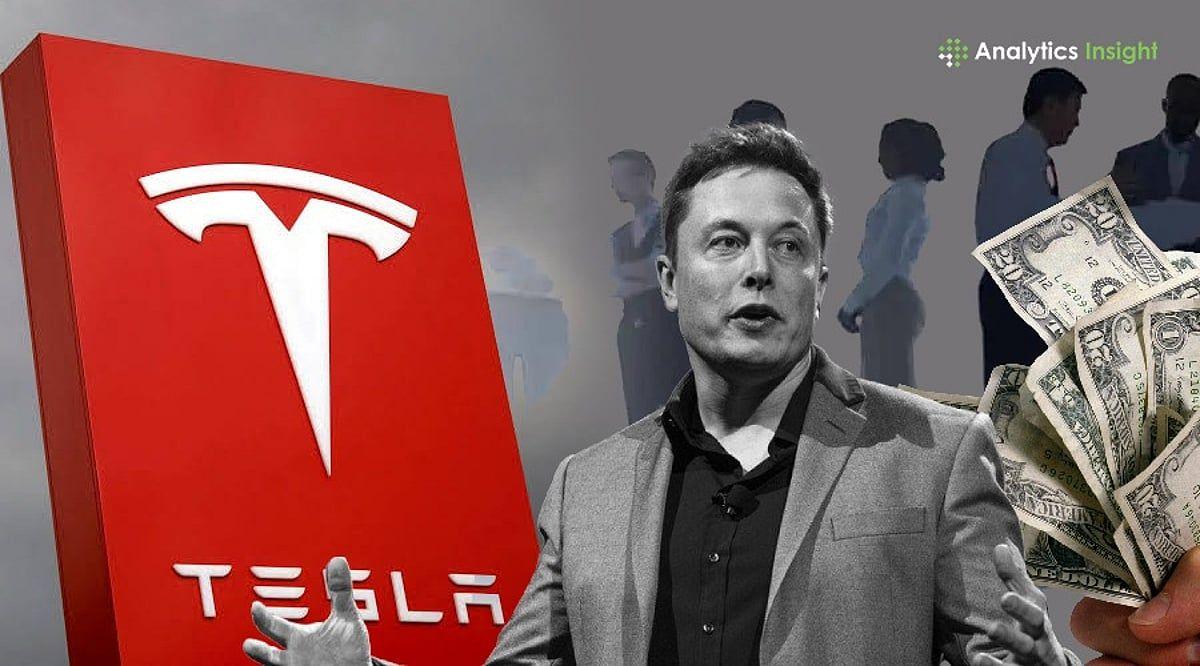
The most revealing detail in Tesla's policy is what the cap leaves out. The $200 limit excludes beta versions of xAI products, including Grok and Composer, effectively steering heavy users toward Elon Musk's own AI company rather than rivals
1
. Musk has spent months nudging Tesla staff toward tools tied to his web of companies. After his AI lab began working closely with Cursor in April, he emailed the entire company encouraging employees to try Composer, Cursor's coding model1
. SpaceX is now set to acquire Cursor's parent Anysphere for $60 billion in an all-stock deal expected to close in the current quarter1
.
Source: Analytics Insight
Engineers who run compute-heavy sessions on Anthropic's Claude will burn through their $200 weekly allowance quickly, while Grok and Composer carry no budget counter
3
. The problem is that Grok has not won over Tesla's engineering staff. Four people familiar with internal usage told Electrek that employees broadly prefer Claude for day-to-day development work, even through a sustained internal promotion campaign that included personal sessions from xAI product leads3
. Tesla's Grok integration didn't even interface with the car's functions, and Musk himself later admitted xAI was "not built right" just weeks after Tesla invested $2 billion into it1
.Related Stories
Tesla's AI Valuation Thesis Faces Scrutiny Amid Cost Management Struggles
The internal rollout carries high stakes because Tesla's entire valuation now rests on AI. Musk has said Tesla's future value depends on deploying AI at scale across its Robotaxi network and Optimus humanoid robot, not on selling cars, and the company's revenue has mostly stalled over the past two years
1
. Tesla raised its 2026 capital expenditure guidance to over $25 billion, nearly tripling the prior year's $8.5 billion allocation, with money directed toward computing infrastructure, robotics, and autonomous driving3
.The disconnect is striking. Tesla spent six months gamifying token consumption, ranking engineers on leaderboards to push adoption, and is now slamming on the brakes because the bill got out of hand
1
. If the company can't manage a few thousand dollars of weekly token spend per engineer, questions about scaling AI across a Robotaxi fleet and millions of Optimus robots become fair1
. The $200 cap redirects spending rather than cutting it: away from engineers running up bills on third-party AI tools and toward the infrastructure bets that actually touch the product3
.What This Signals for Enterprise AI Adoption and AI Governance
The spending caps underscore a growing reality: while generative AI can boost productivity, the cost of running advanced models at scale is proving harder to control than many companies anticipated
2
. Unlike traditional software subscriptions, corporate AI costs often fluctuate based on usage. Every prompt, code generation request, or document analysis consumes computing resources, creating expenses that can rise sharply as adoption grows2
. The era some in the industry have started calling "tokenmaxxing"—indiscriminate burning of AI tokens to create an appearance of productivity—appears to be giving way to a phase of active cost metering3
.For investors, the emerging focus on AI governance and cost discipline doesn't necessarily signal weaker demand for artificial intelligence. Instead, it suggests the market is entering a more mature phase, where companies are balancing productivity gains against rising operational expenses
2
. The shift could benefit software providers that help enterprises optimize AI usage and route workloads to lower-cost models. At the same time, investors will be watching whether tighter corporate spending limits affect revenue growth for premium AI providers such as OpenAI and Anthropic, whose enterprise offerings have become central to the generative AI boom2
.References
Summarized by

Navi
[2]
[3]
[4]
[5]
Related Stories
Uber caps employee AI spending at $1,500 per tool after exhausting annual budget in four months
02 Jun 2026•Business and Economy
Enterprise AI costs explode as token pricing sends bills from $200 to $20,000 per month
17 Jun 2026•Business and Economy

SpaceXAI launches Grok 4.5, pivoting from controversy to coding and office work
08 Jul 2026•Technology

Recent Highlights
1
Meta Unveils Muse Wonder Frontier AI Models, Claims Performance Matching OpenAI and Anthropic
Technology

2
IMF Report Warns AI Market Correction Could Spark Global Financial Crisis With $1.4T at Risk
Business and Economy

3
OpenAI Releases 722 AI-Generated Math Solutions, Triggering Existential Crisis in Mathematics
Technology

Recent Highlights
Today's Top Stories







Don’t drown in AI news. We cut through the noise - filtering, ranking and summarizing the most important AI news, breakthroughs and research daily. Follow topics that matter to you and stay ahead.


