Tesla Targets Year-End Cybercab Sales as NHTSA Investigation Looms Over Autonomous Vehicle Push


9 Sources
[1]
Tesla is prepping a Cybercab onslaught
Tesla says it is preparing to launch its shiny gold Cybercab in new markets outside its home of Austin, Texas, in a bid to "literally take over every part of terrestrial transportation." "We're starting with getting people from one place to the other, but we want to basically own transportation of
[2]
Tesla aims to sell Cybercab robotaxis by end of year despite federal probe
SAN FRANCISCO, Oct 21 (Reuters) - Tesla (TSLA.O), opens new tab is aiming to start selling its Cybercab robotaxis to the public by the end of this year, its engineering chief said on Wednesday, even as the US auto safety agency probes the vehicles that come without manual controls which federal
[3]
Tesla plans to start selling Cybercabs by the end of the year - Engadget
The automaker said it could start switching on Unsupervised Full Self-Driving on some vehicles by the second quarter of 2027. Tesla is aiming to start selling Cybercabs to customers before the year ends. Lars Moravy, VP of engineering at the company, said that the automaker is "trying to get
[4]
Tesla wants you to ride its Cybercab, not own one, and Musk just made that painfully clear
Missing out on the self-driving future is a tough pill to swallow, especially as a car enthusiast. But that is what Tesla handed us on Wednesday, without a hint of mercy. During its October 21, 2026 earnings call, Elon Musk told investors the Cybercab is meant mainly as a ride service. Further,
[5]

Tesla Cybercab robotaxis: Tesla aims to sell Cybercab robotaxis by end of year despite federal probe
Tesla is aiming to start selling its Cybercab robotaxis to the public by the end of this year, its engineering chief said on Wednesday, even as the US auto safety agency probes the vehicles that come without manual controls which federal regulations typically require. The gold, two-seaters - that
[6]

Tesla Cybercabs Could Reach Customers by End of 2026, but Elon Musk Says Vast Majority Will Be TSLA-Owned
Tesla Inc. (NASDAQ:TSLA) CEO Elon Musk said Wednesday that the vast majority of Cybercabs will be owned by the automaker and operated as part of a transport-as-a-service model, rather than sold outright to consumers. Lars Moravy Touts Cybercab's End-of-Year Timeline During Tesla's Q3 earnings
[7]

Tesla wants to sell a car with no steering wheel this year
Tesla (TSLA) wants to put customers behind the wheel of a car that doesn't have one. The electric-vehicle maker is trying to begin delivering its Cybercab to customers before the end of 2026, Tesla Vice President of Vehicle Engineering Lars Moravy said during the company's third-quarter earnings
[8]

Elon Musk's Tesla eyes transportation 'domination' as Cybercab expansion heats up competition with Waymo
Elon Musk's Tesla is gearing up to expand its gold-colored Cybercab robotaxi service beyond Austin, Tex., next month, with an exec saying the automaker is planning transportation "domination." The electric car giant plans to deploy its futuristic two-seaters in Dallas in November and begin selling
[9]

Tesla aims to sell Cybercab robotaxis by end of year despite federal probe
SAN FRANCISCO, Oct 21 (Reuters) - Tesla is aiming to start selling its Cybercab robotaxis to the public by the end of this year, its engineering chief said on Wednesday, even as the US auto safety agency probes the vehicles that come without manual controls which federal regulations typically
Share
Copy Link
Tesla plans to sell its gold, butterfly-door Cybercab robotaxis to customers by the end of 2026, even as federal regulators investigate whether the steering wheel-free vehicles comply with safety standards. But Elon Musk made clear the vast majority will remain Tesla-owned for its ride-hailing service.
Tesla Accelerates Cybercab Rollout Amid Federal Scrutiny
Tesla is moving forward with plans to sell its fully autonomous Cybercabs to customers by the end of 2026, despite an ongoing NHTSA investigation into the vehicles' safety compliance
1
2
. Lars Moravy, Tesla's vice president of vehicle engineering, confirmed the timeline during the company's third-quarter earnings call, stating that Tesla is "trying to get Cybercabs to customers by the end of this year"2
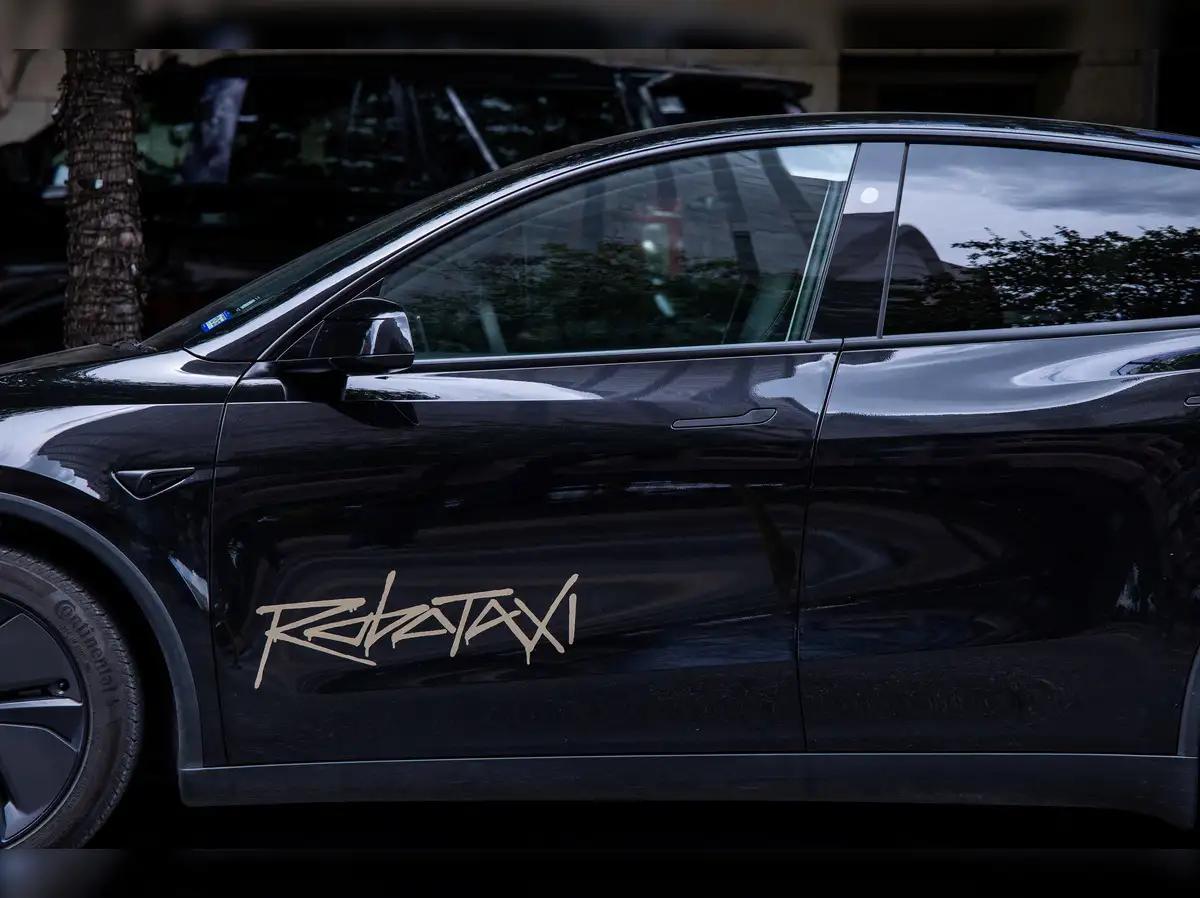
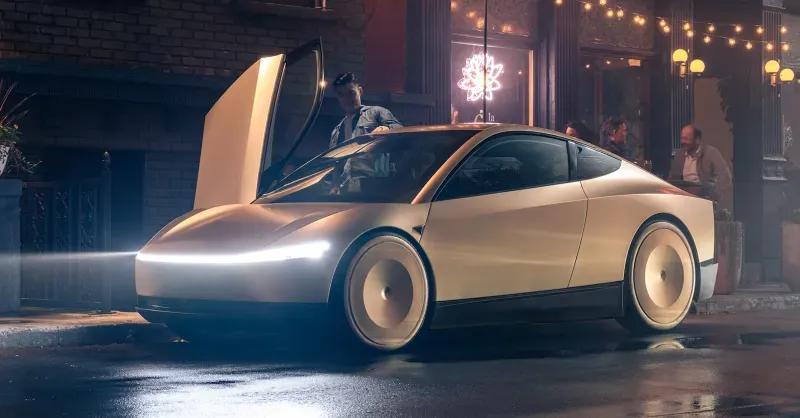
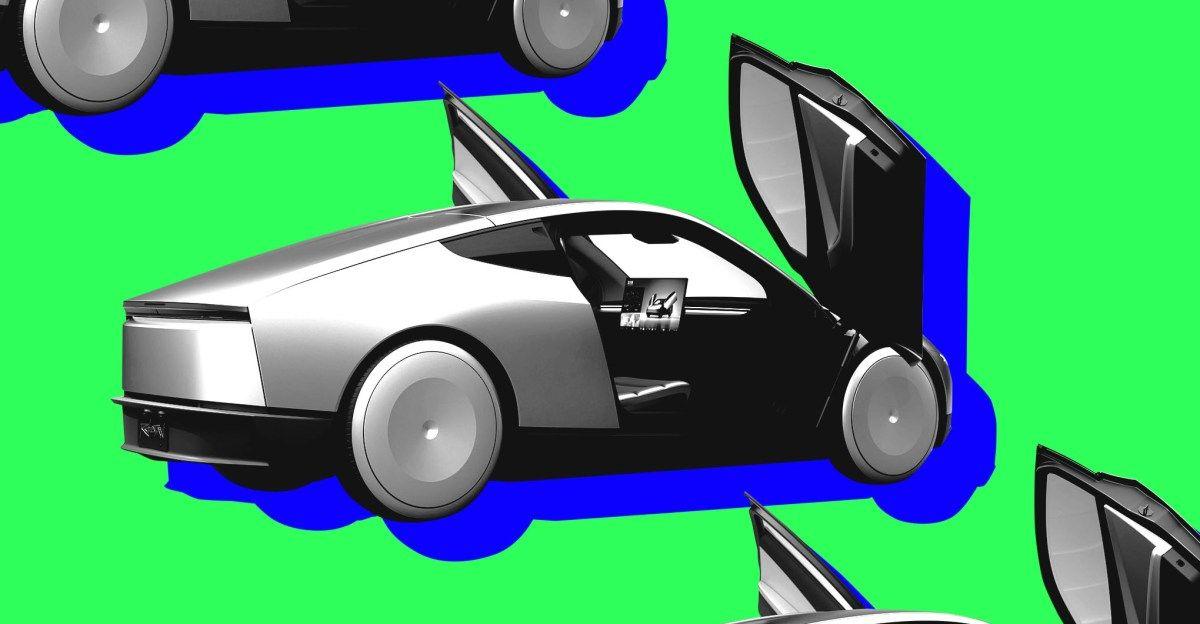
. The gold, two-seater vehicles feature butterfly doors and operate without steering wheels, pedals, or mirrors—a design that has drawn scrutiny from the National Highway Traffic Safety Administration5
.
Source: TechCrunch
Musk Prioritizes Ride-Hailing Over Private Ownership
Elon Musk clarified during the earnings call that the Cybercab is "primarily" a transport-as-a-service product, with the "vast majority" of vehicles remaining "essentially Tesla-owned" for the company's ride-hailing service
4
. This represents a significant shift from initial expectations that individual customers could purchase and operate Cybercabs. Chief Financial Officer Vaibhav Taneja emphasized Tesla's ambition to "literally take over every part of terrestrial transportation," stating the company wants to "basically own transportation of any kind on Earth"1
. Currently, all Cybercabs manufactured at Tesla's Gigafactory in Texas are designated for the company's internal robotaxi fleet3
.Expansion Plans and Waymo Competition
Tesla's robotaxi network will expand to Dallas next month, following its September launch in Austin, Texas
1
. The company already operates robotaxi versions of its Model Y SUV in Dallas, Houston, and Florida cities including Miami, Orlando, and Tampa. This expansion sets up direct competition with Waymo, the current market leader with more than 4,000 robotaxis deployed across more than a dozen cities1
. Tesla argues its Cybercab is cheaper and easier to build, positioning it to undercut competitors on price. Moravy told analysts that the manufacturing team considers the Cybercab "one of the easiest products for them to scale," suggesting "scaling would not be that much of a challenge"2
.
Source: ET
Related Stories

Regulatory Hurdles and Safety Compliance Questions
Just hours after Tesla launched paid Cybercab rides in Austin in September, the National Highway Traffic Safety Administration opened an investigation to assess how Tesla determined the vehicles comply with federal vehicle-safety regulations
2
. Federal regulations, written decades ago for human-driven vehicles, require manual controls and limit commercial deployment of vehicles designed without them5
. Unlike most countries requiring regulatory clearance before launch, U.S. automakers can deploy vehicles by self-certifying they meet federal standards. Tesla has until October 30 to respond to NHTSA's inquiry2
. Ashok Elluswamy, Tesla's head of AI, acknowledged that securing "all the regulatory approvals" remains crucial for deploying Cybercabs "as fast as we can produce them"5
.Technology Development and Future Customer Access
Elluswamy emphasized that remaining bottlenecks for wider robotaxi rollout are "not purely regulatory" but "technology driven"
1
. Tesla has gradually expanded service hours from 6 a.m. to 9 p.m. initially, then to 11 p.m., with plans to extend to 2 a.m. soon, driven by improvements in AI software capability. The service still doesn't operate on highways under certain conditions, though Cybercabs have been spotted operating in heavy rain in Austin1
. For customers hoping to own Cybercabs, the path remains uncertain. Since the Unsupervised version of Tesla's Full Self-Driving suite isn't available to consumers yet, initial Cybercabs sold can't immediately join Tesla's ride-hailing service3
. Elluswamy indicated the company believes it can start enabling Unsupervised Full Self-Driving on "some of the first customer vehicles to be part of the Robotaxi fleet" around the second quarter of 20273
. Musk admitted the new ride-hailing business won't be noticeable in Tesla's overall financial figures until the second quarter of 2027, becoming "probably a big deal by Q3 or Q4 of next year"1
.
Source: Digital Trends
References
Summarized by

Navi
[1]
[4]
Related Stories
Tesla begins Cybercab robotaxi production as Musk adopts cautious tone on autonomous rollout
24 Apr 2026•Technology
Tesla Cybercab Faces Federal Scrutiny as Quiet Austin Launch Reveals Safety Restrictions
04 Sept 2026•Technology

Tesla Cybercab Launch Imminent in Austin as Driverless Vehicles Navigate Safety Questions
18 Aug 2026•Technology

Recent Highlights
1
Jensen Huang's Affair with Suspected Chinese Spy Exposes $7 Billion AI Chip Smuggling Network
Policy and Regulation

2
Anthropic Launches Claude Meetings and AI-Powered Office Tools to Challenge Microsoft and Google
Technology
3
Anthropic launches Fable 5.2 and Mythos 5.2 with 20% price cut and 30% faster output
Technology

Recent Highlights
Today's Top Stories







Don’t drown in AI news. We cut through the noise - filtering, ranking and summarizing the most important AI news, breakthroughs and research daily. Follow topics that matter to you and stay ahead.


