2 Sources
[1]
"Companies should use AI," says director of dark fantasy vampire RPG The Blood of Dawnwalker, but there's an important clarification to make
There's been some concern surrounding dark fantasy vampire role-playing game The Blood of Dawnwalker and how AI tools were used during its development. Rebel Wolves studio co-founder Konrad Tomsazkiewicz, known for having directed The Witcher 3: Wild Hunt, previously said gen-AI tools were used during development, but to test dialogue before it was finalised and actors were employed to record it. You might remember that I talked with Tomaszkiewicz about Blood of the Dawnwalker and AI use late last year. But recent interviews have brought the issue to the foreground once more, so with that in mind, I asked Tomazkiewicz about it again while visiting Rebel Wolves in Poland recently. It was while answering my question during a group Q&A that he shared his belief that companies "should" use generative AI tools, albeit with the important caveat that the tools are used "in a way which helps people to work, not [to] replace the people". Before I quote him in full, it's worth also sharing what fellow Rebel Wolves co-founder Tomasz Tinc said at the end of the Q&A: "I will just say one thing, because the subject of AI was raised, and whenever AI is raised, there's controversy. I wanted to make one thing absolutely clear: nothing that's in The Blood of Dawnwalker was created using generative AI, nothing. People with their blood and flesh made this game from the beginning till the end. I just wanted to make this 1000 percent clear." Konrad Tomaszkiewicz was answering my question about whether smaller triple-A companies like Rebel Wolves, which is around 150-160 people, feel as though they're under pressure to use gen-AI tools in order to compete with bigger studios. Recently we've seen Owlcat confirm use of gen-AI tools while making triple-A sci-fi RPG The Expanse: Osiris Reborn, and Embracer found huge success using gen-AI to help make Arc Raiders. Tomaszkiewicz: "Actually, we don't have any pressure to be honest, but we obviously used some technologies like the generating of the voices in the game in the early stage, because in our genre, when you work on the RPG game, which is recorded in [six-to-eight languages - he wasn't sure there on the spot] in VO, the VO is really costly stuff to do. You need to be sure that what you're recording is what you want to record. Because first of all, changes are really expensive. But the second thing is that the moment when you start to hear the game, hear the NPCs and so on, is the moment when you figure out that something in the story works or does not work." If you were to record it all first and then realise you needed a change, it would be a "really expensive" change to make, he said. It's also bad from a production standpoint of having to change something mid-development. "It makes pressure for the team," Tomazkiewicz said. "It makes problems over time and we wanted to avoid that. That's why we use these kinds of tools from the beginning to do an iteration of the story, and when we are sure that we are there where we want to [be], we remove all those voices and record everything with the actors." He went on, expanding on his answer: "My approach to AI is like this: I think that companies should use AI but in a way which helps people to work, not replace the people. For example, we have our own QA team and they sometimes have the task that they need to, for example, go through the terrain and check if there are any holes in the terrain. In the same time, they could play the quest and tell me if they like the characters or if the gameplay loop is fun enough, or if sometimes the combat can be better or whatever. "My approach is I feel that we should use AI to help our people to work and take from them these tasks which are annoying and frustrating and allow them to do this more fun work, which is needed, actually. And this is what I think about it. It should make our life easier but it shouldn't replace people at all. It's like you can take a stone to put the nail into the board or you can use the hammer - it should work like this." Disambiguating how a studio uses gen-AI tools definitely helps clear some suspicion around it. After all, it's an increasingly ubiquitous technology laced into nearly every major software package, so perhaps its use is mundane rather than nefarious. However, there's still a concern that where a door is opened for gen-AI use, more useage may follow. I explored this theory in a couple of interviews with other members of the Blood of Dawnwalker team, but in both cases I received unequivocal responses about how gen-AI was being used at Rebel Wolves - mostly, it's not - and it doesn't sound like there's any desire to use it either. Specifically, I asked lead quest designer Rafał Jankowski and environment Adam Payet how gen-AI might help them in their work and if they were using it. "In the professional environment I'm not using it at all," said Jankowski. "What opportunities do I see for quest design? Difficult to say, because on one hand, the stage of coming up with stories, with perfecting them, this is something that is, at least for me, the most pleasurable, most interesting [thing] about this whole job. Then there is the second part of it, implementation. It's hard for me to imagine for the AIs to be able to do that anytime soon. So as of this moment, for my particular position, I don't see many opportunities to use [it]." Perhaps it could be used at the beginning for generating large amounts of randomised ideas, he added. "Maybe that is something that could work. But again, coming [up] with these ideas, brainstorming them, discussing them with fellow designers: this is one of the best parts of the process," Jankowski said. "I would prefer not to just push it to the generative AI. But we shall see what the future brings when it comes to this technology. It's super interesting what's happening these days; also a little bit scary, not gonna lie." "For me personally," Adam Payet said, "I do what I do because I like doing it." He also said there's a case for saying that procedural world generation in the Unreal Engine is generative because it can fairly smartly and contextually create areas. "But in the strictly understood sense of what is currently being understood as generative AI, as in 'push a button and something comes out', it's not for me," Payet added. "I enjoy handcrafting those things and luckily I work in an environment where that's valued and where that's the way we do things." Publisher Bandai Namco announced today that The Blood of Dawnwalker releases on 3rd September. This interview excerpt also coincides with a chunky preview of The Blood of Dawnwalker based on my trip to the studio, and on 90 minutes of previously unseen footage of the game I saw. It included the game's opening and detailed how Coen, the main character, became half-human, half-vampire, and how he found himself on a quest to free his family from the clutches of evil.
[2]
The Blood of Dawnwalker Devs Use AI, but There's No AI Assets in the Final Game, and It's Used To 'Avoid' Pressure on Staff
"People with blood and flesh made this game from the beginning to the end." The use of artificial intelligence in video game development has become a thorny and divisive topic over the past couple of years, and so naturally it was a topic of conversation during a recent press Q&A session with The Blood of Dawnwalker's game director, Konrad Tomaszkiewicz. The former Witcher 3 director revealed that generative AI technology is used at the studio as part of the development process, used with the intention of preventing stress and overtime rather than creating final assets. Tomaszkiewicz revealed that generative AI voices were used during the early stages of The Blood of Dawnwalker's development, with the intention of testing and locking in the script before it was handed over to actors. "In our genre, when you work on an RPG game - which is recorded in [six] languages, right? - the VO (voice over) is really hard and really costly stuff to do. You need to be sure that what you're recording is what you want to record. Because, first of all, changes are really expensive. But the second thing is that, the moment when you start to hear the game, hear the NPCs and so on, is the moment when you figure out that something in the story works or does not work. And when you record all of this, and that moment you figure it out and you want to change the story, you [have to] record again a whole [section] of story, and it's really expensive." "It's a really bad process," he continued, "because when you start to change stuff in the middle of production of the game, it makes pressure for the team. It makes problems and overtime and other stuff, and we wanted to avoid that. "That's why we use these kind of tools in the beginning, to do iteration of the story. And when we're sure that we are where we want to [be], we remove all those [AI] voices and record everything with the actors." While generative AI has been used for what could be considered "draft" passes of the script for testing purposes, Tomaszkiewicz has other ideas on how artificial intelligence could be used in development. "We have our own QA team, right. They sometimes have the task that they need to, for example, go through the terrain and check if there are no holes in the terrain and that the collisions are good. At the same time, they could play the quest and tell me if they like the characters or if the gameplay loops are fun enough, or if the timings in the combat can be better or whatever, right? And my approach is that I feel that we should use AI to help our people to work and take from them these tasks which are annoying and frustrating and allow them to do this more fun work, which is needed, actually." "I think that companies should use AI, but in the way which helps people to work, not replace the people," he explained. Before the Q&A concluded, a spokesperson from Rebel Wolves went on to clarify the studio's stance on AI when it comes to the final product: "I want to make one thing absolutely clear: nothing that's in The Blood of Dawnwalker was created using generative AI. Nothing. People with blood and flesh made this game from the beginning to the end." Rebel Wolves' stance on AI wasn't the only thing we learned about while visiting the studio - we also discussed The Blood of Dawnwalker's romance options and the developer's plans for a second IP. We also got to watch a playthrough of the vampire RPG's consequence-filled prologue, as well as talk at length about RPGs with game director Konrad Tomaszkiewicz. The Blood of Dawnwalker will launch on September 3, 2026.
Share
Copy Link
Rebel Wolves has clarified its stance on AI in game development after concerns emerged about The Blood of Dawnwalker. Game director Konrad Tomaszkiewicz says companies should use AI as a supportive tool to help developers work more efficiently, not to replace human talent. The studio confirms no AI-generated assets appear in the final game—only early-stage voice-overs for testing dialogue before voice actors record the final versions.
Rebel Wolves has moved to clarify its position on AI in game development following renewed scrutiny over The Blood of Dawnwalker, the studio's upcoming dark fantasy RPG. During a recent press visit to the studio in Poland, game director Konrad Tomaszkiewicz addressed questions about how generative AI tools have been deployed during production, offering a nuanced perspective that emphasizes AI as a supportive tool rather than a replacement for human creativity
1
.
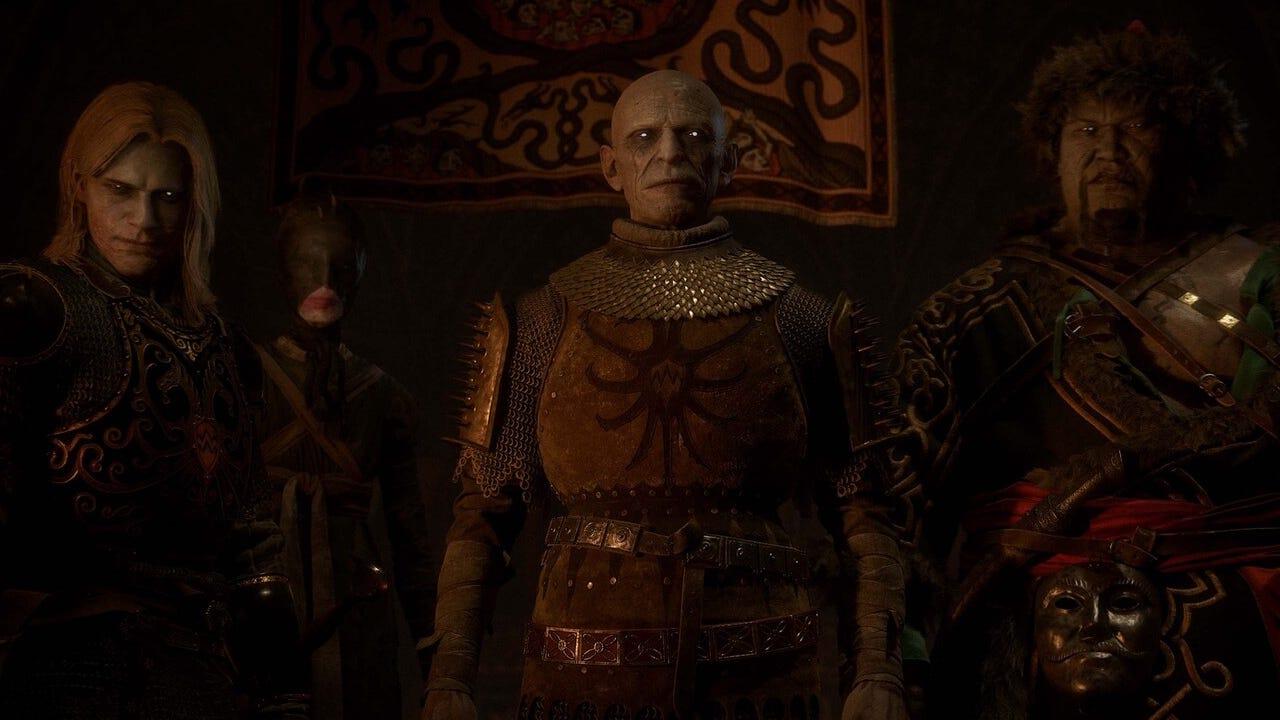
Source: IGN
Tomaszkiewicz, who previously directed The Witcher 3: Wild Hunt, stated that "companies should use AI, but in a way which helps people to work, not replace the people." This distinction matters to developers and players alike as the industry grapples with the ethical implications of automation. The director's comments came during a group Q&A session where he explained that Rebel Wolves faces no external pressure to adopt these technologies, but has chosen to integrate them strategically
2
.The primary application of generative AI at Rebel Wolves involves creating temporary voice-overs during the early stages of development. For an RPG recorded in six to eight languages, voice-over work represents a substantial investment that demands careful planning. Tomaszkiewicz explained that hearing dialogue spoken aloud helps the team identify narrative issues before committing to expensive recording sessions with voice actors
1
."The moment when you start to hear the game, hear the NPCs and so on, is the moment when you figure out that something in the story works or does not work," he said. Making changes after professional recording sessions would be "really expensive" and create production issues that ripple through the entire development timeline. By using AI-generated placeholder audio for story iteration, the studio can refine scripts and lock in dialogue before human developers and voice actors step in to create the final product
2
.This approach aims to reduce production costs while simultaneously helping to avoid pressure on staff. "When you start to change stuff in the middle of production of the game, it makes pressure for the team. It makes problems and overtime and other stuff, and we wanted to avoid that," Tomaszkiewicz explained
2
.Rebel Wolves co-founder Tomasz Tinc made an unequivocal statement at the conclusion of the Q&A session: "Nothing that's in The Blood of Dawnwalker was created using generative AI. Nothing. People with blood and flesh made this game from the beginning to the end." This clarification addresses concerns that AI might have contributed to the final artistic or narrative content that players will experience when the game launches on September 3, 2026
2
.

Source: Eurogamer
The distinction between using AI during the game development process and having AI-generated content in the shipped product represents a critical line for many in the industry. Once the team completes script refinement using AI voice tools, "we remove all those voices and record everything with the actors," Tomaszkiewicz confirmed
2
.Related Stories
Beyond voice work, Tomaszkiewicz envisions AI handling repetitive tasks that consume valuable developer time. He cited Quality Assurance (QA) testing as an example, where team members currently spend hours checking terrain for holes and collision issues. "At the same time, they could play the quest and tell me if they like the characters or if the gameplay loops are fun enough, or if the timings in the combat can be better," he noted
2
.This philosophy treats AI like any other tool advancement in the development pipeline. "It's like you can take a stone to put the nail into the board or you can use the hammer—it should work like this," Tomaszkiewicz said, suggesting AI should make work more efficient without displacing human developers .
When asked directly about their use of AI, lead quest designer Rafał Jankowski stated, "In the professional environment I'm not using it at all," indicating that the technology hasn't penetrated all areas of development at the 150-160 person studio . This suggests Rebel Wolves maintains a selective approach, deploying AI only where it demonstrably improves workflow without compromising the creative vision that human talent brings to the project.
Summarized by
Navi
27 Mar 2026•Entertainment and Society

16 Dec 2025•Technology

16 Oct 2024•Technology

1
Science and Research

2
Technology

3
Technology