4 Sources
4 Sources
[1]
Owlcat says everything in its new Expanse RPG 'will definitely 100 percent be human-made,' but also that generative AI will be used for 'vision coordination' and 'inspiration'
Another highly-anticipated RPG has been spotted with its hands in the generative AI jar. It's only Saturday afternoon, so there's still time for you to be at your most disappointed this week. CRPG magnate Owlcat recently reiterated that its upcoming action RPG, The Expanse: Osiris Reborn, is making use of generative AI in its development -- though the studio is trying to assure players it's not a big deal. As PR manager Katharina Popp told Eurogamer, "We don't use it to create any assets that will be in the game ... We use it a lot for prototyping, trying things out, placeholders. They will all be replaced at the end." She continued that "it's basically for being able to iterate faster. But we don't use it to write, we don't use AI voice actors, so everything that will be in the final version will definitely 100 percent be human made." This is in line with what the studio shared in a post on X two years ago when user anafigreen shared a screenshot of a job listing for a concept artist at Owlcat which listed "concept generation using AI" as an example work task. The studio replied saying that "AI will be used exclusively for additional work with concepts and speeding up some internal processes," and not for final versions of art. Examples it gave were "creative search, inspiration, or vision coordination before starting conceptualization itself." It's not clear how "inspiration" and "creative search" are different from or necessarily predate conceptualization -- these are all wordy ways to describe someone having an idea -- and I'm not entirely sure why AI is necessary to develop concepts for a game with both a TV series and nine novels to pull from. But Popp's note about prototypes and placeholders seems to be the go-to defense for AI in games right now. When players spotted AI-generated art in Crimson Desert, developer Pearl Abyss said any such assets were prototypes intended to be replaced. Anno 117: Pax Romana and Clair Obscur: Expedition 33 gave similar explanations when they encountered similar controversies. CRPG all-star Larian partially swore off generative AI after sharing that it used the technology in "the very early ideation stages" of development. Players on social media are not happy. Bluesky user tickdowntozero replied to a thread about the Eurogamer article saying, "You can't have 100% human made AND use Gen AI. Made it easy to ignore this game though." "Oh man this response pissed people off the last 47 times developers used it but maybe if we use it completely unchanged it'll work for us," User Dylan Macri said in a quote repost of the story. "Makes me sad that as a creative that AI prototyping will be a norm," said Reddit user Cold-Engineering-960. "It's just an expedited way to get inspiration from things, but it feels dirty, even if you remove the trained on stolen art part."
[2]
Owlcat uses gen-AI while making The Expanse: Osiris Reborn
The Expanse: Osiris Reborn developer Owlcat - known for making Pathfinder: Kingmaker, Pathfinder: Wrath of the Righteous, and Warhammer 40K: Rogue Trader - has confirmed it is using generative AI during the sci-fi game's development. "We don't use it to create any assets that will be in the game," PR manager Katharina Popp said, answering my question during a press briefing ahead of today's The Expanse: Osiris Reborn release and beta announcements. "We use it a lot for prototyping, trying things out, placeholders. They will all be replaced at the end. "We use it basically for trying out things on a technical level," Popp added. "For example, looking how a 2D image looks in 3D, or changing colours to what looks good. So it's basically for being able to iterate faster. But we don't use it to write, we don't use AI voice actors, so everything that will be in the final version will definitely 100 percent be human made." This isn't the first time the Cyprus-based studio has faced questions over gen-AI use. Back in 2024, the company posted a job advert for a concept artist and listed one of their tasks as "concept generation using AI and other modern tools". A screenshot of the vacancy was shared on X by someone who'd been interested in the role, prompting a response from Owlcat in order to "clarify" the issue. "We use AI as a working tool for our future project, which is in the early stages of production right now," said Owlcat, presumably referring to The Expanse: Osiris Reborn, which was under wraps at the time. "AI will be used exclusively for additional work with concepts and speeding up some internal processes (for example, for creative search, inspiration, or vision coordination before starting conceptualisation itself). "The final version of the game will not have any art generated by the neural networks. The same goes for the final concepts. Everything will be original and drawn by professional artists. On our current projects, Rogue Trader and Pathfinder, AI was not used at all." Owlcat expanded on that answer to try and cool some heated backlash later on. "We will under no circumstances replace our artists with neural networks," it said. "All art in our games, including concepts, portraits, etc. [are] drawn exclusively by artists. We use a neural network to find direction and inspiration before developing concepts for our upcoming project, which is currently in early development and unannounced." Expanse: Osiris Reborn was eventually announced last summer, more than a year after that X exchange occurred. The Expanse: Osiris Reborn looks at first glance a lot like Mass Effect, with a similar kind of presentation and similar kinds of gameplay. This is partly because Owlcat was heavily inspired by BioWare's renowned sci-fi series; the studio has made no secret of this inspiration - indeed, it was repeated during the press briefing. Cover-based combat, squad commands, romance, dialogue, RPG upgrades and customisation: there's a lot here that can be compared. The major difference is the tone of The Expanse: Osiris Reborn, which is going for a more grounded and believable kind of technology rather than characters with magic-like biotic abilities. It's also based on a celebrated book series that was adapted successfully into a well regarded The Expanse television show by Syfy. Owlcat announced today that The Expanse: Osiris Reborn will be released in spring 2027, on PC, PlayStation and Xbox Series S/X, and that there will be a closed beta demo released next month for people who've pre-purchased the game. It'll also be available day one on Game Pass Ultimate.
[3]
Expanse: Osiris Reborn Dev Defends Using Gen AI For The RPG
The Expanse: Osiris Reborn, a very Mass Effect-esque video game based on James S. A. Corey’s popular book series and developed by Warhammer 40,000: Rogue Trader maker Owlcat Games, got a brand new trailer and a rough release window announcement (spring 2027) during yesterday’s Xbox Partner Preview showcase. However, as promising as the game looks, the only thing anyone seems to be talking about today is Owlcat Games’ confirmation that generative AI is being incorporated into The Expanse: Osiris Reborn’s development. As revealed by Eurogamer, who quizzed Owlcat Games’ PR manager prior to today’s Xbox Partner Preview showcase, while generative AI tools will be leaned upon during development, the end result will still be “human made.†"We don't use it to create any assets that will be in the game," PR manager Katharina Popp said. "We use it a lot for prototyping, trying things out, placeholders. They will all be replaced at the endâ€|We use it basically for trying out things on a technical level." "For example, looking how a 2D image looks in 3D, or changing colors to what looks good,†Popp continued. “So it's basically for being able to iterate faster. But we don't use it to write, we don't use AI voice actors, so everything that will be in the final version will definitely 100 percent be human made." Eurogamer notes in their article that Owlcat Games already had to clarify the studio's stance on generative AI tools back in March 2024 when after they posted a concept artist job listing that required interviewees to have expertise with "concept generation using AI and other modern tools."
[4]
Owlcat using generative AI for The Expanse: Osiris Reborn, final product will be "100% human made"
Owlcat Games, the developer of the upcoming Mass Effect-like sci-fi RPG The Expanse: Osiris Reborn, has confirmed it is using generative AI to help create the game. While it has confirmed that the game won't have visible GenAI at launch, this is still likely a controversial if bold statement to make. Owlcat's PR manager Katharina Popp told Eurogamer about the AI inclusion in a response to a press briefing. She explained: "We don't use it to create any assets that will be in the game. We use it a lot for prototyping, trying things out, placeholders. They will all be replaced at the end. We use it basically for trying out things on a technical level." "For example, looking how a 2D image looks in 3D, or changing colours to what looks good. So it's basically for being able to iterate faster. But we don't use it to write, we don't use AI voice actors, so everything that will be in the final version will definitely 100 percent be human made," she continued. This isn't the first time Owlcat has made it clear that it is using AI for certain aspects of its game development. It's important to note that its past RPG hits like Warhammer 40,000: Rogue Trader and Pathfinder: Wrath of the Righteous did not make use of GenAI in any way. Criticism has been levied against Owlcat for this decision, as gamers still look to mostly shirk the inclusion of AI in their projects. As Crimson Desert and Clair Obscur: Expedition 33 have proven, when GenAI is spotted in the final product, there is always some backlash. Not enough to stop monster sales, mind, but usually enough to spark a reaction.
Share
Share
Copy Link
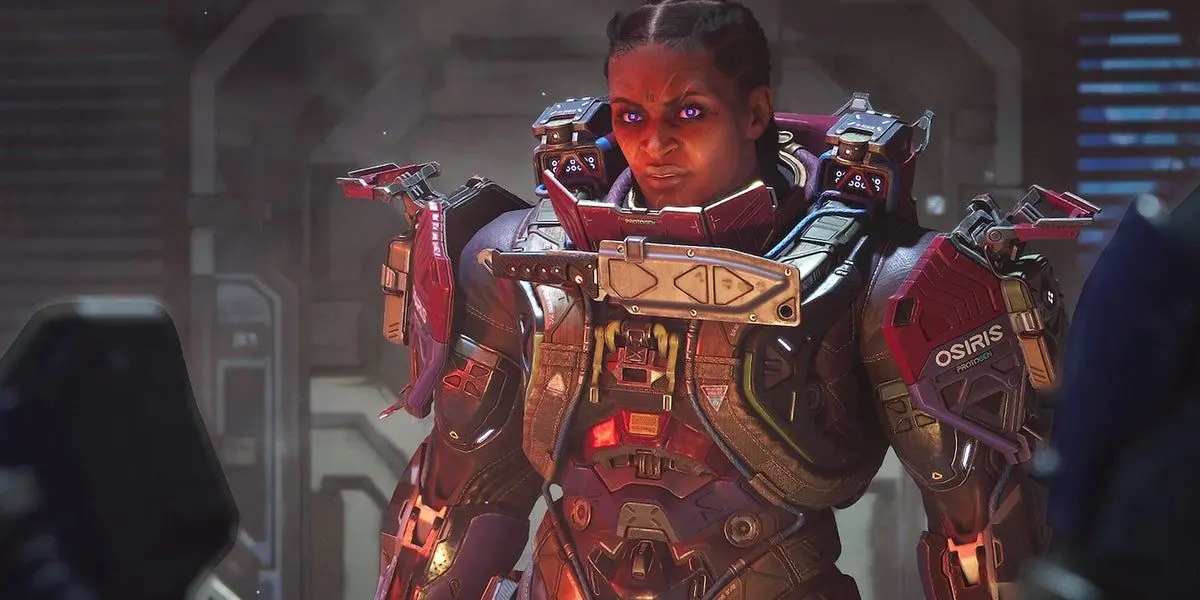
Owlcat Games has confirmed it's using generative AI tools during development of The Expanse: Osiris Reborn, though the studio insists all final in-game assets will be 100 percent human-made. PR manager Katharina Popp says AI is used only for prototyping, placeholders, and vision coordination—not for writing or voice acting. The announcement has reignited debate about AI's role in game development as players express skepticism about the distinction.
Owlcat Games has openly confirmed that generative AI is being used during the development of The Expanse: Osiris Reborn, the studio's upcoming sci-fi RPG inspired by James S. A. Corey's popular book series
1
. Speaking to Eurogamer ahead of the game's Xbox Partner Preview showcase appearance, PR manager Katharina Popp clarified the studio's stance: "We don't use it to create any assets that will be in the game. We use it a lot for prototyping, trying things out, placeholders. They will all be replaced at the end"2
. The developer, known for Pathfinder: Kingmaker, Pathfinder: Wrath of the Righteous, and Warhammer 40,000: Rogue Trader, insists that despite AI involvement in early stages, everything in the final version will be "definitely 100 percent human-made"3
.
Source: Eurogamer
The use of generative AI at Owlcat Games extends beyond simple placeholders. Popp explained that the technology helps the team "iterate faster" by testing technical aspects of game development, such as converting 2D images to 3D or experimenting with color variations
4
. This isn't the first time the studio has addressed AI concerns. Back in March 2024, a job listing for a concept artist at Owlcat included "concept generation using AI" as a work task, prompting immediate scrutiny on social media2
. At that time, the studio responded that AI would be used exclusively for "creative search, inspiration, or vision coordination before starting conceptualization itself"1
. The Cyprus-based studio emphasized that no AI voice actors or AI-generated writing would appear in the final product, and that all final in-game assets would be created by professional artists2
.The announcement has sparked significant player criticism across social media platforms. Bluesky user tickdowntozero responded bluntly: "You can't have 100% human made AND use Gen AI. Made it easy to ignore this game though"
1
. Another user, Dylan Macri, sarcastically noted that this defense "pissed people off the last 47 times developers used it"1
. The controversy mirrors similar situations at other studios. When players spotted AI-generated art in Crimson Desert, developer Pearl Abyss claimed such assets were prototypes intended for replacement. Anno 117: Pax Romana and Clair Obscur: Expedition 33 offered similar explanations when facing comparable backlash1
. Even RPG powerhouse Larian partially distanced itself from generative AI after acknowledging its use during "the very early ideation stages" of development1
.Related Stories
The debate over AI in game development centers on where to draw the line between tools and creative replacement. Reddit user Cold-Engineering-960 captured the ambivalence many creatives feel: "Makes me sad that as a creative that AI prototyping will be a norm. It's just an expedited way to get inspiration from things, but it feels dirty, even if you remove the trained on stolen art part"
1
. For Owlcat Games, this represents a shift from previous projects—the studio confirmed that Warhammer 40,000: Rogue Trader and both Pathfinder games did not use AI at all4
. The Expanse: Osiris Reborn is scheduled for release in spring 2027 on PC, PlayStation, and Xbox Series S/X, with a closed beta demo available next month for those who pre-purchase2
. As the industry continues to grapple with AI integration, players will be watching closely to see whether the promise of human-crafted final products holds true, and whether the use of AI during any stage of development becomes an accepted standard or remains a point of contention.
Source: GameReactor
Summarized by
Navi
21 Dec 2025•Entertainment and Society

30 Oct 2025•Entertainment and Society

19 Feb 2026•Entertainment and Society

1
Policy and Regulation

2
Policy and Regulation

3
Technology