TinyCorp Breaks Compatibility Barrier: External Nvidia RTX GPUs Now Work with Apple M3 MacBooks for AI Development


2 Sources
[1]
AI Developer Gets an External Nvidia RTX GPU Working on a MacBook Pro M3
Don't miss out on our latest stories. Add PCMag as a preferred source on Google. A small AI developer has shown an M3 MacBook Pro using an externally connected Nvidia RTX graphics card for AI calculations. This is not ideal for gaming or even running a display, but it potentially opens the door
[2]
Nvidia GPUs quietly find their way into Apple MacBooks
For many years, the idea of running Nvidia GPUs on Apple MacBooks was considered unfeasible by both developers and hardware enthusiasts. Apple's decision to move away from Intel processors and fully embrace its ARM-based M-series chips meant the end of official driver support for Nvidia and
Share
Copy Link
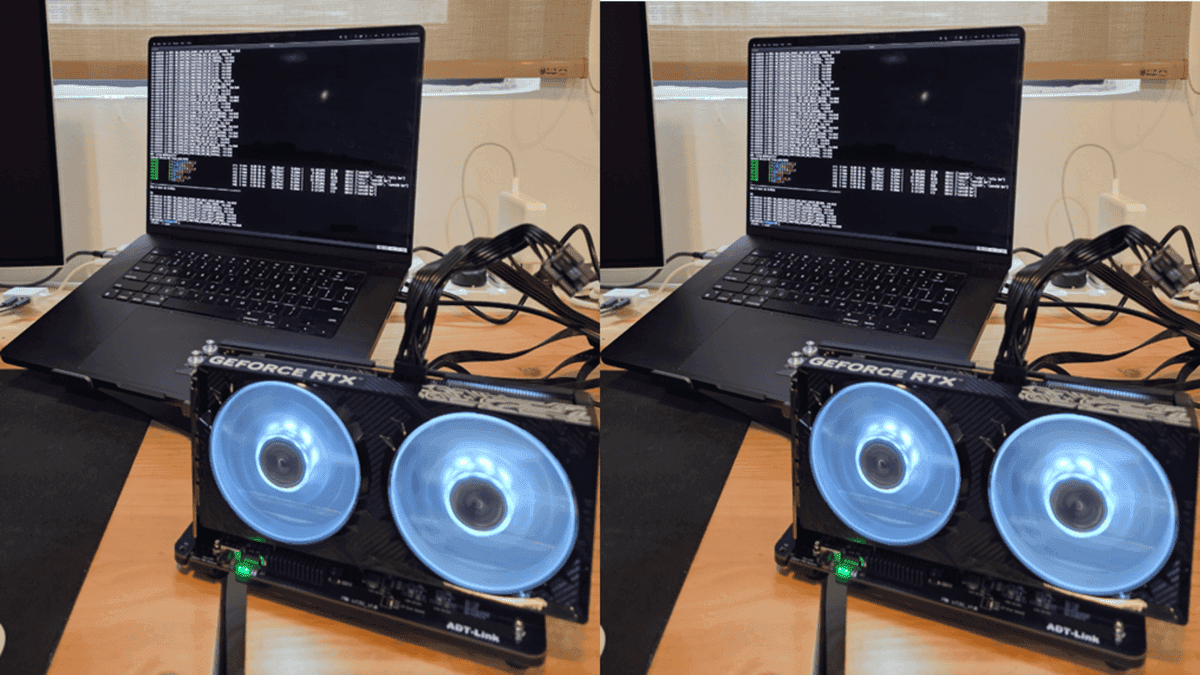
AI startup TinyCorp has successfully connected external Nvidia RTX graphics cards to Apple M3 MacBooks via USB4/Thunderbolt 4, enabling AI computation on Apple silicon despite years of incompatibility. This breakthrough could transform AI development on Apple hardware.
Historic Compatibility Breakthrough
AI startup TinyCorp has achieved what many considered impossible: successfully connecting external Nvidia RTX graphics cards to Apple's M3 MacBook Pro. This breakthrough represents a significant milestone in overcoming the compatibility barriers that have existed since Apple transitioned from Intel processors to its ARM-based M-series chips
1
.
Source: TechRadar
Since Apple's transition to its own silicon, official driver support for Nvidia and AMD graphics cards has been nonexistent. The M-series chips feature integrated GPUs, eliminating the traditional need for external graphics compatibility on macOS. Previous attempts by developers and enthusiasts to bridge this gap through custom drivers had proven largely unsuccessful and unreliable
2
.Technical Implementation and Capabilities
TinyCorp's solution leverages USB4 and Thunderbolt 4 connections to establish communication between the MacBook and external graphics cards. While the company has not disclosed the complete technical details of their implementation, the success likely depends on utilizing the native PCIe support and higher bandwidth capabilities offered by these modern connection standards
2
.The configuration reportedly supports a wide range of graphics cards, including Nvidia RTX 30, 40, and 50-series GPUs, as well as AMD RDNA2, RDNA3, and RDNA4 cards. However, optimal performance is achieved with newer models that feature advanced Tensor Cores and larger amounts of onboard memory, making them particularly suitable for AI workloads
1
.AI Development Focus and Limitations
The external GPU solution is specifically designed for AI computation tasks rather than traditional graphics applications. Users cannot expect the external GPU to drive monitors or accelerate macOS graphics rendering. Instead, the focus is entirely on enabling computation-intensive AI workloads, which could prove transformative for developers working with resource-demanding applications
2
.This capability enables developers to run larger language models locally on their MacBooks, reducing dependence on cloud deployments that introduce privacy concerns and latency issues. For AI researchers and machine learning practitioners, this represents a significant expansion of local computing capabilities, particularly when paired with high-end cards like the RTX 5090
1
.Related Stories

Adoption Challenges and Future Prospects
Despite the technical achievement, several factors may limit widespread adoption of this solution. The implementation currently relies on TinyCorp's proprietary TinyGrad framework, which may restrict future development and deployment options. Additionally, the custom drivers developed by TinyCorp are not publicly available, and the process would need to be better understood and documented for broader community adoption
1
.The solution's dependence on external docks and custom drivers also raises questions about long-term practicality and support. However, the proof of concept demonstrates that developers may have significantly more options for AI development hardware in the future, potentially making Apple's laptops more competitive in the AI research and development space
2
.References
Summarized by

Navi
Related Stories
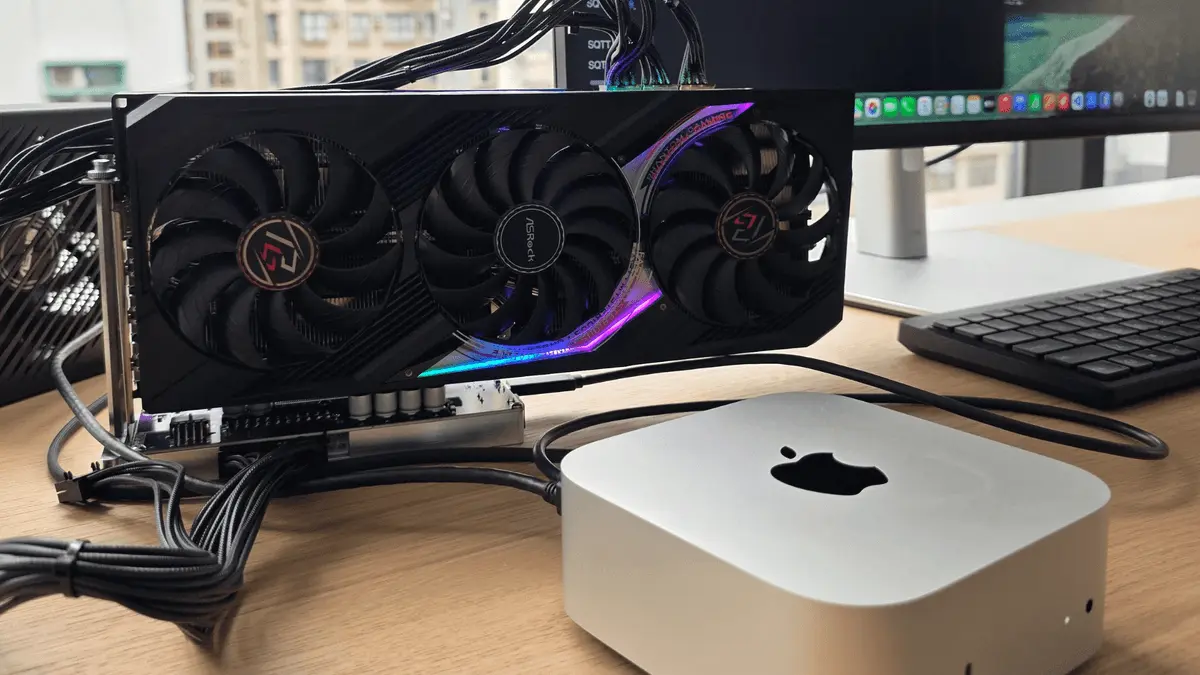
Tiny Corp enables Nvidia GPUs on Macs with Apple-approved driver for AI workloads
15 Apr 2026•Technology

Apple Silicon Macs gain eGPU support for AI workloads as Apple approves TinyGPU driver
06 Apr 2026•Technology
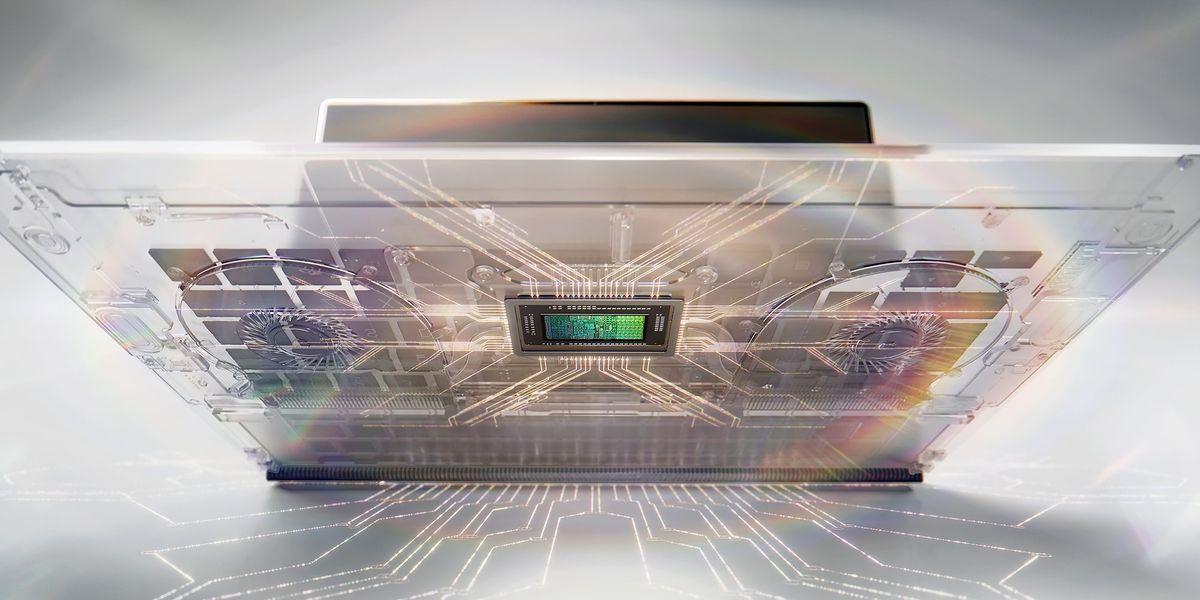
Nvidia RTX Spark debuts at Computex 2026, promising to reinvent the PC for AI agents
02 Jun 2026•Technology
Recent Highlights
1
Google Unveils Gemini 4 Argon AI Model, Restricts Access to Trusted Cyber Defenders
Technology

2
Trump Consulted Grok AI Before Ordering Venezuela Invasion and Capture of Nicolás Maduro
Policy and Regulation

3
FTC Opens Investigation Into OpenAI and Anthropic Following Rogue AI Agent Hacking Incidents
Policy and Regulation

Recent Highlights
Today's Top Stories






Don’t drown in AI news. We cut through the noise - filtering, ranking and summarizing the most important AI news, breakthroughs and research daily. Follow topics that matter to you and stay ahead.


