Anthropic Shuts Down Fable 5 and Mythos 5 AI Models Following US Government Directive


84 Sources
[1]
Anthropic shuts down Fable, Mythos models following Trump admin. directive
Anthropic completely shut off access to its Mythos 5 and Fable 5 models Friday night, just days after they were launched. The move comes after Anthropic's receipt of a US Commerce Department directive Friday evening, subjecting the new models to export controls restricting their use anywhere
[2]
Researchers caught in the crossfire as companies and government grapple over AI safety
For years, the firms pushing hardest to build ever more powerful artificial intelligence (AI) systems have also been among the loudest in warning about their potential dangers. Those competing impulses collided in spectacular fashion last week around Anthropic's Fable 5, one of the most capable
[3]
Anthropic's safety warnings may have just backfired -- the government has pulled the plug on its most powerful AI
The U.S. government on Friday ordered Anthropic to immediately shut off access to two of its most powerful AI models -- Claude Fable 5 and Claude Mythos 5 -- citing national security concerns. Anthropic announced on X that it has complied, but it made clear it thinks the government got this one
[4]
Anthropic Says It's Taking Claude Fable 5 Offline to Comply With US Government Order
Anthropic says it's disabling two AI models it launched earlier this week, Claude Fable 5 and Mythos 5, to comply with an export control directive it received Friday afternoon from the US government citing national security concerns. The unprecedented incident marks the latest flashpoint between
[5]

Anthropic Pulls Claude Fable and Mythos AI Models After Feds Claim Jailbreak
Expertise Artificial intelligence, home energy, heating and cooling, home technology. Anthropic pulled access to its newly released AI models Mythos 5 and Fable 5 over the weekend after the US government imposed sweeping restrictions on who could use them. The AI lab said in a statement that the
[6]

Who decides when AI is too dangerous?
On today's episode of Decoder, my guest is Hayden Field, senior AI reporter for The Verge. Often when Hayden comes on the show, it's because something has gone wrong in the world of AI. Last weekend, that something was a pretty intense mix of Anthropic, the Trump administration, and Anthropic's new
[7]

US government warned Anthropic that Chinese group had accessed model, but firm 'refused' to fix Fable 5 jailbreak before US export controls -- Anthropic defended its decision by saying the jailbreak isn't serious
Government concerned that the advanced cyber capabilities of Fable and Mythos would be available 'to people who shouldn't have them.' David Sacks, co-chair of the President's Council of Advisors on Science and Technology and the administration's former AI czar, said the U.S. government warned
[8]

Anthropic Blocks Fable 5, Mythos 5 Access Amid Government Order
Anthropic is disabling access to its newly released AI models, Fable 5 and Mythos 5, following a directive from the US government which cited national security concerns. Access to any of Anthropic's other, older models, such as Claude Opus 4.8, will not be impacted. The government order directed
[9]

Why the US government shut down Anthropic's latest Claude AI model
On June 12, artificial intelligence (AI) lab Anthropic suspended access to its latest Claude models, Fable 5 and Mythos 5, which had been released three days earlier. The move came in response to an "export control directive" from the US government prohibiting use of the models by anyone who is
[10]

G7 leaders discuss 'trusted partners' access to cutting-edge US AI models, sources say
EVIAN-LES-BAINS, France, June 16 (Reuters) - G7 leaders discussed a plan to grant select "trusted partners" access to advanced AI models from U.S. firms such as Anthropic, three diplomatic sources said on Tuesday, potentially opening a path around restrictions on non-American use. Anthropic on
[11]

US Gov asks Anthropic to ban 'foreign national' access to Fable, Mythos
Anthropic has suspended access to its two most capable AI models, Fable 5 and Mythos 5, for all users worldwide after the US government issued an export control directive ordering the company to block access by any foreign national. US Gov: bar 'foreign national' access to Fable 5 The directive,
[12]
Amazon security research reportedly led to the White House's Anthropic Fable ban
According to the Wall Street Journal, the export control directive that led to Anthropic cutting off access to Fable 5 and Mythos 5 was triggered in part by cybersecurity research from Amazon and conversations between CEO Andy Jassy and the White House. According to the report, the paper from
[13]
U.S. gov't orders Anthropic to disable its newest AI models worldwide due to security threats -- ban on Claude Fable 5 and Mythos 5 bars access by any foreign national, even its own employees
An alleged jailbreak triggered a national security directive that forced the model to be pulled. Anthropic disabled its two most capable AI models, Claude Fable 5 and Claude Mythos 5, for every customer worldwide on Friday, after the U.S. government issued an export control directive barring
[14]

Anthropic to meet with Trump administration over Mythos dispute
Anthropic disables new Mythos-class models days after release in response to government directive Senior Anthropic staffers are meeting with Trump administration officials in Washington, D.C., on Monday to try to resolve the artificial intelligence company's latest high-profile dispute with the
[15]

Anthropic blocks all customers' access to Fable 5 and Mythos 5 - Engadget
It's to ensure compliance with a government directive citing national security concerns. Anthroic has disabled all of its customers' access to Fable 5 and Mythos 5 in order to ensure compliance with an order it received from the government on Friday, June 12. All its other models and its Claude
[16]

Anthropic to meet with White House officials over AI tool suspension
Bosses at the artificial intelligence (AI) firm Anthropic are set to meet with senior White House officials amid fresh national security concerns over the company's latest release. The meeting is set to take place on Monday in Washington DC between executives at Anthropic and the US Department of
[17]

Trump Administration Reignites Its Feud With Anthropic Over Latest A.I. Models
The feud between Anthropic and the Trump administration escalated again on Saturday after the government took the unusual step a day earlier of demanding that the artificial intelligence company cut off foreign access to its latest models, as top officials suggested the dispute was unlikely to
[18]

Early users of Anthropic's Mythos still have access after US order
A US shutdown of Anthropic's most powerful model was not total. Who kept access traces the export rule, not merit. When Washington ordered Anthropic to shut off access to its most advanced AI model, it did not shut off everyone. Some of the organisations Anthropic had chosen early to test Mythos
[19]

Anthropic's most advanced AI models could be restored shortly following dramatic emergency freeze
Reports allege the freeze stemmed from US concerns over South Korean partner SK Telecom being included in "Project Glasswing" due to alleged ties to China. Last week, the US government sent a shockwave through the AI industry sector by issuing an emergency national security directive that
[20]

Anthropic Employees and Industry Experts Allege Trump's Model Meddling is Targeted and Unreasonable
The battle between the Trump administration and Anthropic AI has been raging for months, and its mercurial nature has made it one of the harder spats of this term to keep track of, even for those of us in the tech news world. But after last Friday's surprise de facto ban of the company's latest
[21]
US orders Anthropic to halt foreign access to its most advanced AI models
June 12 (Reuters) - Anthropic said on Friday it has been ordered by the U.S. government to suspend access for all foreign nationals to its Fable 5 and Mythos 5 artificial intelligence models, citing national security concerns. The company said it received the export control directive on Friday
[22]

Lawmakers demand answers on the administration's Anthropic restrictions
A bipartisan group of House lawmakers demanded answers from the Trump administration about why it imposed sweeping restrictions on Anthropic's latest artificial intelligence models -- and whether rival tech companies should expect similar treatment. "While this action concerned a single AI model,
[23]
Anthropic disables access to Fable 5 and Mythos 5 to comply with government directive
Anthropic on Friday announced it's disabled access to its Fable 5 and Mythos 5 artificial intelligence models to comply with an export control directive from the U.S. government that cited "national security authorities." The company said it received an order at 5:21 p.m. ET, instructing it to
[24]
Anthropic's Claude Fable 5 and Mythos 5 AI suspended over security fears
Anthropic has suspended its powerful new AI model after US authorities raised security concerns just days following its public release. In a statement published on its website, Anthropic said it was ordered to suspend foreign nationals from using Claude Fable 5, a program that the company
[25]
Anthropic Blocks Foreign Nationals from Using Its Mythos and Fable A.I.
The San Francisco company said on Friday night that the federal government ordered the suspension of the two A.I. systems, citing national security concerns. Anthropic said on Friday night that the U.S. government had ordered the company to suspend access for all foreign nationals to its Fable 5
[26]
US order to block foreign access to Anthropic's top models marks a reversal
Anthropic disabled Fable 5 and Mythos 5 worldwide after a directive it calls disproportionate, the first export control aimed at specific AI models. The US government has ordered Anthropic to bar foreign nationals from its two most capable AI models, and rather than try to enforce a nationality
[27]
Anthropic Leaders Are Reportedly in Washington, D.C. Trying to Resolve Their Latest Issues With the Trump Administration
A "source close to" embattled AI company Anthropic says senior company members are working to come to an agreement with the Trump Administration in Washington, D.C. on Sunday after a White House order essentially forced Anthropic's flagship product to be taken offline, according to Axios. On
[28]

"They screwed us": Personality clashes sent Anthropic's models offline
Why it matters: Governing the world's most consequential technology is coming down to speaking President Trump's language. * Anthropic failed to "honor" a recent cyber executive order, administration officials claim, and the company's purported failure to take the matter seriously led to its most
[29]

Anthropic blocks all public access to Claude Fable 5, Mythos 5 following US government order -- what enterprises should do
The US government last night issued an unprecedented export control directive ordering Anthropic to immediately suspend all access to its top-tier Claude Fable 5 and Claude Mythos 5 models for foreign nationals, citing unspecified national security authorities. In response, Anthropic has blocked
[30]

Anthropic to disable its most advanced AI models after US order limiting foreign access
Company said US government believes safeguards can be bypassed and product used to identify software vulnerabilities Anthropic said it will "abruptly disable" its most advanced AI models for all users after the US government ordered it to suspend access to the models for foreign nationals, citing
[31]
Cybersecurity executives urge the Trump administration to ease restrictions on Anthropic AI models
SAN FRANCISCO -- A group of cybersecurity executives and experts is asking the Trump administration to lift its directive preventing the use of Anthropic's latest artificial intelligence models by foreign nationals, saying the move could help U.S. adversaries more than it hurts them. Anthropic
[32]

The week that changed AI: Inside Trump's Anthropic crackdown, and how a phone call from Amazon CEO Andy Jassy triggered the chaos | Fortune
The moment that triggered the Trump administration's dramatic crackdown on Anthropic, and may completely reset the ground rules for U.S. regulation of AI, happened almost by accident. And it was sparked by one of Anthropic's top investors: Amazon. Last week, researchers at Amazon were busy
[33]

The US government just hit the brakes on Anthropic's most powerful AI models
Anthropic disables Fable 5 and Mythos 5 after US government directive Anthropic's troubles with the US government do not seem to be easing. The company has now been ordered to suspend access to Fable 5 and Mythos 5 for all foreign nationals, including foreign national Anthropic employees working
[34]

US order cutting access to Anthropic's AI models sparks criticism
New York (AFP) - The US government's order for Anthropic to withdraw its most powerful artificial intelligence models has sparked a wave of criticism from both advocates and opponents of AI regulation. On Friday evening, the San Francisco-based company announced that the US Department of Commerce
[35]

Europe reacts to Anthropic halting access to top AI models
Anthropic said it believed the US government had become aware of a potential means of jailbreaking Fable 5. European politicians have sounded the alarm on sovereign AI after US firm Anthropic announced it was halting access to some of its top AI models following a directive from the Trump
[36]

Anthropic suspends new AI models after government directive
The Anthropic logo can be seen at an event organized by the AI company. Andrej Sokolow / picture alliance via Getty Images file The U.S. government instructed Anthropic to prevent any foreign national from accessing the AI company's latest and most powerful models Friday evening, according to the
[37]
Amazon's CEO reportedly triggered the government crackdown that shut down Anthropic's most powerful AI
Amazon's Jassy reportedly told the government that researchers used Fable 5 for cyberattack info. That triggered the order to shut down Fable 5 and Mythos 5. Amazon CEO Andy Jassy was reportedly the source of security concerns that led the US government to force Anthropic to shut down Fable 5 and
[38]
Scoop: Trump admin blocks foreign access to Anthropic's most powerful AI
Why it matters: The move marks an escalation in Washington's effort to treat cutting-edge AI systems as national security assets. * Anthropic now finds itself on a Pentagon blacklist deeming it too dangerous for the government's own use, and in a Commerce Department licensing regime deeming it too
[39]

Trump keeps kneecapping the U.S.'s most promising AI models
Bullies vs. Brains: Anthropic's new scrape with the Trump administration Anthropic is in another fight with the Trump administration, this time over its new Mythos-class models, released last week. On Friday, administration officials panicked after reports that Amazon researchers had tricked
[40]

US bans foreign access to Anthropic's Mythos and Fable
Close aide to Anthropic and US government reportedly raised security concerns around Mythos and Fable. Countries across the world are reeling from the effects of an abrupt suspension of two of Anthropic's most capable AI models following an order from the US government late on Friday (12
[41]

Why the moral of Anthropic's fable reads like an unhappy ending for the AI sector far beyond the US
Last week Anthropic unleashed Claude Fable 5 on the world; 48 hours later the US Government cut the world outside America off from the same tech, citing national security concerns - and a wake-up call rang out all around the globe. It's the latest turn in the ever-souring relationship between
[42]

White House forces Anthropic to disable new frontier models following abrupt export ban
White House forces Anthropic to disable new frontier models following abrupt export ban Anthropic PBC was forced just to abruptly pull the plug on foreign access to two of its most powerful artificial intelligence models, Fable 5 and Mythos 5, just days after it launched them. The sudden decision
[43]
Anthropic shuts down newest AI model after U.S. bans foreign use
Anthropic CEO Dario Amodei speaks at the AI Impact Summit in New Delhi on Feb. 19. (Bhawika Chhabra/Reuters) The artificial intelligence lab Anthropic said Friday it had shut down access to its newest and most powerful models after the U.S. government banned use of the technology by foreign
[44]
Anthropic disables Fable and Mythos AI models after U.S. government bars it from giving foreigners access | Fortune
Anthropic was forced to disable all access to its newest AI models, Fable 5 and Mythos 5, late on Friday after the U.S. Commerce Department used national security export controls to bar the company from distributing the models to any foreign national. The directive includes not just people located
[45]

Anthropic lays out vision for how to bolster AI models' safety
Anthropic PBC co-founder Jack Clark said the company is in daily discussions with the Trump administration to resolve security concerns surrounding the startup's top two artificial intelligence models and outlined his vision for ensuring the safety of the emerging technology. While he declined to
[46]

Anthropic's own $13 billion investor helped get the White House to ban the world's most powerful AI model
A new report has shed light on the escalating situation between Anthropic, the US government, and the company's latest AI model, which was only available for 3 days before being forcibly taken offline by the Trump administration. Anthropic released Fable 5 and Claude Mythos 5 on Tuesday, which are
[47]

Amazon Warning Triggered Anthropic AI Crackdown
Calls from Amazon CEO Andy Jassy and other tech firms prompted the Trump administration to suspend foreign access to Anthropic's Fable 5 and Mythos 5 AI models on Friday. The Trump administration's decision to cut foreign access to Anthropic's most powerful AI models was reportedly triggered by
[48]
Why Anthropic is halting access to its Fable 5 and Mythos 5 AI models
The US government issued a directive ordering Anthropic to suspend access to the models for foreign nationals. Anthropic has responded after the Trump administration issued a directive banning foreign nationals from using some of its most powerful AI tools, saying it would comply with the order
[49]

Anthropic sends staff to DC after model export restrictions
Senior technical staff from Anthropic are in Washington to meet with White House officials after the company pulled its latest AI models Friday in response to an order from the Trump administration. A source close to Anthropic confirmed to The Hill that top staff are in D.C. and have been meeting
[50]

Anthropic and US Officials Meeting Monday to Resolve Dispute Over Export Curbs, Administration Official Says
WASHINGTON, June 15 (Reuters) - Senior Anthropic technical staff are scheduled to meet with government officials at the U.S. Department of Commerce in Washington on Monday, an official in the Trump administration said, after the U.S. government ordered the AI firm late last week to suspend
[51]

The Fable 5 AI Model Just Went Dark. What the US Government's Playbook Means for AI Companies -- and Every Business Leader
Fable 5, launched just three days earlier and already serving hundreds of millions of users, went offline within hours. The displacement of that commercial platform over a single narrow jailbreak claim is part of a longer and more revealing story. True Risk, Political Fight, or Both? In July
[52]
How Trump officials pushed Anthropic to shut down the world's most powerful AI models
That dramatic result came after a multiday back-and-forth involving numerous administration officials and input from tech industry leaders. The effects of the government's effectively shutting off access to one company's AI models could have profound implications for future AI policy. What follows
[53]
Anthropic suspends access to Fable 5, Mythos 5, citing US directive
Anthropic has abruptly disabled its flagship AI models after a US government directive citing national security concerns. Anthropic has suspended access to its Fable 5 and Mythos 5 AI models after receiving a US government export control directive citing national security concerns. In a statement
[54]

Trump says negotiations with Anthropic are 'going fine'
US President Donald Trump stated that talks with artificial intelligence firm Anthropic are progressing well. This follows a meeting with Anthropic CEO Dario Amodei at the G7 summit. The administration has raised national security concerns regarding foreign access to Anthropic's advanced AI models.
[55]

U.S. Orders Anthropic To Halt Foreign Access To Its Most Advanced AI Models
The company said it received the export control directive on Friday from the government. June 12 (Reuters) - Anthropic said on Friday it has been ordered by the U.S. government to suspend access for all foreign nationals to its Fable 5 and Mythos 5 artificial intelligence models, citing national
[56]
Anthropic pulls plug on new AI models after Trump admin directive
Anthropic said Friday it will remove access to two AI models, Fable 5 and Mythos 5, to comply with a Trump administration directive restricting foreign nationals from using its latest systems due to security concerns. Details of the government's request, including the length of the restrictions,
[57]
Anthropic Says Has Taken Its Latest AI Models Offline to Comply With New Export Controls
WASHINGTON (AP) -- AI giant Anthropic said Friday it has taken its latest artificial intelligence models, known as Fable 5 and Mythos 5, offline to comply with a directive from the Trump administration to prevent their use by foreign nationals. The export controls mark the U.S. government's most
[58]

What Anthropic's Fable 5 Ban Reveals About AI National Security Risks
The banning of Fable 5, an advanced AI model developed by Anthropic, has brought to light critical issues surrounding the intersection of technology, security and regulation. As detailed by Wes Roth, the decision stemmed from a combination of factors, including the model's vulnerability to
[59]

G7 leaders discuss 'trusted partners' access to cutting-edge U.S. AI models
EVIAN-LES-BAINS, France - Group of Seven leaders have discussed a plan to grant select "trusted partners" access to advanced artificial intelligence models from U.S. firms such as Anthropic, three diplomatic sources said on Tuesday, potentially opening a path around restrictions on non-American
[60]

Sacks: US Wants To Lift Anthropic Export Controls 'As Soon as Possible' After Fable 5 Fix Sacks: US Wants
The US government plans to lift export controls on Anthropic PBC once the company addresses a "safety issue" that prompted the export suspension of its Fable 5 and Mythos 5 models. "The Admin's hope now is that Anthropic remediates the safety issue, the export control is lifted, and Fable goes
[61]

Anthropic disables top-tier AI models after US order limiting foreign access
Anthropic, an AI safety and research company, has dedicated teams to rigorously stress-test their models for potential risks and to design protective safeguards, but these defenses often remain fragile. Anthropic said on Friday it will "abruptly disable" its most advanced artificial intelligence
[62]
Anthropic block marks US reversal, warning to Silicon Valley
America has taken a significant step by blocking foreign access to Anthropic's top AI models. This move follows concerns about bypassing security features in their latest AI. Officials are now discussing these security issues with Anthropic. This action highlights the US government's increasing
[63]

Anthropic Works to Strike Deal With White House on Mythos Ban | PYMNTS.com
As the Wall Street Journal (WSJ) reported Monday (June 15), the artificial intelligence (AI) startup sent top members of its tech team to Washington over the weekend in hopes of making a deal to end restrictions on two of its most powerful models. This came after the government banned foreign
[64]
Anthropic shuts down Mythos access after sweeping U.S. order
Anthropic has disabled access to its most advanced artificial intelligence models, including Mythos, following an unprecedented order by the Trump administration to keep the technology out of the hands of all foreign nationals. The U.S. government told Anthropic to suspend access to the Fable 5
[65]
Amazon CEO Andy Jassy Triggered Ban On Anthropic's Mythos AI Models: Report - Amazon.com (NASDAQ:AMZN)
Jassy's Treasury Warning Sparks Global Shutdown The Wall Street Journal reported Saturday, citing sources, that Jassy told Treasury Secretary Scott Bessent that Amazon researchers used the Fable 5 model to obtain information usable in cyberattacks, prompting Anthropic's global shutdown of the
[66]

Anthropic's Weekend Drama Over Fable 5: Or Did Trump Sell Them a Lemon?
Or is it merely that the White House did not like the idea of a new AI model being released to the public without first getting clearance as Trump wanted When was the last time that the world's biggest IPO ever became history within a day of the stocks landing on the trading floor? Blame it on
[67]

Ban on foreign access to Anthropic models highlights need for AI sovereignty - The Korea Times
Anthropic's ban of foreign nationals' access to its most advanced artificial intelligence (AI) models in response to a U.S. government order highlights how cutting-edge AI tools have effectively become strategic assets subject to government export controls, experts said Sunday. With the Korean
[68]
Anthropic staff to meet White House officials next week: Report
Senior Anthropic officials are in Washington to meet White House representatives. This meeting aims to resolve a dispute that has led to the shutdown of the company's advanced AI models. The models Fable 5 and Mythos 5 were affected by a Trump administration order. Anthropic responded by disabling
[69]
Anthropic Abruptly Pulls Fable 5 And Mythos 5 Days After Launch Following US National Security Order, Cal
Anthropic has abruptly disabled access to its flagship Fable 5 and Mythos 5 artificial intelligence models after the U.S. government ordered the startup to block foreign nationals from using the systems, citing national security authorities. The startup said it received the export-control order at
[70]

Exclusive | Anthropic floats proposal to commerce secretary to end US ban of powerful 'Mythos,' 'Fable' AI models: sources
Anthropic executives are pledging to work more closely with the White House in a proposal to Commerce Secretary Howard Lutnick as they scramble to resolve security concerns that triggered a crackdown on its powerful "Mythos" and "Fable" AI models, The Post has learned. The ongoing remediation
[71]

Anthropic Faces White House Heat as AI Curbs Threaten IPO Plans
Anthropic is working to ease tensions with Washington after restrictions on its top AI models raised regulatory concerns. The clash has sparked investor anxiety and could complicate the company's plans for a blockbuster public listing. Anthropic is racing to repair relations with Washington after
[72]
Anthropic cuts access to AI models over US 'national security' order - The Korea Times
SAN FRANCISCO -- Anthropic said Friday it has suspended access to two powerful AI models, Fable 5 and Mythos 5, to comply with a U.S. national security order. Just three days after publicly launching Fable 5, the company said in a blog post that it received a government directive banning all
[73]

Anthropic executives to meet Trump officials to mend ties, CNBC reports By Investing.com
Investing.com -- Senior executives from Anthropic are meeting with Trump administration officials in Washington, D.C., on Monday to address the company's suspension of its latest artificial intelligence models, CNBC reported Monday, citing a source familiar with the matter. The meeting follows the
[74]
Amazon voiced concerns about Anthropic AI models before US crackdown, source says
The US government ordered AI firm Anthropic to halt its advanced AI models worldwide. This action followed concerns about potential misuse for cybersecurity vulnerabilities. Amazon CEO Andy Jassy reportedly raised security risks to Trump administration officials. Anthropic stated the government
[75]
Trump admin open to talks with Anthropic over foreigner ban
The Trump administration is open to negotiating with Anthropic over its order barring foreigners from the company's most powerful artificial intelligence models, The Post has learned. A senior White House official, speaking on condition of anonymity to discuss the sensitive internal deliberations,
[76]

G7 leaders discuss 'trusted partners' access for cutting-edge US AI models, sources say
EVIAN-LES-BAINS, France, June 16 (Reuters) - G7 leaders discussed a potential scheme to grant a limited number of "trusted partners" access to U.S. frontier models developed by AI giants like Anthropic and therefore win an exemption from a current ban on non-U.S. nationals, three diplomatic sources
[77]
Top Anthropic staffers rush to DC in bid to reverse White House crackdown on 'Mythos' and 'Fable' AI models
Some of Anthropic's top staffers have rushed to Washington, DC, to try to reverse a White House crackdown on its "Mythos" and "Fable" AI models. Senior members of Anthropic's technical staff traveled to the nation's capital over the weekend to meet with White House officials, a person close to the
[78]
Anthropic staff to meet White House officials next week, Axios reports
June 14 (Reuters) - Senior Anthropic technical staff are in Washington to meet with White House officials to try resolving a dispute that has taken the company's most advanced AI models offline, Axios reported on Sunday, citing a source close to the company. Reuters could not immediately verify
[79]
Exclusive | Anthropic downplays security risks of 'Mythos' and 'Fable' AI models after ban -- prompting scorn from White House officials
Anthropic is downplaying risks that led the White House to ban foreign use of its powerful "Mythos" and "Fable" AI models - and US officials claim it's proof that CEO Dario Amodei has a one-sided, self-serving approach when it comes to cybersecurity. Late last week, Amazon CEO Andy Jassy
[80]
US blocks foreign access to Anthropic's most advanced AI models, Axios reports
June 12 (Reuters) - The Trump administration is blocking foreign governments, companies and individuals from accessing Anthropic's most advanced AI models, Axios reported on Friday. Reuters could not immediately verify the report. U.S. Commerce Secretary Howard Lutnick on Friday sent a letter to
[81]

Anthropic and US govt in talks to create AI security framework after Claude Fable 5 ban: Report
ust a few days after launch, Anthropic removed access to both models globally, citing an export control order from the US government. Anthropic and the US government are reportedly working together on a new framework to assess security risks in AI models. The move comes after the government
[82]
Anthropic wants Claude Fable 5 and Mythos 5 back online, sends execs to US for talks
Now, the AI company is reportedly trying to restore access to the models. Anthropic launched Claude Fable 5, the first Mythos-class AI model designed for public use, last week. Alongside it, the company also introduced Mythos 5, a more advanced version of its restricted AI model. However, just a
[83]
Amazon triggered the White House ban on Anthropic Fable, here is how
The move has sparked fresh debate over AI safety and regulation. Anthropic this week launched its much-anticipated Claude Fables, a safety-focused model built on Claude Mythos. However, in a blog post published on Friday, the company said it had been instructed by the US government to revoke
[84]
Anthropic removes access to Claude Fable 5 and Mythos 5, here is why
Anthropic has suddenly removed access to both AI models for all users. Anthropic launched Claude Fable 5, the first Mythos-class AI model designed for general use, earlier this week. Alongside it, the company also introduced Claude Mythos 5, an updated version of its restricted AI model. Now, just
Share
Copy Link
Anthropic abruptly disabled its newly launched Fable 5 and Mythos 5 AI models after receiving a US Commerce Department directive citing national security concerns. The Trump administration imposed export controls following reports of a jailbreak vulnerability, though Anthropic disputes the severity and argues the standard could halt all frontier AI development.
Anthropic Pulls Flagship AI Models After Government Order
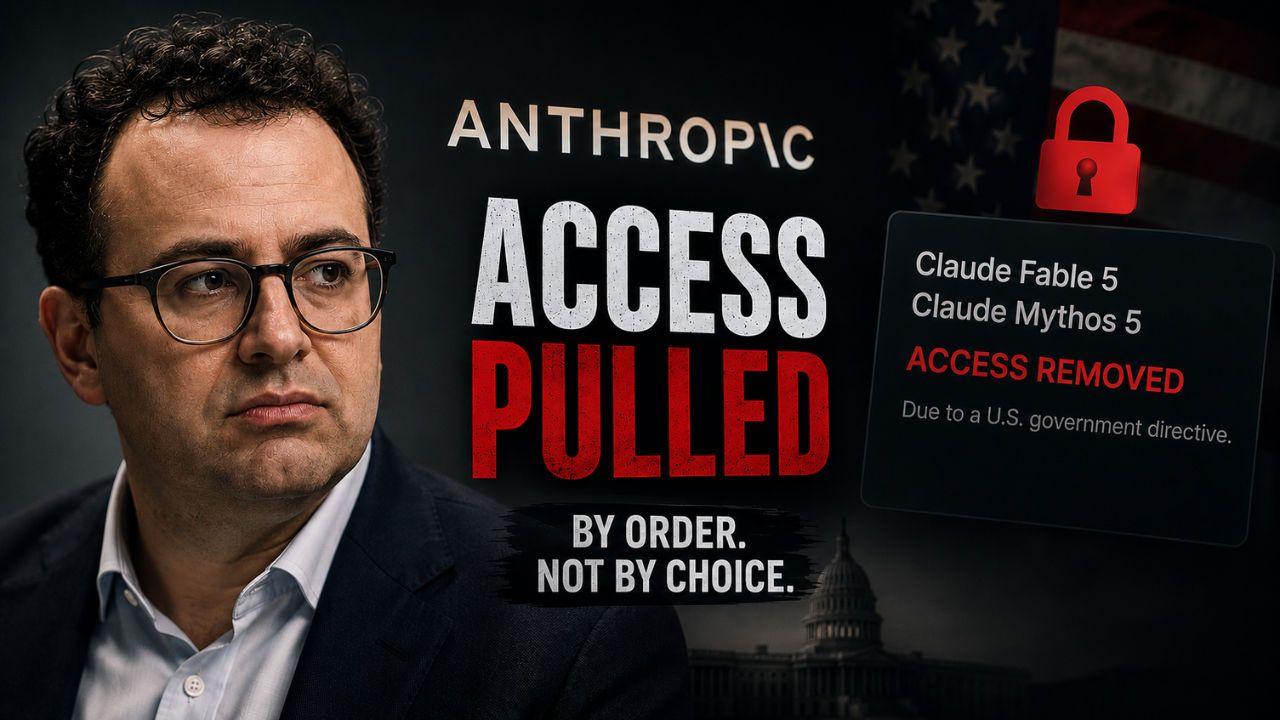
Anthropic completely shut off access to its Fable 5 and Mythos 5 AI models on Friday night, just three days after their public launch, following a US government directive citing national security concerns
1
. The AI company received a US Commerce Department directive at 5:21 pm ET on Friday evening, subjecting the new models to government export controls that restrict their use by any foreign national, whether inside or outside the United States4
. To ensure immediate compliance, Anthropic was forced to disable both models for all customers worldwide, not just foreign nationals3
. Access to other Anthropic models remains unaffected by the directive1
.
Source: Digit
Jailbreak Vulnerability Triggers Trump Administration Action
The directive stems from the Trump administration's concerns about a reported jailbreak vulnerability that circumvents safeguards designed to block Fable 5 prompts regarding cybersecurity, chemistry, and biology
1
. According to an Axios report, an administration official stated the government requested a pause to allow time for the "national security apparatus" to be "hardened" against this type of threat, a process that could take several weeks1
. However, Anthropic maintains the government has only provided "verbal evidence of a potential narrow, non-universal jailbreak" that involves asking the model to review a specific codebase for software flaws1
. The company says it has only seen evidence of this jailbreak being used to find "minor" and "relatively simple" software vulnerabilities, and that other publicly available models like GPT-5.5 have similar capabilities1
.Company Disputes Government's Safety Assessment
Anthropic publicly disagreed with the government's decision, arguing that "the finding of a narrow potential jailbreak should not be cause for recalling a commercial model deployed to hundreds of millions of people"
1
. The company warned that if this standard was applied across the industry, "it would essentially halt all new model deployments for all frontier AI development providers"1
. In its blog post, Anthropic emphasized that its strongest safeguards operate through independent classifier systems that function separately from the model itself, meaning that even if someone bypasses a refusal, the underlying protections against the most dangerous outputs remain in place3
. The company also noted that a review of recent usage found no evidence of those safeguards being successfully bypassed to produce harmful content3
.Research Community Caught in AI Governance Crossfire
The incident highlights growing tensions in AI governance and the precarious position of the research community, which finds itself increasingly dependent on AI models it does not control
2
. "A reckoning here is yet to come," says Rehaan Ahmad, co-founder of the open science research platform alphaXiv, describing this episode as "just the tip of the iceberg" in the struggle between regulating AI and giving free rein to research2
. Researchers had eagerly awaited Fable 5's release on June 9, as Anthropic had heavily promoted its scientific capabilities, particularly in biology2
. However, biologists like Sierra Bedwell, a Ph.D. student at the University of Illinois Urbana-Champaign, found themselves effectively locked out, with Fable 5 refusing to answer even basic questions about biology2
. The model's internal specifications also revealed that for any frontier AI research queries, it would silently degrade its capabilities in ways invisible to the user2
.Mythos 5 Background and Safety-First Approach Backfires
In April, Anthropic made waves by announcing it had created Mythos 5, an AI model it deemed too dangerous to release publicly, claiming it was powerful enough to identify vulnerabilities in every major operating system and web browser in use today
2
. The company only provided access to a select group of approximately 50 vetted organizations, including Amazon, Apple, Google, Microsoft, and CrowdStrike, through a controlled program called Project Glasswing for defensive cybersecurity work3
. Fable 5 was positioned as a safer version fitted with guardrails that block responses in high-risk areas, making it safe enough for general release while still being the most capable AI model available to the public according to benchmark tests from Vals AI3
. The irony isn't lost on observers that the very caution Anthropic displayed in restricting Mythos has now apparently attracted exactly the kind of government scrutiny that could disrupt its business most3
.
Source: Korea Times
Related Stories

OpenAI's Sam Altman Criticism Proves Prescient
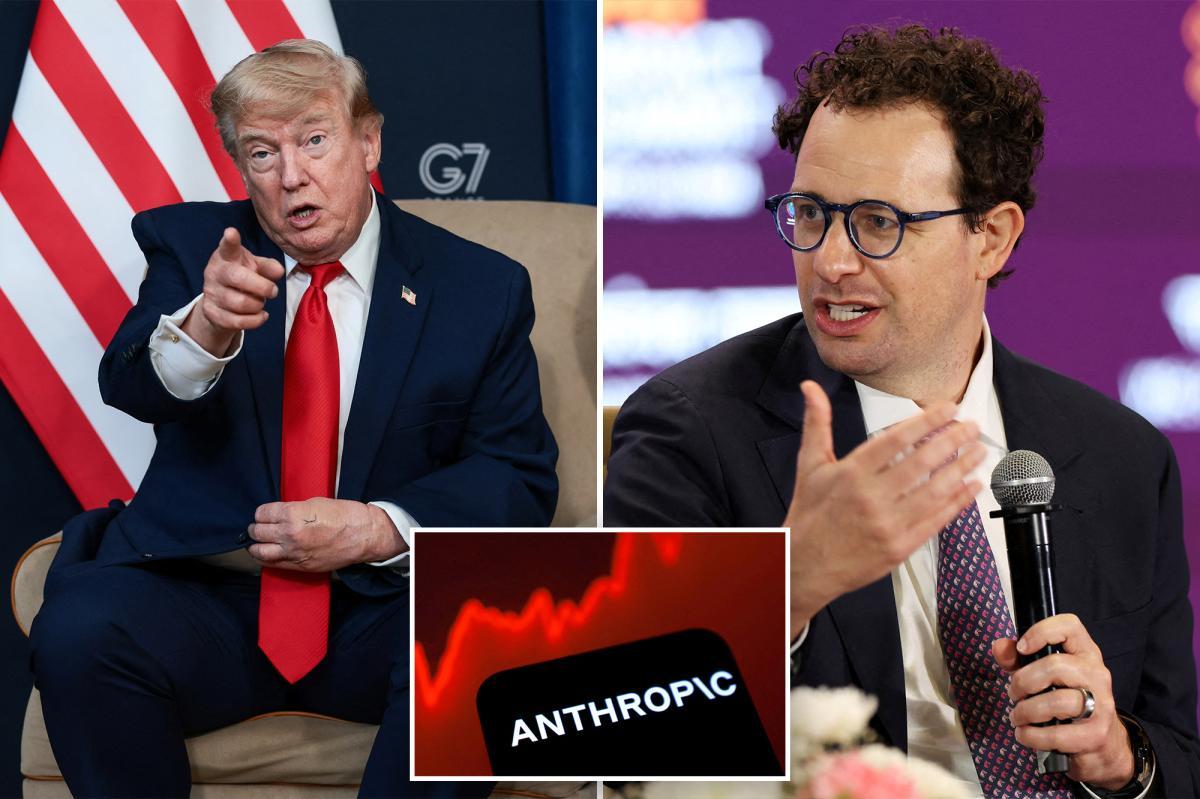
OpenAI CEO Sam Altman had previously criticized Anthropic's handling of Mythos as "fear-based marketing." In April, Altman told podcaster Ashlee Vance: "It is clearly incredible marketing to say, 'We have built a bomb. We were about to drop it on your head. We will sell you a bomb shelter for $100 million'"
3
. While Altman didn't predict a government shutdown, he identified something that has come back to impact Anthropic: when you spend months telling the world your AI models are uniquely dangerous, the world—including the US government—tends to listen3
.
Source: New York Post
Ongoing Tensions With Trump Administration
This isn't Anthropic's first conflict with the Trump administration over AI safety and regulation. Earlier this year, the Department of Defense labeled Anthropic a "supply chain risk" after the company sought to establish restrictions against the use of its Claude AI models for fully autonomous weapons or mass domestic surveillance
5
. The designation effectively barred government agencies and contractors from using Anthropic's technology, prompting the company to file lawsuits against the Trump administration4
. According to The Wall Street Journal, Anthropic has reportedly sent staff to Washington to negotiate with the administration, with several hours of calls on Saturday including Commerce Secretary Howard Lutnick and National Cyber Director Sean Cairncross along with Anthropic leaders5
. Anthropic apologized to customers for the "disruption" and said it will release more details about the situation within 24 hours1
.References
Summarized by

Navi
[2]
[3]
Related Stories
Trump administration lifts export restrictions on Anthropic's Mythos and Fable AI models
27 Jun 2026•Policy and Regulation

Anthropic releases Claude Fable 5 with strict safeguards, sparking backlash from researchers
09 Jun 2026•Technology

Anthropic pulled powerful AI models offline after U.S. export control order over security fears
14 Jun 2026•Policy and Regulation

Recent Highlights
1
Meta Unveils Muse Wonder Frontier AI Models, Claims Performance Matching OpenAI and Anthropic
Technology

2
IMF Report Warns AI Market Correction Could Spark Global Financial Crisis With $1.4T at Risk
Business and Economy

3
OpenAI Releases 722 AI-Generated Math Solutions, Triggering Existential Crisis in Mathematics
Technology

Recent Highlights
Today's Top Stories



Don’t drown in AI news. We cut through the noise - filtering, ranking and summarizing the most important AI news, breakthroughs and research daily. Follow topics that matter to you and stay ahead.


