Trump cheerleads for AI as MAGA grassroots mount resistance over regulation and rural impact


2 Sources
[1]
As Trump cheerleads for AI, some in MAGA world fret
Washington (United States) (AFP) - President Donald Trump is an enthusiastic advocate for swift AI development in America, dismissing regulation as a curb on competing with China. But some of Trump's supporters in the MAGA world are skeptical of the new technology threatening to upend society with
[2]
As Trump resists curbs on AI, MAGA grassroots shows growing momentum against it
U.S. President Donald Trump is an enthusiastic advocate for swift artificial intelligence development in America, dismissing regulation as a curb on competing with China. But some of Trump's supporters in his Make America Great Again movement are skeptical of the new technology threatening to
Share
Copy Link
President Donald Trump positions himself as a champion of rapid AI development, viewing regulation as a threat to US competitiveness with China. But a growing faction within his MAGA base is pushing back, demanding government oversight and accountability as massive data centers reshape rural communities and AI threatens widespread job displacement.
Trump Resists Curbs on AI Despite Growing Internal Pressure
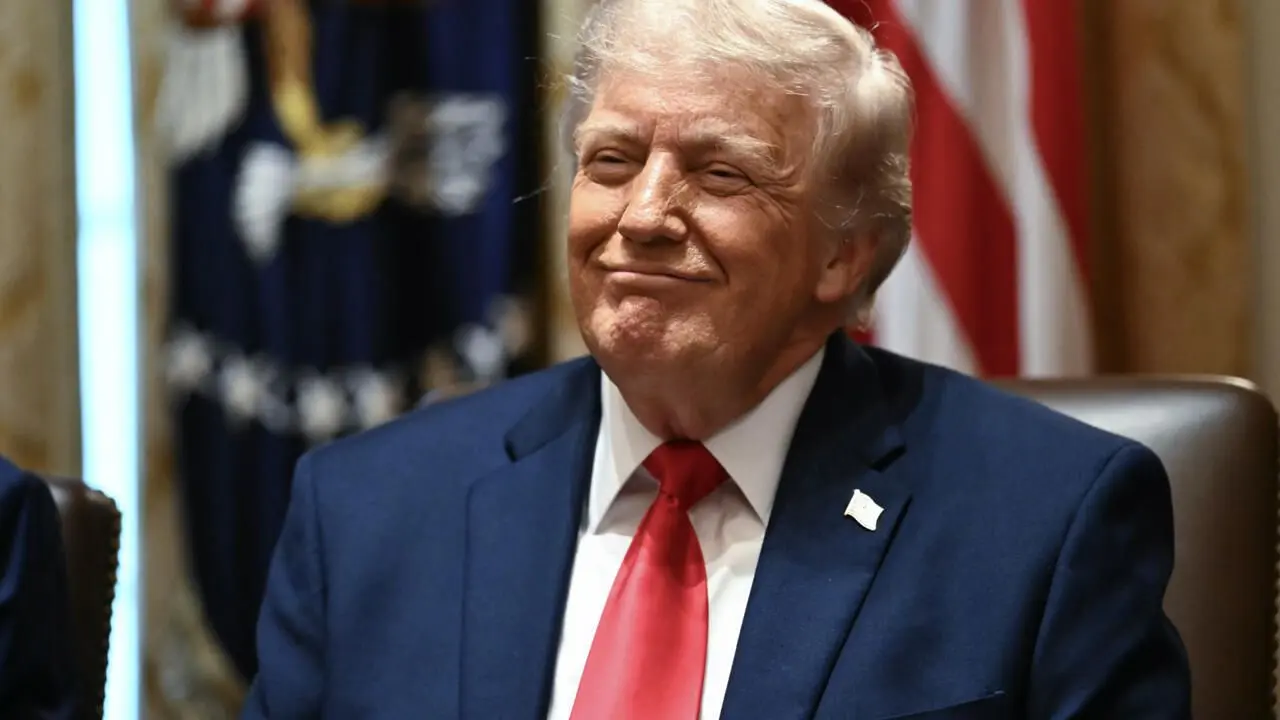
President Donald Trump has positioned himself as an enthusiastic advocate for swift artificial intelligence development in America, dismissing regulation as a constraint on US competitiveness with China
1
. The 79-year-old billionaire's stance puts him at odds with a vocal segment of his own Make America Great Again movement, which is increasingly skeptical of AI's potential to upend society through job displacement and societal disruption2
. This tension came to a head on May 21 when Trump dropped the planned signing of a watered-down executive order on powerful AI models that called for voluntary industry controls, with fingers pointing at his allies in Silicon Valley who oppose government oversight of the technology1
.
Source: France 24
MAGA Grassroots Against AI Gain Momentum
Amy Kremer, president of a group named Humans First and a long-standing Trump supporter since his first White House win in 2016, argues that US conservatives need to wake up to the danger posed by artificial intelligence
1
. "There are more regulations on a ham sandwich that I can buy at a street corner in New York City or Washington, DC, than there is on AI," Kremer said, highlighting what she sees as a dangerous regulatory gap1
. Dozens of activists, most of them conservatives, reached out recently to Donald Trump in a letter initiated by Humans First and published by Axios, warning that "America did not become the greatest nation in the world by allowing unelected elites to experiment on the public without safeguards or accountability"1
.Steve Bannon and Conservative Leaders Demand AI Regulation
Among the signatories pushing for AI regulation was Steve Bannon, one of the ideological gurus of the coalition that rose up around Trump, who has called AI "the most dangerous technology in the history of mankind"
1
. Bannon and other letter signatories urged Trump to issue a decree mandating that new AI models undergo government testing before release to the public1
. Kremer maintains her support for the president, saying his leadership has been "absolutely amazing" and that "I know his heart and soul is with the American people," but she directs her anger toward tech companies and their lobbyists, claiming "they have built a moat around the White House" that keeps Trump insulated from people's worries1
.Related Stories
Data Centers Fuel Rural Backlash and Differing Views on AI
The revolt against rapid AI development spans both of America's main parties, with particular intensity in rural areas where massive data centers are being constructed
1
. UCLA political science professor Megan Mullin notes that these data centers, which can gorge on water and electricity while creating few new jobs, are "activating that feeling of siege and resentment for folks who live in rural communities" who already feel "ignored or neglected by regular politics"1
. This matters because Trump has dominated rural America, triumphing in 90 percent of all rural counties across the last three presidential elections, with his share of the rural vote growing from 59% in 2016 to 65% in 2020 and then 69% in 2024, according to Pew Research data1
. Alex Dray, a 23-year-old activist with the bipartisan Young People's Alliance who signed the Axios letter, predicts AI will soon become a key issue for young voters concerned about mental health, jobs and cost of living impacts. "I think there's going to be a reckoning in the next couple months," he told AFP1
. While Mullin sees "some simmering roots of an AI backlash" emerging, she notes it's not yet strong enough to clearly predict how this anger will affect voting patterns1
.References
Summarized by

Navi
[1]
Related Stories
Trump's AI Embrace Sparks MAGA Backlash: A Rift in Conservative Ranks
10 Sept 2025•Policy and Regulation

AI Becomes Political Wedge Issue as MAGA Base Splits from Trump's Tech Agenda
24 Nov 2025•Policy and Regulation
OpenAI Lobbies Trump Administration for Light AI Regulation and Focus on China Competition
14 Mar 2025•Policy and Regulation

Recent Highlights



Recent Highlights
Today's Top Stories






Don’t drown in AI news. We cut through the noise - filtering, ranking and summarizing the most important AI news, breakthroughs and research daily. Follow topics that matter to you and stay ahead.


