Trump heads into Xi talks still short of the minerals he needs


2 Sources
[1]
Trump's minerals push has yet to loosen China's grip ahead of Xi talks
SHENZHEN, China, Nov 15 (Reuters) - US President Donald Trump meets Chinese President Xi Jinping this week with a key part of his trade strategy unfinished: securing a homegrown supply of critical minerals to counter Beijing's dominance. Many US mining projects remain years from production despite
[2]
Analysis-Trump's Minerals Push Has Yet to Loosen China's Grip Ahead of Xi Talks
By Jarrett Renshaw and Ernest Scheyder SHENZHEN, China, Nov 15 (Reuters) - US President Donald Trump meets Chinese President Xi Jinping this week with a key part of his trade strategy unfinished: securing a homegrown supply of critical minerals to counter Beijing's dominance. Many US mining
Share
Copy Link
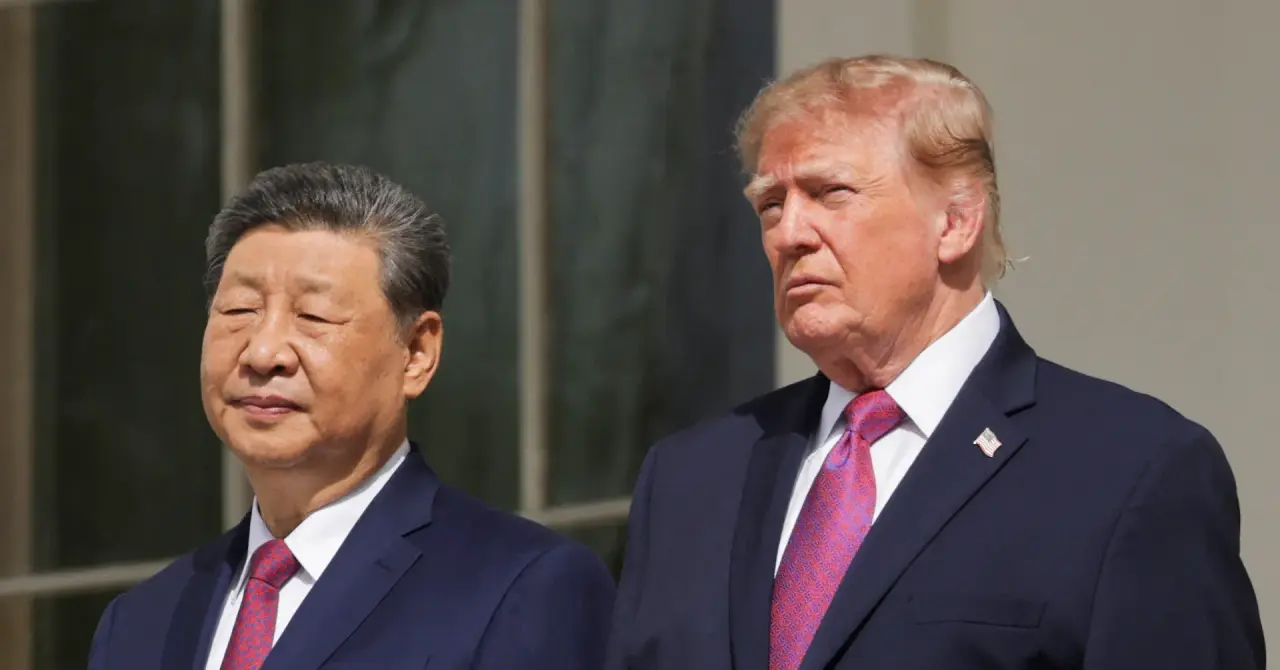
Trump meets Xi this week still dependent on China for critical minerals. His homegrown supply push remains unfinished, with most US projects years from production.
Donald Trump sits down with Xi Jinping this week, expected Thursday, with the US still dependent on China for the critical minerals that feed its semiconductor, robotics and weapons factories, and the homegrown supply he has pushed for still unfinished
2
1
. Per analysts interviewed by Reuters, that dependence limits how hard Trump can push on tariffs and export controls before he risks the supply of materials the US cannot make in quantity1
.
Source: Reuters
The leverage, used once already
Last year Beijing restricted exports of rare earths and magnets, disrupting work at Ford and other US manufacturers, until Washington negotiated continued access
2
1
. China has spent decades building the refineries, plants and know-how that turn raw ore into industrial components, on top of being the world's top rare earths miner2
1
. The gap shows up hardest in magnets, the components that turn electricity into motion in everything from cars to missiles: US capacity for neodymium-iron-boron magnets, the kind used in cars and weapons, was roughly 45 times smaller than China's in 2025, per the International Energy Agency2
1
.Years from production
Trump's own investments have not closed that gap. Many US mining projects are still years away from producing anything, despite federal investment running into billions of dollars
2
1
. A $7.4 billion Tennessee refinery for copper and zinc, with South Korea's Korea Zinc behind it, is not expected to open until 20302
1
. Trilogy Metals, in which the administration took an equity stake last year, plans copper production in Alaska starting in 20312
1
.Even projects already running face hurdles. Vulcan Elements has started making rare earth magnets in North Carolina, but customers have yet to approve them for use
2
1
. MP Materials is expanding magnet output in Texas with multibillion-dollar backing from the Pentagon2
1
. Lithium Americas' Thacker Pass mine in Nevada expects production in 2028, and Perpetua Resources plans antimony output in Idaho by 20292
1
.Facilities like these take a decade or more to come online
2
1
. Part of the reason, per Kapadia, is that the US nearly abandoned the industry at the end of the 20th century2
. Samir Kapadia of the Vogel Group, which advises on supply-chain policy, put the doubt bluntly: "Right now there are more PowerPoint decks than permits, so the question is how many of these projects exist only in PDF form and how many are shovel-ready"2
.Related Stories
The politics at home
There is a domestic test coming too. Democrats won control of Congress in the midterms and take over next year; some of them have questioned the administration's stakes in private companies
2
1
. Energy Secretary Chris Wright, whose department funded several of the projects, said last week he is "happy to explain everything we've done"2
. The White House did not respond when asked for comment2
1
. China, for its part, says it restricted the minerals to keep them out of war, and accuses the US of misusing export controls to block semiconductor sales to China2
1
."Where are we now? Exactly where the Chinese want us: screwed up beyond belief," said Jack Lifton of Technology Metals Research
2
. The meeting could still produce an extension of the trade truce, which expires in January and carries waivers for certain critical minerals2
1
.References
Summarized by

Navi
Related Stories
US-China AI Safety Channel Agreed as Trump and Xi Navigate Security Dilemma
24 Sept 2026•Policy and Regulation

US-China Trade War Threatens AI Development and Global Tech Supply Chains
16 Apr 2025•Business and Economy

Trump and Xi meet Thursday with AI chip curbs hanging over their summit
Today•Policy and Regulation
Recent Highlights


Recent Highlights
Today's Top Stories





Don’t drown in AI news. We cut through the noise - filtering, ranking and summarizing the most important AI news, breakthroughs and research daily. Follow topics that matter to you and stay ahead.


