6 Sources
[1]
Robotaxis Will Hit London's Notoriously Unruly Roads This Year. Are They Ready for Chaos?
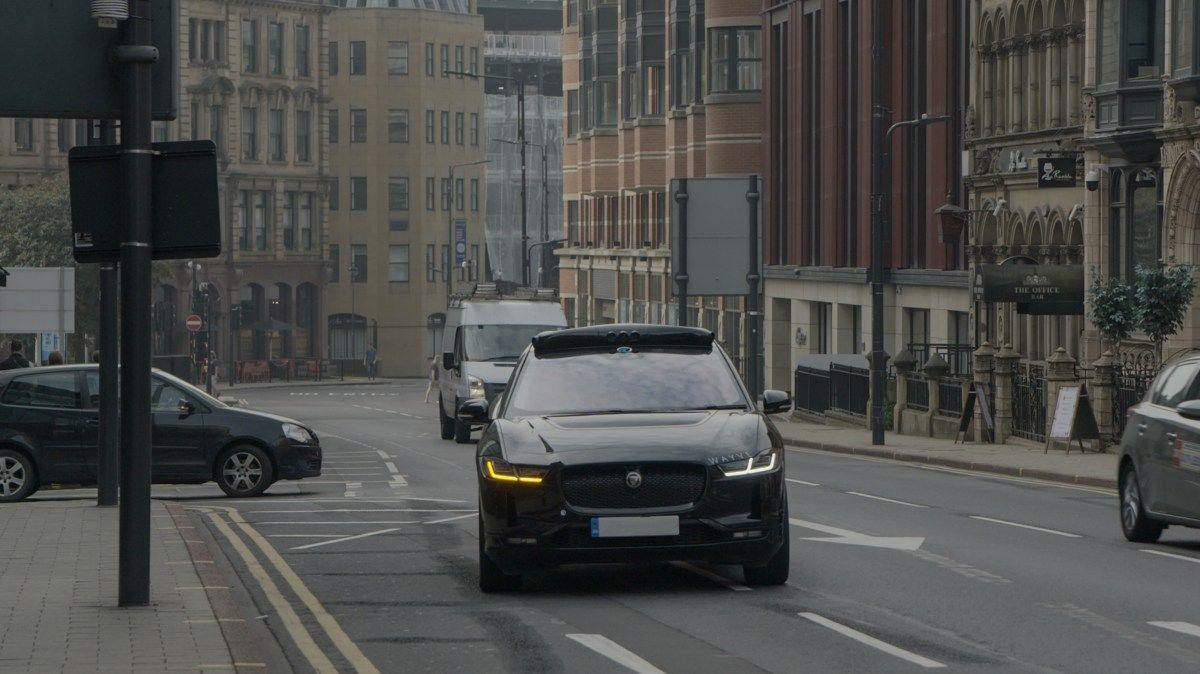
Katie is a UK-based news reporter and features writer. Officially, she is CNET's European correspondent, covering tech policy and Big Tech in the EU and UK. Unofficially, she serves as CNET's Taylor Swift correspondent. You can also find her writing about tech for good, ethics and human rights, the climate crisis, robots, travel and digital culture. She was once described a "living synth" by London's Evening Standard for having a microchip injected into her hand. To be a pedestrian in London is to have the power. Tube strikes? Bus delays? No fear -- you can probably walk there faster anyway. And traffic? Make it stop for you. There are no jaywalking laws here. It's against this backdrop of people stepping out into the road whenever they damn well please that Waymo plans to launch its fully autonomous robotaxis this year. "We're treating London with the appropriate amount of humility and respect," Saswat Panigrahi, Waymo's chief product officer, told the audience at SXSW London. On a couple of occasions throughout the tech festival, I caught a glimpse of one of the company's Jaguar I-Pace vehicles rolling slowly along the street. Waymo employees have started traveling around the city in Waymo vehicles, of which there are 100 -- all still under the watchful eye of a human driver for now. The testing in the British capital comes ahead of Waymo opening up to the public by the end of 2026. And it's not alone. Wayve, one of the UK's most valuable AI startups, has also been trialing its tech on London roads. It plans to launch its autonomous ride-hailing service in London this year in partnership with Uber before expanding to Tokyo and the US. The two companies rely on different technologies: Waymo uses a classic robotics approach based on 3D mapping combined with sensors and lidar, while Wayve uses an AI driver that taps into end-to-end neural networks trained on extensive data. But for Londoners, both options will introduce a brand new experience into the city's well-established transport network. Both companies will also have to contend with many of the same unique-to-London challenges. London roads: "The hardest edge cases" When I finally get to try Waymo in London, it won't exactly be my first time. I have been in one of the cars before on a mission to go for tacos in San Francisco's Mission district. On that occasion, struggling to find somewhere to pull over, the Waymo circled the block several times before it would let me out. London isn't a grid-based city but instead packs complex one-way systems into its labyrinthine medieval streets. If a car misses its chance to stop, it could be much harder to remedy. It's like driving around San Francisco's Chinatown but all the time, Waymo spokesperson Ethan Teicher told me in an interview at the company's SXSW London booth. Operating in the city means "solving for the hardest edge cases," said Wayve's vice president of commercial and operations, Kaity Fischer, speaking at SXSW London. It has 20 times the amount of construction going on in San Francisco, and 10 times the number of vulnerable pedestrians, she added -- and that's not just the jaywalkers. Unlike Waymo, which is already available in cities across the US, London is Wayve's first market for autonomous taxis, so it's learning all its lessons here before it goes elsewhere. But it has been testing its vehicles on British roads since 2019. Waymo, meanwhile, has only been testing in London since the end of last year, but it will use the experience it's gained over more than 20 million rides to inform its expansion to London. These, in turn, will provide learnings to help the company venture elsewhere. London (mostly) welcomes its robotaxi overlords To the point where any autonomous vehicle company can operate in any given city, it needs policymakers and regulators on its side. In the US, most states and even cities have their own operating standards, which explains the phased rollout. The same isn't true in the UK. "The government has been an incredible support for us launching and deploying our technology right now," said Fischer. The UK is the first country to have a nationwide strategy for getting autonomous vehicles on the road, which makes it easier for companies like Wayve, she added. London was a natural first choice for Waymo in Europe, said Teicher. It's a global city with a huge potential customer base of both residents and visitors who come from other countries and might experience Waymo in the British capital for the first time. Plus, he added, "the city has some very clear goals around safety and transit, and we think this technology helps accomplish a lot of those goals." London also wants to help people find last-mile solutions, which Waymo is ideal for, said Teicher. "We already know that Londoners think about transportation in sort of a step-by-step manner," he said, adding that the company was happy to contribute another safe, accessible, clean and comfortable option to London's established transport ecosystem. That ecosystem includes iconic modes of transportation, which includes the Tube underground system, red Routemaster buses and black cabs. The latter may prove less welcoming to Waymo and Wayve than local politicians have been. When Uber first arrived in the city, London's black cab drivers -- who must pass a test known as the Knowledge, in which they prove their encyclopedic understanding of London's streets -- protested extensively. Last year, the Guardian reported that there's been a drop in the number of black cab drivers registered with Transport for London from 22,810 in 2013-14 to 14,470 in 2023-24. I ask Teicher whether Waymo is prepared for the potential backlash from the city's registered cabbies. "They are skilled professionals," he said. "We have tremendous respect for what they do, what they mean to the city, and we don't see ourselves replacing them anytime soon." The company will be part of an ecosystem of hailable vehicles when it launches, he added. "We're not going to be the whole ecosystem." He also welcomes the competition from Uber and Wayve. "It pushes all of us to do what we can to be better, to learn from each other, and ultimately it's a win for Londoners," he said.
[2]
Here's How to Try Out a Robotaxi Ride in London Using the Uber App
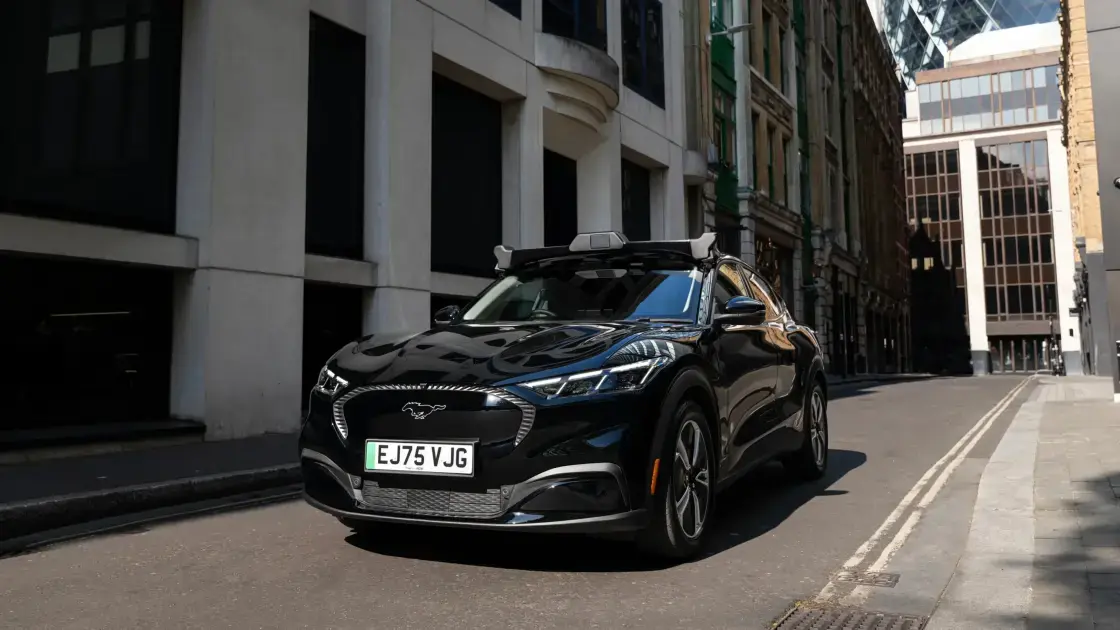
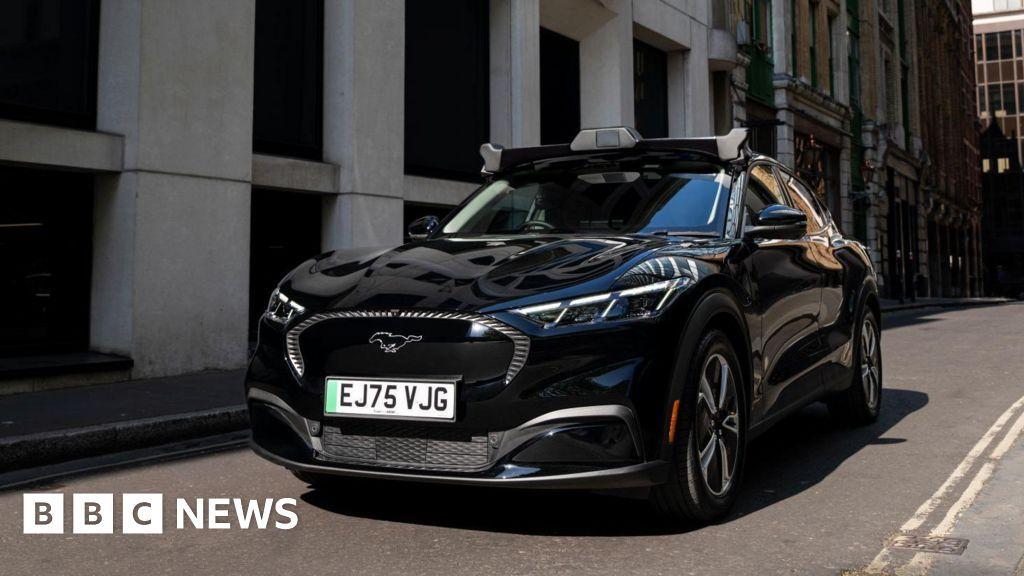
An Uber x Wayve co-branded Ford Mustang Mach-E (Credit: Wayve/Uber) Wayve is gearing up to launch its robotaxi service in London via Uber. The two companies announced their partnership last year and are now inviting interested customers for public rides. Starting Monday, Uber users in the UK can join an "Interest List" to increase their chances of being matched with a Wayve robotaxi while in London. To get started, update the Uber app and head to Account > Settings > Ride Preferences > Autonomous vehicles > Join interest list. Once you're on the list, when you request an UberX, Uber Electric, or Uber Comfort ride, you may be given the option to book a Wayve AV ride at no additional cost. Every time a Wayve robotaxi is available, you'll receive a notification, followed by options to either accept the AV ride or switch to a non-AV vehicle. At launch, customers will get an Uber x Wayve co-branded Ford Mustang Mach-E. Each car is retrofitted with surround cameras and radar sensors "that enable Wayve's AI to see the world with full 360-degree visibility around the car at all times," Uber notes. Though designed to launch as a fully autonomous service, initial public rides in Wayve robotaxis will have a licensed operator behind the wheel. Wayve's driving system for its robotaxis, AV2.0, "learns from experience like a human driver, enabling it to adapt to new roads, vehicles, weather conditions, and cities with unprecedented speed and efficiency," Wayve says. The in-car rider experience, meanwhile, is designed by Uber and will be available in 64 languages. Customers can use the interactive screens to start and control their ride. They can also use the screens to check out their planned path and contact support if needed. Wayve has been testing its driverless tech in London since 2018. The two companies plan to work together in over 10 cities, including Tokyo, where they have partnered with Nissan and hope to conduct tests later this year. As far as the UK is concerned, the government last year fast-tracked its self-driving goals, allowing companies to pilot their autonomous taxis by spring 2026. Wayve expects to launch in London in "the coming months," while Google-owned Waymo -- which has also been conducting tests in the British capital -- hopes to launch before the end of this year.
[3]
Uber opens London waitlist for Wayve robotaxis
Londoners can now sign up for self-driving rides from British startup Wayve, with Uber owning the fleet, as Waymo lines up a rival launch and the city's black-cab drivers brace for impact. London's robotaxi era is starting with a sign-up form. Uber has opened a waitlist for Londoners who want to ride in a self-driving car, the clearest sign yet that driverless taxis are about to reach the capital's streets. The rides will be powered by Wayve, the London-based self-driving startup, under a partnership in which Uber owns and operates the fleet while Wayve supplies the "AI Driver" that does the actual driving. The waitlist, reported by Bloomberg, opens ahead of a commercial trial the two companies have said will begin in London in 2026. The timing is not an accident. Britain has accelerated its rules for commercial self-driving pilots, with the Department for Transport bringing forward a permitting regime that allows driverless taxi and bus services to run without a safety driver onboard. Uber and Wayve plan to deploy SAE Level 4 vehicles, the level at which a car can handle everything within a defined area without human intervention. Wayve is one of Europe's most valuable AI startups, having raised $1.2bn last year in a round it has since extended, with backers including Uber, SoftBank, Nvidia, and most recently AMD, Arm, and Qualcomm. Its pitch is a more general, learning-based approach to autonomy than the heavily mapped systems used by some rivals, an idea its Cambridge-trained founders were once told would never work. It will not have London to itself. Waymo, Alphabet's robotaxi unit, plans to launch a passenger service in the city by the third quarter of 2026, and has signalled its cars may carry no driver from the start. Uber, for its part, is hedging across partners and cities, having already lined up robotaxi efforts with Wayve and Nissan in Tokyo and WeRide in Madrid. Not everyone is enthusiastic. London's black-cab drivers, whose "Knowledge" of the city's streets has been a barrier to entry for more than a century, are sceptical of cars that learned to drive from data. Their worry is the one facing taxi drivers wherever robotaxis arrive: that an algorithm willing to work around the clock changes the economics of the job overnight. For Uber, the waitlist is also a demand signal, and a marketing one. The company said autonomous trips grew tenfold year on year in its most recent quarter, and London is among its most valuable markets. Whether riders embrace a steering wheel that turns itself, on streets famous for confounding newcomers, is the test that starts now.
[4]
Lyft, Baidu to start testing robotaxis in London
Chinese tech giant Baidu is set to test its self-driving cars in London soon. Partnering with Lyft, the company aims for commercial operations this year. This move follows a similar announcement from British startup Wayve. While fully driverless rides may take longer, London is poised for a significant shift in its taxi services. Chinese tech giant Baidu will start testing its autonomous vehicles in London "in the coming weeks", US ride-hailing platform Lyft, its partner on launching the capital's robotaxi service, told AFP Wednesday. It comes after Wayve, a British startup specialised in artificial intelligence for self-driving vehicles, said Monday it was ready to launch its robotaxi service with Uber in London as early as this summer. Lyft executive Jeremy Bird told AFP that his company's "autonomous vehicles will be on the (London) streets soon, in the coming weeks" after already arriving. "They need to get inspected and pass (tests)... and then they'll be out on the streets," Bird said, adding that the company hopes to launch commercial operations this year. Self-driving taxis are already in operation in the United States and in China, but a commercial deployment in London would be a first for Europe. Customers will have to wait a little longer for fully driverless taxi rides in the British capital, however, as Wayve plans to launch its vehicles with an operator behind the wheel. The American giant Waymo, a subsidiary of Google parent Alphabet, hopes also to launch its driverless vehicles in London by the end of 2026 after mapping the capital for several months. The world leader in driverless cars currently operates in eleven US cities, while Baidu's autonomous vehicle subsidiary -- Apollo Go -- operates in 27 Chinese cities and in Dubai. The exact timeline for London's rollout depends on the implementation of the UK framework for automated vehicles and on approvals by authorities. Bird said Lyft will manage the fleet, and marketing on its app, for the London vehicles, while Baidu is producing the vehicles and their technology. He said the taxi fares will "probably start as pretty similar" to rides carried out by human drivers. Apollo Go provided 3.4 million driverless rides in the final quarter of last year, up 200 percent compared with the last three months of 2024, the company has reported.
[5]
London's first robotaxis expected in months, Uber says
LONDON, June 8 (Reuters) - Uber said its users could sign up from Monday for a chance to ride in London's first robotaxis as soon as regulators give the go-ahead for launch, which it expects in the coming months. The cars will use AI technology from British startup Wayve to drive themselves round the capital's streets, but will initially have trained operators sitting behind the wheel monitoring the system, the ride-hailing company said. Robotaxis already operate in cities in the United States, including San Francisco, Phoenix and Los Angeles, and in China. But Europe has been slower to roll them out, in part due to local legislation and more complex historical street layouts. Uber has described their introduction as a strategic priority as it races with rivals to adopt the technology, which promises more efficient journeys and cost savings. "This is the first time the general public will be able to hail an autonomous vehicle in the UK," Wayve's VP of commercial and operations Kaity Fischer said in an interview. TESTED ON BUSY LONDON STREETS The Ford Mustang Mach-E vehicles, branded Uber x Wayve, have surround cameras and radar that provide data that is processed in the vehicle. The technology has been tested on London roads since 2018, Fischer said. The vehicle coped with heavy London traffic - buses pulling in and out, cyclists swerving through cars and pedestrians stepping onto crossings - in a test ride taken by Reuters on Friday. Customers matched with a Wayve autonomous ride will be able to choose to accept or switch to a conventional service, said Annie Duvnjak, Uber's Global Head of Autonomous Mobility Operations. The AV rides will not cost more, she added. The British government said in 2025 it would fast-track pilots of taxi services without a safety driver this year before a potential wider roll-out next year. Commercial services have to be approved by local authorities, such as Transport for London, before launch. Transport minister Heidi Alexander said on Monday that self-driving technology had the potential to transform how people travel - reducing road danger while driving growth and creating high-skilled jobs across the UK. "Wayve is a British success story and this partnership with Uber is a welcome vote of confidence in their technology," she said. Waymo, a subsidiary of Google-owner Alphabet, is also testing autonomous vehicles on London's streets. It has said it plans to launch commercial services there this year. Uber and its rival Lyft will also test Chinese company Baidu's self-driving Apollo Go cars in London this year, the companies have said. Wayve, which partnered with Uber in 2024, said its technology could be adapted to multiple vehicle platforms, enabling it to scale quickly. In February, it raised $1.5 billion, including new money from Uber, Mercedes-Benz, Stellantis and Nissan, at a valuation of $8.6 billion. (Reporting by Paul Sandle; Editing by Kate Holton and Andrew Heavens)
[6]
Uber users can sign up for London's first robotaxis ahead of launch 'in months'
LONDON, June 8 (Reuters) - Uber said its users could sign up from Monday for a chance to ride in London's first robotaxis, as soon as regulators give the go-ahead for launch, which it expects in the coming months. The cars will use AI technology from British startup Wayve to drive themselves round the capital's streets, but will initially have trained operators sitting behind the wheel monitoring the system, the ride-hailing company said. Robotaxis already operate in cities in the United States, including San Francisco, Phoenix and Los Angeles, and in China. But Europe has been slower to roll them out, in part due to local legislation and more complex historical street layouts. Uber has described their introduction as a strategic priority as it races with rivals to adopt the technology, which promises more efficient journeys and cost savings. "This is the first time the general public will be able to hail an autonomous vehicle in the UK," Wayve's VP of commercial and operations Kaity Fischer said in an interview. TESTED ON BUSY LONDON STREETS The Ford Mustang Mach-E vehicles, branded Uber x Wayve, have surround cameras and radar that provide data that is processed in the vehicle. The technology has been tested on London roads since 2018, Fischer said. The vehicle coped with heavy London traffic - buses pulling in and out, cyclists swerving through cars and pedestrians stepping onto crossings - in a test ride taken by Reuters on Friday. Customers matched with a Wayve autonomous ride will be able to choose to accept or switch to a conventional service, said Annie Duvnjak, Uber's Global Head of Autonomous Mobility Operations. The AV rides will not cost more, she added. The British government said in 2025 it would fast-track pilots of taxi services without a safety driver this year before a potential wider roll-out next year. Commercial services have to be approved by local authorities, such as Transport for London, before launch. Transport minister Heidi Alexander said on Monday that self-driving technology had the potential to transform how people travel - reducing road danger while driving growth and creating high-skilled jobs across the UK. "Wayve is a British success story and this partnership with Uber is a welcome vote of confidence in their technology," she said. Waymo, a subsidiary of Google-owner Alphabet, is also testing autonomous vehicles on London's streets. It has said it plans to launch commercial services there this year. Uber and its rival Lyft will also test Chinese company Baidu's self-driving Apollo Go cars in London this year, the companies have said. Wayve, which partnered with Uber in 2024, said its technology could be adapted to multiple vehicle platforms, enabling it to scale quickly. In February, it raised $1.5 billion, including new money from Uber, Mercedes-Benz, Stellantis and Nissan, at a valuation of $8.6 billion. (Reporting by Paul Sandle; Editing by Kate Holton and Andrew Heavens)
Share
Copy Link
London's self-driving car era begins as Uber opens a waitlist for Wayve robotaxis, with commercial rides expected within months. British startup Wayve partners with Uber to deploy AI-powered autonomous vehicles, while Google's Waymo plans a rival launch by late 2026. The city's complex medieval streets and jaywalking pedestrians will test whether these competing technologies can handle Europe's most challenging urban environment.
London is entering the self-driving car era as Uber launches a waitlist for passengers eager to experience robotaxis in London powered by British AI startup Wayve
2
. Starting this week, Uber users across the UK can join an interest list through the app by navigating to Account > Settings > Ride Preferences > Autonomous vehicles, positioning themselves for rides expected to launch in the coming months5
. When requesting UberX, Uber Electric, or Uber Comfort rides, waitlisted customers may receive notifications offering them a Wayve autonomous vehicle at no additional cost2
.Source: Market Screener
The Uber robotaxi service will deploy Uber x Wayve co-branded Ford Mustang Mach-E vehicles retrofitted with surround cameras and radar sensors that provide the AI Driver with 360-degree visibility
2
. Wayve's AV2.0 driving system relies on end-to-end neural networks that learn from experience like human drivers, enabling rapid adaptation to new roads, weather conditions, and cities2
. This approach differs fundamentally from traditional robotics methods. Though designed as fully autonomous vehicles, initial commercial self-driving pilots will include safety operators behind the wheel monitoring the system5
.Source: Market Screener
Wayve has tested its technology on London roads since 2018, giving it extensive experience with the capital's notoriously challenging environment
5
. During a Reuters test ride, the vehicle successfully navigated heavy traffic, buses pulling in and out, cyclists swerving through cars, and pedestrians stepping onto crossings5
. Kaity Fischer, Wayve's vice president of commercial and operations, described London as "solving for the hardest edge cases," noting the city has 20 times the construction activity of San Francisco and 10 times the number of vulnerable pedestrians1
.Google-owned Waymo plans to launch its competing service in London by the end of 2026, having deployed 100 Jaguar I-Pace vehicles for testing since late last year
1
. Unlike Wayve's learning-based AI approach, Waymo uses classic robotics combining 3D mapping with sensors and lidar1
. The company brings experience from over 20 million rides across eleven US cities, though Waymo spokesperson Ethan Teicher acknowledged that navigating London's labyrinthine medieval streets is "like driving around San Francisco's Chinatown but all the time"1
.
Source: CNET
Related Stories
Beyond Wayve and Waymo, Chinese tech giant Baidu plans to test its Apollo Go autonomous vehicles in London within weeks through a partnership with Lyft
4
. Apollo Go provided 3.4 million driverless rides in the final quarter of last year, representing 200 percent growth compared to the same period in 20244
. Uber is also hedging its strategy across multiple partners, with robotaxi efforts involving Wayve and Nissan in Tokyo and WeRide in Madrid3
.The UK government has provided crucial regulatory support, becoming the first country with a nationwide strategy for autonomous vehicles
1
. Britain fast-tracked its self-driving goals in 2025, allowing companies to pilot autonomous taxis by spring 20262
. Transport minister Heidi Alexander stated that self-driving technology could transform travel while reducing road danger and creating high-skilled jobs, calling Wayve "a British success story"5
. Commercial services require approval from local authorities like Transport for London before launch5
.Wayve raised $1.5 billion in February at a valuation of $8.6 billion, with backers including Uber, SoftBank, Nvidia, AMD, Arm, and Qualcomm
5
. The startup's technology can adapt to multiple vehicle platforms, enabling rapid scaling across markets5
. However, London's black-cab drivers remain skeptical, concerned that algorithms working around the clock will fundamentally alter the economics of taxi services that have relied on human knowledge of the city's streets for over a century3
.Summarized by
Navi
[3]
[5]
1
Technology

2
Business and Economy

3
Health