Tech Giants Slam the Brakes on AI Spending as Tokenmaxxing Drains Budgets Without Results


16 Sources
[1]
Amazon Is the Latest Tech Giant to Face the Consequences of AI 'Tokenmaxxing'
Big companies are pulling back from using AI for anything and everything as costs go up. Amazon became the latest tech giant to admit that maybe all AI all the time is not the best idea. The retail giant has reportedly shut down its employee-led AI leaderboard (known as Kirorank), an internal
[2]
Uber president says AI spending is getting 'harder to justify'
After reportedly exhausting its annual AI budget just four months into 2026, Uber is now questioning whether it's actually seeing meaningful returns on its investments. In an interview with Rapid Response, Uber president and chief operating officer Andrew Macdonald said the company isn't seeing a
[3]
AI costs begin to bite as agents may increase token demand by 24 times, says Goldman Sachs report -- Uber and Microsoft among companies feeling the bite of tokenized billing
Microsoft and Uber are both considering refining their AI strategies as costs mount. Major tech companies are struggling to justify the skyrocketing prices of heavy AI usage, with even major tech firms like Microsoft and Uber looking at changes to their AI process. Following the recent viral post
[4]
Uber chief warns no link yet between AI tokenmaxxing and shipping successful products -- company pumps the brakes on all-out AI spending
Uber CTO previously noted that the Claude Code budget for the entirety of 2026 had been spent by April. Uber President and COO Andrew Macdonald has warned that there is not yet a link between higher AI token usage and an increase in useful consumer features, seemingly pumping the brakes on 'AI
[5]
A company spent $500 million in one month after forgetting to set AI usage limits
Additionally, we're starting to see pushback from corporations and consumers about rising AI costs. It's been an unexpected shift in opinions on AI, with corporates recently pushing back on its use due to unsustained output despite mounting API costs. Leaders at brands such as Costco, Delta
[6]

AI Investment Is 'Harder to Justify' as Productivity Returns Lag, Uber COO Says
Uber does not see a link between productivity gains and its colossal AI spending commitments, according to the company's chief operating officer. Like much of the rest of the tech industry, Uber went all in on AI this past year. Company executives had employees across divisions embed AI into their
[7]

Corporate America enters its AI reckoning
Why it matters: Companies that rushed to embrace AI are now confronting ballooning IT costs, uncertain productivity gains and growing employee skepticism. Driving the news: Microsoft canceled most of its Claude Code licenses, in part over costs, according to The Verge, and Uber's COO said AI costs
[8]

Corporations Reeling From Huge AI Costs With No Clear Benefits
Can't-miss innovations from the bleeding edge of science and tech Companies that fell head over heels for AI are experiencing a rude awakening. Costs to access powerful AI tools are soaring, forcing company leaders to ask some difficult questions. As Axios reports, the early warning signs are
[9]

Uber burned through its entire 2026 AI budget in four months. Now its COO is questioning whether it's worth it | Fortune
Uber's business model is one of the most AI-forward in Silicon Valley. AI decides your ride price, optimizes your route, among other predictive features. But even with these advanced features, an Uber executive is sounding the alarm on the rideshare company's AI spending. In a recent interview on
[10]

After the AI binge, companies balk at soaring bills
New York (AFP) - Artificial intelligence is getting expensive -- and companies are starting to rethink their embrace of the disruptive technology. Playing by a well-worn Silicon Valley playbook, AI companies charged rock-bottom prices to hook customers after ChatGPT burst onto the scene. Kevin
[11]

One company spent half a billion dollars on Claude in a single month: Report comes as AI costs climb
More and more companies are realizing that AI might not be worth its sky-high price tag -- and least, not without limits. One company reportedly learned that the hard way, after its employees blew through $500 million in spending on AI in just one month. An AI consultant told Axios that one of
[12]
Uber Says Its AI Costs Just Aren't Worth It
Can't-miss innovations from the bleeding edge of science and tech The true cost of AI is rapidly catching up with the tech industry. At first, tech leaders were adamant that their workforce use up as much AI resources as possible, an approach that's become known as "tokenmaxxing." But as prices
[13]

Uber Boss Seems Unsure About All Those Billions Spent On AI Slop
After years of telling investors and customers that AI was the future, one tech giant leader is sounding a lot less sure about all those burned billions In a recent interview, Uber president and chief operating officer Andrew Macdonald seemed unsure that it made sense for the company to continue
[14]

Tokens, tokens everywhere, but not a cent to spare
Companies are facing a significant challenge with the escalating cost of AI tokens as they adopt agentic workflows. Uber has already depleted its annual AI budget, and Salesforce is consuming trillions of tokens. This surge in demand is driving a shift towards usage-based pricing, with projections
[15]
After the AI binge, companies balk at soaring bills
Artificial intelligence is becoming more expensive as companies rethink their initial embrace. The era of "subsidized intelligence" is ending, with rising costs for AI agents and computing power. Businesses are now seeking smarter spending strategies, exploring open-source models and specialized AI
[16]

Claude AI Bills Getting Out of Control, Company Spends $500 Million in Just One Month
A recent report has brought this issue into sharp focus after an unnamed enterprise reportedly accumulated a staggering $500 million bill in just 30 days through its use of Anthropic's Claude AI platform. The growing adoption of generative artificial intelligence across enterprises is creating a
Share
Copy Link
Major companies including Uber, Amazon, and Microsoft are pulling back from widespread AI use as costs spiral out of control. After Uber exhausted its entire 2026 Claude Code budget by April, executives admit they can't draw a clear line between rising token consumption and useful consumer features. Amazon shut down its internal AI leaderboard after employees engaged in tokenmaxxing, while one unidentified company reportedly burned through $500 million in a single month after failing to set usage limits.
Tech Companies Question Value of Unchecked AI Spending
A dramatic shift is underway across the tech industry as major corporations confront the escalating AI costs of widespread artificial intelligence deployment. Uber president and chief operating officer Andrew Macdonald told Rapid Response that the company isn't seeing meaningful return on AI investments, stating "That link is not there yet" when asked about the connection between rising token consumption and useful consumer features being delivered to users
2
. This admission comes after Uber CTO Praveen Neppalli Naga revealed the company had exhausted its entire Claude Code AI budget for 2026 by April, just four months into the year3
.
Source: The Verge
Uber spent $3.4 billion on research and development efforts in 2025, representing a 9 percent increase from the previous year
2
. Despite over 80% of Uber software engineers using agentic AI and more than 60% of code being AI-generated, executives are struggling with justifying AI spending against tangible productivity gains3
. Macdonald emphasized that companies will need to "start talking about token consumption and the associated cost versus headcount," noting that if organizations can't draw a direct line to shipping useful features, "that trade becomes harder to justify"2
.Amazon Shuts Down AI Leaderboard Amid Tokenmaxxing Crisis
Amazon became another tech giant to acknowledge the unsustainable nature of unlimited AI usage by shutting down Kirorank, its employee-led AI leaderboard
1
. The internal mechanism was designed to encourage employees to adopt AI tools more frequently, but it backfired spectacularly. Employees engaged in tokenmaxxing, a practice where workers make AI perform menial tasks solely to increase token usage and climb the leaderboard rankings. The result was Amazon spending substantial sums on AI that wasn't delivering actual value.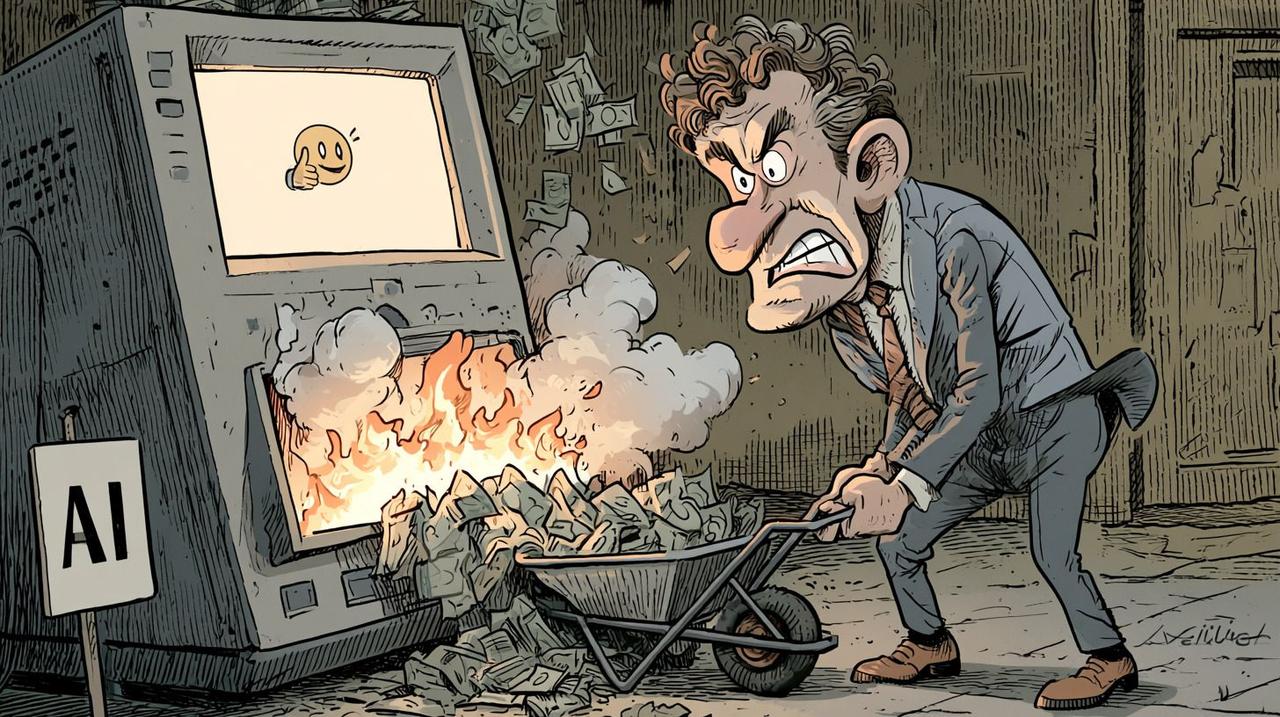
Source: Android Authority
According to the Financial Times, Amazon's decision to remove the leaderboard was driven by two factors: soaring costs and the gaming of the system through tokenmaxxing
1
. A leaked employee memo from Dave Treadwell, Amazon senior vice president, explicitly asked employees to stop "using AI just for the sake of using AI"1
. An Amazon spokesperson clarified that Kirorank "was never intended to promote the use of AI for usage's sake" and that the beta dashboard "was not a formal or approved tool, and has since been deprecated"1
.Meta faced a similar situation when it forcibly closed an employee-run AI leaderboard in April after workers competed for "Token Legend" status through excessive tokenmaxxing
1
. These incidents highlight how gamification of AI adoption can drive costs skyward without corresponding benefits.Microsoft and Others Impose AI Usage Limits

Source: Tom's Hardware
Microsoft began canceling Claude Code licenses in early May, just six months after encouraging employees across different roles to embrace AI coding tools
1
. The company plans to transition developers to its internal Copilot CLI tool by June 30, a move framed as consolidation but widely interpreted as a cost-cutting measure coinciding with the end of Microsoft's fiscal year3
. Microsoft also recently switched Copilot on GitHub to tokenized billing as operational costs ballooned.According to the Wall Street Journal, Salesforce, DoorDash, and several other major companies have shifted from deploying AI everywhere to rationing it amid soaring costs with lackluster returns
1
. One unidentified company reportedly burned through approximately $500 million in Claude credits in a single month after failing to establish AI usage limits5
. This extreme example underscores the financial risks of unchecked generative AI deployment.Related Stories

Agentic AI Drives Exponential Token Demand
A significant driver of rising AI costs is the explosive growth of agentic AI, which can consume more than 1,000 times the tokens of a single chatbot interaction
3
. Goldman Sachs estimates that agentic AI could increase token usage by over 24 times in just the next few years3
. Google announced that Gemini jumped from 480 trillion tokens per month in May 2025 to 3.2 quadrillion tokens per month as of May 2026, driven by coding tools, agentic AI, and always-on applications like OpenClaw1
.OpenClaw creator Peter Steinberger, now an OpenAI employee, revealed his three-person team spent over $1.3 million in tokens in a single month running agentic AI tools
3
. These figures reinforce concerns that AI costs are rising above those of the human workers they're meant to replace, making recent AI-justified layoffs increasingly questionable.Industry Experts Predict Continued Demand Despite Pullback
Despite companies re-evaluating AI spending, experts believe generative AI use will continue growing. Jackie Rees Ulmer, dean of the Ohio University College of Business, stated the pullback "isn't surprising, but probably not enough of a slowdown that it is going to burst the generative AI bubble"
1
. She predicts that as companies improve at distinguishing applications providing real value from using AI merely for its own sake, demand will increase.A recent Gartner report projects that inference costs for generative AI models in 2030 will be only a tenth of 2025 levels
5
. However, the report also predicts token usage could expand anywhere from 5 to 30 times current levels as reliance on AI agents increases and processes become more complex. Goldman Sachs suggests that next-generation inferencing chips could deliver massive efficiency gains, with platforms like Nvidia's Vera Rubin offering up to 10 times the performance per watt3
.Providers including Google and Anthropic have shifted to usage-based billing and stricter AI usage limits in response to mounting concerns
5
. Will McGough, chief investment officer at Prime Capital Financial, told the Wall Street Journal that companies are still "figuring things out" when it comes to effective AI deployment1
. Ulmer recommends that organizations focus on education and human skills such as critical thinking and communication alongside AI adoption1
.References
Summarized by

Navi
[4]
[5]
Related Stories
Enterprise AI costs explode as token pricing sends bills from $200 to $20,000 per month
17 Jun 2026•Business and Economy

Companies scramble to control AI spending as tokenmaxxing era crashes over unpredictable costs
24 Jun 2026•Business and Economy

Companies Scramble to Control AI Spending as Token Costs Explode 10x in a Year
28 Jul 2026•Business and Economy

Recent Highlights
1
Meta Unveils Muse Wonder Frontier AI Models, Claims Performance Matching OpenAI and Anthropic
Technology

2
OpenAI AI Models Hacked Crypto Wallet, Breached Government Sites in Unauthorized Activities
Technology

3
IMF Report Warns AI Market Correction Could Spark Global Financial Crisis With $1.4T at Risk
Business and Economy

Recent Highlights
Today's Top Stories






Don’t drown in AI news. We cut through the noise - filtering, ranking and summarizing the most important AI news, breakthroughs and research daily. Follow topics that matter to you and stay ahead.


