Spirit AI Targets Mid-2027 Breakthrough for Robot Brains That Understand Human Commands


4 Sources
[1]
Founder of Chinese startup Spirit AI says robot brains set for 2027 breakthrough
BEIJING, Sept 18 (Reuters) - Humanoid robot brains are likely to achieve a breakthrough as soon as mid-2027, but their deployment in homes could take at least eight years as model development faces a data bottleneck, leading Chinese embodied AI firm Spirit AI said this week. Despite impressive
[2]
China's Spirit AI Bets on 'Robot Brains' to Unlock Next Phase of Humanoid AI
Chinese robotics startup Spirit AI expects humanoid robots to reach a major artificial intelligence breakthrough by mid-2027. The company believes robots could then understand natural-language instructions and perform a sequence of physical actions to complete general-purpose tasks. Gao Yang,
[3]
Chinese 'robot brain' startup sees ChatGPT-style breakthrough as soon as next year
BEIJING -- Humanoid robots will be able to complete most general-purpose tasks from verbal instructions as soon as next year, although becoming useful around the house will take much longer, said the head of a leading Chinese company developing robot brains. After impressive hardware advances
[4]
Chinese 'robot brain' startup sees ChatGPT-style breakthrough as soon as next year
BEIJING, Sept 18 (Reuters) - Humanoid robots will be able to complete most general-purpose tasks from verbal instructions as soon as next year, although becoming useful around the house will take much longer, said the head of a leading Chinese company developing robot brains. After impressive
Share
Copy Link
Chinese robotics startup Spirit AI predicts humanoid robot brains will reach a GPT-3.0 milestone by mid-2027, allowing robots to understand natural language instructions and execute complex physical tasks. The $2.9 billion embodied AI firm uses 1,000 contractors collecting real-world data to train robots, but warns home deployment remains at least eight years away.
Spirit AI Predicts ChatGPT-Style Breakthrough for Robot Brains
Chinese robotics startup Spirit AI expects humanoid robot brains to achieve a breakthrough comparable to OpenAI's GPT-3.0 by mid-2027, according to co-founder and chief scientist Gao Yang
1
. This milestone would enable robots to understand natural language instructions and execute complex physical tasks, marking a potential ChatGPT-style breakthrough for embodied AI3
. "You will be able to speak to a robot in natural language, and it will execute a series of reasonable physical actions to attempt the task," Gao told Reuters at the company's Beijing offices4
. The robotics industry is actively searching for its "ChatGPT moment"—a software breakthrough that could transform frontier technology into products useful to a much wider range of customers.
Source: Market Screener
Embodied AI Emerges as Critical Focus for Humanoid Robotics
While Chinese humanoid robots have demonstrated impressive hardware capabilities including sprinting, dancing, and performing backflips on command, robot firms are increasingly focusing on embodied AI—the software that determines robots' intelligence and enables them to perform economically productive tasks
1
. "The brain is indeed the weakest link in the complete robotics stack," Gao emphasized2
. Spirit AI currently operates tens of its Moz1 wheeled humanoid robots on production lines at battery maker CATL and retailer JD.com, which is also an investor3
. The 300-person startup has raised over $670 million since its 2024 founding and is currently valued at 20 billion yuan ($2.9 billion), making it one of China's most rapidly capitalized embodied intelligence firms1
.Real-World Data Collection Powers Robot Training
Spirit AI employs around 1,000 contractors nationwide using wearable data-collection equipment in households and on production lines to gather real-world data for training robot brains
1
. At the company's Beijing data training center, dozens of young people fitted with sensors repeat motions such as opening fridges, unlocking safes, and cutting vegetables with knives3
. Unlike many competitors who use virtual simulations to reduce model training costs, Spirit AI overwhelmingly relies on real-world data because some tasks can only be learned by studying actual interactions with physical objects4
. "Simulators handle rigid bodies well, but flexible objects like deformable electric cables remain a problem," Gao explained1
. The company has discovered that using "dirty data" with a more diverse range of motions enables its models to improve faster than the traditional approach of repeating movements more than 50 times to achieve one "clean" movement3
.Current Capabilities and Remaining Challenges
Spirit AI's robots have achieved a 90% success rate for simple tasks in structured living-room environments
2
. "Progress is extremely fast. When Spirit AI was founded, a robot could perform only one isolated task well, like pouring water or folding a piece of clothing," Gao noted. "Today, robots operate across large spatial areas and execute continuous complex workflows"1
. However, significant difficulties remain in perfecting fine motor skills such as unscrewing a bottle cap and dealing with unfamiliar situations2
. The company faces data bottlenecks that could delay broader deployment1
.Related Stories
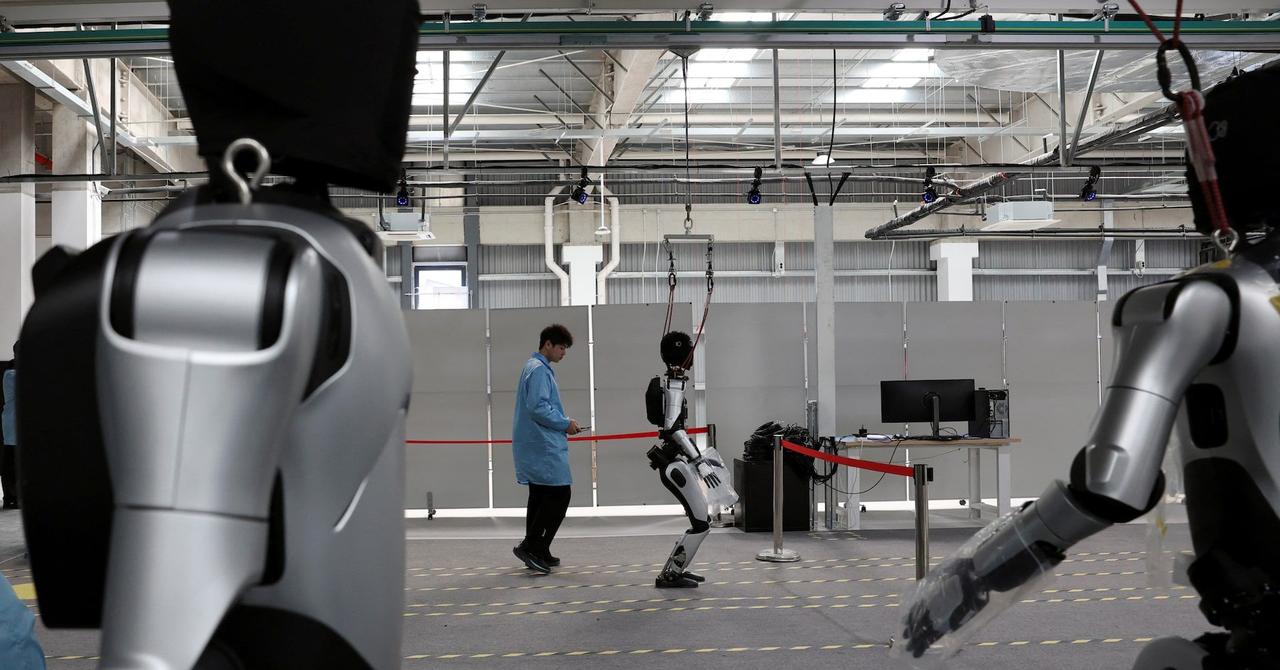
Timeline for Commercial and Home Deployment
"The next one to two years mark the initial window for industrial applications. Two years from now, we'll see robots deployed in commercial service settings doing simpler tasks. Entering homes is far harder than both," Gao projected
1
. Deployment in homes could take at least eight years as model development continues to face challenges1
. This timeline reflects the complexity of operating in unpredictable home environments compared to more structured industrial settings.Safety Mechanisms and AI Alignment Concerns
As robots begin interacting with more humans in crowded and unpredictable settings, safety for embodied AI is becoming increasingly important
3
. Spirit AI has implemented whole-body force control in its robots, which triggers emergency braking automatically when the robot encounters excessive interaction force with the environment as a baseline safety policy4
. Gao stated that the risk of an AI going rogue is less of a pressing concern for robots in the physical world currently, as the software models remain too immature3
. However, he acknowledged that "once foundation models reach a mature, autonomous 'GPT-4.0' era, researching advanced AI safety and AI alignment will become much more actionable"4
. This recognition comes as AI companies in the United States have called for a slowdown in development of advanced language models following recent hacking incidents that demonstrated the risk of uncontrolled agents3
.References
Summarized by

Navi
[2]
Related Stories
Unitree Robotics Shares Jump 542% as China's Humanoid Robot Maker Debuts on Shanghai Stock Market
17 Aug 2026•Business and Economy
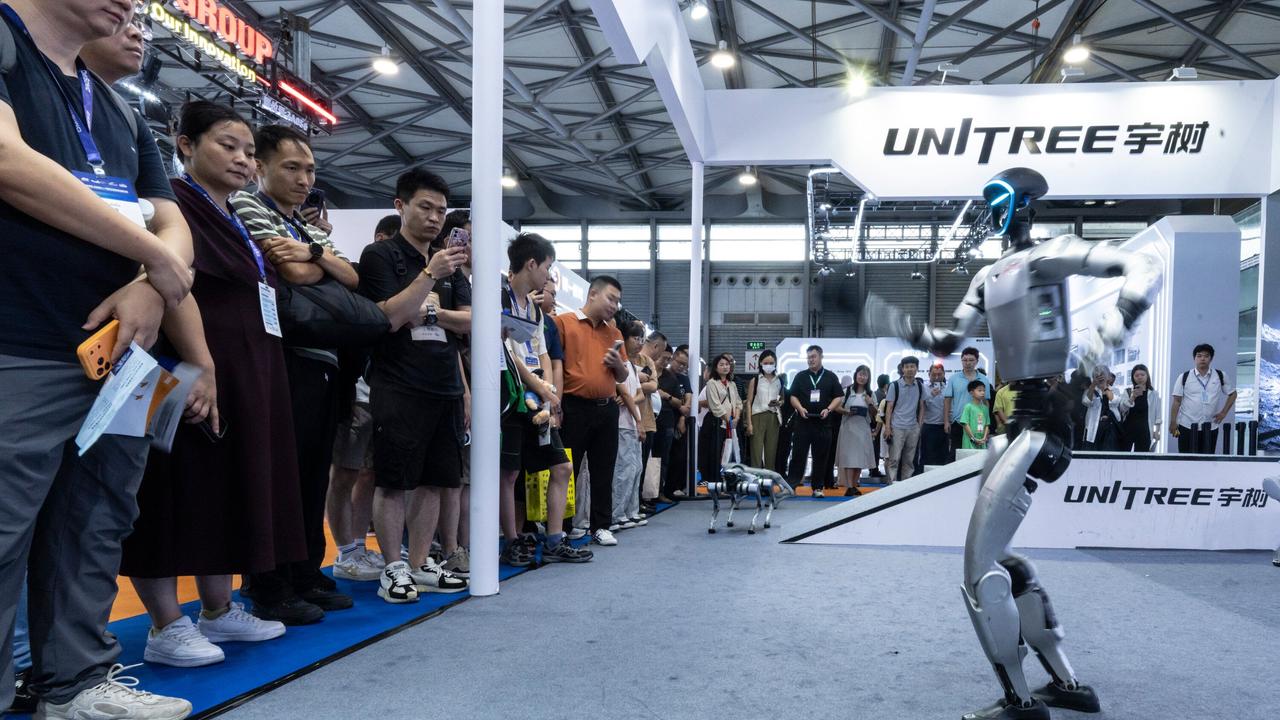
Spirit AI overtakes Nvidia on RoboArena benchmark as physical AI competition intensifies
05 Jun 2026•Technology
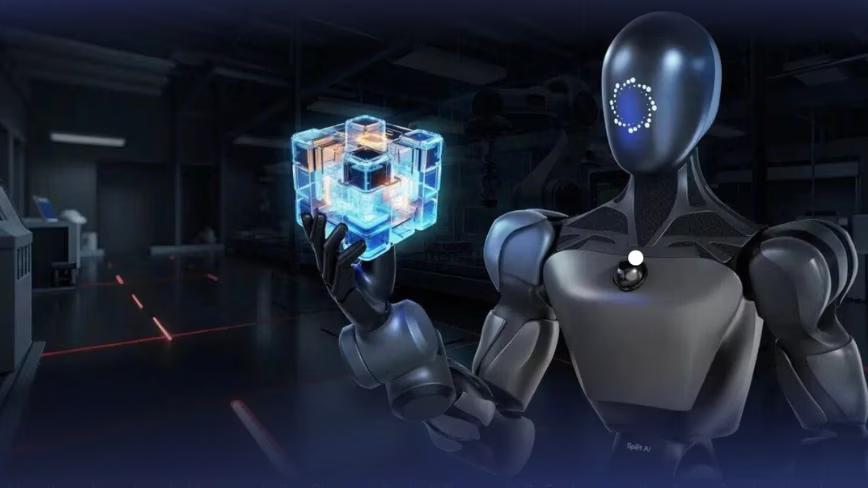
Nvidia unveils full-stack AI robotics platform, positioning itself as the Android of robots
06 Jan 2026•Technology
Recent Highlights
1
Microsoft and Nvidia Launch Surface Laptop Ultra: A $2,599 AI-Ready PC With RTX Spark Chip
Technology

2
Meta Muse AI Agent Surges to 6.6M Downloads Despite Privacy and Security Controversies
Technology

3
Scientists Build AI Model That Reconstructs Images From Brain Scans in Record Time
Science and Research

Recent Highlights
Today's Top Stories












Don’t drown in AI news. We cut through the noise - filtering, ranking and summarizing the most important AI news, breakthroughs and research daily. Follow topics that matter to you and stay ahead.


