Unitree Unveils H2-X Humanoid Robot Bodyguard That Disarms Attackers and Lifts Cars in Dramatic Demo


3 Sources
[1]
Unitree unveils humanoid robot designed to act as real-life guardian
China's Unitree Robotics has unveiled the H2-X, a humanoid robot designed to help in emergencies, including confronting attackers and rescuing people from danger. A promotional video released on Wednesday shows the robot disarming a knife-wielding intruder, smashing a car door, lifting a vehicle to
[2]
A jumping, punching, kung fu-trained robot that protects your house and family -- what could go wrong?
Unitree's insane new humanoid is the world's first robot bodyguard. A hooded man with a knife walks toward a woman sitting in her backyard. Before he reaches her, a humanoid robot steps between them and squares up. That's the money shot in the one-minute video Unitree released on October 21 to
[3]
World's largest humanoid robot maker unveils robot bodyguard that can fight attackers, lift cars
Chinese robotics giant Unitree has unveiled a kung fu humanoid robot designed to disarm attackers, lift cars during emergencies and rescue people from danger. The H2-X, dubbed "Kung Fu Legend: Guardian," was introduced in a promotional video released Wednesday, showing the robot performing a
Share
Copy Link
Unitree Robotics revealed its H2-X humanoid robot designed for household protection and security and rescue operations. The promotional video shows the robot bodyguard disarming a knife-wielding attacker, lifting a car to free trapped victims, and performing combat maneuvers. However, critical questions about autonomous capabilities and AI ethics remain unanswered.
Chinese Robotics Company Introduces Combat-Ready Humanoid Robot
Unitree Robotics, the world's largest humanoid robot manufacturer by sales, unveiled the Unitree H2-X on October 21 through a dramatic promotional video showcasing a machine designed to protect families and intervene in emergencies
1
3
. The Hangzhou-based Chinese robotics company presented the H2-X, dubbed "Kung Fu Legend Guardian," as a robot bodyguard capable of disarming attackers, smashing through car doors, and rescuing people from danger2
. The one-minute demonstration shows the humanoid robot confronting a knife-wielding intruder threatening a woman, lifting a car to free a trapped victim, and pulling a pedestrian away from an oncoming vehicle1
.
Source: Interesting Engineering
Technical Capabilities and Physical Performance
The Unitree H2-X builds on the company's existing H2 humanoid platform, which stands approximately 1.8 meters tall and weighs around 70 kilograms
3
. The original H2 model features 31 degrees of freedom and a maximum leg-joint torque of 360 newton-meters, enabling coordinated movements for walking, balancing, and manipulating objects1
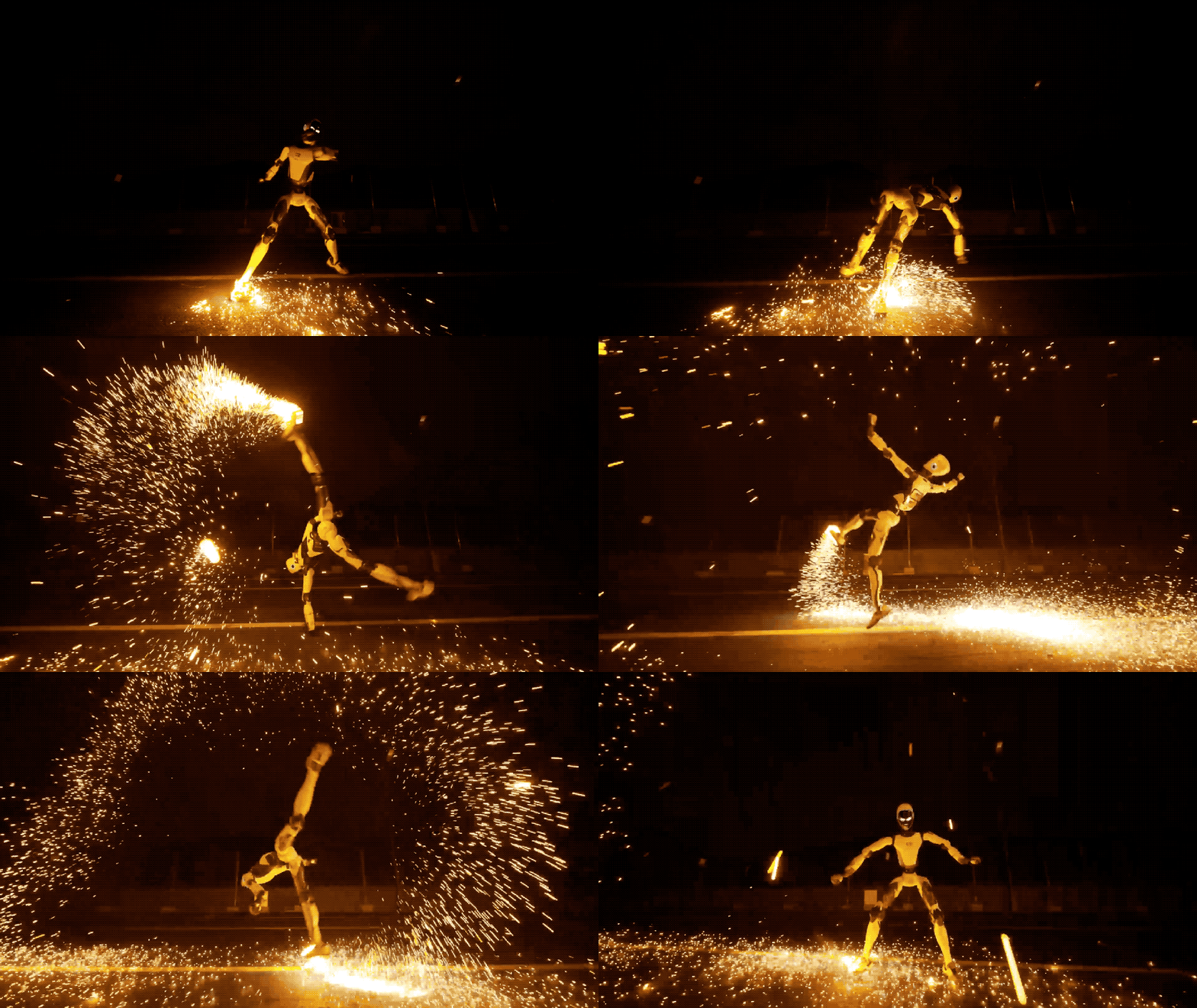
. Unitree swears the promotional video was shot for real and not sped up, showing the humanoid robot performing impressive physical feats including springing onto a sedan, somersaulting, delivering flying kicks, and dropping from a platform marked as 13 feet high before rolling to absorb impact2
. The company stated the H2-X could stand for approximately eight hours, though it provided no further details on battery capacity or power consumption during physically demanding tasks1
.
Source: Fast Company
Unanswered Questions About Autonomous Capabilities
A central technical question surrounds whether the Unitree H2-X can recognize threats and respond independently during security and rescue operations. Unitree has not disclosed whether the demonstrations were autonomous, pre-programmed, or remotely controlled
3
. The company did not confirm to the South China Morning Post whether the robot acted autonomously, leaving open the possibility it was steered by a human operator or following a rehearsed script2
. These distinctions matter significantly for a machine intended for household protection, as responding to unexpected attacks requires interpreting changing surroundings, coordinating movements, and avoiding causing additional harm1
. Unitree has not explained how the humanoid robot detects people, identifies potential threats, plans movements, or determines when to act1
.AI Model Integration and Combat Training
Last month, Unitree announced its UnifoLM-X2-1.0 AI model, designed to enable humanoid robots to practice combat movements autonomously, including punching, blocking, and dodging
3
. The H2-X demonstration follows this push to combine physical robotics with AI-driven movement and control for autonomous sparring and movement1
. The company is developing AI technology intended to help humanoid robots improve their capabilities through continued learning3
. However, the integration of combat training with household protection raises significant AI ethics concerns about whether autonomous robots can reliably distinguish friend from foe2
.Related Stories


Commercial Deployment and Safety Concerns
Unitree has not announced a release date or price for the Unitree H2-X, leaving questions unanswered about the robot's availability and intended customers
1
. The company warned against dangerous modifications and unauthorized uses, advising people to maintain a safety distance of at least two to three meters from the robot bodyguard3
. A combat-trained, metal-smashing, bone-breaking humanoid robot brings unsolved problems of battlefield AI directly into the living room, particularly around whether autonomous robots can truly identify threats safely2
. Unitree has not provided evidence establishing the H2-X's performance in unscripted emergencies, leaving its practical capabilities, safety safeguards, and readiness for real-world deployment unclear1
.Industry Context and Future Outlook
Speaking at the China International Industry Fair in Shanghai earlier this month, Unitree founder Wang Xingxing predicted that humanoid robots could reach a "ChatGPT moment" within one or two years as AI advances accelerate
3
. Wang Xingxing said Unitree Robotics was already testing robots in automobile factories and homes, although limited efficiency and adaptability remained barriers to widespread adoption3
. The unveiling comes as the Chinese robotics company seeks to move beyond eye-catching demonstrations toward practical applications for its humanoid robots3
. Watch for clarification on autonomous capabilities, regulatory responses to combat-ready household robots, and whether Unitree can demonstrate reliable threat detection before commercial deployment.References
Summarized by

Navi
[1]
[2]
Related Stories
Recent Highlights



Recent Highlights
Today's Top Stories


Don’t drown in AI news. We cut through the noise - filtering, ranking and summarizing the most important AI news, breakthroughs and research daily. Follow topics that matter to you and stay ahead.


