US, China, EU Take 3 Different Paths to AI Regulation Amid Growing Security Concerns


2 Sources
[1]
US, China, EU: three paths to regulating AI
Washington (United States) (AFP) - The United States, China and the European Union are taking different paths to govern artificial intelligence, as calls grow worldwide to rein in its most powerful systems. Here is how they are going about it: United States Nearly two years into his second term,
[2]
Laws, pledges or an iron grip? How the EU, US and China are reining in AI
The US, China and the EU are taking sharply different approaches to regulating artificial intelligence. Here is how the world's biggest economies are tackling the technology, and what is at stake. Pressure is growing worldwide to rein in the most powerful artificial intelligence systems, and the
Share
Copy Link
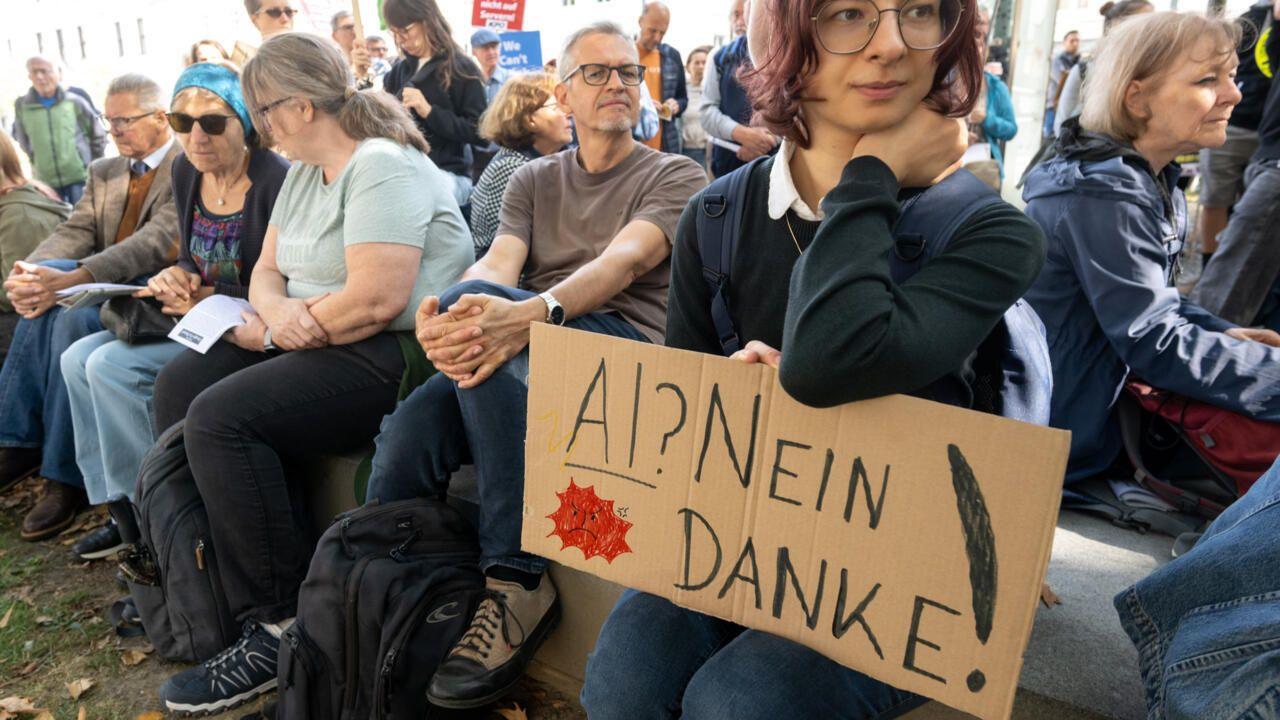
The world's three AI superpowers are charting distinct regulatory courses for artificial intelligence. The EU enforces binding laws through its AI Act, the US relies on voluntary industry pledges and executive orders, while China builds a state-controlled framework. Each approach reflects different priorities as global pressure mounts to address AI's security and societal risks.
Three Divergent Approaches to AI Regulation
The United States, China, and the European Union are pursuing fundamentally different strategies for regulating AI, revealing stark contrasts in how the world's largest economies balance innovation against control
1
2
. While concerns about AI-powered cyberattacks, national security risks, and tragic incidents involving AI companions remain universal, each region's response reflects its unique economic priorities and governance philosophy. The EU has committed to comprehensive binding legislation, the US favors voluntary industry pledges paired with executive orders, and China is constructing an evolving rulebook under tight state oversight.US Embraces Voluntary Pledges and Deregulation
Nearly two years into his second term, President Donald Trump has shaped US AI policy almost entirely through voluntary industry pledges and executive orders designed to sustain the AI boom powering the American economy
1
. On his first day back in office, Trump eliminated his predecessor Joe Biden's 2023 executive order that required developers of powerful AI systems to share safety test results with the government and directed federal agencies to establish privacy guidelines preventing algorithmic discrimination2
.In July 2025, the White House unveiled an "AI Action Plan" containing more than 90 measures to accelerate development, increase infrastructure investment, and deregulate the sector
2
. An accompanying executive order titled "Preventing Woke AI in the Federal Government" mandates that federal agencies purchase only models deemed ideologically neutral, though no formal methodology exists to assess neutrality beyond requiring platforms to share technical documentation2
.Congress remains politically divided and heavily lobbied by Big Tech, having yet to pass federal AI legislation. State laws are taking effect nationwide, including California's AI Transparency Act, despite Trump's attempts to block them
2
. Cybersecurity risks prompted a June executive order establishing a voluntary system allowing developers to grant the government up to 30 days of early access to their most powerful models1
.With voter anxiety mounting, heads of America's six largest AI companies signed a White House accord on September 29 pledging independent model audits and board-level oversight of cutting-edge systems
1
. The pact carries no penalties for noncompliance, though Trump described it as "morally binding." That same day, Trump ordered federal agencies to replace the term "artificial intelligence" with "super intelligence" in official communications1
.EU Implements Comprehensive Binding Laws
The European Union adopted its AI Act in 2024, legislation Brussels promotes as the world's first comprehensive rules on artificial intelligence
2
. The Act employs a four-tier risk-based classification framework, with regulations escalating according to threat levels. Systems posing minimal risk, such as video game elements and spam filters, operate freely, while unacceptable high-risk systems with wide-reaching powers—including social scoring, emotion recognition, and manipulation technologies—face outright bans2
.European companies, concerned the rules would stifle innovation as they compete with US and Chinese rivals, successfully lobbied for delays on regulations covering high-risk systems through the AI Omnibus bill, aided by the Commission's rightward shift following EU elections
2
. European Commission President Ursula von der Leyen stated last month that the AI rules position "Europe in the position to shape global efforts" in global AI governance, announcing plans to invite major frontier labs for discussions on supporting industry efforts1
2
.European firms remain wary of slowing development, fearing such moves could allow US giants to consolidate dominance
1
. The EU employs additional regulatory tools beyond the AI Act. In August, ChatGPT became the first AI chatbot added to the EU's list of very large digital services subject to heightened legal scrutiny under the Digital Services Act1
2
. Brussels also proposed last month forcing companies to make AI companions and chatbots safe before children access them, with the EU Kids Act banning systems from "simulating interpersonal relationships in ways that create emotional dependency" following multiple suicides worldwide linked to children's interactions with such assistants1
2
.Related Stories

China Builds State-Controlled Framework
China has established a complex, evolving set of rules governing AI usage, including specific protections for children
1
. Regulations on AI companion bots took effect in July, designed to curb emotional dependency and banning the creation of digital clones of real people without consent1
. President Xi Jinping declared this summer that AI should remain "always under human control," calling for expanded "laws and regulations, technological monitoring, early warning, and emergency response systems"1
.Premier Li Qiang warned that the world risks "losing control" of frontier technologies like artificial intelligence if governments regulate too slowly
1
. However, Oxford China Policy Lab analysts noted in September that "a general pause or deliberate slowdown in AI development remains outside the mainstream Chinese policy posture"1
. Some in China view calls to decelerate progress as difficult to justify, "particularly given their perception that US measures such as export controls have already constrained China's AI development for years," the analysts explained1
.China censors and controls AI-generated content similarly to other online information. Last month, Minister of State Security Chen Yixin warned that generative AI could endanger national security, stating that "hostile forces" are exploiting the technology to "fabricate political rumors and spread harmful information"
1
. China's strict rules on AI reflect its broader approach to digital governance, prioritizing state control over innovation speed while rejecting external pressure to slow development in AI regulatory approaches that differ fundamentally from Western models.References
Summarized by

Navi
[1]
Related Stories
Global AI Regulation Landscape: Divergent Approaches Ahead of Paris Summit
04 Feb 2025•Policy and Regulation

AI Safety Warnings Collide With Accelerating US-China Competition as Doomsday Predictions Spark Debate
16 Sept 2026•Policy and Regulation

US and China Propose AI Hotline to Address National Security Threats Ahead of Washington Summit
16 Sept 2026•Policy and Regulation
Recent Highlights



Recent Highlights
Today's Top Stories





Don’t drown in AI news. We cut through the noise - filtering, ranking and summarizing the most important AI news, breakthroughs and research daily. Follow topics that matter to you and stay ahead.


