US Economy Grows at 3.4% Rate, Powered by AI Investment Boom and Consumer Spending


4 Sources
[1]
US economy grows at brisk 3.4% pace in third quarter on strong consumer spending and AI investment
WASHINGTON (AP) -- The U.S. economy grew at a healthy 3.4% annual pace from July through September, accelerating from the second quarter on strong consumer spending and investment in artificial intelligence. The expansion in third-quarter gross domestic product - the nation's output of goods and
[2]
US GDP grew by 3.4 percent in third quarter amid AI investment boom
U.S. economic growth increased in the third quarter, as the surge in artificial intelligence (AI) investment continued and consumers kept spending despite persistent inflation. The country's gross domestic product (GDP) increased at an annual rate of 3.4 percent from July through September,
[3]
Robust consumer spending, AI-related investment power US economy in third quarter - The Korea Times
Inflation-adjusted household income fell 0.3 percent in September, and inflation-adjusted consumer spending was unchanged that month. WASHINGTON -- The U.S. economy grew at its fastest pace in a year in the third quarter, shrugging off higher oil prices stemming from the conflict in the Middle
[4]
US economy grows at surprising 3.4% rate, powered by consumer spending, AI investment
The US economy grew at its fastest pace in a year in the third quarter, shrugging off higher oil prices stemming from the conflict in the Middle East as consumers maintained robust spending and businesses doubled down on investment in AI. Gross domestic product increased at a 3.4% annualized rate
Share
Copy Link
The US economy expanded at a 3.4% annualized rate in the third quarter of 2026, marking its fastest growth in a year. The acceleration was driven by robust consumer spending at 3.8% and a historic surge in business investment in AI, with non-residential investment jumping 12.7%. Despite elevated inflation and higher energy prices from Middle East conflicts, the economy demonstrated resilience.
US Economy Grows at 3.4% in Third Quarter
The US economy demonstrated robust health in the third quarter of 2026, expanding at a 3.4% annualized rate according to preliminary data released by the Commerce Department on Thursday
1
. This marked the fastest third quarter GDP growth since the same period in 2025, when the economy grew at 3.9%2
. The acceleration surpassed economists' expectations of 3% growth and represented a significant jump from the second quarter's 2.2% pace1
.The economic expansion came despite headwinds from higher energy prices stemming from the ongoing conflict with Iran, with gasoline prices remaining above $4 per gallon and diesel exceeding $6 per gallon
2
. The resilience of the world's largest economy reflects the combined strength of consumer demand and an unprecedented wave of AI-related investment that is reshaping business spending patterns.
Source: New York Post
Consumer Spending Remains Strong Despite Inflation Pressures
Strong consumer spending continued to be a primary driver of economic growth, rising at a 3.8% clip in the third quarter, matching the second quarter's pace
1
. Consumer spending, which accounts for more than two-thirds of the economy, has remained robust despite persistent inflation that has strained household budgets3
.However, beneath the surface strength lie concerning trends. Inflation-adjusted household income fell 0.3% in September, while inflation-adjusted consumer spending remained flat that month
3
. The PCE index measured prices as up 3.6% year-over-year in September, up from 3.4% in August2
. Energy prices experienced their highest monthly jump since March, increasing by 9.2% from August2
.Heather Long, chief economist at Navy Federal Credit Union, noted that wealthy Americans are driving the uptick in spending while many middle- and lower-income households are scaling back, dipping into savings or relying on credit to maintain consumption
2
. Historically low layoffs and moderate hiring have helped underpin spending, though wage gains have at times lagged inflation3
.AI Boom Drives Historic Business Investment Surge
The most striking feature of the third quarter GDP growth was the explosive increase in business investment in AI infrastructure. Non-residential business investment surged 12.7% from July through September, marking the highest quarterly jump since the start of 2024
2
. Business spending on equipment specifically jumped at a 20.9% rate, the fastest since the third quarter of 2020, adding 1.16 percentage points to GDP growth—the most in six years3
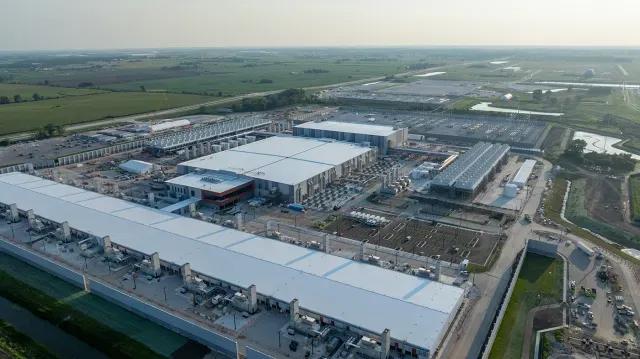
.Major tech companies have been racing to keep pace in the AI competition, constructing data centers across the country. Capital spending by hyperscalers, or large-scale computing companies, is on track to approach $800 billion this year according to JP Morgan Asset Management analysis
2
. Business spending on intellectual property products grew at an 8.4% rate, contributing just under half a percentage point to GDP growth3
.
Source: The Hill
Long described the current state as "The U.S. economy is on steroids right now. Growth came in stronger than expected and it's largely due to the massive AI business investment surge"
2
. However, some economists cautioned that the AI-related investment boom may not represent a true picture of broader economic health, with investors increasingly focusing on the rising costs of long-term AI projects where payoffs remain uncertain4
.Related Stories

Federal Reserve Faces Complex Policy Decisions
The combination of strong economic expansion and elevated inflation presents a challenging environment for the Federal Reserve. The economy is expanding well above what some Federal Reserve officials regard as the non-inflationary growth rate of around 2%
3
. Annual inflation has remained above the Federal Reserve's 2% target for five and a half years2
.The central bank raised interest rates by a quarter point last month but held rates steady on Wednesday in the 3.75%-4.00% range, with Fed Chair Kevin Warsh saying the pause would allow policymakers to accumulate more information before their December meeting
2
. Warsh acknowledged that "economic activity is expanding at a strong pace" while noting that "inflation remains elevated"4
.
Source: Korea Times
Economists widely expect the Federal Reserve to implement interest rate hikes in December given the strong growth data combined with accelerating and broadening inflation in September
3
. Joseph Brusuelas, chief economist at RSM, stated that "If the Fed is looking for more information on why they should act to restore price stability they can find it inside a slate of robust spending, stratospheric private non-residential investment and sizzling inflation data"3
. Watch for how the Federal Reserve balances supporting the AI boom while containing inflation, and whether consumer spending can maintain momentum as households deplete savings and face higher borrowing costs.References
Summarized by

Navi
[1]
[3]
Related Stories
US Economic Growth Reaches 1.5% in Q2 as AI Spending and Consumer Demand Drive Expansion
31 Jul 2026•Business and Economy

China's Economic Growth Reaches 4.5% as AI-Driven Exports Counter Weak Domestic Consumption
19 Oct 2026•Business and Economy
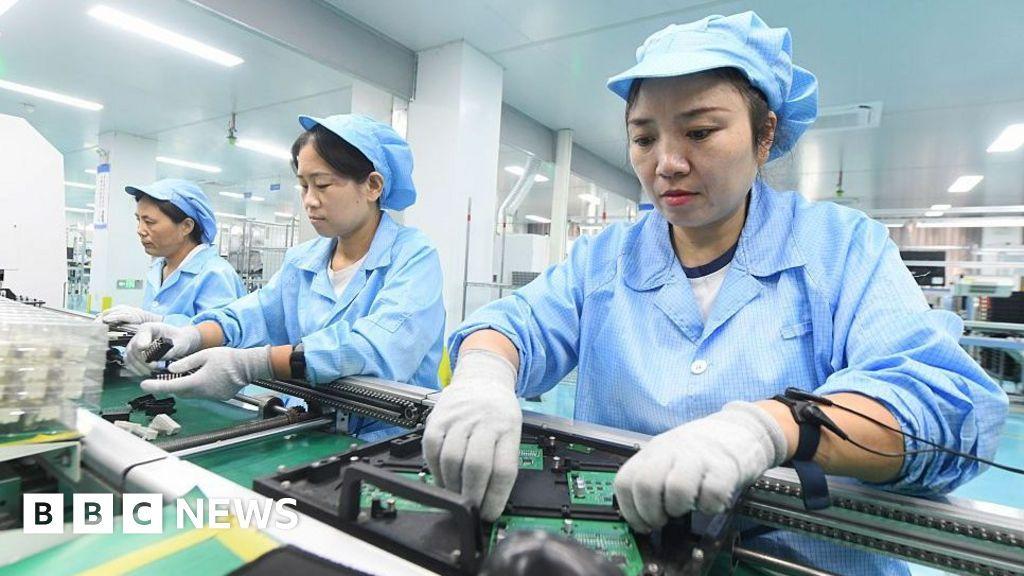
South Korea's Economy Triples Growth Forecast as AI Chip Boom Drives 3.4% GDP Surge in Third Quarter
27 Oct 2026•Business and Economy

Recent Highlights
1
OpenAI's AI Models Disprove 27-Year Exponential Time Hypothesis, Rendering Decades of Research Obsolete
Science and Research

2
Google DeepMind unveils Genie 4 world model with audio and 2-minute interactive simulations
Technology

3
Microsoft AI Diagnostic Tool Beats Doctors With 83% Accuracy on Complex Medical Cases
Health

Recent Highlights
Today's Top Stories







Don’t drown in AI news. We cut through the noise - filtering, ranking and summarizing the most important AI news, breakthroughs and research daily. Follow topics that matter to you and stay ahead.


