US Power Demand Set for Record Highs in 2026 and 2027 as AI Data Centers Drive Unprecedented Surge


2 Sources
[1]
US power demand to beat record highs in 2026 and 2027 as AI use surges, EIA says
NEW YORK, Nov 10 (Reuters) - US electricity consumption will rise to record highs in 2026 and 2027 due to power-hungry AI data centers and electrification, the US Energy Information Administration said in its Short-Term Energy Outlook (STEO) on Tuesday. The EIA projected that power demand will
[2]
US power demand to beat record highs in 2026 and 2027 as AI use surges, EIA says
NEW YORK, Nov 10 (Reuters) - US electricity consumption will rise to record highs in 2026 and 2027 due to power-hungry AI data centers and electrification, the US Energy Information Administration said in its Short-Term Energy Outlook (STEO) on Tuesday. The EIA projected that power demand will
Share
Copy Link
The U.S. Energy Information Administration forecasts US power demand will climb to historic levels, reaching 4,370 billion kWh by 2027. AI data centers and broader electrification trends are fueling this surge, marking three consecutive years of record high electricity consumption while reshaping America's energy landscape.
AI Data Centers Push US Power Demand to Unprecedented Levels
US power demand is set to shatter records in 2026 and 2027, driven primarily by the explosive growth of AI data centers and accelerating electrification across homes and businesses. The U.S. Energy Information Administration released projections in its Short-Term Energy Outlook on Tuesday, forecasting electricity consumption will climb from a record 4,216 billion kilowatt-hours (kWh) in 2025 to 4,306 billion kWh in 2026, then surge further to 4,370 billion kWh in 2027
1
. If these projections hold, 2026 will mark the third consecutive year of record high electricity consumption, signaling a fundamental shift in America's energy landscape.Energy Demands of AI Reshape Infrastructure Requirements
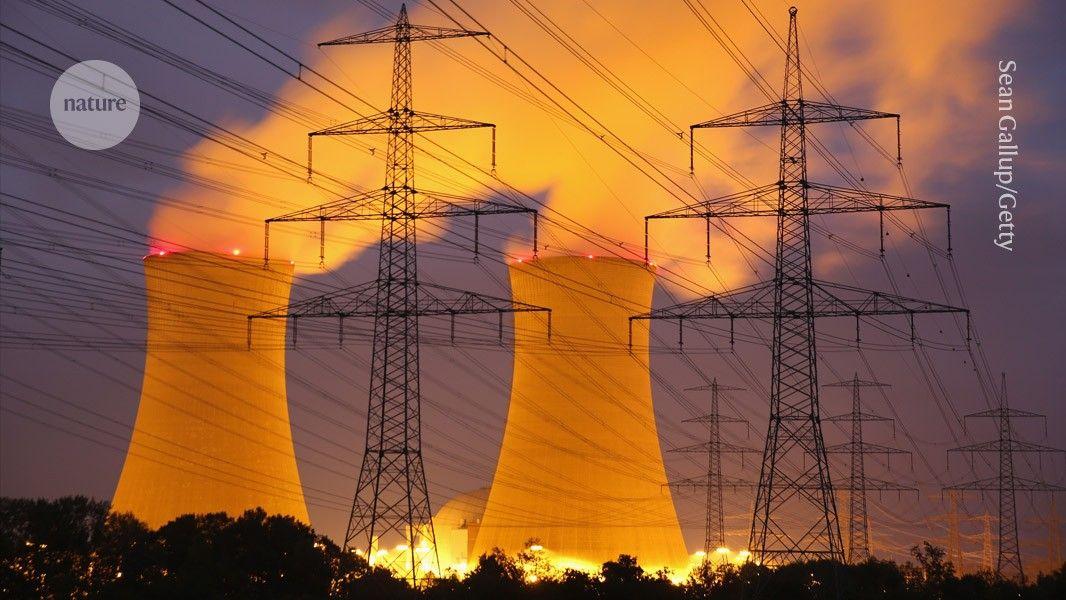
The surge in record high electricity consumption stems largely from power-hungry AI infrastructure and energy demand. Data centers dedicated to artificial intelligence operations require massive amounts of electricity to run computational workloads, train models, and maintain cooling systems. This trend coincides with broader electrification trends as residential and commercial consumers shift away from fossil fuels toward electric solutions for heating and transportation
2
. The combination creates unprecedented pressure on the nation's electrical grid and generation capacity.
Source: Market Screener
Residential Power Sales and Commercial Power Sales Hit New Peaks
The EIA forecasts residential power sales will reach 1,546 billion kWh in 2026, surpassing the previous all-time high of 1,519 billion kWh set in 2025. Commercial power sales are projected to climb even higher to 1,557 billion kWh in 2026, eclipsing the 2025 record of 1,503 billion kWh
1
. Industrial power sales are expected to reach 1,061 billion kWh, approaching but not quite matching the all-time high of 1,064 billion kWh recorded in 2000. These figures underscore how AI data centers and electrification are transforming consumption patterns across all sectors of the economy.Renewables Gain Ground as Energy Mix Transforms
As US power demand soars, the nation's energy generation mix is undergoing significant transformation. The share of renewables in power generation will rise from approximately 24% in 2025 to 25% in 2026 and 28% in 2027, according to the Short-Term Energy Outlook
2
. Meanwhile, coal's contribution will decline from 17% in 2025 to 15% in both 2026 and 2027. Natural gas will maintain a dominant position at 40% in 2026 before easing slightly to 39% in 2027, while nuclear power will hold steady at 18% through 2027.Related Stories
Natural Gas Demand Shifts Toward Power Generation
The EIA projects natural gas consumption patterns will shift notably as AI infrastructure and energy demand intensify. Gas sales for power generation are forecast to reach 37.4 billion cubic feet per day (bcfd) in 2026, surpassing the 2024 record of 36.8 bcfd
1
. Conversely, residential natural gas consumption is expected to decline to 12.2 bcfd, well below the 1996 peak of 14.3 bcfd, while commercial customers will use 9.4 bcfd compared to the 2025 high of 9.9 bcfd. Industrial gas sales are projected to match the 1973 record of 23.8 bcfd, reflecting how energy demands of AI are reshaping fuel allocation across sectors.Grid Capacity and Investment Challenges Loom
The projected surge in record high electricity consumption raises critical questions about grid capacity, infrastructure investment, and generation adequacy. With AI data centers continuing to proliferate and broader electrification trends accelerating, utilities and grid operators face mounting pressure to expand transmission networks and generation capacity. The shift toward renewables, while environmentally beneficial, introduces intermittency challenges that must be managed alongside baseload sources like natural gas and nuclear power. Industry observers will be watching closely to see whether infrastructure buildout can keep pace with demand growth, or if capacity constraints emerge that could limit AI expansion or drive up electricity costs for all consumers in the coming years.
References
Summarized by

Navi
Related Stories
US Power Consumption Set for Record Highs in 2026-2027 as AI Data Centers Drive Demand Surge
07 Oct 2026•Business and Economy

Data Centers Driving US Power Consumption to Record Highs: EIA Forecast
11 Jun 2025•Technology
AI surge pushes data centers to consume 20% of US electricity by 2035 as demand skyrockets to 194GW
22 Jul 2026•Business and Economy
Recent Highlights
1
Jensen Huang's Affair with Suspected Chinese Spy Exposes $7 Billion AI Chip Smuggling Network
Policy and Regulation

2
Anthropic Launches Claude Meetings and AI-Powered Office Tools to Challenge Microsoft and Google
Technology

3
Anthropic launches Fable 5.2 and Mythos 5.2 with 20% price cut and 30% faster output
Technology

Recent Highlights
Today's Top Stories








Don’t drown in AI news. We cut through the noise - filtering, ranking and summarizing the most important AI news, breakthroughs and research daily. Follow topics that matter to you and stay ahead.


