US Supreme Court blocks Trump from removing copyright official who flagged AI training concerns


3 Sources
[1]
US Supreme Court won't let Trump remove top copyright official for now
WASHINGTON, June 30 (Reuters) - The U.S. Supreme Court declined on Tuesday to let Donald Trump remove the government's top copyright official for now in another battle over the Republican president's targeting of federal officials. The justices denied the Justice Department's request to lift a
[2]
US Supreme Court Won't Let Trump Remove Top Copyright Official for Now
WASHINGTON, June 30 (Reuters) - The U.S. Supreme Court declined on Tuesday to let Donald Trump remove the government's top copyright official for now in another battle over the Republican president's targeting of federal officials. The justices denied the Justice Department's request to lift a
[3]
US Supreme Court won't let Trump remove top copyright official for now
WASHINGTON, June 30 (Reuters) - The U.S. Supreme Court declined on Tuesday to let Donald Trump remove the government's top copyright official for now in another battle over the Republican president's targeting of federal officials. The justices denied the Justice Department's request to lift a
Share
Copy Link
The US Supreme Court denied Trump's request to fire Shira Perlmutter, the government's top copyright official, keeping her in place while her legal challenge proceeds. Perlmutter was terminated a day after her office released a report finding that tech firms' unauthorized uses of copyrighted works to train generative AI systems may be unlawful. The case centers on whether Trump lacked the authority to remove an official from the legislative branch.
US Supreme Court Denies Trump's Request to Remove Shira Perlmutter
The US Supreme Court declined on Tuesday to let Donald Trump remove Shira Perlmutter, the government's top copyright official, marking another significant legal battle over presidential authority to fire federal officials
1
. The justices denied the Justice Department's request to lift a lower court's ruling that blocked Trump's firing of Perlmutter as the U.S. register of copyrights and director of the U.S. Copyright Office while her legal challenge to her firing continues2
. In an unsigned order, the court clarified its action was not a ruling on the merits of the underlying legal issue, leaving the door open for future deliberation.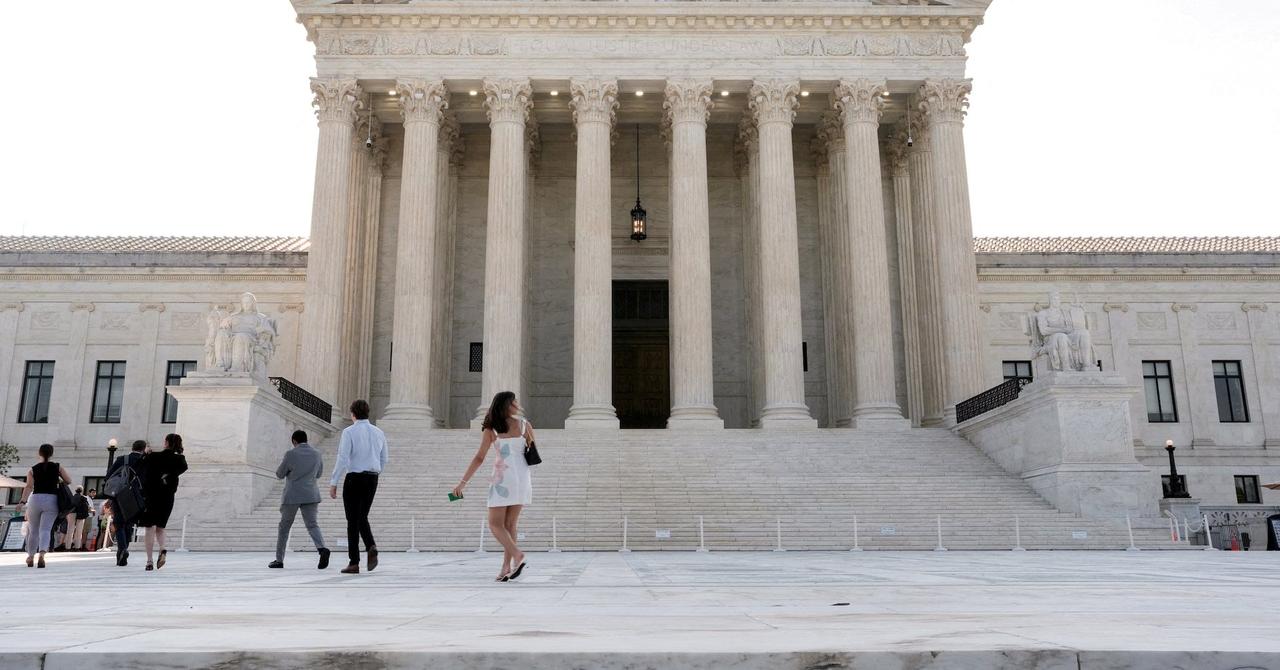
Source: Reuters
AI Report Triggered Perlmutter's Termination
Perlmutter was notified of her termination in May 2025, just one day after her office circulated a report with critical findings about artificial intelligence training practices
3
. The report concluded that some unauthorized uses of copyrighted works carried out by tech firms to train generative AI systems may be unlawful, a determination that directly impacts how companies develop generative AI technologies. Her lawyers argued in legal papers that Trump sought to remove her from her job because he disagreed with the report's findings on AI, raising concerns about executive power being used to silence policy advice that runs counter to administration preferences. As Congress' primary adviser on copyright issues, Perlmutter's role carries significant weight in shaping how lawmakers approach the intersection of intellectual property and emerging technologies.Constitutional Battle Over Separation of Powers
The legal battle centers on fundamental questions about separation of powers and whether Trump lacked the authority to fire an official in the legislative branch. After firing Perlmutter, Trump also terminated Librarian of Congress Carla Hayden and replaced her with Todd Blanche, his former criminal defense attorney and current acting U.S. attorney general. Blanche, in his capacity as acting head of the Library of Congress, which oversees the U.S. Copyright Office, then attempted to ratify Trump's decision to remove Perlmutter. Perlmutter sued to block her firing, arguing that Trump lacked the authority to appoint Blanche as acting Librarian of Congress because that office is not an executive branch agency but rather part of the legislative branch
3
.Related Stories

Court Rulings Split on Executive Overreach
Washington-based U.S. District Judge Timothy Kelly initially rejected Perlmutter's request to preliminarily block her firing in July 2025, finding she had not suffered irreparable harm that would justify reinstating her
1
. However, the D.C. Circuit Court of Appeals reversed this decision in September 2025, with Judge Florence Pan writing that Trump's purported ouster of Perlmutter amounted to an overreach into the legislative branch to fire an official he has no statutory authority to either appoint or remove. Pan, joined by Judge J. Michelle Childs, drew a stark comparison: "The president's purported removal of the legislative branch's chief adviser on copyright matters, based on the advice that she provided to Congress, is akin to the president trying to fire a federal judge's law clerk"2
.Broader Implications for Federal Officials and AI Policy
The Supreme Court postponed its decision in November 2025, waiting until after its Monday rulings that allowed Trump to fire Federal Trade Commission Democratic member Rebecca Slaughter but refused to let him remove Federal Reserve Governor Lisa Cook
3
. This pattern suggests the court is carefully evaluating each case based on the specific constitutional structure of different agencies. For the AI industry, Perlmutter's continued presence means copyright issues related to training data remain under scrutiny by an official willing to challenge tech firms on unauthorized uses of copyrighted works. Watch for how this legal battle influences ongoing debates about AI regulation, intellectual property protections, and the balance between innovation and creator rights as the case continues through the courts.References
Summarized by

Navi
[3]
Related Stories
US Copyright Office Director Sues Trump Administration Over Controversial Firing Amid AI Copyright Debate
23 May 2025•Policy and Regulation
Trump Administration's Copyright Office Shake-up Sparks Controversy Over AI and Fair Use
12 May 2025•Policy and Regulation
US Supreme Court declines AI-generated art copyright case, upholding human authorship requirement
02 Mar 2026•Policy and Regulation

Recent Highlights



Recent Highlights
Today's Top Stories



Don’t drown in AI news. We cut through the noise - filtering, ranking and summarizing the most important AI news, breakthroughs and research daily. Follow topics that matter to you and stay ahead.


