US, UK, and Australia Deploy Undersea Drones to Shield $1.8 Trillion Infrastructure from Sabotage


2 Sources
[1]
Drones to protect undersea cables from Russian sabotage touted in new defense pact -- US one of three partners developing new tech to protect $1.8 trillion in daily transactions
Undersea cables are the new sea lines of communication that navies must protect. A trilateral security agreement between Australia, the UK, and the U.S. is leading towards the development of undersea drones to help protect their critical undersea cables from Russian sabotage. According to The
[2]
How AI drones could protect Europe's underwater networks
From Fincantieri's DEEP system to AI and drones: this is how ports and undersea cables are being protected. The sea is no longer just a transport route or an economic resource, but the centre of a silent yet crucial strategic contest. Today, the underwater domain has become a key arena of hybrid
Share
Copy Link
A trilateral defense pact between the US, UK, and Australia is accelerating development of undersea drones to protect critical underwater cables from Russian sabotage. With more than 99% of global data and $1.8 trillion in daily transactions flowing through these cables, nations are deploying AI-powered autonomous systems to detect and deter threats targeting the infrastructure that powers the digital economy.
Defense Pact Accelerates Undersea Drone Development
A trilateral security agreement between Australia, the UK, and the US is driving rapid development of undersea drones designed to protect undersea cables from Russian sabotage and other threats. UK Secretary of State for Defense John Healey announced the three nations would collaborate to build advanced technology that safeguards underwater infrastructure connecting NATO members, stating this would "rapidly give our forces the very most advanced battlefield technology as together we produce a range of cutting-edge sensors and weapons systems for undersea drones."
1
The initiative addresses growing concerns about hybrid warfare targeting critical undersea cables that carry more than 99% of global data traffic and facilitate $1.8 trillion in daily transactions.1
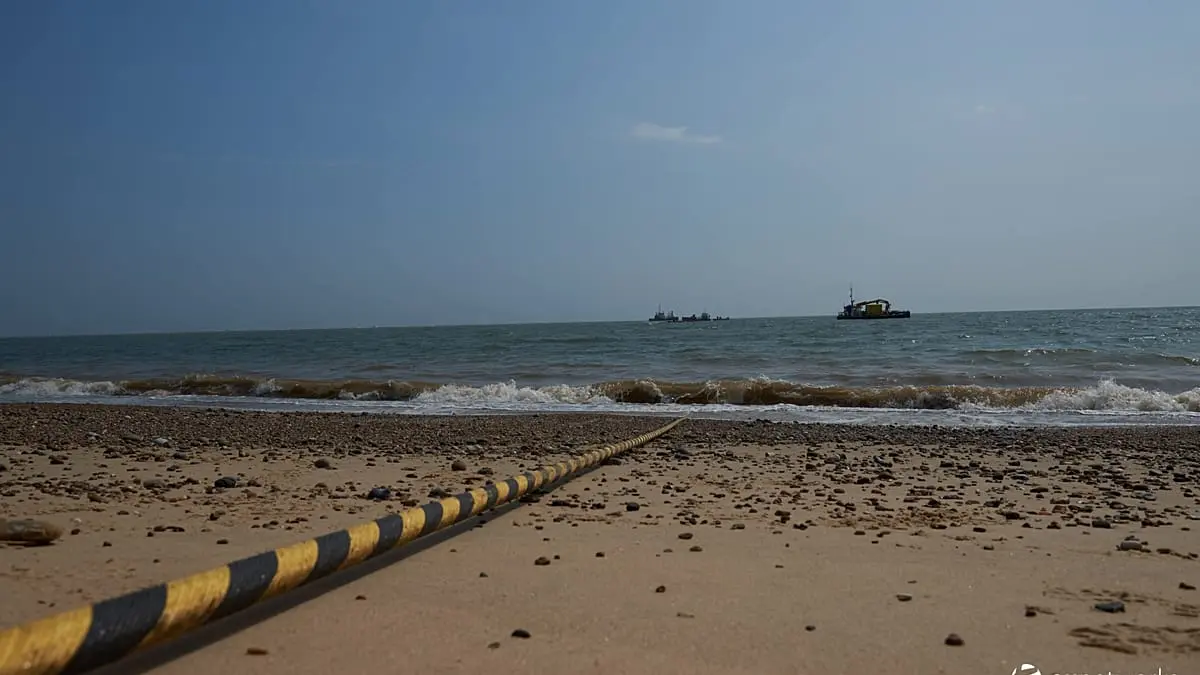
Source: Euronews
Rising Threats Target Telecommunications Cables and Energy Pipelines
Multiple incidents have raised alarm about deliberate attacks on underwater infrastructure. Critical undersea cables connecting Finland to Germany, Sweden to Lithuania, and linking Taiwan to the US have been severed by cargo ships in what authorities suspect were purposeful acts.
1
Russian naval assets have been tracked near undersea cables in international waters, suspected of mapping this vital infrastructure. Recent events, including the attempted sabotage of the tanker SeaJewel off Savona's coast—believed to be part of Russia's shadow fleet—demonstrate how commercial ports and maritime corridors have become sensitive targets.2
The underwater domain has emerged as a key arena where national security depends on monitoring and protecting vital infrastructure that remains largely unseen yet essential to modern life.AI-Powered Drones Transform Underwater Defense Strategy
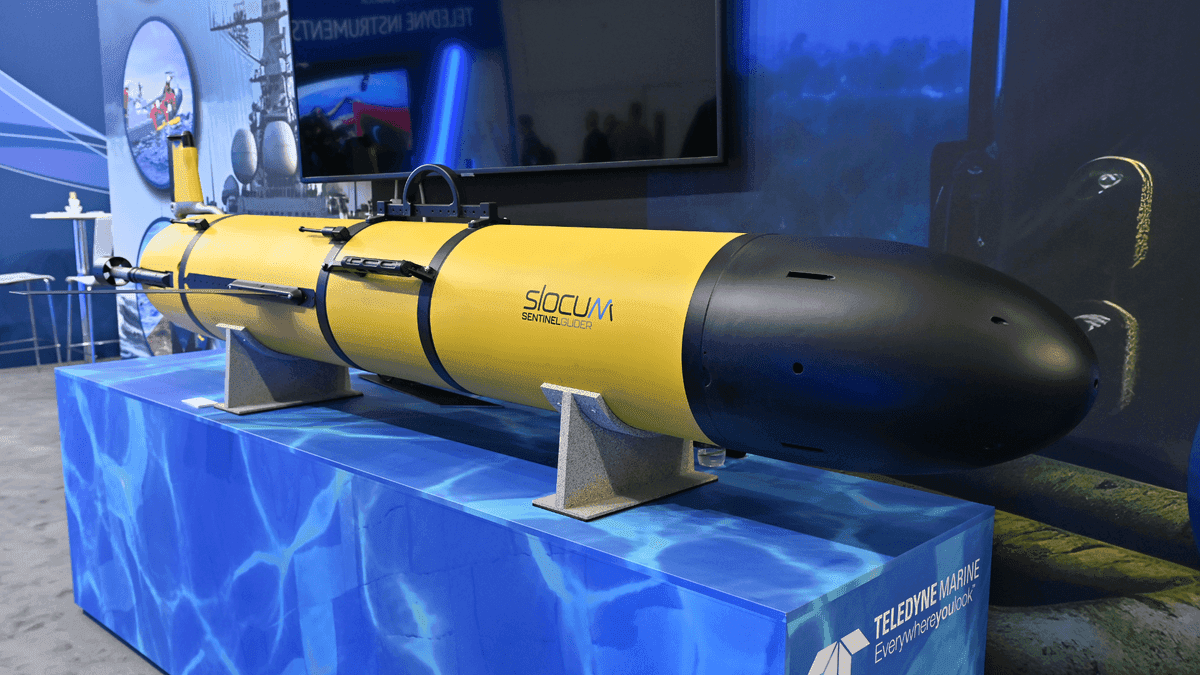
Source: Tom's Hardware
Governments are increasingly deploying autonomous underwater drones as cost-effective alternatives to traditional naval vessels for protecting sprawling cable networks. DARPA, credited as the progenitor of the modern internet, has issued a call for proposals to build autonomous underwater drones, while the U.S. Navy signed agreements with AI firms to develop technology enabling undersea minesweepers to learn about new threats within days.
1
The UK is testing a 40-foot drone for seabed warfare missions. Fincantieri's DEEP system exemplifies this technological shift, integrating an early warning system of seabed sensors that detect potential threats by monitoring surrounding water activity. Once threats are identified, the system deploys swarms of small underwater drones equipped with onboard artificial intelligence algorithms that identify danger types in real time, enabling immediate risk-mitigation responses.2
Related Stories

Emerging Technologies Push Defense Boundaries
Innovative approaches are reshaping how nations protect Europe's underwater networks and global infrastructure. Distributed Acoustic Sensing (DAS) technology transforms standard fiber-optic cables into vast underwater listening devices by measuring microscopic tension variations, capable of detecting submarines or divers across extensive areas. Quantum magnetometers mounted on drones can detect minute magnetic field changes caused by submarine steel hulls from tens of kilometers away, overcoming acoustic sonar limitations in crowded waters.
2
The underwater defense market is estimated at approximately €50 billion annually, reflecting the scale of investment in dual-use technology serving both civil sectors—including maintenance and laying of fiber-optic and power cables—and military applications.2
Strategic Implications and Future Outlook
The shift toward undersea drone deployment reflects practical considerations: stationing navy vessels to guard cables spanning thousands of miles proves prohibitively expensive, while autonomous systems allow navies to keep assets free for responding to active threats.
1
Looking ahead, key challenges for 2026 and 2027 include creating common European standards enabling wireless, real-time communication between surface drones, seabed sensors, and underwater drones from different countries, transforming defense into a shared maritime awareness network aligned with NATO.2
Geopolitical risks are also driving infrastructure fragmentation, with Western countries strengthening Mediterranean and Atlantic cables while China promotes alternative digital infrastructure corridors in Asia and Africa, potentially leading to separate digital ecosystems.2
References
Summarized by

Navi
Related Stories
Helsing Unveils AI-Powered Underwater Drone Swarm for Naval Surveillance
13 May 2025•Technology
Denmark Deploys AI-Powered Robotic Sailboats for Maritime Surveillance Amid Rising Tensions
17 Jun 2025•Technology

AUKUS defense pact advances undersea drones for 2027, as partners pledge faster delivery
30 May 2026•Policy and Regulation

Recent Highlights
1
Microsoft and Nvidia Launch Surface Laptop Ultra: A $2,599 AI-Ready PC With RTX Spark Chip
Technology

2
Meta Muse AI Agent Surges to 6.6M Downloads Despite Privacy and Security Controversies
Technology

3
Scientists Build AI Model That Reconstructs Images From Brain Scans in Record Time
Science and Research

Recent Highlights
Today's Top Stories









Don’t drown in AI news. We cut through the noise - filtering, ranking and summarizing the most important AI news, breakthroughs and research daily. Follow topics that matter to you and stay ahead.


