AI Data Centers: The Hidden Environmental Cost and Innovative Cooling Solutions


3 Sources
[1]
Why do AI data centers use so many resources?
With the AI boom, construction of new data centers has skyrocketed, and not without consequence -- some communities that count these facilities as neighbors are now facing water shortages and strained power supplies. While tech's data center footprint has been growing for decades, generative AI has
[2]
Graduate students at UT-Arlington are developing a way to cool data centers without water
ARLINGTON, Texas (AP) -- Sai Abhideep Pundla has been awake since 3 a.m. After a red-eye flight from Las Vegas, where he briefed data center company executives and local government officials about the future of artificial intelligence, he's back in a lab at UT-Arlington, tinkering with a prototype
[3]
Graduate Students at UT-Arlington Are Developing a Way to Cool Data Centers Without Water
ARLINGTON, Texas (AP) -- Sai Abhideep Pundla has been awake since 3 a.m. After a red-eye flight from Las Vegas, where he briefed data center company executives and local government officials about the future of artificial intelligence, he's back in a lab at UT-Arlington, tinkering with a prototype
Share
Copy Link
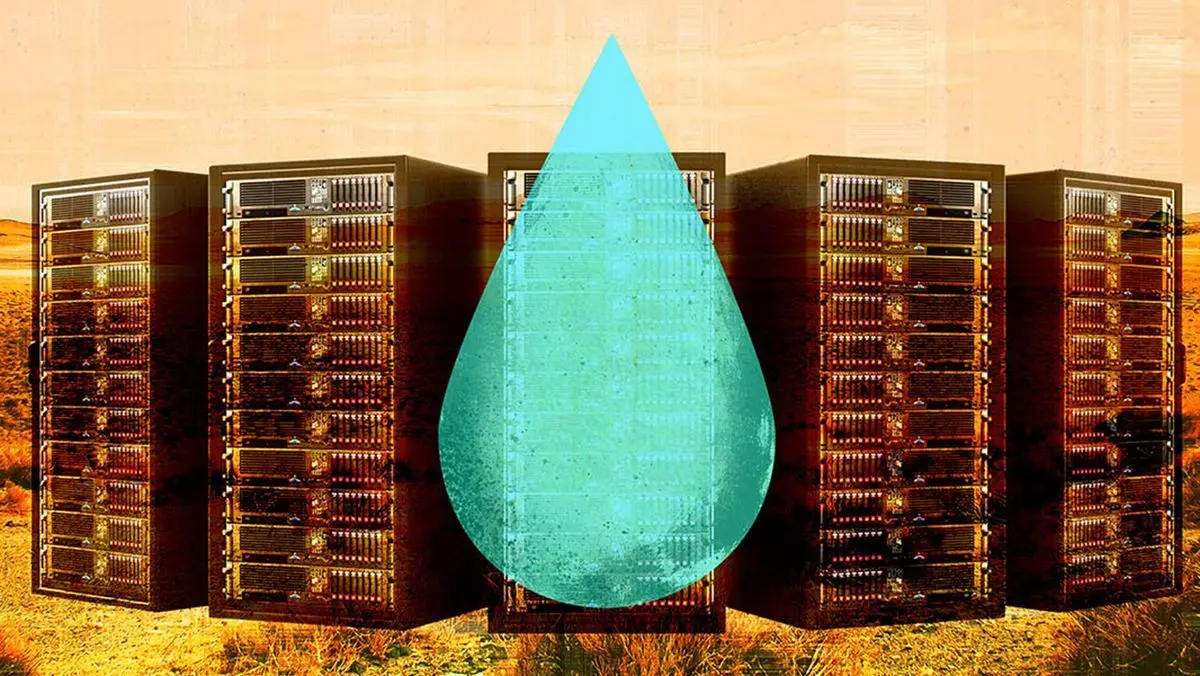
The rapid growth of AI is driving a surge in data center construction, leading to significant environmental concerns. Researchers and engineers are developing new cooling technologies to address the massive water and energy consumption of these facilities.
The AI Boom and Its Environmental Impact
The rapid growth of artificial intelligence (AI) has led to a significant increase in data center construction, raising concerns about their environmental impact. These massive facilities, which store and process our digital data, are now facing scrutiny for their extensive use of resources, particularly water and energy
1
.
Source: Engadget
Water Consumption in AI Data Centers
In Texas alone, existing data centers are projected to consume approximately 25 billion gallons of water by 2025, accounting for 0.4% of the state's total water use. This figure could rise to 2.7% of Texas' annual water consumption by 2030, equivalent to the water usage of 1.3 million average U.S. households
2
.The state currently hosts over 400 data center facilities, with about 70 more in development. While the overall water consumption may seem small at the state level, it can have significant impacts on local communities, especially in water-stressed regions
3
.The Technology Behind AI's Resource Hunger
AI data centers rely heavily on Graphics Processing Units (GPUs) rather than traditional Central Processing Units (CPUs). GPUs are designed for parallel processing, making them ideal for AI tasks but also more energy-intensive. Phil Burr, Head of Product at Lumai, explains that "every iteration of a GPU has more and more transistors, but the power jumps up every time because getting gains from those processes is hard"
1
.Energy Consumption and Heat Generation
The Lawrence Berkeley National Laboratory reported a sharp increase in data center electricity consumption as GPUs became more prevalent. From 2018 to 2023, energy use more than doubled from 1.9% to nearly 4.4% of the US total, with projections reaching up to 12% by the early 2030s
1
.Cooling Challenges and Innovations
The heat generated by these powerful GPUs presents a significant challenge. Data centers must maintain temperatures between 18 to 27 degrees Celsius (64.4 to 80.6 degrees Fahrenheit) for optimal performance. Traditional cooling methods, such as hot and cold aisle containment and water-based evaporative cooling, are common but resource-intensive
1
.Related Stories
Developing Water-Free Cooling Solutions
Researchers at the University of Texas at Arlington are working on innovative solutions to address these challenges. Sai Abhideep Pundla, a doctoral candidate in engineering, is developing a system that uses a recirculating chemical refrigerant instead of water to cool computer servers
2
.Policy and Regulation
As concerns grow, some states are taking action. California has passed a bill requiring new data centers to report their projected water use before starting operations. In Minnesota, data center developers must consult with the state's environmental agency to ensure adequate water supply at proposed locations
3
.Future Outlook
With the announcement of a $500 billion federal initiative to build AI data centers in Texas, the need for sustainable cooling solutions has become even more pressing. As the industry continues to grow, balancing technological advancement with environmental responsibility will be crucial for the future of AI and data center development
3
.References
Summarized by

Navi
[1]
Related Stories
Google and Amazon report record energy use as AI data centers challenge climate goals
01 Jul 2026•Business and Economy
Google pledges water replenishment as AI data centers face drought zone scrutiny
03 Jun 2026•Business and Economy

Nvidia liquid cooling system slashes data center water use, but AI's broader water problem persists
22 Jun 2026•Technology

Recent Highlights



Recent Highlights
Today's Top Stories






Don’t drown in AI news. We cut through the noise - filtering, ranking and summarizing the most important AI news, breakthroughs and research daily. Follow topics that matter to you and stay ahead.


