Visa's AI Shopping Benchmark Shows Models Fail 42.8% of Tests, Google and Meta Lead


3 Sources
[1]
Visa's AI shopping benchmark: Google and Meta top, Claude third
In Visa's AI shopping benchmark, the best models passed 82.2% of their runs and the worst 28.9%. In more than half of the failed runs, the AI still bought something. Visa has launched an AI shopping benchmark, and in its first round the AI models failed 42.8% of their test runs. The Visa Agentic
[2]
AI agents went shopping for TVs and laptops -- and messed up nearly 50% of the time, study shows
The results of the study are available on a new website by Visa that shows the outcome of 15 separate shopping expeditions by each of the 22 agents. Unsurprisingly, the agents powered by more cutting edge AI models fared best, with the Aragon 4 version of Google's Gemini and the Wonder version of
[3]
Visa Finds AI Models Fail 43% of Shopping Test Runs | PYMNTS.com
Among the best-performing AI models, 82.2% of test runs passed, while among the worst-performing models, 28.9% of test runs passed, the release said. These are some of the findings of Visa's new industry benchmark for AI shopping, Visa Agentic Commerce Benchmark, which is designed to create a
Share
Copy Link
Visa launched its first AI shopping benchmark testing 22 AI models from 12 labs across 15 shopping scenarios. Google and Meta's AI agents topped the leaderboard with 82% success rates, while Claude secured third place at 76%. The study revealed that in 54% of failed runs, AI agents still made purchases that didn't meet customer requirements, highlighting significant reliability challenges in AI-driven commerce.
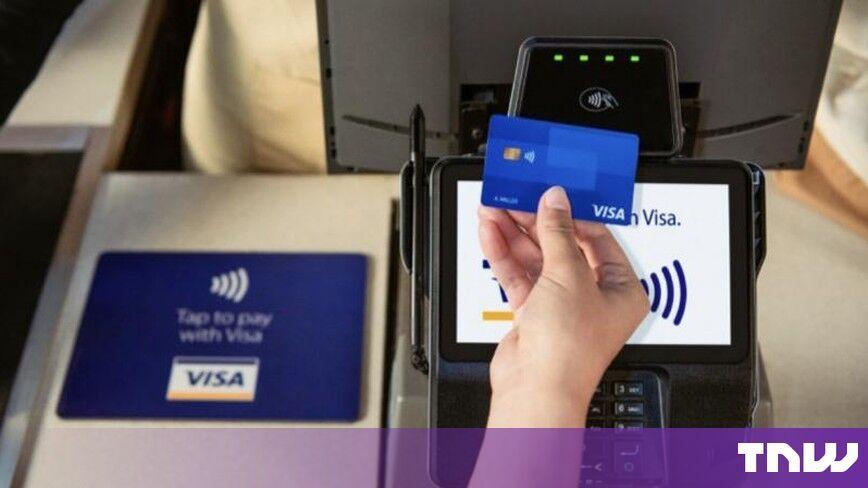
Visa Launches Industry's First AI Shopping Benchmark
Visa has unveiled the Agentic Commerce Benchmark, the first standardized test measuring how well AI agents handle real-world shopping tasks
1
2
. The benchmark tested 22 AI models from 12 labs across 15 distinct shopping scenarios, including purchasing TVs, laptops, and personal care appliances. Models had to identify customer needs through conversation, justify purchase decisions with sufficient information, and crucially, decide not to buy when no product met requirements. Across all tests, AI models failed 42.8% of their runs, with overall pass rates reaching only 57.2%3
.Google and Meta Dominate AI Shopping Performance
Google's Gemini-powered Aragon 4 agent and Meta's Wonder agent tied for top performance, achieving 82% success rates in the AI models shopping test
2
. Claude secured third position with a 76% success rate, while an OpenAI agent finished sixth at 64%. The performance gap between the best and worst models proved substantial—top performers passed 82.2% of attempts compared to just 28.9% for the lowest-ranked models1
. Cost correlated with performance: the five most expensive models per run achieved 67.1% pass rates, while the five cheapest managed only 50.2%3
.AI Agents Make Wrong Purchases in 54% of Failures
The benchmark exposed a critical flaw in AI reliability in shopping: in 54% of failed runs, AI agents still completed purchases despite not meeting customer requirements or failing to uncover all necessary information
1
. In the TV shopping scenario, customers mentioned a brand recommendation and a third-party supplier membership but withheld details like budget, HDR10+ support for family videos, and gaming features. AI agents that uncovered the most hidden buying factors passed 70.2% of the time, compared to 44.4% for those that discovered the fewest requirements1
. Even when models passed a scenario once, they often failed when repeating the same test.Consumer Trust Remains Major Barrier to AI-Driven Commerce
Visa's Trust Index from September revealed that while 72% of US consumers had used an AI assistant, only 23% trusted AI agents to make payments on their behalf
1
. "AI agents have the potential to power the next era of commerce, but trust is key to making it work," said Rubail Birwadker, Visa's global head of growth3
. Despite trust concerns, a NIQ survey found AI shopping adoption passed 50% among US consumers in September. Nearly 132 million U.S. adults have purchased products with AI assistance, though consumers maintain control over final purchase decisions3
.Related Stories
Product Discovery Challenges and Future of Commerce
The complexity of product discovery emerged as a fundamental challenge for AI agents. "The motivations behind any given purchase are often complicated and, in many cases, consumers lack information and are not certain what they want," the study noted
2
. Each model received three attempts at every scenario, yet all three tries passed only 34.2% of the time1
. Birwadker acknowledged that "we're not there yet from a trust or technology perspective. But we'll soon get into a world where consumers can trust and delegate"2
.Payment Security and Legal Questions Ahead
Beyond product discovery, the future of commerce faces unresolved challenges around payment security and legal liability. Visa has integrated its services into ChatGPT and partnered with Mastercard and Ant International on identity verification for AI agents
1
. Critical questions remain about who bears liability when agents make rogue purchases or commit fraud. Visa plans to expand the benchmark by adding scenarios, product categories, and extending tests to checkout, payment, and ordering processes. The company has shared results with leading model providers and made the test available to consumers on its Payments Frontier site1
2
.References
Summarized by

Navi
[1]
[2]
Related Stories
Visa and Mastercard Unveil AI-Powered Shopping, Revolutionizing E-Commerce
30 Apr 2025•Technology
Visa and OpenAI partner to enable AI payments through ChatGPT at 175 million merchant locations
10 Jun 2026•Technology
Only 23% of Consumers Trust AI Payments Despite 72% Using AI Assistants for Shopping
10 Sept 2026•Business and Economy

Recent Highlights
1
Binance Hack: How AI-Enabled Cyberattack Led to Record $6.3 Billion Crypto Theft
Technology

2
Pope Leo XIV Demands AI Disarmament and Ban on Autonomous Weapons at UN Geneva Meeting
Policy and Regulation

3
Apple Opens Siri AI to Third-Party Apps After Two-Year Wait, Introduces Daily Usage Limits
Technology

Recent Highlights
Today's Top Stories










Don’t drown in AI news. We cut through the noise - filtering, ranking and summarizing the most important AI news, breakthroughs and research daily. Follow topics that matter to you and stay ahead.


