3 Sources
[1]
Walmart investors reject AI workplace report as automation expands in the US
Walmart investors on Thursday voted against a shareholder proposal asking it to report on how its use of AI is affecting the well-being of its workforce, according to preliminary voting results from the retailer's annual shareholders' meeting. Walmart investors on Thursday voted against a shareholder proposal asking it to report on how its use of AI is affecting the well-being of its workforce, according to preliminary voting results from the retailer's annual shareholders' meeting. The proposal, filed by investor United for Respect, comes in the teeth of Walmart's escalating battle against Amazon for ecommerce dominance. Walmart aims to get deliveries to customers within 30 minutes. Ava Williams, an overnight worker at â a Walmart â in Spokane, Washington, spoke in favor of the proposal, saying she has "repeatedly tried to sound the alarm" about how AI-driven employee standards are leading to "injuries, burnout, and high turnover." "We're expected to meet impossible timelines," Williams said, adding that workers are sometimes pressured to skip critical steps such as sanitising shelves and checking for expired products. "There is zero accountability for the tools that now impact our safety." Josh Allen, Walmart's head of frontline training, said the company's AI philosophy tries to emphasize "responsible use and human judgment." "AI learning should build confidence, not pressure," Allen said during an AI training presentation at Walmart's annual Associates Week event. Walmart is the largest private employer in the U.S. with about 1.6 million employees, according to its 2026 annual report. Walmart is ramping â up investments in artificial intelligence and automation across its warehouses and stores, deploying tools such as "self-healing" inventory systems to monitor and replenish stock, and predictive demand forecasting. Sales in fast delivery rose more than 50% year-over-year in the first quarter, which Walmart reported in â May. The company is also aggressively automating its back end. More than 60% of its stores now receive freight from automated distribution centers, and over 50% of its ecommerce fulfillment volume is automated, the company said late last year. It is leaning hard into AI-driven training tools, too. On Wednesday, a bakery manager at an Arkansas Sam's Club demonstrated to the media a tool that uses photos to assess the quality of freshly baked pies, and the proficiency of piped inscription on cakes. CFO John David Rainey has said these investments helped reduce shipping costs, which have been consistently dropping in the 30% range for several quarters. Walmart saw a 150% increase in same-day, next-day units sold from its fulfillment centers, Rainey told analysts on a post-earnings call in May. Risks around immigration policies Preliminary results of the vote also showed that shareholders rejected a proposal requesting a report on how shifting US immigration policy and enforcement under President Donald Trump may impact Walmart's operations. The proposal, submitted by SOC Investment Group, raised concerns that measures from the administration such as canceling humanitarian parole visas resulted â in job losses and staffing shortages across the country. It noted that hundreds of workers at Walmart supercenters in Florida and Texas had work permits abruptly revoked. The proposal also said that the jump in the H-1B visa fee from $215 to $100,000 would also impact the company's ability to hire people and affect growth in its web platform and infrastructure. Walmart paused H-1B hiring in October last year, according to media reports, which was about a month after the fee revision. The proposal also said the pause on visa grants to foreign-born commercial truckers could lead to rising costs for Walmart. Walmart said it had not experienced significant operational or supply chain disruptions due to immigration-related policy changes. "Our use of employment-based visa sponsorships is actually a very small percentage of our U.S. workforce, and it's primarily for specialized roles and complements other forms of workforce planning," Donna Morris, executive vice president and chief people officer at Walmart, told investors.
[2]
Walmart Tries to Assuage AI Worries as Tech-Related Layoffs Rise | PYMNTS.com
As the Financial Times (FT) reported Sunday (June 7), the retail goliath last week gathered thousands of its employees at its Arkansas headquarters to drive home the message that AI would enhance, and not eliminate, their jobs. This effort, FT points out, comes amid worries that the technology could make some workers' jobs obsolete. A recent report from job placement company Challenger, Gray and Christmas found that AI has been the number one reason companies gave for layoffs in the U.S. for the last three months. And Walmart reportedly cut or moved 1,000 corporate employees last month to bring together its global technology and product teams. However, executives at Walmart's annual Associates Week gathering described a future where AI will transform how people work, but not necessarily take their jobs, FT said. "Technology will power our future. But our associates will lead it." Donna Morris, Walmart's chief people officer, told employees. The company also announced that any Walmart staffer in the U.S. can now become certified in the use of OpenAI. FT noted that Walmart sped up its AI adoption last year when it recruited Instacart executive Daniel Danker to serve as executive vice-president for AI acceleration, product and design. He was paid $44 million last year, more than outgoing Walmart CEO Doug McMillon. McMillon's successor John Furner on Friday gave an award to a pair of Walmart engineers who had programmed a "vibe coding" platform being used throughout the company. It allows hourly-wage employees to create code to solve business problems, FT said. The news comes days after Walmart shareholders rejected a proposal that would have required the company to compile a report on AI/automation's impact in the workplace. The proposal presented by United for Respect called on Walmart to explain how it plans to address and measure impact of the technology as it embeds AI across its operations. "A report describing the principles guiding AI deployment, the metrics used to assess workforce impacts -- such as job quality, compensation, training effectiveness, and equity -- and the governance structures overseeing these systems would enable shareholders to evaluate whether Walmart's AI strategy aligns with its public commitments, supports long-term value creation and mitigates workforce-related risks," the proposal read. Walmart's board opposed the idea, arguing the company is committed to managing how AI and automation are deployed and the additional reporting would be unnecessary. For all PYMNTS AI coverage, subscribe to the daily AI Newsletter.
[3]
Walmart Shareholders Reject Bid to Require AI Workplace Impact Report | PYMNTS.com
The shareholder proposal was presented at the company's Annual Shareholders' Meeting and received about 4.95% of the shares that were voted, Walmart said in a Thursday (June 4) press release. The Annual Shareholders' Meeting was held Thursday in a virtual-only format. The proposal presented by United for Respect would have required Walmart to prepare a report on the principles by which the company plans to address and measure the social implications on its workforce of the growing adoption of AI, automation and other advanced technologies, according to the text included in a proxy statement. Walmart is embedding AI across its operations; has rolled out AI-enabled tools that support hiring, scheduling, training and task prioritization; has expanded automation in fulfillment centers and supply chain operations; and implemented an algorithmic, performance-based system to determine hourly employees' pay increases, per the proposal. "For shareholders, the key question is how the Company is measuring and managing the workforce-related risks and opportunities associated with AI and automation," the proposal said. "A report describing the principles guiding AI deployment, the metrics used to assess workforce impacts -- such as job quality, compensation, training effectiveness, and equity -- and the governance structures overseeing these systems would enable shareholders to evaluate whether Walmart's AI strategy aligns with its public commitments, supports long-term value creation and mitigates workforce-related risks." The Walmart board of directors opposed the proposal, saying that the company is committed to managing how AI and automation are shaping the future of work and that the additional reporting sought by the proposal is unnecessary. In a statement in opposition to the proposal, which was included in the proxy statement, the board said Walmart already discloses relevant information in its annual report, earnings calls, investor forums, an annual report on strategies to create shared value, and other forums. "Through these channels, Walmart has consistently communicated that technology should serve people by elevating human capability, improving the customer experience, and making work more meaningful," the board said in its statement. "While roles and talent needs will evolve as AI and other technologies advance, we are committed to providing opportunities for our associates' continued development through investment in training, skill-building, and new career pathways."
Share
Copy Link
Walmart shareholders voted down a proposal requiring the retail giant to report on how AI and automation affect its 1.6 million workers. The decision came despite worker concerns about impossible timelines and safety issues. Meanwhile, Walmart continues aggressive AI implementation across stores and warehouses, with over 60% of locations now receiving freight from automated distribution centers.
Walmart AI faces scrutiny as shareholders rejected a proposal demanding transparency about AI workplace impact during the company's annual meeting on June 4. The proposal, presented by United for Respect, received only 4.95% of votes cast
3
. Investors declined to require Walmart to prepare a report on AI's impact on its workforce, despite mounting concerns from employees about safety and working conditions1
.The proposal sought to establish principles guiding AI deployment and metrics to assess workforce impacts including job quality, compensation, employee training effectiveness, and equity across Walmart's 1.6 million-strong U.S. workforce . United for Respect argued that a detailed report on AI's impact would enable shareholders to evaluate whether Walmart's AI strategy aligns with public commitments and supports long-term value creation while mitigating workforce-related risks.

Source: PYMNTS
Ava Williams, an overnight worker at a Walmart in Spokane, Washington, testified about the social implications of AI during the shareholders meeting. She described how AI-driven standards are creating "injuries, burnout, and high turnover" among frontline employees
1
. Williams stated workers face "impossible timelines" and are sometimes pressured to skip critical safety steps such as sanitizing shelves and checking for expired products. "There is zero accountability for the tools that now impact our safety," she told investors.
Source: PYMNTS
These concerns emerge as AI has become the leading reason companies cite for job losses in the U.S. for three consecutive months, according to job placement firm Challenger, Gray and Christmas
2
. The timing is particularly sensitive given Walmart's recent corporate restructuring that affected 1,000 corporate employees last month to consolidate its global technology and product teams2
.Walmart's AI implementation continues at an accelerated pace across its operations. More than 60% of Walmart stores now receive freight from automated distribution centers, while over 50% of ecommerce fulfillment volume runs through automated systems
1
. The company deploys "self-healing" inventory systems to monitor and replenish stock, alongside predictive demand forecasting tools.The automation push has delivered measurable results. CFO John David Rainey reported that these investments helped reduce shipping costs consistently in the 30% range for several quarters. Walmart saw a 150% increase in same-day and next-day units sold from fulfillment centers, while sales in fast delivery rose more than 50% year-over-year in the first quarter
1
. The company aims to deliver orders to customers within 30 minutes as it battles Amazon for ecommerce dominance.
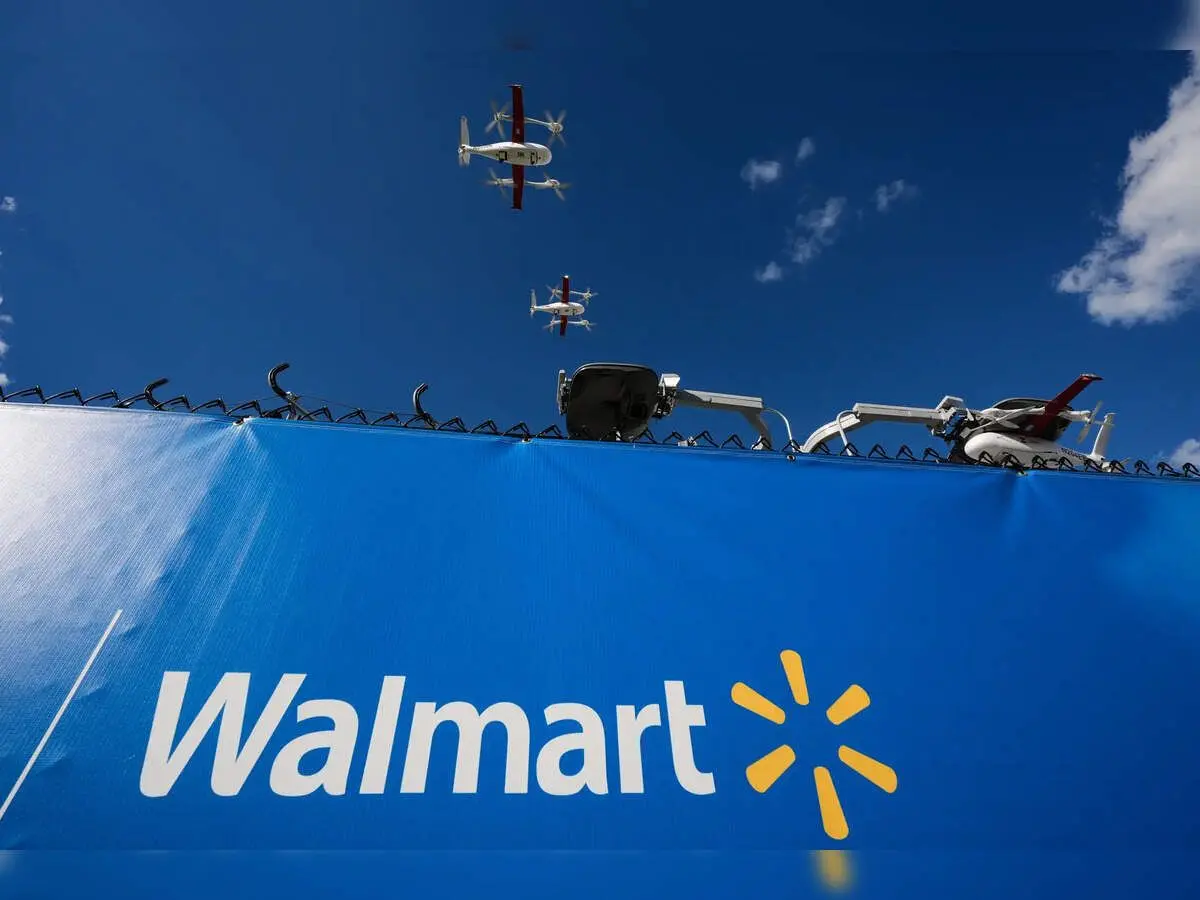
Source: ET
Related Stories
Walmart leadership attempted to assuage concerns during the annual Associates Week gathering, where thousands of employees convened at Arkansas headquarters. "Technology will power our future. But our associates will lead it," Donna Morris, Walmart's chief people officer, told employees
2
. The company announced that any U.S. Walmart employee can now become certified in using OpenAI.Josh Allen, Walmart's head of frontline training, emphasized the company's philosophy on responsible AI use. "AI learning should build confidence, not pressure," Allen stated during an AI training presentation
1
. CEO successor John Furner highlighted a "vibe coding" platform that allows hourly-wage employees to create code for solving business problems2
.The Walmart board of directors opposed the shareholder proposal, arguing that additional reporting on AI's impact would be unnecessary. The board stated Walmart already discloses relevant information through its annual report, earnings calls, investor forums, and an annual report on strategies to create shared value . "Through these channels, Walmart has consistently communicated that technology should serve people by elevating human capability, improving the customer experience, and making work more meaningful," the board said.
Walmart accelerated its AI adoption last year by recruiting Instacart executive Daniel Danker as executive vice-president for AI acceleration, product and design. Danker was paid $44 million in his first year, exceeding outgoing CEO Doug McMillon's compensation
2
. This significant investment signals Walmart's commitment to AI-driven transformation across supply chain operations and fulfillment processes, even as questions persist about measuring cost reductions against workforce well-being.Summarized by
Navi
13 May 2026â˘Business and Economy

22 May 2026â˘Business and Economy

24 Jul 2025â˘Technology

1
Policy and Regulation

2
Technology

3
Health