Investors use AI in finance for research but trust human financial advisors for final decisions


3 Sources
[1]
Investors still seek a human touch even with AI tools at hand: HSBC
Younger investors embraced AI most, mainly for research and risk assessment. Investors continue to rely on professional financial advisers for their final investment decisions, even as artificial intelligence becomes more widely used in the initial stages of research, according to a survey by
[2]
AI loses out to human wealth managers when the money actually moves, HSBC finds
An HSBC survey of nearly 10,000 wealthy investors finds AI doing the research and a human adviser making the final call. Wealthy investors are using artificial intelligence to research and generate ideas, and then asking a human being whether to act on them. That is the headline finding of new
[3]
Indian investors lead the world in AI adoption for finance, but still trust humans with the final call
Indian wealthy investors are leading the world in using AI for financial research and analysis, with 86% leveraging the technology. While AI boosts their confidence and willingness to take calculated risks, human financial advisors still hold the reins for final investment decisions. This indicates
Share
Copy Link
An HSBC survey of nearly 10,000 wealthy investors across 10 markets reveals a clear division of labor in wealth management. While 73% use AI tools for research and risk assessment, 62% still turn to human financial advisors as their main source of investment ideas. Only 12% cite AI as the most influential factor in final investment decisions, highlighting a hybrid model where technology assists but human judgment prevails.
Wealthy Investors Embrace AI in Finance but Reserve Final Decisions for Humans
An HSBC survey of nearly 10,000 affluent and high-net-worth individuals across 10 markets has revealed a striking pattern in how investors are integrating artificial intelligence into their financial lives
1
. While AI adoption for finance continues to accelerate, human financial advisors maintain a decisive edge when it comes to final investment decisions. The research, conducted by Ipsos between January 6 and February 6, 2026, surveyed investors aged 21 to 69 with minimum investable assets of $100,000 for the affluent tier and $2 million for the high-net-worth tier2
.The findings show that 62% of respondents use financial professionals and institutions as their main source of investment ideas, while only 12% named AI as the single most influential factor in their decision-making
2
. More tellingly, 37% said human financial experts had the greatest influence on their final investment decisions—three times as many as those who cited AI tools for research and risk assessment1
. HSBC has labeled this emerging pattern the "human-AI advantage," describing a division of labor where technology handles initial exploration and humans provide context and validation2
.
Source: ET
Gen Z and Millennials Lead AI Adoption Across Wealth Management
Younger investors are driving the charge in AI adoption for finance, with 86% of Gen Z respondents and 82% of Millennials surveyed using AI for their financial and investment decisions
1
. However, their usage patterns differ significantly. Gen Z primarily uses AI to identify potential risks and avoid mistakes, while Millennials leverage it mainly to speed up research and analysis1
.Despite AI playing a limited role in final investment decisions, nearly half of respondents said it has made them more confident and willing to take calculated risks, especially among Gen Z and Millennials
1
. Investors are treating AI as an analytical companion rather than a decision-maker, using it to compare options, summarize research, and settle their nerves before conversations with advisors2
.Indian Investors Lead Global AI Adoption but Still Trust Human Expertise
Indian investors emerged as the world's most enthusiastic adopters of AI in finance, with 86% of affluent and high-net-worth individuals using the technology for finance and investment-related activities—well above the global average of 73%
3
. About 80% of Indian respondents use AI for analysis and research, while 70% use it for strategy support3
.Nearly two-thirds of Indian investors said AI makes them more willing to take calculated risks, making them the most confident investors globally on this measure
3
. More than half said AI makes them feel more in control of their finances, while respondents attributed an average 40% of their investment returns over the past year to the influence of AI3
. Yet financial advisers remain the most important source of investment ideas for 67% of Indian respondents, with only 15% saying AI had the greatest influence over their ultimate investment choices3
.Regional Variations Show Asia and Middle East Leading Confidence Gains
By markets, the HSBC survey found that AI's impact on investor confidence was more pronounced in parts of Asia and the Middle East, including India, the United Arab Emirates, Malaysia, and Hong Kong
1
. In the UAE, 98% of investors said they use AI somewhere in their lives—the joint-highest of the markets surveyed—and 83% use it for finance, against 73% globally2
. Yet financial professionals remained the most influential voice in final decisions at 34%, nearly three times the 13% attributed to AI tools2
.Investors in the United States, Singapore, Taiwan, and the United Kingdom were "more measured in their approach" to AI adoption for finance
1
. The more comfortable investors become with the technology, the more clearly they mark where its job ends and human judgment begins2
.Related Stories
The Hybrid Model Emerges as Preferred Approach in Wealth Management
More than half of respondents said their preferred approach combines AI tools and human advisers in a hybrid model
3
. About a third said they would use AI to identify opportunities before seeking validation from an adviser, while others want advisers themselves to use AI as part of the advisory process3
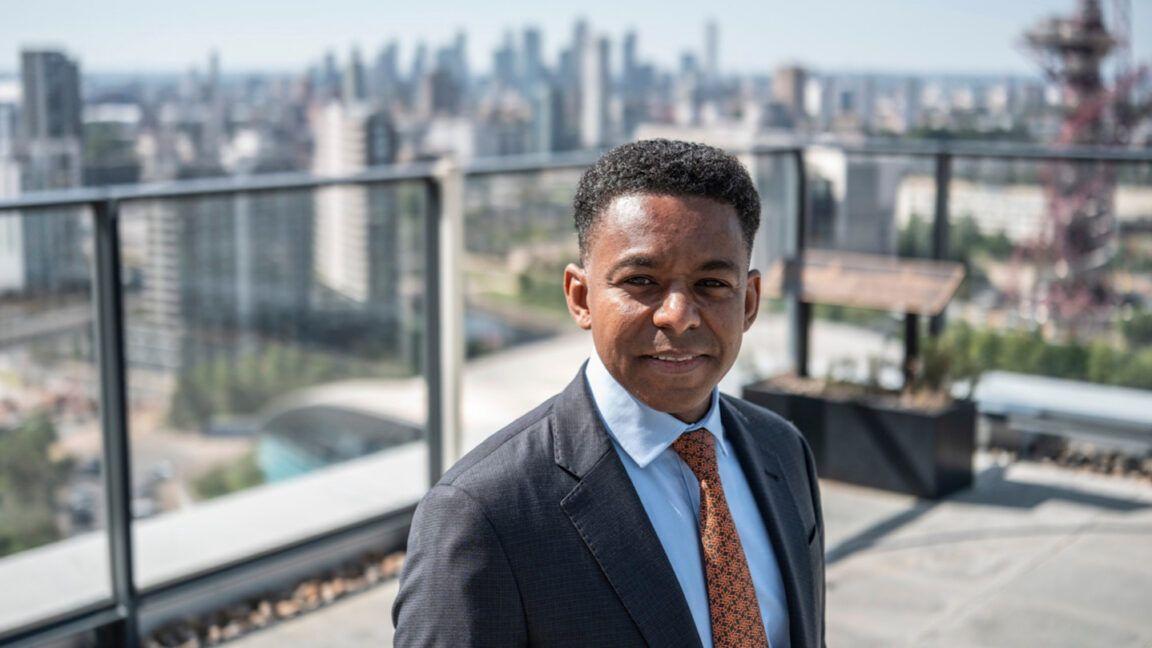
."Clients are increasingly using AI to explore their options, but when it comes to making investment decisions, they value judgement, context, and accountability from a trusted wealth adviser," said Barry O'Byrne, CEO of International Wealth & Premier Banking at HSBC
1
. O'Byrne noted that clients "aren't choosing between AI and professional advice, they're sequencing both," using the machine to explore faster and then wanting "a trusted human checkpoint for context and validation"2
.The findings arrive as HSBC rolls out Wealth Intelligence, a large-language-model platform that draws on more than 10,000 data sources to brief its relationship managers before client meetings, built in part on a partnership with Google Cloud
2
. This timing underscores the commercial stakes in understanding how AI and human expertise can work together in wealth management.What This Means for the Future of Financial Advisory Services
The survey suggests that while investors are increasingly comfortable asking AI what to do with their money, they are not yet ready to let it decide for them
3
. This distinction could prove important as the financial industry enters the next stage of the AI era—one where the question is no longer whether investors will use AI, but how much authority they are willing to give it3
.Reassurance and strategic expertise were among the main reasons professional human advisors are preferred for final decisions
1
. Unlike AI, human advisors can apply judgment, validate information, spot mistakes in AI-generated data, and interpret complex data1
. For now, wealthy investors have settled on an arrangement that gives them the speed of the machine and the reassurance of a person, and they are paying for the person2
.References
Summarized by

Navi
Related Stories
Americans turn to AI for financial advice but trust remains with human advisors
03 Dec 2025•Business and Economy

Trust in AI Financial Advisors Varies Across Demographics, Study Finds
16 Oct 2024•Business and Economy

HCLTech Report Reveals 84% of Wealth Firms Need AI Redesign, But Only 7% Build Agentic Capabilities
29 Sept 2026•Business and Economy

Recent Highlights
1
Microsoft and Nvidia Launch Surface Laptop Ultra: A $2,599 AI-Ready PC With RTX Spark Chip
Technology

2
Trump Consulted Grok AI Before Ordering Venezuela Invasion and Capture of Nicolás Maduro
Policy and Regulation

3
Scientists Build AI Model That Reconstructs Images From Brain Scans in Record Time
Science and Research

Recent Highlights
Today's Top Stories






Don’t drown in AI news. We cut through the noise - filtering, ranking and summarizing the most important AI news, breakthroughs and research daily. Follow topics that matter to you and stay ahead.


