Wonder's AI lets anyone launch a restaurant brand in under a minute across 120 locations


2 Sources
[1]
Marc Lore says that AI will soon enable anyone open a restaurant | TechCrunch
Marc Lore, the veteran e-commerce entrepreneur who sold his previous startups to Amazon and Walmart, has big plans to infuse AI into his current venture, Wonder. The centerpiece of those plans is Wonder Create, an initiative that would let anyone -- from food entrepreneurs to social media
[2]
Wonder Develops AI and Infrastructure to Automate Restaurant Launches | PYMNTS.com
By completing this form, you agree to receive marketing communications from PYMNTS and to the sharing of your information with our sponsor, if applicable, in accordance with our Privacy Policy and Terms and Conditions. Speaking at The Wall Street Journal's Future of Everything event, Wonder
Share
Copy Link
Marc Lore's Wonder is rolling out an AI tool that enables anyone to design and launch their own restaurant brand in under a minute. The platform automatically generates names, branding, recipes, and pricing, then deploys virtual restaurants across Wonder's network of 120 tech-enabled kitchens. The company aims to expand to 400 locations next year.
Wonder Unveils AI-Powered Restaurant Creation Tool
Marc Lore, the veteran e-commerce entrepreneur behind ventures sold to Amazon and Walmart, is deploying AI to transform how restaurants are created and operated through his current company, Wonder. Speaking at The Wall Street Journal's Future of Everything conference, Lore detailed Wonder Create, an initiative designed to let anyone use AI to design and launch their own restaurant brand in under a minute
1
. The virtual restaurant brands would then operate across Wonder's growing network of programmable cooking platforms, currently numbering 120 locations with plans to reach 400 next year2
.
Source: TechCrunch
The AI tool, expected to roll out by the end of the year, works like a "Shopify front-end with an AI prompt," according to Lore. Users simply type in what kind of restaurant they want to build, and the AI generates everything needed to automate restaurant launches: the name, branding, description, pictures, pricing, health information, and all the recipes for the restaurant
1
. Would-be restaurateurs can refine the prompt if changes are needed before launching across all Wonder locations.Programmable Cooking Platforms Enable Multiple Restaurant Brands
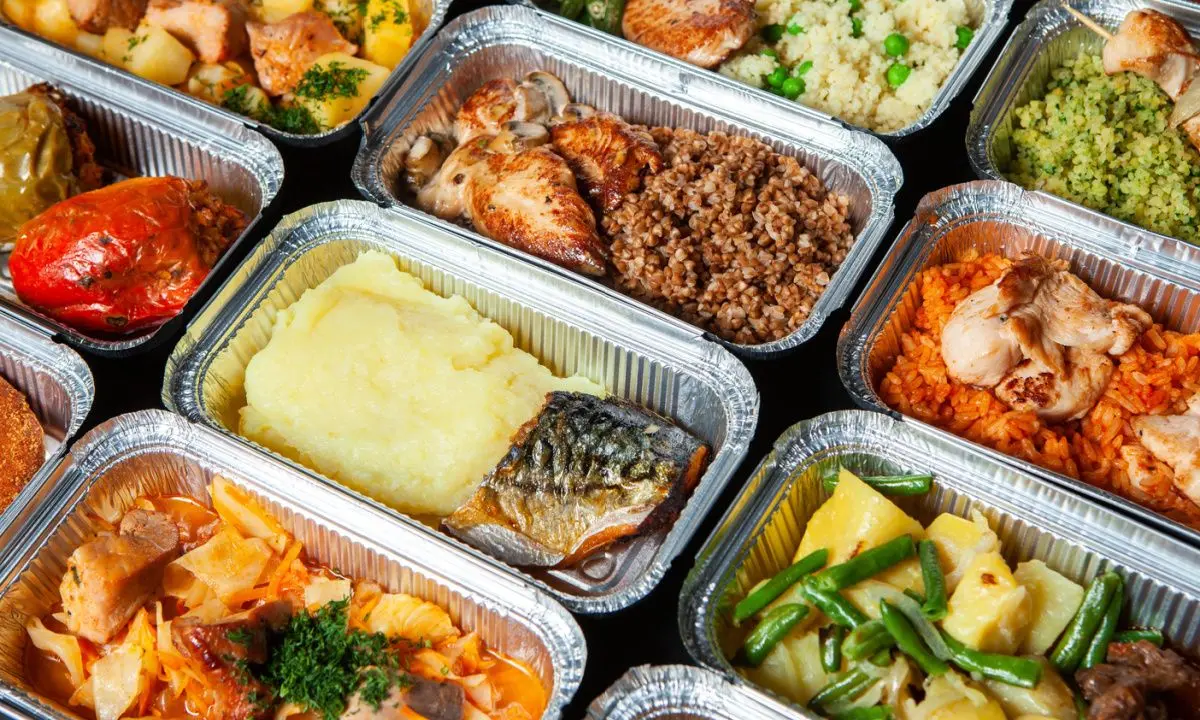
Wonder has evolved from food trucks to fast casual restaurants with 10 to 20 seats, but these aren't traditional dining establishments. Each location functions as a programmable cooking platform capable of operating as 25 different types of restaurants based on cuisine within their all-electric kitchens
1
. These kitchens maintain a 700-ingredient library and employ up to 12 people working alongside cooking tech, including conveyors and robotic arms involved in the cooking process1
.
Source: PYMNTS
The company recently acquired Spice Robotics, a maker of automatic bowl-making machines previously used by Sweetgreen. Next year, Wonder plans to offer an "infinite sauce machine" capable of producing about 80% of all the sauces found in recipes on the internet today
1
. As automation and robotics increase, Lore emphasized that headcount won't necessarily decrease. Instead, the goal is to increase throughput—the number of meals a kitchen can produce in a given period.Scaling from 7 Million to 20 Million Meal Throughput
Lore outlined ambitious targets for Wonder's operational capacity. "We have about 7 million throughput capacity with 12 people," he said. "We see a path to getting to 20 million throughput out of 2,500 square feet with just 12 people." By 2035, the company aims to have 1,000 unique restaurants operating out of each 2,500 square-foot location
1
.The target users for Wonder Create span a wide spectrum. "It could be a mega-influencer, a micro-influencer—anyone that wants to monetize their following," Lore explained. "Or it could be a private trainer that wants to make specific bowls. It could be a not-for-profit. It could be Disney for [marketing] their new movie. Anybody can make a restaurant"
1
. Food entrepreneurs could test recipes to gauge customer reaction before adding dishes to their own brick-and-mortar locations, while influencers could connect with their audience through culinary concepts without launching actual chains.Related Stories

Learning from Ghost Kitchen Failures
Whether the model will attract mass adoption remains uncertain. Ghost kitchens—a similar concept that promised to let brands sell food without owning a restaurant—struggled in the early 2020s, with several high-profile operators scaling back or shutting down after failing to build customer loyalty. MrBeast Burger, a famous ghost kitchen experiment, faced widespread complaints over inconsistent food quality due to relying on dozens of different contracted kitchens and staff
1
. Wonder's programmable, increasingly automated kitchens are designed to solve exactly that consistency problem by maintaining standardized equipment and processes across all locations.Lore acknowledged limitations to the platform. Wonder's team and robots can't perform complex tasks like tossing and stretching pizza dough or slicing and rolling sushi. Instead, the focus remains on simpler basics like burgers, chicken wings, fried chicken, and bowls
1
. The strategy integrates with Lore's other acquisitions—Grubhub for its 250 million deliveries per year and Blue Apron for its meal kit business—creating a vertically integrated dining and food delivery platform. Wonder is also acquiring restaurant brands like New York City-based Blue Ribbon Fried Chicken to expand its offerings1
.References
Summarized by

Navi
Related Stories
Dubai's WOOHOO Restaurant to Debut AI Chef 'Aiman' in Futuristic Dining Experience
10 Jul 2025•Technology
AI in the Kitchen: Renowned Chefs Explore ChatGPT for Recipe Creation
04 Jun 2025•Technology

HelloFresh Invests $70 Million in AI-Powered Meal Planning to Enhance Customer Experience
05 Aug 2025•Business and Economy

Recent Highlights



Recent Highlights
Today's Top Stories





Don’t drown in AI news. We cut through the noise - filtering, ranking and summarizing the most important AI news, breakthroughs and research daily. Follow topics that matter to you and stay ahead.


