World Cup 2026 deploys robot dogs, AI cameras, and hunter drones for unprecedented security


4 Sources
[1]
Robot dogs, hunter drones, and AI cameras: the tech securing the 2026 World Cup
The 2026 World Cup deploys Boston Dynamics robot dogs, net-shooting hunter drones, and AI cameras across 16 cities. FEMA distributed $875M for security. The 2026 World Cup kicks off next week across 16 cities in the US, Mexico, and Canada. It is the largest in history: 48 teams, 104 matches, 39
[2]
AI surveillance, drone defenses to secure World Cup venues
J.D. Miles is an award-winning reporter who has been covering North Texas for CBS 11 since 1996. As fans arrive for nine World Cup matches in North Texas, the action on the field won't be the only display of elite preparation. Behind the scenes, law enforcement will deploy some of the most
[3]
The World Cup Poses an Unprecedented Security Challenge at a Fraught Moment. Is the US Ready?
NEW YORK (AP) -- The World Cup, a 48-team, 104-match behemoth kicking off next week across 16 cities in the United States, Mexico and Canada, presents an unprecedented security challenge, with more countries, games and a larger footprint than ever before. It also comes against the backdrop of the
[4]
FIFA World Cup 2026 poses biggest security challenge for U.S, Canada, Mexico. Is Donald Trump administration ready to host global soccer event safely in North America?
FIFA World Cup 2026, a 48-team, 104-match behemoth kicking off next week across 16 cities in the United States, Mexico and Canada, presents an unprecedented security challenge, with more countries, games and a larger footprint than ever before. It also comes against the backdrop of the U.S. and
Share
Copy Link
The 2026 World Cup across 16 cities in North America becomes the most technologically surveilled sporting event in history. FEMA distributed $875 million for security measures including Boston Dynamics robot dogs, net-shooting hunter drones, and thousands of AI-powered cameras. Officials describe it as "78 Super Bowls over 39 days" amid concerns about drone threats and AI-fueled disruptions.
World Cup 2026 Security Becomes Largest Tech Deployment in Sports History
The World Cup 2026 kicks off next week across 16 cities in the United States, Mexico, and Canada, marking the largest tournament in history with 48 teams competing in 104 matches over 39 days
1
. But beyond the spectacle on the pitch, this event represents an unprecedented security challenge that has mobilized federal agencies, local law enforcement, and private tech companies to deploy the most advanced security measures ever assembled for a sporting event3
. Andrew Giuliani, executive director of Trump's World Cup task force, described the scale as "78 Super Bowls over 39 days," emphasizing that "there's never been a summer like this in American history from a security angle" .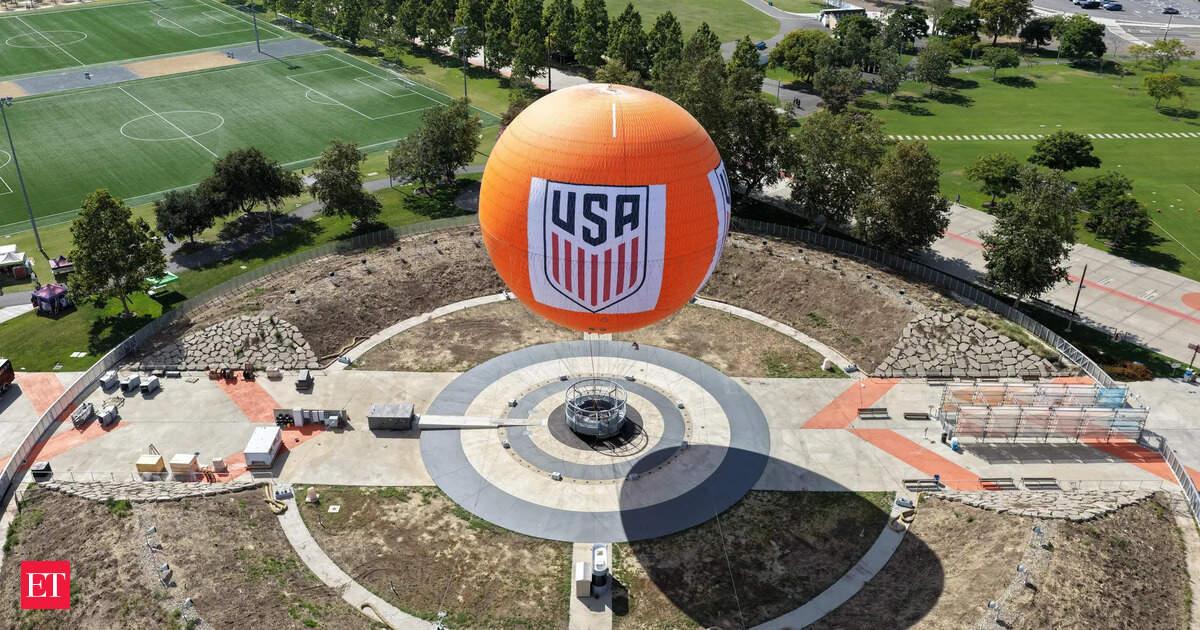
Source: ET
FEMA has distributed $625 million to the 11 U.S. host cities, with an additional $250 million earmarked specifically for tracking and neutralizing suspect drones
1
. The Department of Homeland Security estimates up to 7 million people will visit the U.S. for the tournament, creating a massive logistical and security footprint across North America3
.Robot Dogs and AI Technology Transform Stadium Surveillance
Boston Dynamics' Spot robot dogs are patrolling AT&T Stadium in Arlington, Texas, as part of a "Security Spot" initiative by owner Hyundai
1
. The company is deploying what it calls "its largest and most advanced mobility fleet to date," making it the first official partner to provide robotics for the tournament. These robot dogs will inspect suspicious packages and hazardous materials, though Boston Dynamics has clarified they "do not have facial recognition capabilities" after social media rumors sparked surveillance concerns1
. Mexico is deploying four robot dogs called K9-X across its three World Cup venues, with officials stating the robots will intervene in fights or drunken incidents to protect officers1
.AI-powered cameras represent another critical layer of surveillance infrastructure. Matt Sailor, CEO of IC Realtime, confirmed that high-resolution, AI-enabled cameras analyzing crowd behavior in real time are standard deployment at these large-scale facilities
2
. These systems can detect changes in a person's movement that may signal escalating behavior, determining "based on gait, based on motion, based on the way the body is moving from a calm movement to an excited movement, and it levels that on kind of a threat detection," according to Sailor . Facial recognition and vehicle recognition tools are expected to identify individuals known to cause trouble, with the ability to load databases of known subjects .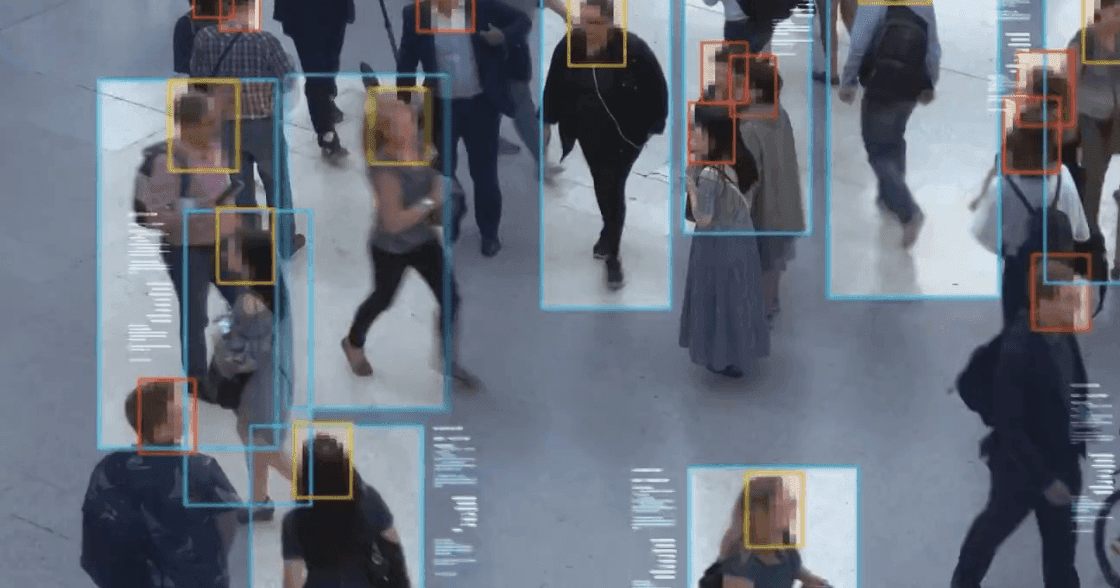
Source: CBS
Drone Defense Technology Addresses Top Security Concern
Drones have emerged as the primary threat keeping security officials awake at night. "If there is one threat that keeps me up at night, it is from drones," said New York City Police Commissioner Jessica Tisch
1
. Since the last World Cup in Qatar in 2022, drones have become prominent weapons in conflicts including Russia's war in Ukraine and Hamas' attack on Israel on October 7, 20234
. Drones are banned over stadiums and fan zones, and counter-drone measures have become one of the fastest-growing segments in defense tech1
.The FBI says it has a "full suite of options" to thwart drone incursions
1
. One solution comes from Fortem, which claims to have signed a multimillion-dollar DHS contract for quadcopters that shoot nets at encroaching drones to trap them in midair, though DHS declined to discuss the contract1
. These hunter drones and net-shooting drones represent cutting-edge counter-drone technology designed to neutralize aerial threats before they reach critical infrastructure3
.Related Stories



AI-Fueled Disruptions and Geopolitical Tensions Complicate Threat Landscape
The security apparatus operates against a tense backdrop shaped by geopolitical tensions. The U.S. and Israel's war with Iran has fundamentally changed the threat picture since planning began
1
. "The security picture fundamentally changed," said Stefano Ritondale, chief intelligence officer at Artorias. "There's a major difference in preparing for a lone wolf radical who rams his car into a public place and a terrorist who is bankrolled by a foreign country we're at war with"4
.AI-generated misinformation poses another significant concern. Officials warned that state actors could use deepfake videos to sow panic during the tournament
1
. The FBI will activate joint operations centers in each host city on match days to counter this threat. "If there's a video that shows an explosion going off at a site, and it's AI generated, we have people on the ground who can validate whether or not that's true," said FBI Special Agent in Charge Amit Kachhia-Patel1
. The FBI has spent two years developing its security plan, incorporating lessons from other major events and testing them at smaller gatherings3
.Inter-Agency Collaboration Faces Resource and Coordination Challenges
The tournament carries the same high-level federal security designation as the Super Bowl, ensuring inter-agency collaboration between federal, state, and local entities
3
. The U.S. Secret Service, in charge of protecting world leaders who attend, is understaffed by about 860 agents, according to Homeland Security Secretary Markwayne Mullin1
. "I feel very comfortable where we're at, and we feel like we have a zero-fail mission," Mullin told Congress, acknowledging "it's going to be complicated"3
.In Dallas, a $120 million tech upgrade gives police body cameras with real-time translation, helping officers communicate with international visitors
1
. However, some officials involved in planning said the federal government could have played a more hands-on role. John Cohen, a former senior DHS official, noted the government was largely absent from planning meetings last year and did not begin sharing threat intelligence with host regions until recently3
. The disbursement of FEMA funds was delayed by a department funding lapse, which officials argue hindered security planning4
. Despite these challenges, Giuliani stated there are no credible threats so far, adding "we're as prepared as we can be"3
. The unspoken expectation is that AI technology and advanced security measures will bridge any remaining gaps in personnel and coordination.References
Summarized by

Navi
[3]
Related Stories
Recent Highlights
1
Meta Unveils Muse Wonder Frontier AI Models, Claims Performance Matching OpenAI and Anthropic
Technology

2
IMF Report Warns AI Market Correction Could Spark Global Financial Crisis With $1.4T at Risk
Business and Economy

3
OpenAI Releases 722 AI-Generated Math Solutions, Triggering Existential Crisis in Mathematics
Technology

Recent Highlights
Today's Top Stories








Don’t drown in AI news. We cut through the noise - filtering, ranking and summarizing the most important AI news, breakthroughs and research daily. Follow topics that matter to you and stay ahead.


